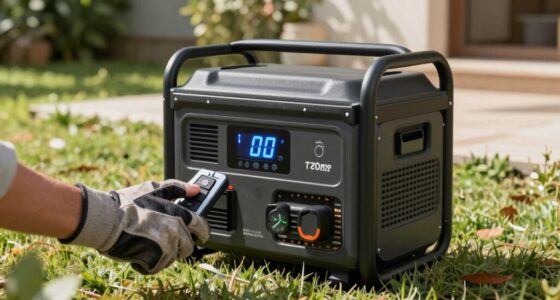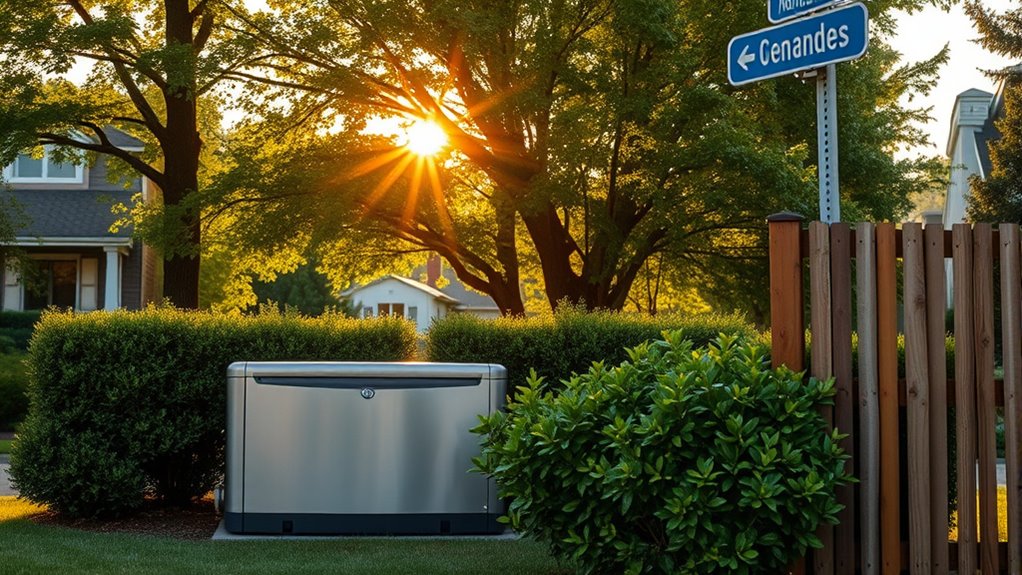

To comply with advanced noise ordinances for generators, you need to understand your local regulations, including decibel limits, zoning restrictions, and allowed operation hours. Install soundproof barriers, use vibration dampening, and position your generator away from sensitive areas. Regular maintenance and monitoring tools help keep noise within legal limits. By following best practices and staying informed, you’ll guarantee smooth operation without penalties—continue exploring to master the details and stay compliant.

Get backup power and energy gear delivered free with Prime
- Fast, free delivery on millions of items
- Prime Video, Amazon Music and more included
- Member-only deals all year
Key Takeaways
- Understand local noise limits, zoning rules, and permissible operating hours for generators.
- Implement soundproofing, barriers, and vibration dampening to meet noise regulations.
- Use noise level meters and remote monitoring tools for real-time compliance tracking.
- Follow routine maintenance and muffler repairs to prevent excessive noise emissions.
- Develop clear procedures for noise complaints and ensure adherence to community-specific ordinances.
Understanding Local Noise Regulations for Generators

To effectively operate your generator without risking penalties, you need to understand your local noise regulations. Noise compliance is vital to avoid fines and ordinance enforcement actions. Check your city or county’s specific noise ordinance, which typically sets maximum decibel levels allowed during certain hours. These regulations often vary by zone—residential, commercial, or industrial—so knowing your zone helps you stay compliant. Some areas may have restrictions on noise duration or specific quiet hours. Failing to adhere to these rules can lead to complaints, inspections, or fines. By understanding and respecting your local noise regulations, you guarantee smooth operation of your generator and avoid unnecessary penalties. Staying informed about noise compliance keeps you within legal boundaries and promotes good neighbor relations.
Key Components of Advanced Noise Ordinances

Advanced noise ordinances go beyond simple decibel limits by incorporating specific components that regulate generator noise more effectively. Zoning restrictions are a key element, limiting noise levels based on location, such as residential or industrial zones, to prevent disturbances. These ordinances also establish clear noise complaint procedures, making it easier for you to report issues and ensure enforcement. They often specify permissible hours for generator operation, reducing noise during late-night or early-morning hours. Additionally, advanced ordinances may include soundproofing requirements or technology standards to minimize noise emissions. By addressing zoning and complaint processes, these ordinances create a thorough framework that balances operational needs with community peace, giving you clearer guidelines and more reliable enforcement mechanisms.
Strategies for Complying With Noise Limits
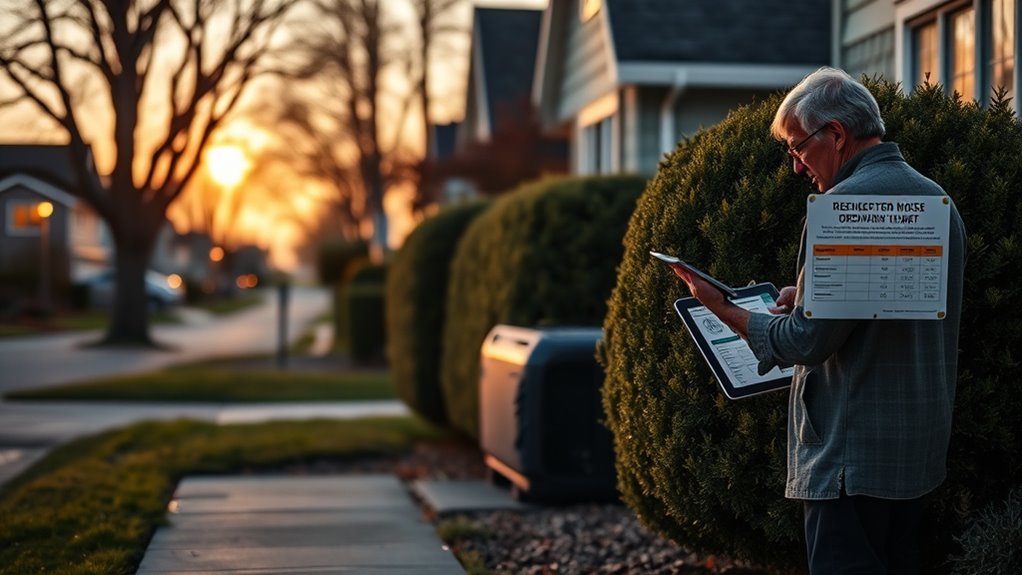
Ensuring your generator stays within noise limits requires proactive measures and careful planning. One effective strategy is installing sound barriers around the equipment, which help block noise from reaching neighboring properties. Additionally, implementing vibration dampening techniques can considerably reduce noise caused by vibrations transferring through the ground or structure. Use rubber mounts or pads to absorb vibrations at the source, minimizing sound transmission. Regular maintenance also plays a key role; keeping your generator in good condition prevents unnecessary noise due to worn parts or loose components. Finally, plan the placement of your generator thoughtfully—position it away from property lines and sensitive areas. Incorporating interior soundproofing methods can further enhance noise control in enclosed spaces. Combining sound barriers, vibration dampening, and strategic placement gives you a practical approach to complying with noise limits while maintaining operational efficiency.
Tools and Technologies to Monitor Generator Noise
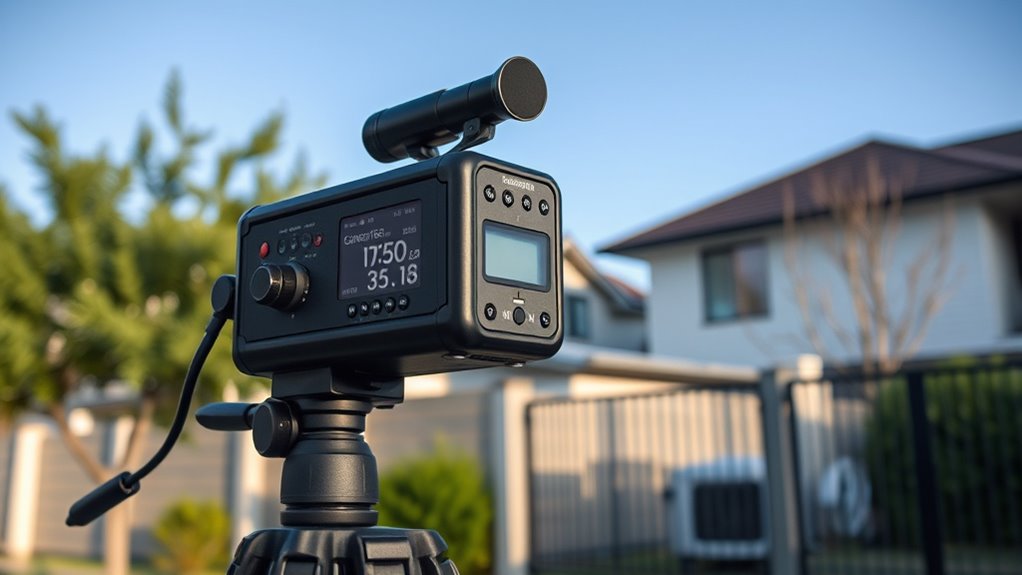
Modern tools and technologies make it easier to accurately monitor generator noise levels and guarantee compliance with regulations. Noise level meters are essential devices that measure sound intensity in real-time, helping you stay within legal limits. Pairing these meters with soundproof enclosures can markedly reduce noise emissions, but monitoring remains vital to ensure effectiveness. Advanced sound level meters often feature data logging, allowing you to track noise patterns over time and identify potential issues before they become violations. Some systems even integrate remote monitoring, providing instant alerts if noise exceeds predefined thresholds. These tools enable proactive management, ensuring your generator operates within acceptable noise levels while maintaining efficiency. Utilizing modern technology simplifies compliance, minimizes disturbances, and supports a quieter, more compliant operation. Regular maintenance of filters and soundproofing measures enhance noise control and help ensure consistent adherence to noise ordinances.
Best Practices for Maintaining Quiet Operation
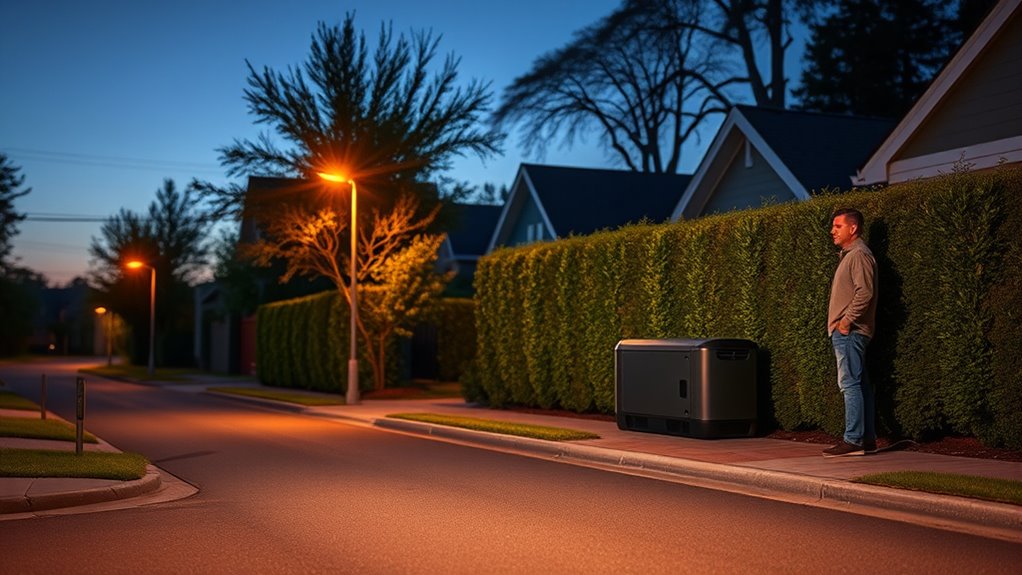
Maintaining quiet operation of your generator requires consistent attention to detail and proactive practices. Regularly inspect and maintain your generator mufflers to guarantee they are functioning properly, as they substantially reduce noise levels. Properly sealing any leaks and replacing worn mufflers helps keep sound levels low. Additionally, installing sound barriers around your generator can further minimize noise transmission. Position your generator on a stable, elevated surface to prevent vibrations that amplify noise. Keep the generator away from enclosed spaces and sensitive areas. Routine maintenance, such as oil changes and tightening loose parts, also reduces unnecessary noise. Incorporating noise reduction techniques into your maintenance routine can significantly enhance quiet operation. By combining well-maintained mufflers with effective sound barriers, you’ll ensure your generator operates quietly and complies with noise ordinances, creating a more peaceful environment.
Frequently Asked Questions
How Often Do Noise Regulations for Generators Typically Change?
Noise regulations for generators usually change every few years, but it varies by location. You should stay updated on noise level standards, as they often evolve to address enforcement challenges. Local authorities may adjust limits based on new technology or community feedback. Regularly checking with your city or county guarantees you’re compliant, especially since enforcement challenges can lead to stricter rules over time.
Are There Specific Noise Ordinances for Different Types of Generators?
You’ll find that noise ordinances often have specific rules for different generator types. For example, portable generators usually face stricter limits than standby or industrial models, based on noise measurement standards. These distinctions matter because noise levels can wildly differ between generator types, impacting nearby residents or businesses. To stay compliant, you need to understand the specific noise ordinances for your generator type and measure noise levels accurately.
Can Noise Ordinances Vary Significantly Between Neighboring Jurisdictions?
Yes, noise ordinances can vary considerably between neighboring jurisdictions due to jurisdictional differences. You’ll find that ordinance variability reflects local priorities, zoning laws, and community standards. It’s essential to check with your local authorities because what’s acceptable in one area might be restricted in another. Don’t assume uniformity—research the specific noise ordinances for your jurisdiction to ensure compliance and avoid potential fines or complaints.
What Are the Penalties for Non-Compliance With Noise Laws?
If you don’t comply with noise laws, you’ll face penalties enforced through noise enforcement and penalty enforcement efforts. These can include fines, citations, or even legal action depending on your jurisdiction. Authorities actively monitor noise levels, and repeated violations often lead to increased fines or equipment shutdowns. To avoid these consequences, stay within the permitted noise limits and cooperate with local authorities during enforcement actions.
How Can I Advocate for Clearer Noise Regulation Enforcement?
You can advocate for clearer noise regulation enforcement by engaging in community outreach and legal advocacy. Start by organizing local meetings to raise awareness and gather support. Collaborate with neighbors and advocacy groups to push for stricter enforcement policies. While it might seem challenging, persistent community efforts and legal action can influence authorities to prioritize noise regulation, ensuring your neighborhood remains peaceful and compliant with ordinances.
Conclusion
Now that you understand the complexities of noise ordinances and the tools at your disposal, you’re better equipped to keep your generator compliant and your neighbors happy. But don’t relax just yet—regulations can change, and new challenges may arise. Will your current setup stand the test of time? Stay vigilant, stay informed, and keep your operations running smoothly—because the true test of mastery is how you adapt when the unexpected comes knocking.
Halloween Picks
halloween
As an affiliate, we earn on qualifying purchases.