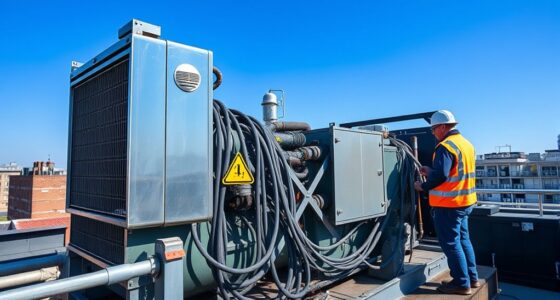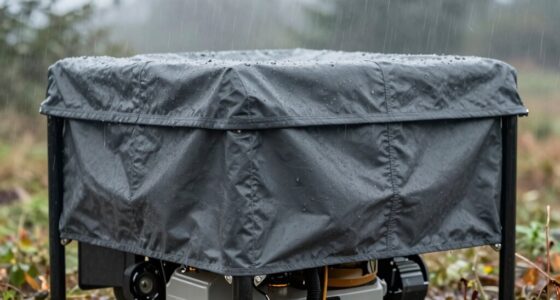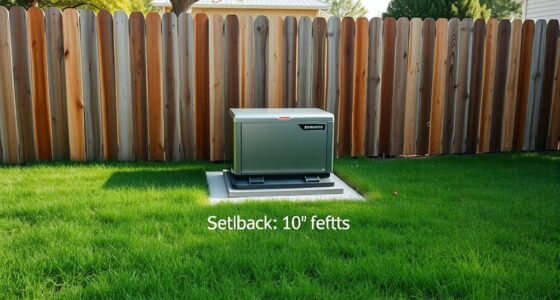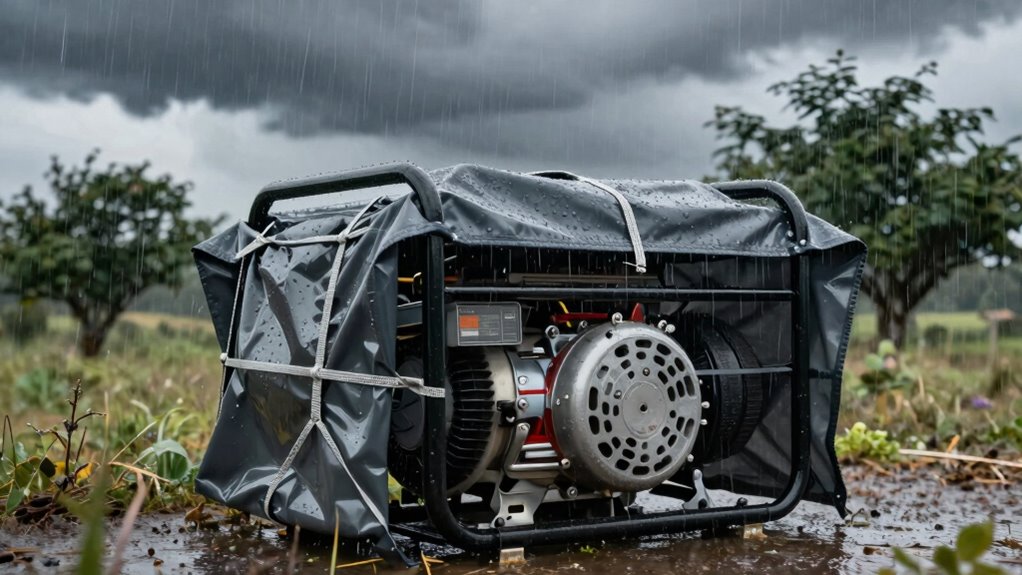

To protect your generator from driving rain, build a waterproof shelter with proper ventilation to prevent overheating and moisture buildup. Make certain the shelter extends beyond the sides to block rain effectively, and elevate the generator on a sturdy platform to avoid water pooling. Cover it with a waterproof canopy that allows airflow, and add barriers or soundproof enclosures for noise reduction. Following these steps helps guarantee your generator stays dry, functional, and long-lasting—discover more tips to keep it protected.

Get backup power and energy gear delivered free with Prime
- Fast, free delivery on millions of items
- Prime Video, Amazon Music and more included
- Member-only deals all year
Key Takeaways
- Use a waterproof canopy or shelter that extends beyond the sides to shield the generator from rain and splashes.
- Elevate the generator on a sturdy platform to prevent water pooling and reduce splash damage.
- Ensure proper ventilation in the shelter to dissipate heat and exhaust gases safely.
- Seal all electrical connections and components to prevent water ingress and corrosion.
- Install barriers or soundproof enclosures to minimize noise and further protect from rain exposure.
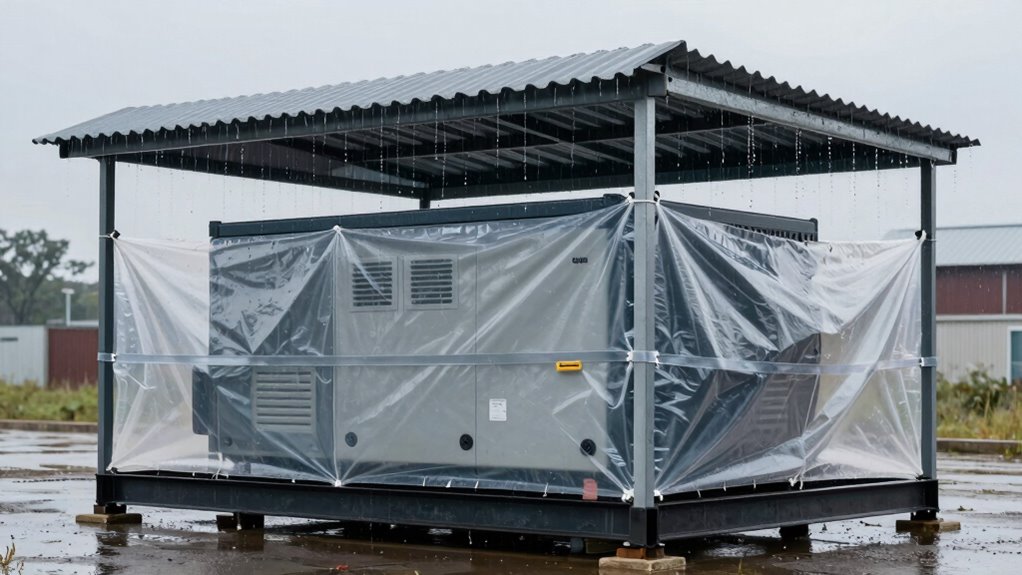
Have you ever wondered how to keep your generator running smoothly during heavy rain? Rain can threaten both your generator’s performance and longevity, but with the right precautions, you can protect it effectively. One of the key concerns is maintaining fuel efficiency, since wet conditions can cause your generator to work harder, consuming more fuel. Making sure proper shelter and ventilation helps your generator operate at ideal levels, reducing unnecessary strain and conserving fuel. When your generator is exposed to rain, it risks water ingress into essential components, which can lead to corrosion or electrical shorts that impair efficiency. Covering it with a waterproof shelter keeps moisture out and helps maintain steady fuel consumption, saving you money in the long run. Additionally, natural pools integrated into your backyard design can create a more eco-friendly environment that complements your generator setup.
Noise reduction is another important aspect when protecting your generator from rain. An uncovered or poorly shielded generator tends to produce louder operational noise, which can be disruptive, especially in residential or quiet environments. Using soundproof enclosures or installing barriers around your generator can greatly reduce noise levels, even during heavy rain. These barriers also serve as additional protection against water splashes, further preventing moisture intrusion. When you choose a sheltered setup that emphasizes noise reduction, you not only preserve the generator’s performance but also keep the peace in your surroundings. Proper shelter design ensures effective protection from the elements while maintaining accessibility for maintenance. Ensuring your shelter materials are weather-resistant is crucial for long-term durability and effective protection.
To effectively shield your generator from rain, consider building a dedicated shelter that’s designed with ventilation in mind. Ventilation prevents heat buildup and ensures proper airflow, which is essential for controlling noise and maintaining fuel efficiency. Elevating your generator on a sturdy platform prevents water from pooling around it, reducing splash risks and potential water damage. Covering the top with a waterproof canopy that extends beyond the sides offers protection from direct rain while allowing some airflow. Make sure the shelter is well-ventilated to prevent overheating and to keep exhaust gases safely dispersed. Proper ventilation also helps to minimize the risk of moisture buildup inside the shelter, ensuring your generator stays in optimal condition.
Frequently Asked Questions
Can a Generator Be Safely Operated in Heavy Rain?
You shouldn’t operate a generator in heavy rain because it risks electrical hazards and damage. To keep it safe, use a waterproof enclosure or shelter, which helps reduce generator noise and protects against rain. Protecting your generator also improves fuel efficiency by preventing moisture-related issues. Always guarantee proper ventilation and avoid exposing the generator to direct rain, maintaining safety and peak performance during stormy weather.
What Materials Are Best for Waterproof Generator Covers?
Did you know that choosing the right materials can extend your generator’s lifespan by up to 50%? For waterproof covers, opt for durable materials like heavy-duty polyester or vinyl, which resist tearing and moisture. Make sure your cover has proper ventilation to prevent heat buildup and condensation. These materials offer excellent durability and weather resistance, keeping your generator dry and functional during heavy rain and unpredictable weather conditions.
How Often Should Generator Covers Be Inspected for Damage?
You should inspect your generator cover at least once every three to six months to guarantee cover durability and identify any signs of damage. Regular generator maintenance includes checking for tears, holes, or worn areas that could compromise protection. Promptly repair or replace damaged covers to prevent water infiltration and safeguard your generator from driving rain. Consistent inspections help prolong the cover’s lifespan and keep your generator running smoothly.
Is It Necessary to Elevate the Generator During Rain?
An ounce of prevention is worth a pound of cure. You should elevate your generator during rain to prevent water from pooling or causing damage. When considering placement, follow maintenance tips like placing it on a dry, level surface and under a protective cover. Elevation helps improve airflow and reduces flooding risk, ensuring reliable operation. Proper placement and elevation are key to safeguarding your generator from rain-related issues.
Can You Run a Generator Indoors Safely?
You shouldn’t run a generator indoors because it can produce dangerous carbon monoxide fumes. If you want to operate it safely indoors, make certain proper indoor ventilation to prevent buildup of harmful gases. Additionally, consider noise reduction measures to minimize disturbance. Always place the generator outside in a well-ventilated area, using extension cords if needed, and never run it inside enclosed spaces. Safety first!
Conclusion
By shielding your generator from driving rain, you guarantee it stays dry and functions reliably, even during storms. Remember, a well-protected generator can last up to 30% longer, saving you money on repairs and replacements. Imagine a heavy rainstorm pouring down, yet your generator remains untouched and ready to power your essentials. Taking simple steps now can prevent costly damage later, giving you peace of mind when Mother Nature releases her worst.
Halloween Picks
halloween
As an affiliate, we earn on qualifying purchases.