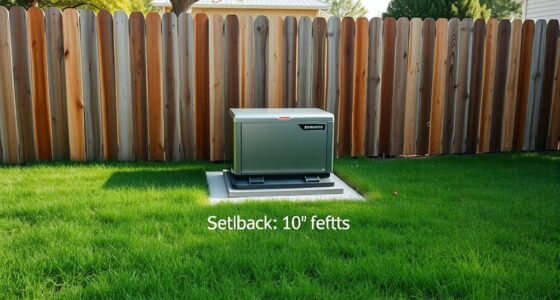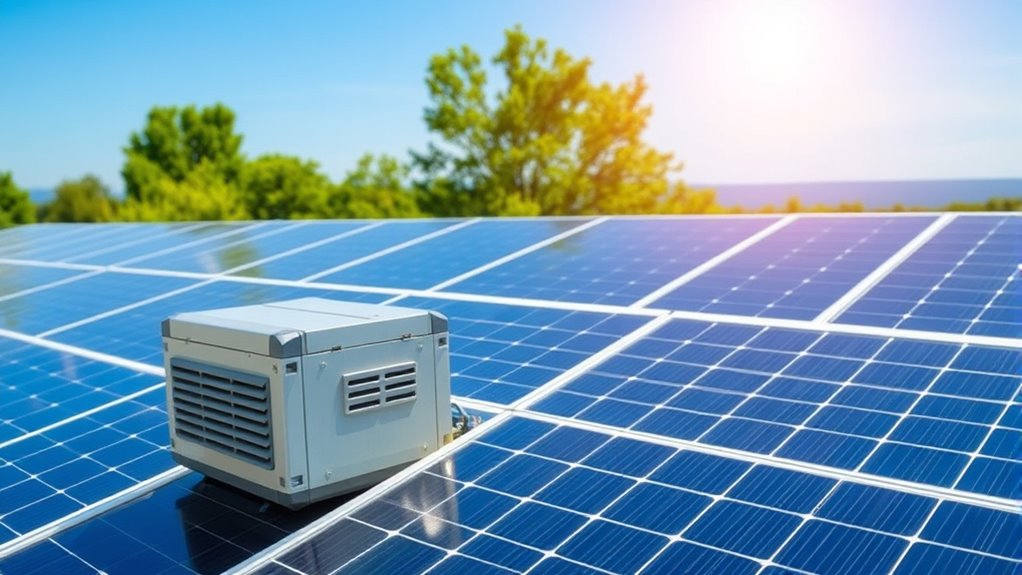

Integrating generators with your solar PV system guarantees you have reliable power even when sunlight is low or during outages. Generators act as backup, providing stability when solar panels produce less energy. Batteries store excess energy for later use, reducing reliance on generators and saving costs. With proper grid connection and control strategies, your system can seamlessly switch between solar, storage, and generator power. Keep exploring to discover how smart controls and AI enhance your hybrid energy setup.
Key Takeaways
- Proper system integration ensures seamless switching between solar, generator, and grid power for reliability.
- Backup generators supplement solar PV during low sunlight, maintaining consistent energy supply.
- Battery storage optimizes renewable energy use and reduces generator dependency.
- Smart control systems coordinate components, balancing capacity and improving efficiency.
- AI enhances system security, monitors performance, and optimizes operation of hybrid solar-generator setups.
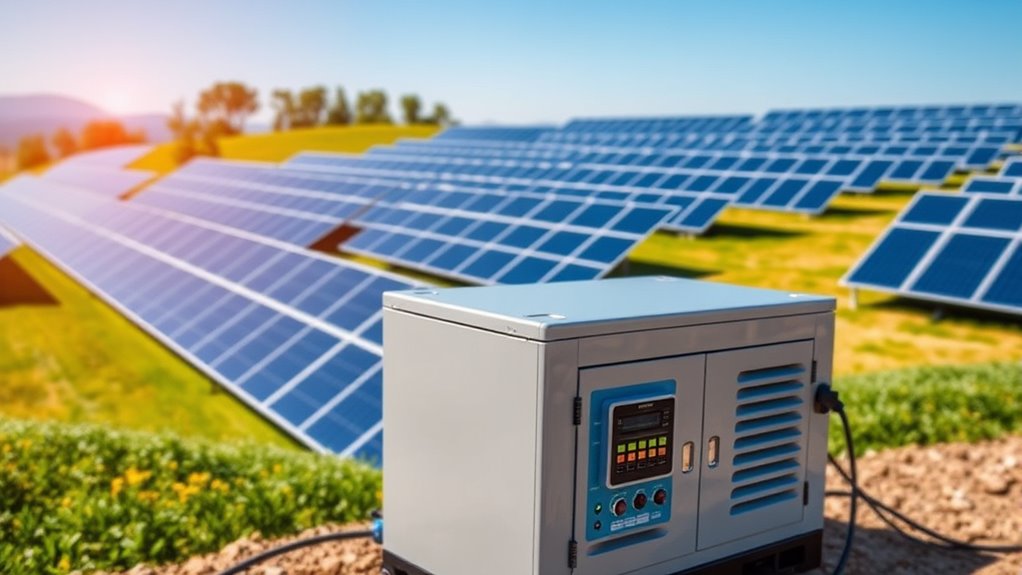
Integrating generators with solar PV systems offers a reliable solution to guarantee continuous power supply, especially when sunlight is insufficient. When your solar panels aren’t generating enough electricity—during cloudy days or at night—you need a backup source to keep your operations running smoothly. That’s where generators come into play, working alongside your solar setup to provide seamless power. To maximize efficiency, you should consider incorporating battery storage into your system. Batteries store excess energy produced during sunny periods, which can then be used during low production times or outages. This setup reduces reliance on the generator, saving fuel and lowering operational costs. Additionally, battery storage enhances your energy independence by allowing you to optimize the use of renewable energy while having a reliable backup.
Grid integration is another critical component when combining generators with solar PV systems. Connecting your system to the grid allows you to feed surplus energy back into the network, earning credits or compensation where applicable. It also provides an extra layer of security, as you can draw power from the grid when both solar and battery storage are insufficient. Proper grid integration requires a smart inverter and control systems that manage the flow of electricity between your solar panels, batteries, generator, and the grid. These systems automatically switch between sources, prioritizing renewable energy and stored power before activating the generator or drawing from the grid, depending on your needs and cost considerations.
When designing this integrated system, you’ll want to focus on balancing the capacity of your generator, battery storage, and grid connection to match your energy demands. For example, a larger battery can reduce the frequency of generator use, which is beneficial if fuel costs are high or emissions are a concern. Conversely, a robust generator ensures backup power during prolonged periods of low sunlight or system failures. Proper control algorithms are essential to coordinate these components efficiently, ensuring smooth transitions and maintaining power quality. Also, consider the local regulations regarding grid connection and net metering, which can influence how you design and operate your hybrid system.
Incorporating AI Security principles can further improve the system’s efficiency and security by enabling real-time monitoring and threat detection, protecting your energy infrastructure from cyber threats.
Frequently Asked Questions
How Do Generators Affect Solar System Warranties?
Generators can impact your solar system warranty, especially if warranty considerations aren’t addressed. If the generator isn’t compatible with your solar setup, it might void parts of your warranty. To avoid this, verify generator compatibility before integration. Always check your solar provider’s warranty terms and consult with them or a professional to confirm that adding a generator won’t jeopardize your coverage, keeping your system protected and functioning effectively.
What Are the Best Generator Types for Solar Integration?
Think of the best generator types for solar integration as the steady heartbeat of your energy system. You should choose inverter generators for seamless battery compatibility and fuel efficiency, ensuring reliable support without draining resources. These generators adapt well to solar setups, providing backup power when needed while conserving fuel. With their quiet operation and efficient performance, inverter generators become your perfect partner, keeping your solar energy system running smoothly and sustainably.
How Does Grid-Tied Versus Off-Grid Impact Generator Use?
You’ll find grid-tied systems rely less on generators because they draw power from the grid, reducing your need for energy storage and lowering environmental impact. Off-grid setups, however, depend heavily on generators for energy, increasing fuel use and emissions. Using generators in off-grid systems requires careful planning to minimize environmental footprint, such as choosing cleaner fuel options and integrating energy storage to optimize efficiency.
Can Generators Be Automated With Solar System Controls?
Yes, generators can be automated with solar system controls using automatic synchronization and smart control integration. You can set up your system so the generator kicks in automatically when solar power is insufficient or when demand spikes. This seamless coordination guarantees reliable power, reduces manual intervention, and optimizes energy use. With advanced controls, your generator and solar system work together efficiently, providing a smart, integrated solution for your energy needs.
What Maintenance Is Required for Combined Generator and Solar Setups?
You might think combined generator and solar setups need complex maintenance, but that’s not entirely true. Regularly check your batteries for corrosion and verify they’re properly charged, as battery maintenance is essential. Also, verify inverter compatibility to prevent system glitches. Keep your generator’s oil and filters in good shape, and schedule routine inspections. This proactive approach keeps your system running smoothly, maximizing efficiency and lifespan.
Conclusion
By combining generators with solar PV systems, you gain reliability where sunlight fades and power interruptions occur. It’s like having a backup friend who steps in just when you need them most, contrasting the quiet, clean energy of solar with the dependable, robust power of a generator. Together, they create a balanced duo—one shines in the daylight, the other stands ready in the dark—ensuring your energy needs are met, no matter the weather.