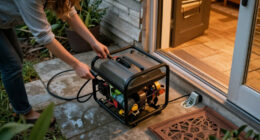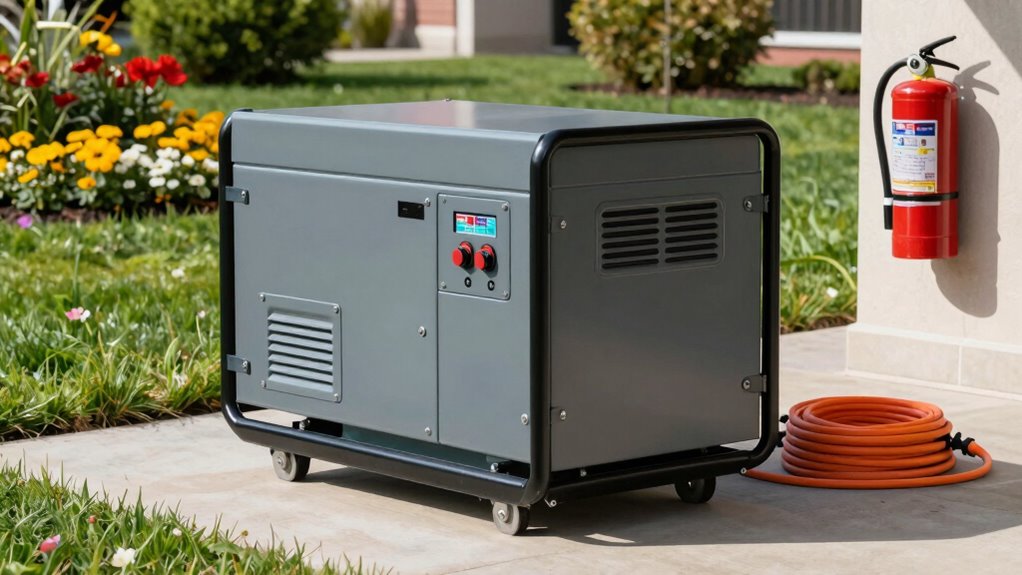
To stay safe with your generator, store fuel outside in approved containers away from heat, sparks, and vents, and turn off the generator before refueling. Place it far from your home and neighbors, using barriers or soundproof enclosures to reduce noise. Follow proper startup, shutdown, and maintenance procedures, and inspect regularly for leaks or damage. By following these essential safety rules, you can protect your family and property—keep going to learn more important tips.

Get backup power and energy gear delivered free with Prime
- Fast, free delivery on millions of items
- Prime Video, Amazon Music and more included
- Member-only deals all year
Key Takeaways
- Store fuel only in approved containers outside and away from heat sources or vents.
- Place the generator away from windows and neighbors to reduce noise and safety risks.
- Follow proper startup and shutdown procedures, including turning off and cooling down before refueling.
- Regularly inspect for leaks, clear debris, and maintain proper airflow around the generator.
- Exercise caution during refueling to prevent spills, fires, and exposure to hazardous fumes.
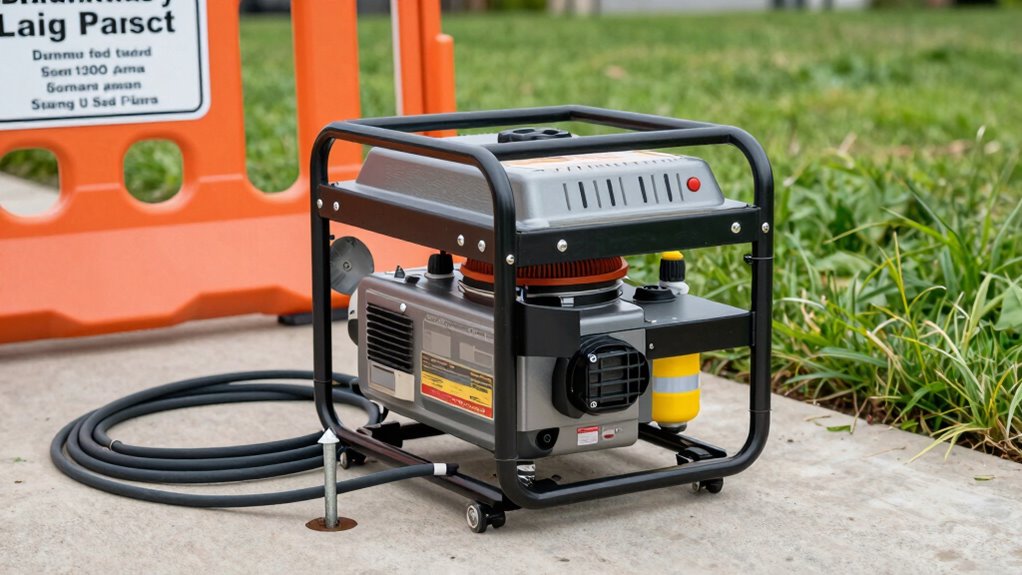
During a power outage, a generator can be a vital backup, but if not used properly, it can pose serious safety risks. One of the first things to think about is how you handle fuel storage. Gasoline and other fuels are highly flammable, so you need to store them in approved containers outside your home, away from windows, vents, and any sources of heat or sparks. Never store large quantities of fuel inside your garage or basement, as fumes can accumulate and increase the risk of fire or explosion. Always keep fuel containers tightly sealed and check them regularly for leaks or deterioration. When refueling your generator, turn it off and let it cool down to prevent accidental fires. Remember, spilling fuel on hot engine parts can ignite a fire, so exercise caution every time you refuel. Proper fuel storage is essential to prevent dangerous fumes and potential fires. Noise levels are another important safety concern. Generators produce a considerable amount of noise, which can disturb neighbors and potentially lead to complaints or confrontations. To mitigate this, place your generator as far away from your home and neighboring properties as possible, ideally behind a barrier or in a shed designed for sound dampening. Use soundproof enclosures if available, and operate the generator during reasonable hours to reduce noise disturbance. Be aware that excessive noise can also mask important safety signals or alarms, so maintaining a safe distance is essential. Proper generator operation procedures include understanding how to start and shut down your unit correctly, which can prevent accidents or damage. Additionally, regular maintenance is vital to ensure your generator operates safely and efficiently. Check oil levels, inspect for leaks, and clean the air filters regularly. Keep the area around your generator clear of debris and clutter, which can be fire hazards or obstruct airflow. Proper fuel management is also crucial, as improper handling can lead to dangerous situations. Implementing a routine safety checklist before and after use can help identify potential hazards early. By adhering to these safety rules—proper fuel storage, managing noise levels, and routine maintenance—you greatly reduce the risks associated with generator use. This not only protects your family but also helps maintain good relations with your neighbors during power outages.
Products Worth Considering

Sonos Era 100 Wireless Smart Speaker, Black

Sonos Era 100 SL Compact Microphone-Free Speaker, Black

Samsung 75-Inch Class The Frame QLED 4K Art TV (LS03HE, 2026)
As an affiliate, we earn on qualifying purchases.
Frequently Asked Questions
Can I Run a Generator Indoors Safely?
No, you can’t run a generator indoors safely. Doing so risks dangerous indoor ventilation issues, leading to a buildup of carbon monoxide, which is deadly. Always operate your generator outside in a well-ventilated area to guarantee proper carbon monoxide safety. Keep it far from windows and doors, and never run it inside garages, basements, or enclosed spaces, even if they’re ventilated, to prevent dangerous carbon monoxide poisoning.
How Long Can a Generator Run Continuously?
You can run a generator continuously for about 8 to 12 hours, but it depends on fuel efficiency and load. To avoid overheating, check the manufacturer’s guidelines. Keep noise levels in mind, especially if you’re in a neighborhood. Regularly refuel and perform maintenance to guarantee ideal performance. If you plan extended use, consider a generator with higher fuel efficiency, quieter operation, and built-in safety features to prevent hazards.
Do Generators Require Regular Maintenance?
You should perform regular maintenance on your generator to guarantee peak fuel efficiency and noise reduction. Imagine a homeowner neglecting routine checks, leading to a sudden breakdown during a storm. Regularly changing the oil, inspecting the air filters, and testing the system keeps your generator running smoothly, conserves fuel, and minimizes noise. Maintenance not only prolongs its lifespan but also assures safe operation when you need it most.
What Type of Fuel Is Best for My Generator?
The best fuel for your generator depends on your needs, but gasoline is common for portable models, offering quick start-up and good fuel efficiency. For longer storage, consider using stabilized fuel or propane, which has better fuel storage qualities and fewer maintenance issues. Always store fuel in approved containers, keep it in a cool, dry place, and use fresh fuel to guarantee maximum generator performance and safety.
How Do I Safely Connect a Generator to My Home?
Picture your home as a fortress, and the generator as its essential heartbeat. To connect it safely, guarantee proper generator placement outside, away from windows and vents. Install a transfer switch to control power flow, preventing backfeed into the grid. Always turn off the main breaker before connecting, and follow manufacturer instructions. With these steps, you safeguard your home and keep the power flowing smoothly during outages.
Conclusion
So, next time your generator hums to life, remember it’s more than just backup power — it’s a potential hazard hiding in plain sight. Ironically, the very safety rules meant to protect you are often overlooked, leaving you vulnerable. Stay vigilant, follow the guidelines, and treat your generator with respect. After all, a little caution now could save you from a big disaster later. Because sometimes, safety isn’t just smart — it’s downright lifesaving.