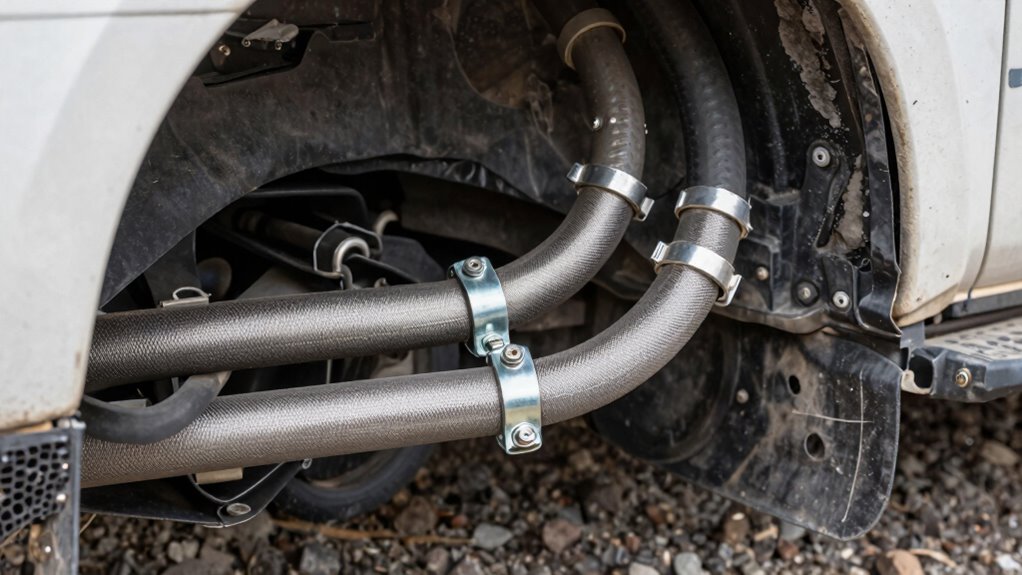

To safeguard fuel lines from physical damage, regularly inspect them for wear, cracks, or leaks, especially near hot surfaces and moving parts. Use durable protective coverings like rubber or reinforced fabric to shield lines from impacts, abrasion, and debris. Make certain these covers fit snugly without restricting fuel flow. Keep an eye on environmental factors like dust and debris that can accelerate deterioration. Staying proactive about maintenance helps prevent costly repairs and enhances safety—continue to discover more ways to safeguard your fuel system.
Key Takeaways
- Install durable protective coverings like rubber or reinforced fabric sleeves around fuel lines.
- Securely fasten protective coverings to prevent movement and abrasion.
- Keep fuel lines away from sharp edges, moving parts, and hot surfaces.
- Regularly inspect and replace damaged or worn protective materials.
- Use impact shields or guards in high-risk areas to prevent physical damage.
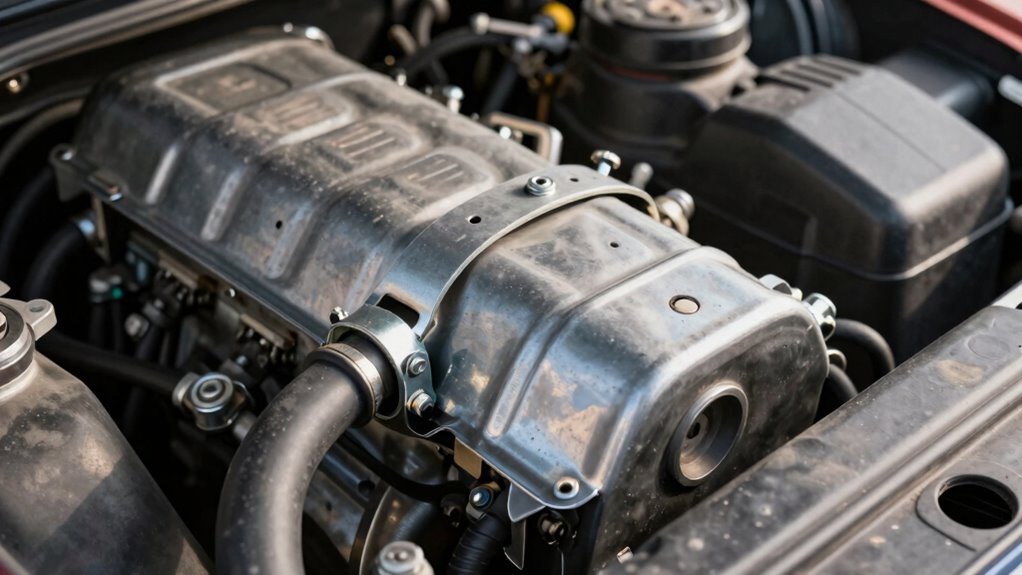
Fuel lines are essential for your vehicle’s operation, and protecting them from physical damage is critical to guarantee safety and performance. When it comes to maintaining your vehicle, regular fuel line inspection should be a top priority. You want to check for any signs of wear, cracking, corrosion, or leaks. These issues can compromise the integrity of your fuel system, leading to dangerous leaks or even engine failure. During inspections, pay close attention to areas where the fuel line runs close to moving parts, sharp edges, or hot surfaces. If you notice any damage or deterioration, it’s important to replace or repair the affected sections immediately. Neglecting this step can turn minor issues into major safety hazards.
Regularly inspect fuel lines for wear, cracks, or leaks to ensure safety and prevent engine failure.
To prevent damage from occurring in the first place, protective covering installation is a highly effective measure. You can add protective sleeves or coverings to shield your fuel lines from physical impacts, abrasion, or environmental factors. These coverings are typically made of durable materials like rubber, plastic, or reinforced fabric, designed to absorb shocks and resist wear. Installing protective coverings is straightforward and can be done with minimal tools, but it’s essential to ensure they fit securely without restricting fuel flow or causing undue pressure on the lines. Properly installed coverings not only safeguard your fuel lines from accidental damage caused by debris, rocks, or contact with other components but also help prevent issues stemming from vibrations or rough terrain. Additionally, understanding how sound vibrations influence cellular health and overall well-being can inspire you to choose protective materials that effectively absorb such energy and reduce stress on your fuel lines. Regularly inspecting the protective coverings and fuel lines themselves can help catch problems early before they escalate. If you notice any cracks, tears, or signs of deterioration in the covering or on the fuel lines, replace or repair them promptly to maintain your vehicle’s safety and efficiency. Being aware of microplastics in dust and other environmental contaminants can further help you understand how debris and particles may contribute to degradation over time, emphasizing the importance of protective measures. Recognizing that environmental factors can accelerate wear underscores the need for regular checks and proactive protection. Ultimately, the combination of thorough fuel line inspection and proactive protective covering installation creates a robust defense against physical damage. Staying vigilant and maintaining these components ensures your vehicle runs smoothly and minimizes the risk of costly repairs or dangerous leaks. Protecting your fuel lines isn’t just about avoiding inconvenience—it’s about safeguarding yourself, your passengers, and everyone around you.

Jackery Explorer 1000 v2 Portable Power Station,1070Wh,1500W
- Powerful yet Compact: Boasting a 1,500W AC output...
- One Hour Fast Charging: Charge your Explorer 1000 v2...
- 10 Year Lifespan: The Explorer 1000 v2 portable...
As an affiliate, we earn on qualifying purchases.
Frequently Asked Questions
What Tools Are Needed to Inspect Fuel Lines Safely?
To inspect fuel lines safely, you need basic inspection accessories like a flashlight, mirror, and gloves. These tools help you see fuel line corrosion or leaks clearly without direct contact. Use the flashlight to illuminate hard-to-see areas, and the mirror to check behind components. Wearing gloves protects your hands from fuel residues and potential damage. These tools guarantee a thorough inspection while keeping you safe from hazards.
How Often Should Fuel Lines Be Checked for Damage?
You should check your fuel lines at least once a year for damage, corrosion, and leaks. Regular fuel line maintenance helps prevent costly failures and guarantees safety. Inspect thoroughly for cracks, rust, or wear, especially in areas prone to physical damage. Early detection of issues allows you to address corrosion prevention and keep your fuel system functioning properly, reducing the risk of fire or breakdowns.
Can Aftermarket Shields Improve Fuel Line Protection?
Yes, aftermarket shields can greatly improve fuel line protection. They act as an extra barrier against debris, rocks, and other potential hazards that could cause damage. Installing high-quality aftermarket shields is a smart move, especially if you frequently drive off-road or in rough terrains. They help guarantee your fuel lines stay intact, reducing the risk of leaks or failures, and ultimately keep your vehicle running safely and smoothly.
Are There Specific Materials Best for Fuel Line Protection?
You should go with durable, heat-resistant materials like rubber or braided stainless steel for fuel line protection, as they can handle rough conditions. Protective covering options, such as nylon sleeves or metal shields, add an extra layer of defense. These materials are flexible yet tough, helping you avoid unnecessary headaches. Remember, choosing the right fuel line materials and protective coverings keeps your system running smoothly and prevents costly repairs down the line.
How Does Vehicle Usage Influence Fuel Line Damage Risk?
Your vehicle usage considerably influences fuel line damage risk. If you frequently drive on rough vehicle terrain, your fuel lines face more stress and potential punctures. Aggressive driving habits, like sudden stops or sharp turns, can cause vibrations and wear that damage the lines over time. Regularly inspecting your routes and driving style helps reduce risks, ensuring your fuel lines stay intact and functioning safely.

Porch Shield Waterproof Universal Generator Cover 38 x 28 x 30 inch - for Most Generators 5500-15000 Watt, Black
- Compatible - More sizes for 5500w -15000w gas...
- Upgrade Material - Made of 600D polyester fabric...
- Tear Resistant & Waterproof - The high-level double...
As an affiliate, we earn on qualifying purchases.
Conclusion
Protecting your fuel lines isn’t just about avoiding damage—it’s about staying prepared for those unexpected moments on the road. Sometimes, a simple shield or careful placement can prevent costly repairs, reminding you that small precautions can make a big difference. After all, just as life throws surprises, being proactive keeps your vehicle running smoothly. In the end, safeguarding your fuel lines is a quiet reminder that a little care today can prevent chaos tomorrow.
Porch Shield Waterproof Universal Generator Cover 32 x 24 x 24 inch - for Most Generators 5000-10000 Watt, Black
- Compatible - More sizes for 5000w -10000w gas...
- Upgrade Material - Made of 600D polyester fabric...
- Tear Resistant & Waterproof - The high-level double...
As an affiliate, we earn on qualifying purchases.

Generator Cover Portable Waterproof,Generator Rain Cover for Outside,Universal Generator Cover for Most Portable Generators 5000-10000 Watt(32"L x 24"W x 24"H)
- 【Dimensions】Generator Covers for outside 32x24x24 inch Fits Most...
- 【Windproof Design】This generator covers for outside features an...
- 【Side Ventilation Openings】This portable generator cover features side...
As an affiliate, we earn on qualifying purchases.