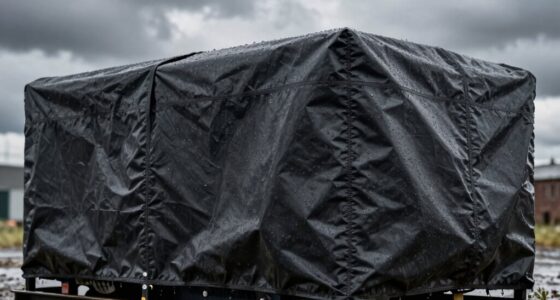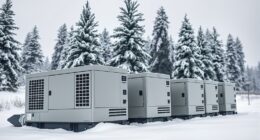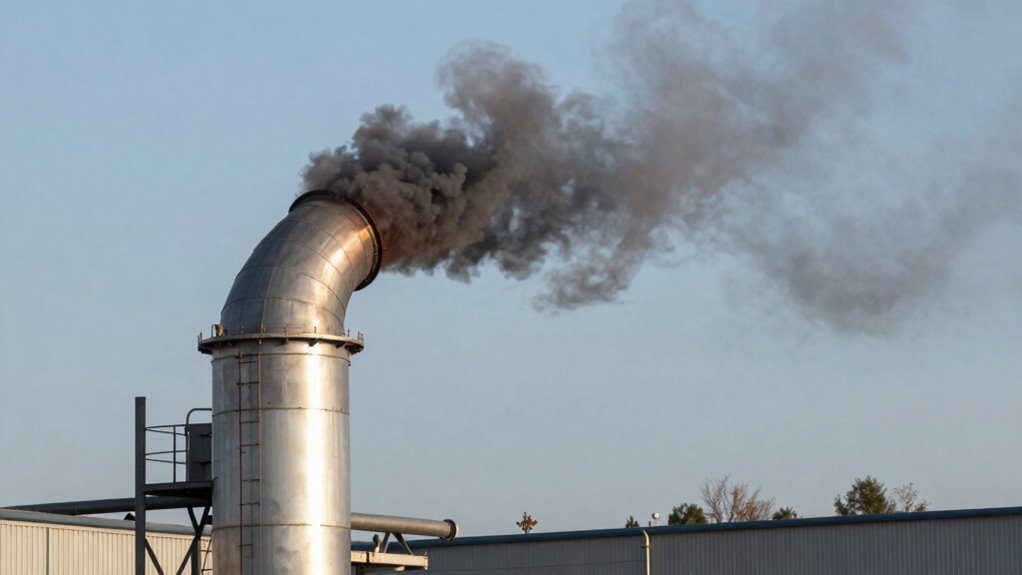

The direction your generator’s exhaust is vented impacts safety, noise, and the environment. If it’s poorly directed, fumes can accumulate indoors or near openings, risking carbon monoxide build-up and health hazards. Improper placement causes louder noise that disturbs your neighbors and wildlife. It also affects air quality and can damage the equipment over time. By positioning the exhaust properly, you guarantee efficient operation and reduce environmental and community impacts. Keep going to discover how to optimize your setup effectively.

Get backup power and energy gear delivered free — and shop member deals
- Fast, free delivery on millions of items
- Access to Prime Big Deal Days deals on October 6–7
- Prime Video, Amazon Music and more included
Key Takeaways
- Proper exhaust direction reduces noise pollution and minimizes disturbance to residents and wildlife.
- Correct venting prevents harmful gases like carbon monoxide from accumulating indoors or near openings.
- Optimizing exhaust placement enhances generator efficiency and prolongs equipment lifespan.
- Considering wind patterns ensures pollutants and fumes are dispersed away from sensitive areas.
- Compliance with regulations and environmental responsibility depend on proper exhaust positioning.
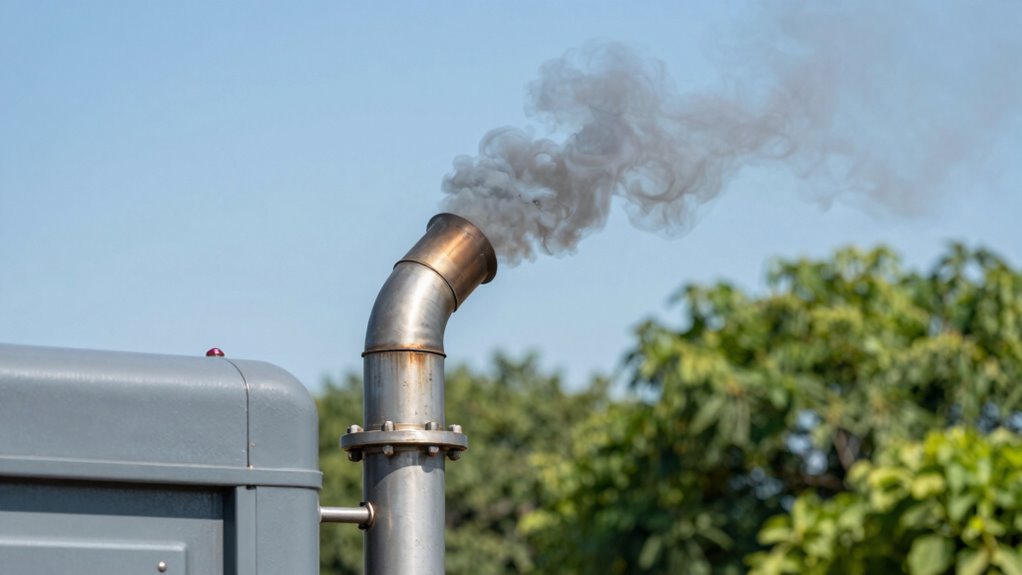
Have you ever wondered why the direction of a generator’s exhaust matters? It’s more than just a matter of convenience or aesthetics. The way exhaust gases are channeled can substantially influence noise pollution and the environmental impact of your generator. When exhaust is directed improperly, it can produce loud, disruptive noise that disturbs nearby residents or wildlife. This noise isn’t just an annoyance; it can also lead to complaints and even legal issues if it exceeds local noise regulations. Proper exhaust direction helps minimize this noise, ensuring your generator runs more quietly and peacefully in its surroundings. Additionally, understanding the impact of exhaust direction can help you optimize the performance and longevity of your generator by preventing corrosion and damage caused by improper venting. Proper exhaust placement can also be crucial for complying with local regulations, which often specify safe distances and directions for venting exhaust gases. Beyond noise, the environmental impact of exhaust gases plays a crucial role. Generators emit pollutants like carbon monoxide, nitrogen oxides, and particulate matter, which can harm air quality. If exhaust fumes are directed toward sensitive areas—such as homes, parks, or water bodies—the pollutants can settle or be inhaled by people and animals, worsening health outcomes and contributing to pollution. Properly directing exhaust away from populated or environmentally sensitive areas reduces the risk of air quality degradation and helps protect the local ecosystem. Additionally, the direction of exhaust can influence the safety and efficiency of your generator. If exhaust gases are vented toward structures, they can accumulate and pose a risk of carbon monoxide buildup, which is dangerous and potentially lethal. Ensuring the exhaust is directed away from windows, vents, and doorways prevents this dangerous buildup and keeps your space safe. Moreover, directing exhaust properly prevents it from pooling around the generator itself, which can cause corrosion or damage over time, reducing the lifespan of your equipment. Proper exhaust placement also involves considering natural wind patterns to ensure optimal dispersion of fumes and noise. By understanding how wind influences exhaust dispersion, you can better position your generator for optimal operation and safety. Incorporating proper ventilation techniques can further enhance exhaust dispersal and reduce harmful concentrations. Choosing the right direction for your generator’s exhaust isn’t just about immediate convenience; it’s about long-term environmental responsibility and safety. It involves considering local regulations, the proximity of structures, and natural wind patterns. Wind can carry pollutants and sound further afield if exhaust isn’t directed appropriately, exacerbating noise pollution and environmental harm. By studying these factors and adjusting your exhaust outlet accordingly, you can mitigate adverse impacts, promote safety, and ensure your generator operates in harmony with its environment. In essence, the direction of a generator’s exhaust is a simple yet crucial aspect of responsible usage. It influences how much noise pollution is generated, how pollutants disperse, and how safe your surroundings remain. Paying attention to this detail helps you operate your generator more efficiently while respecting the environment and the community around you.
Frequently Asked Questions
Can Exhaust Direction Affect Generator Performance?
Yes, exhaust direction can affect generator performance. Proper exhaust airflow guarantees fumes are directed away from essential components and ventilation areas, preventing overheating and buildup of harmful gases. If exhaust is poorly directed, ventilation efficiency drops, causing potential engine strain and reduced lifespan. You should aim to position the exhaust to maximize airflow and minimize fumes recirculation, helping your generator run smoothly and safely without unnecessary strain.
Are There Specific Regulations for Exhaust Placement?
Yes, there are strict regulations for exhaust placement that you must follow. Proper exhaust ventilation guarantees emissions disperse safely and don’t overwhelm your surroundings. Regulations specify minimum distances from buildings, vents, and air intakes, preventing hazardous buildup. Ignoring these can lead to dangerous emissions concentrations, risking health and safety. Always check local codes and manufacturer guidelines to confirm your generator exhaust installation complies, protecting everyone nearby from potentially explosive emission dispersion.
How Does Exhaust Direction Impact Nearby Structures?
You should consider how exhaust direction impacts nearby structures because improper ventilation airflow can cause buildup of harmful gases, leading to potential structural damage over time. If exhaust is directed toward buildings or sensitive areas, heat and chemical fumes may weaken walls or foundations. By directing exhaust away, you guarantee good ventilation airflow, reduce risks of structural damage, and protect both your equipment and surrounding structures from long-term harm.
What Are Safety Risks if Exhaust Is Improperly Directed?
If your generator’s exhaust is improperly directed, you risk dangerous carbon monoxide buildup, which can cause health issues or fatalities. Additionally, it may lead to fire hazards if exhaust gases ignite nearby materials. Poor exhaust direction can also decrease fuel efficiency and increase environmental impact by releasing fumes into unintended areas. To stay safe and eco-friendly, guarantee exhaust is directed away from people, structures, and ventilation systems.
Does Exhaust Direction Influence Noise Levels?
Yes, exhaust direction influences noise levels. Properly directing the generator exhaust can help with noise mitigation by directing sound away from occupied or sensitive areas. It also promotes airflow optimization, ensuring that exhaust gases are efficiently vented without creating turbulence that amplifies noise. When you aim the exhaust away from structures or open areas, you reduce noise pollution and improve overall safety and comfort during generator operation.
Conclusion
Choosing the right exhaust direction for your generator isn’t just about convenience; it’s about safety. Proper exhaust placement can reduce the risk of carbon monoxide buildup, which causes over 400 deaths annually in the U.S. alone. By directing fumes away from your home and living areas, you protect yourself and others. Remember, a small adjustment in exhaust direction can make a big difference in ensuring safe, reliable power without endangering your health.
Fall Picks
fall essentials
As an affiliate, we earn on qualifying purchases.