When installing a generator, you need to obtain permits from your local building department before starting the work. These permits ensure your setup meets safety and electrical codes. Inspections will be scheduled at various stages to verify proper installation, clearances, and safety measures. Passing these inspections confirms your system complies and operates efficiently, helping you avoid fines or rework. If you want to understand how to navigate these steps smoothly, the following details will guide you through the process.
Key Takeaways
- Obtain necessary permits from local building departments before starting installation.
- Schedule multiple inspections to verify compliance with safety and electrical standards.
- Proper permitting and inspections ensure safety, code compliance, and insurance eligibility.
- Adhering to permit requirements helps prevent fines, rework, and safety hazards.
- Documentation of permits and inspections supports warranty claims and future system upgrades.
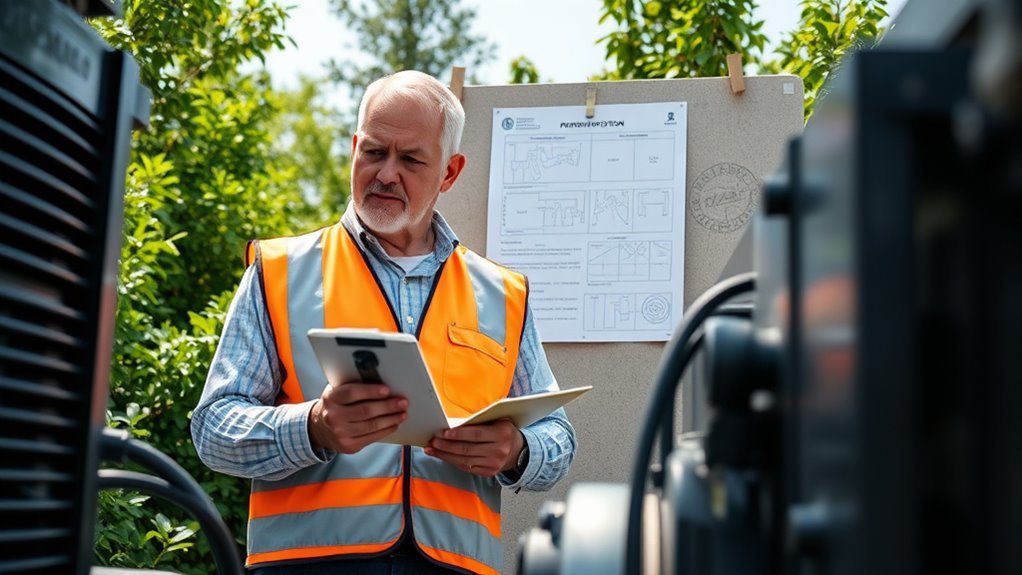
Installing a generator isn’t just about hooking up the equipment; it also requires obtaining the proper permits and passing inspections to guarantee safety and compliance. This process ensures your generator meets local codes and safety standards, helping you avoid fines or costly rework. Before you start, check with your city or county building department to understand the specific permits needed. Usually, you’ll need a permit to install the generator, especially if it’s a permanent setup, and sometimes an electrical permit as well. Submitting detailed plans and specifications is often required, so having a clear installation plan helps streamline the approval process.
Obtain necessary permits and schedule inspections to ensure safe, code-compliant generator installation.
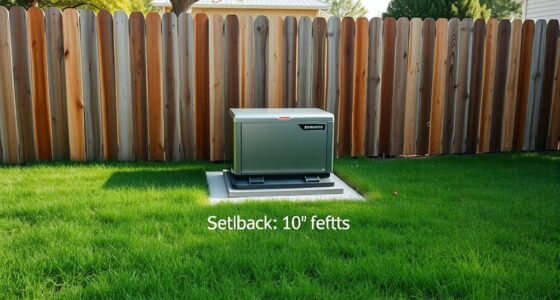
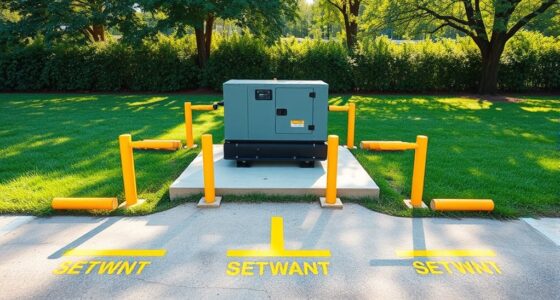
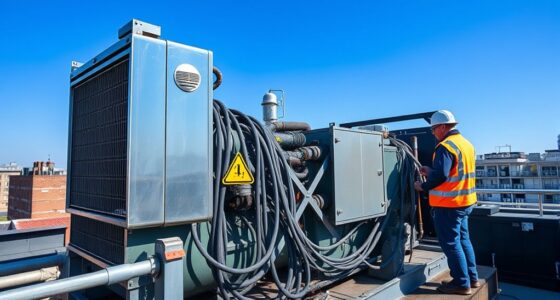
Once your permits are approved, inspections become a critical step. Inspectors verify that your installation meets safety standards, proper clearances, and electrical codes. They’ll check that your generator is installed correctly, that fuel lines are secure, and that grounding and wiring are up to code. Passing these inspections not only ensures safety but also makes your system eligible for insurance coverage and future resale. Keep in mind that inspections might be scheduled at various stages—after foundation work, electrical connections, and final installation—so be prepared for multiple visits.
In addition to safety, permitting and inspections play a role in maximizing your generator’s performance, especially concerning fuel efficiency. Properly installed units that adhere to local codes are more likely to operate efficiently, saving you money over time. For example, an improperly vented generator can lead to fuel wastage or emissions issues, which inspections aim to prevent. Ensuring your system is compliant from the start also helps you develop effective maintenance schedules. When your setup is inspected and approved, you can establish routine checks—like oil changes, filter replacements, and fuel system inspections—that keep your generator running smoothly and efficiently.
Furthermore, staying compliant with permits and inspection requirements can extend the lifespan of your generator. Regular maintenance, guided by manufacturer recommendations and inspection insights, reduces the risk of breakdowns and ensures fuel efficiency remains prime. It’s essential to keep records of all permits, inspections, and maintenance activities, as these documents might be needed for warranty claims or future upgrades. Additionally, understanding the importance of essential oils for generator maintenance can help in managing fuel and engine health effectively. When you follow this process diligently, you’re not only safeguarding your property but also ensuring your generator operates reliably, efficiently, and safely for years to come.
Frequently Asked Questions
How Long Does the Permitting Process Typically Take?
The permit timeline for generator installations usually takes around 2 to 4 weeks, but it can vary depending on your local authority. You might face approval delays if your plans lack detail or if inspections are backlogged. To speed things up, make certain your application is complete and accurate. Stay in touch with the permitting office, so you’re aware of any issues that could cause delays.
Are There Specific Inspections Required for Different Generator Types?
Did you know that nearly 60% of generator installations require specialized inspections? Yes, different generator types do have specific inspection procedures to meet generator standards. For example, standby generators often need load testing, while portable units might only require visual checks. You should expect inspections tailored to your generator’s type, ensuring safety and compliance with regulations. Always check local codes to understand the exact inspection requirements for your generator.
What Are Common Reasons for Permit Application Denials?
You might face permit application denials if your generator installation doesn’t meet safety standards or permit compliance requirements. Common reasons include incomplete paperwork, incorrect permit details, or failure to follow local codes that guarantee generator safety. Ensurers want to confirm your setup won’t pose hazards or violate regulations. To avoid denial, double-check your application, adhere to safety guidelines, and confirm all permits reflect proper installation practices for a smooth approval process.
Do Permits Cover Both Residential and Commercial Generator Installations?
Permits do cover both residential and commercial generator installations. You need to comply with zoning restrictions and environmental regulations to guarantee your installation is legal and safe. Local authorities review your plans to address setbacks, noise levels, and emissions. By obtaining the proper permit, you avoid potential fines and ensure your generator meets all safety and environmental standards. Always check with your local agency to confirm specific requirements for your property type.
Can Permits Be Expedited in Emergency Situations?
In emergencies, permits can be expedited like lightning, ensuring critical needs are met swiftly. Authorities often grant emergency permits through permit prioritization, allowing you to bypass usual delays. You should contact your local permitting office quickly, explain the urgency, and request an emergency permit. This process helps you get the necessary approvals fast, so your generator installation can proceed without unnecessary hold-ups during urgent situations.
Conclusion
Guiding the permitting and inspection process is like charting a course through uncharted waters. By staying informed and proactive, you’ll guarantee your generator’s installation is a smooth sail, keeping your home powered and safe. Think of these steps as the guiding stars that lead you to peace of mind in any storm. With patience and attention to detail, you’ll turn a formidable task into a well-orchestrated symphony of safety and reliability.