To install automatic voltage regulators and surge protectors, connect them directly to your main power source and wiring setup. Make certain critical devices are wired through these protective devices to shield against voltage fluctuations and surges. Proper installation helps protect sensitive electronics, ensures a stable power supply, and enhances equipment longevity. Continuing with the process will give you a clearer understanding of how to effectively safeguard your electrical systems and equipment.

Get backup power and energy gear delivered free with Prime
- Fast, free delivery on millions of items
- Prime Video, Amazon Music and more included
- Member-only deals all year
Key Takeaways
- Install surge protectors at main entry points to divert high-voltage transients and prevent equipment damage.
- Connect automatic voltage regulators directly to the main power source for effective voltage stabilization.
- Wire sensitive devices through surge protectors and voltage regulators to ensure consistent and safe operation.
- Proper installation enhances electrical safety, reduces downtime, and prolongs equipment lifespan.
- Regularly inspect and maintain devices to ensure optimal performance and continued protection.
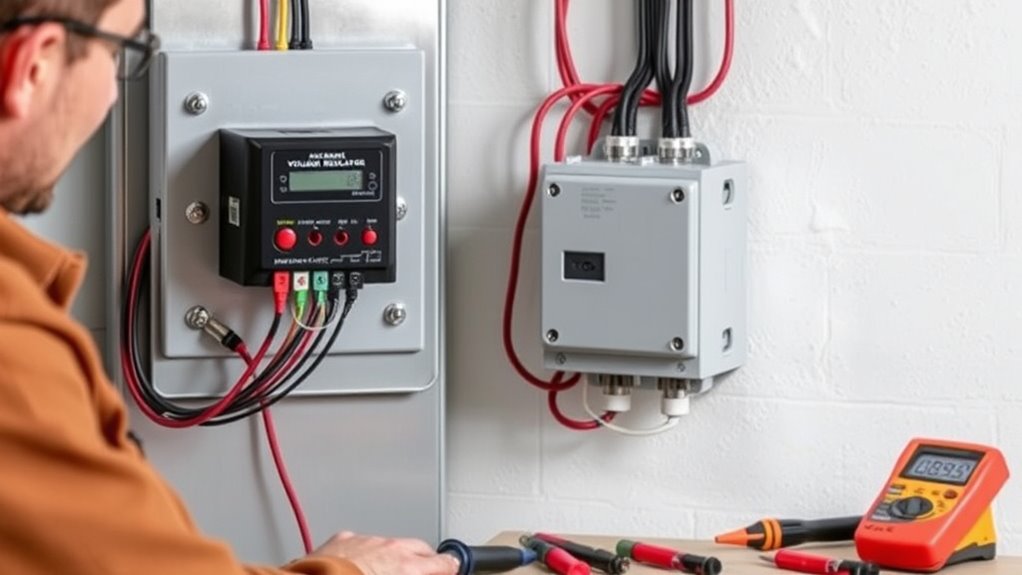
Installing automatic voltage regulators and surge protection is indispensable for safeguarding your electrical equipment from voltage fluctuations and power surges. When you prioritize these devices, you guarantee a stable power supply, which is crucial for maintaining the longevity and performance of your electronics. Voltage fluctuations can cause erratic operation, damage sensitive components, or even lead to complete equipment failure. By installing these protective systems, you create a buffer against unpredictable electrical conditions, reducing the risk of costly repairs and downtime.
Installing voltage regulators and surge protectors ensures a stable power supply and protects your electronics from damage.
A reliable power supply is fundamental for any setting, whether at home, in a business, or industrial environment. Surge protection devices act as the first line of defense, diverting excess voltage during surges caused by lightning strikes, power outages, or switching operations. Automatic voltage regulators, on the other hand, actively monitor and adjust voltage levels to keep them within safe limits. This dual approach offers all-encompassing electrical safety, shielding your equipment from sudden spikes and drops that could otherwise compromise their function.
When you install an automatic voltage regulator, you gain control over your power supply, ensuring consistent voltage levels regardless of fluctuations in the grid. This stability is especially critical if you’re operating sensitive devices like computers, medical equipment, or manufacturing machinery. Proper installation involves connecting the regulator directly to your main power source and then wiring your critical devices to it. Doing this not only enhances electrical safety but also prevents damage caused by undervoltage or overvoltage conditions.
Surge protection devices are equally important because they prevent high-voltage transients from reaching your electrical system. These devices are typically installed at main entry points, such as your circuit breaker panel or individual outlets for high-value electronics. When a surge occurs, the device absorbs or redirects the excess energy, protecting your equipment from immediate damage. Combining surge protection with an automatic voltage regulator provides a layered defense, ensuring your power supply remains steady and safe.
Additionally, understanding the nutritional advantages of green juice can help you appreciate the importance of protecting your health-related devices and systems, just as safeguarding your electrical equipment is vital for operational integrity.
Frequently Asked Questions
Can AVRS Protect Against Power Surges Caused by Lightning?
Yes, Automatic Voltage Regulators (AVRs) can help protect against power fluctuations caused by lightning strikes. When lightning hits, it creates sudden surges in voltage that can damage your equipment. AVRs work by stabilizing voltage levels, preventing these surges from reaching your devices. While they offer some protection, for full safety during lightning strikes, it’s best to combine AVRs with surge protectors designed specifically for lightning-induced power surges.
How Often Should Surge Protection Devices Be Replaced?
Did you know that nearly 80% of power surges occur indoors? You should replace your surge protection devices every 3 to 5 years based on surge device maintenance and replacement guidelines. Regularly check for signs of wear or damage, such as burnt smells or physical cracks. Staying proactive ensures your devices remain effective, protecting your electronics from unexpected power fluctuations. Don’t wait for failure—schedule routine inspections to maintain maximum safety.
Do All Electrical Appliances Require Surge Protection?
Not all electrical appliances need surge protection, but many do, especially sensitive devices like computers and home entertainment systems. You should check appliance compatibility before choosing a surge protector type, as some are designed specifically for high-risk electronics. Using the right surge protector helps prevent damage from power surges, ensuring your appliances stay safe. Assess your devices’ needs and select the appropriate surge protection to keep everything secure.
Can I Install AVRS and Surge Protectors Myself?
Installing AVRs and surge protectors is like trying to assemble furniture—you can do it yourself, but safety precautions matter. If you’re comfortable with basic electrical work, DIY installation is possible, but always turn off power and read instructions carefully. Remember, incorrect setup risks damage or injury. If unsure, it’s smarter to hire a professional to make sure everything’s properly installed and safe, protecting your appliances and home.
What Is the Typical Lifespan of an Automatic Voltage Regulator?
An automatic voltage regulator usually lasts around 10 to 15 years with proper electrical maintenance. You should regularly check its device durability and perform routine inspections to make certain it functions correctly. Factors like power surges, temperature fluctuations, and usage can affect its lifespan. By maintaining the device properly, you help extend its life, ensuring your electrical system remains stable and protected for years to come.
Conclusion
By installing automatic voltage regulators and surge protection, you’re shielding your devices like a sturdy fortress guards its treasures. Think of it as giving your electrical system a guardian angel, ready to ward off unexpected surges and voltage swings. With these safeguards in place, you’ll enjoy peace of mind, knowing your equipment is protected from the unpredictable storms of electricity. Take action now—your appliances will thank you for the shield that keeps them safe and sound.
Fall Picks
fall essentials
As an affiliate, we earn on qualifying purchases.