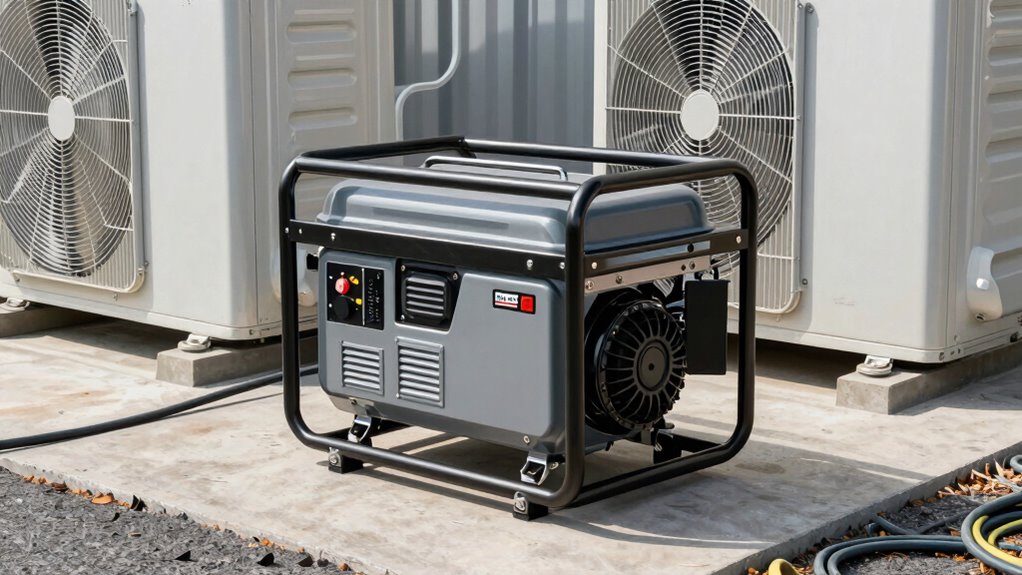

To safely place your generator near HVAC equipment, keep it a good distance away to reduce noise and prevent fumes from entering living spaces. Use barriers or fencing to dampen sound and maintain clear airflow around the unit. Follow manufacturer guidelines for minimum clearance and consider exhaust extensions to direct fumes away from vents and windows. Ensuring proper placement helps prevent safety hazards and promotes reliable operation; keep exploring to learn more about ideal setup strategies.

Get backup power and energy gear delivered free with Prime
- Fast, free delivery on millions of items
- Prime Video, Amazon Music and more included
- Member-only deals all year
Key Takeaways
- Place the generator at a safe distance from HVAC units to prevent noise disturbances and allow proper airflow.
- Use barriers or fencing to reduce noise and protect the generator from accidental contact or damage.
- Ensure exhaust extensions direct fumes away from HVAC intakes, windows, and air vents.
- Maintain clear, manufacturer-recommended clearance around the generator for ventilation and safety.
- Follow local codes and perform regular inspections to ensure safe placement and operation near HVAC equipment.
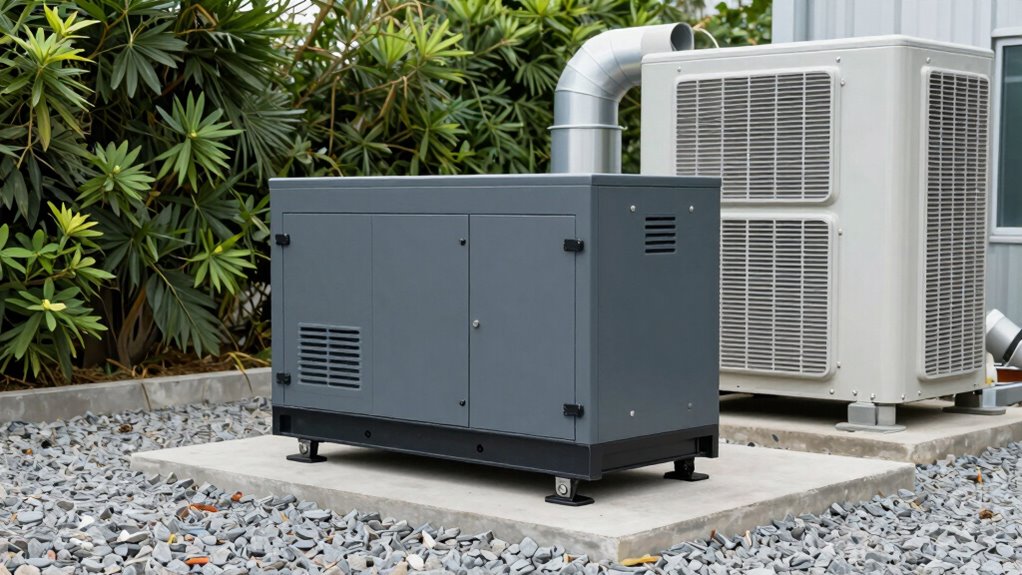
When installing a generator near HVAC equipment, safety should be your top priority. The placement of your generator directly impacts not only its performance but also the safety and comfort of your home. One of the most critical considerations is managing generator noise. Generators can produce loud sounds that may disturb your household or neighbors if placed too close to living spaces or outdoor HVAC units. To minimize this, position the generator at a reasonable distance, ideally behind barriers or fencing designed to dampen sound. This helps prevent noise pollution while ensuring your generator runs quietly enough not to cause discomfort or complaints.
Another essential factor to consider is ventilation requirements. Your generator needs proper airflow to operate efficiently and safely. When set up near HVAC equipment, you must ensure it’s not obstructing vents, intake, or exhaust pathways. Poor ventilation can lead to dangerous carbon monoxide buildup, which poses serious health risks. Maintain clear space around the generator, following manufacturer guidelines for minimum clearance distances. Additionally, place it in a location with natural airflow or where you can easily install exhaust extensions to direct fumes away from sensitive areas like windows or air intakes. Proper ventilation also prevents overheating, which can cause mechanical failures or fire hazards. Ensuring adequate clearance helps facilitate effective ventilation and airflow, which is vital for safe generator operation. Moreover, considering noise mitigation measures can further enhance the safety and comfort of your setup. Being aware of local codes and regulations is also crucial, as they often specify minimum distances and safety standards for generator placement—adhering to these can prevent potential violations and safety issues. Regularly inspecting and maintaining your generator can also help identify issues early, ensuring ongoing safe operation and compliance with safety standards.
Frequently Asked Questions
How Close Can a Generator Be Installed to HVAC Units?
You should keep your generator at least 18 inches away from HVAC units to guarantee safe generator placement and prevent carbon monoxide buildup. Proper placement considerations include avoiding direct contact with vents or air intakes, maintaining good airflow, and considering local codes. This distance minimizes risks associated with generator safety, such as exhaust fumes affecting HVAC operation or safety hazards. Always consult manufacturer guidelines and local regulations for specific placement requirements.
Are There Specific Clearance Requirements for Generator Placement Near HVAC?
Like a knight’s armor, specific clearance requirements shield your HVAC and generator setup. You should maintain enough distance for safe operation, ensuring proper airflow and preventing heat buildup. Check manufacturer guidelines for fuel compatibility and clearance distances. Adequate space also guarantees easy maintenance access, so you can service your generator without a hassle. Following these rules safeguards your equipment, keeps everything running smoothly, and helps avoid costly repairs down the line.
What Are the Ventilation Needs for Generators Near HVAC Systems?
You need to guarantee proper ventilation for generators near HVAC systems to prevent airflow restrictions and improve fumes dispersion. Keep the generator in an open, well-ventilated area, avoiding tight spaces that trap exhaust fumes. Install exhaust systems or fans if necessary to direct fumes away from HVAC intake points. Regularly check airflow and venting to maintain safety and prevent buildup of dangerous gases, ensuring both equipment and occupant safety.
How Does Generator Noise Impact HVAC Operation?
Generator noise can act like a disruptive drumbeat, interfering with HVAC operation. You can limit this impact through sound insulation and noise mitigation strategies, which help dampen the noise and prevent vibrations from spreading. Proper placement guarantees the generator’s sound doesn’t drown out or disturb your HVAC system, maintaining a peaceful environment. Think of it as tuning two instruments to harmony rather than chaos, keeping both systems working smoothly.
Can Generator Fumes Affect HVAC System Performance?
Generator fumes can negatively impact your HVAC system’s performance if not properly managed. When fumes escape near your equipment, they can cause corrosion or clog filters, reducing HVAC efficiency. To prevent this, make sure your generator is placed away from air intakes and ventilation points. Regular maintenance helps minimize fumes exposure, keeping your HVAC system running smoothly and efficiently, and avoiding potential costly repairs.
Conclusion
Remember, placing your generator too close to HVAC equipment can be risky, just like a fire hazard lurking nearby. Yet, with careful planning and proper distance, you can keep your home safe while ensuring reliable power. Think of it as balancing safety and convenience—one without the other isn’t enough. So, take the time to follow guidelines, and you’ll protect both your equipment and your loved ones, turning a potential danger into peace of mind.
Halloween Picks
halloween
As an affiliate, we earn on qualifying purchases.