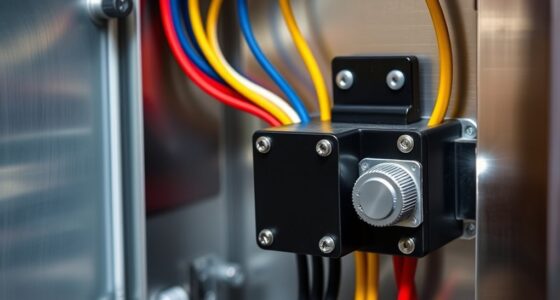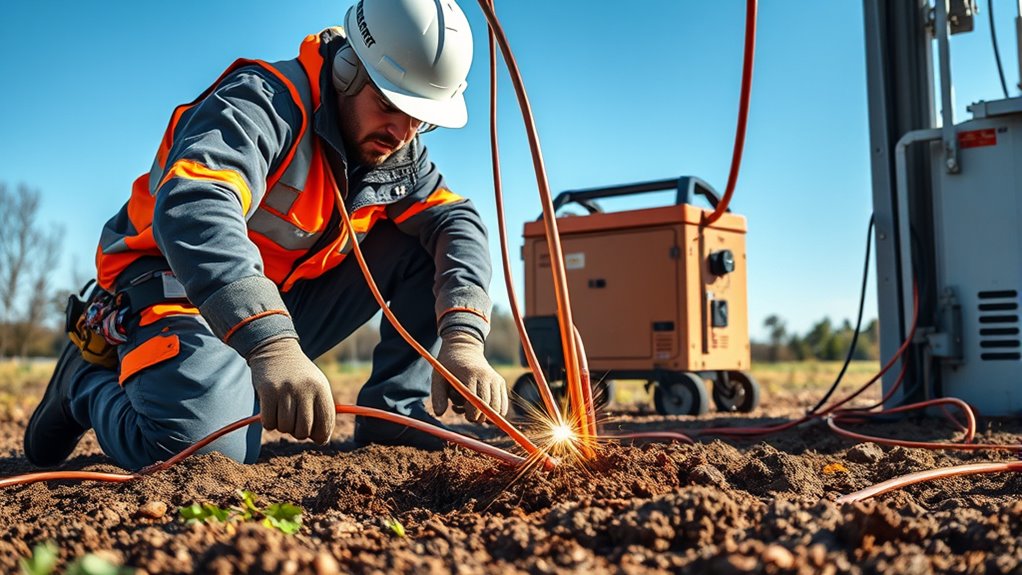

To master grounding and bonding a standby system in just a weekend, focus on understanding the core concepts—know that grounding connects your system to the earth and bonding creates a low-resistance path for safety. Don’t fall for myths like confusing bonding with shielding or thinking grounding is only for lightning. Use the right tools, follow proper procedures, and prioritize safety. Keep exploring, and you’ll uncover the essential tips to ensure your system is both safe and reliable.

Get backup power and energy gear delivered free with Prime
- Fast, free delivery on millions of items
- Prime Video, Amazon Music and more included
- Member-only deals all year
Key Takeaways
- Understand the distinct roles of grounding (earth connection) and bonding (metallic link) to ensure system safety.
- Use proper tools and corrosion-resistant materials to create secure, low-resistance grounding and bonding connections.
- Follow local regulations and standards for grounding methods, conductors, and bonding jumpers.
- Test all grounding and bonding connections regularly with multimeters and specialized testing devices.
- Debunk myths by recognizing that grounding prevents faults, not just lightning, and bonding ensures potential equalization.
Understanding the Fundamentals of Grounding and Bonding in Standby Systems
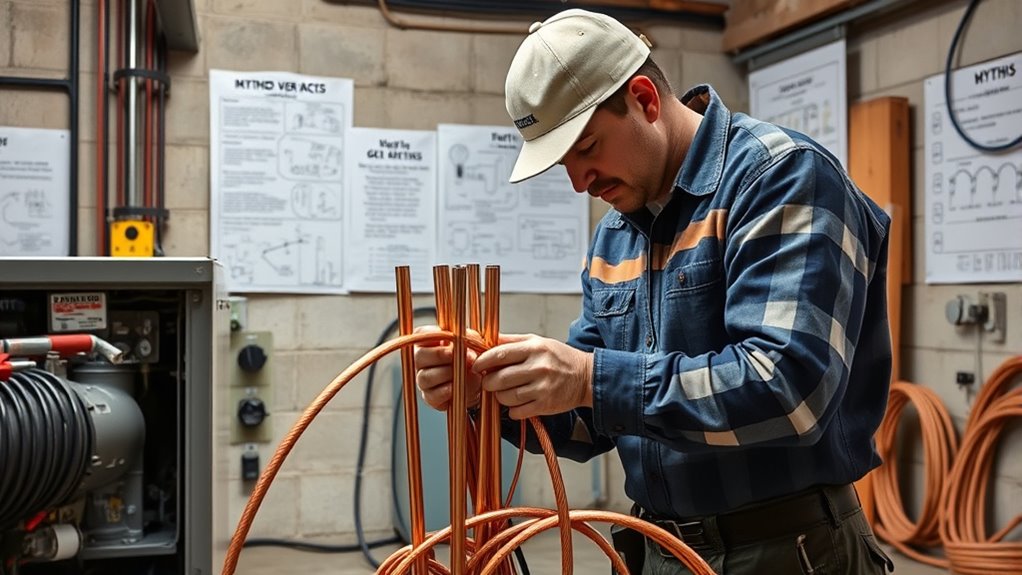
Understanding the fundamentals of grounding and bonding in standby systems is essential for guaranteeing safety and reliable operation. Grounding principles involve connecting electrical systems to the earth to prevent dangerous voltages and facilitate fault current paths. Proper grounding helps protect people and equipment by minimizing shock hazards and ensuring system stability. Bonding techniques, on the other hand, involve connecting metallic parts to create a continuous conductive path, which helps prevent potential differences that could cause shocks. These techniques ensure that all system components are at the same electrical potential, reducing risk during faults. Additionally, Kia Tuning modifications such as ECU remapping or suspension upgrades highlight the importance of precise system management, which parallels the need for proper grounding and bonding to maintain system integrity. By mastering grounding principles and bonding techniques, you ensure your standby system operates safely and efficiently, reducing the chances of equipment damage or electrical hazards.
Common Myths and Misconceptions About Grounding and Bonding
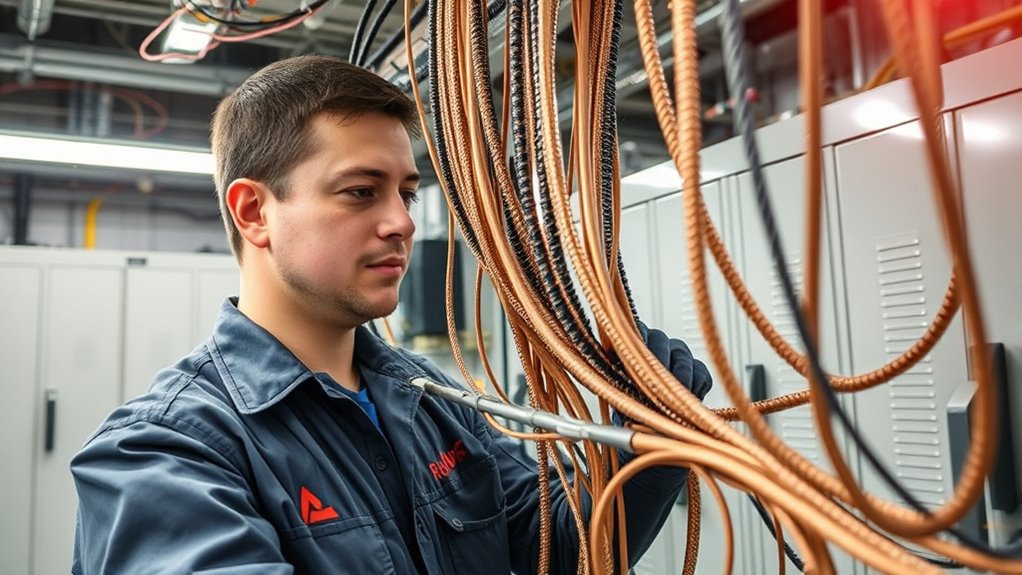
Many common beliefs about grounding and bonding are actually misconceptions that can compromise safety and system performance. These grounding misconceptions often lead to improper setups, risking equipment damage or electrical shock. Similarly, bonding myths can cause inadequate connections, increasing the chance of faults.
Here are three key points to watch out for:
- Believing that grounding is only for lightning protection—it’s also essential for fault current safety.
- Thinking that bonding creates a complete electrical shield—its purpose is to ensure a low-resistance path, not shielding.
- Assuming grounding and bonding are the same—each plays a distinct role in electrical safety.
- Misunderstanding the importance of proper grounding techniques, which are critical for system reliability and safety.
Essential Tools and Materials for Effective Grounding and Bonding

To achieve effective grounding and bonding, you need the right tools and materials that guarantee secure and reliable connections. Using proper equipment helps you avoid grounding myths and bonding misconceptions that can compromise safety and system performance. Essential tools include a wire stripper, crimping tools, and a multimeter for testing continuity and grounding integrity. You’ll also need copper grounding rods, grounding conductors, and bonding jumpers made from high-quality, corrosion-resistant materials. Proper connectors, clamps, and washers ensure secure connections without loose or corroded joints. Remember, relying on inferior tools or materials can perpetuate grounding myths, leading to unsafe setups. Using the right tools and materials assures compliance with standards and ensures your grounding and bonding system functions reliably and safely. Additionally, understanding dog breeds can help in selecting suitable service animals for assisting with system inspections or educational demonstrations.
Step-by-Step Procedures for Proper Grounding and Bonding

To guarantee your grounding and bonding are done correctly, you need to follow proper equipment connection guidelines carefully. Testing and verification are essential to confirm that your setup is safe and effective. Let’s review the key steps to help you achieve reliable and compliant grounding and bonding. Incorporating proper grounding procedures ensures your system adheres to safety standards and mitigates electrical hazards.
Equipment Connection Guidelines
Properly connecting equipment is essential for effective grounding and bonding. To guarantee safety and compliance, follow these equipment connection guidelines:
- Verify circuit compatibility before connecting any device, ensuring it matches the system’s voltage and current ratings. This prevents overloads and damage.
- Adhere strictly to grounding regulations, using approved grounding conductors and bonding methods to minimize potential differences.
- Connect equipment to the grounding system using secure, corrosion-resistant terminals, avoiding loose or exposed connections that could compromise safety.
Testing and Verification Methods
Testing and verification are crucial steps to guarantee your grounding and bonding systems function correctly. You should begin with remote testing to assess system performance without disrupting operations, ensuring all connections are solid and compliant. Use specialized tools to measure resistance and continuity, verifying that grounding paths are effective. System calibration is essential to maintain accuracy across testing devices, so regularly calibrate your equipment to ensure reliable results. After initial testing, document your findings and compare them against industry standards. Repeat tests periodically to detect any degradation over time. Proper testing methods confirm your system’s integrity, reduce the risk of faults, and ensure safety during system operation. Consistent verification helps you catch issues early, maintaining reliable grounding and bonding performance. Additionally, understanding grounding and bonding principles ensures you apply the correct procedures and interpret test results accurately.
Safety Precautions and Best Practices During Installation
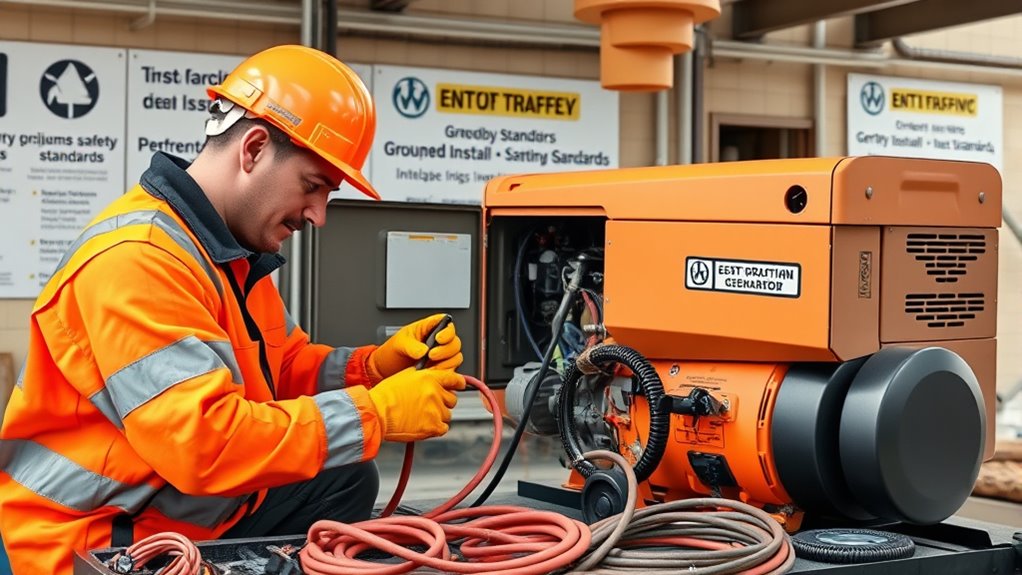
Ensuring safety during grounding and bonding installation is critical to prevent accidents and damage. You must follow strict safety precautions to avoid fire hazards and electrical shocks. Here are three key practices:
- Always turn off power before working on the system to eliminate shock risk.
- Use insulated tools and wear personal protective equipment, including gloves and safety glasses.
- Verify grounding connections with proper testing devices to guarantee they’re secure and effective. Continuous advancements in AI detection methods also help ensure the integrity of electrical systems by identifying anomalies and potential faults.
Troubleshooting and Maintaining Grounding and Bonding Systems
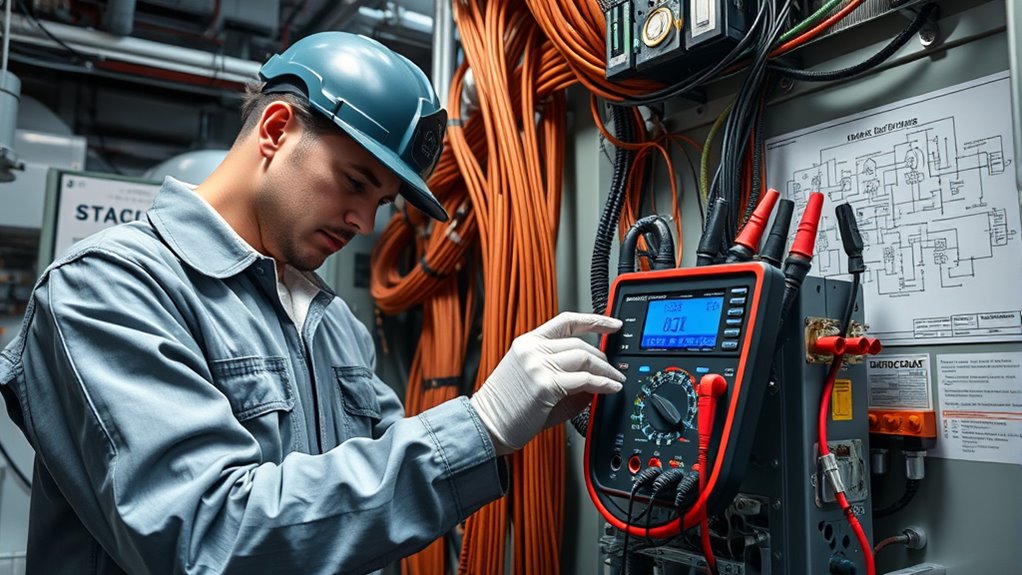
Regularly inspecting your grounding and bonding systems helps identify potential issues before they cause problems. Follow established grounding protocols and bonding standards to guarantee your system remains effective and compliant. Check for loose connections, corrosion, or damaged conductors that could compromise safety. Use a multimeter to verify proper grounding resistance and continuity, ensuring everything meets the required specifications. Keep detailed records of inspections and maintenance activities to track system performance over time. When troubleshooting, confirm that all components adhere to current standards and protocols. If you find discrepancies or faults, address them promptly to prevent equipment damage or safety hazards. Proper maintenance and adherence to grounding protocols and bonding standards are essential for reliable, safe operation of your standby system. Additionally, understanding the specific grounding and bonding requirements for your system can greatly reduce the risk of faults and improve overall safety.
Frequently Asked Questions
How Do Environmental Factors Affect Grounding System Performance?
Environmental factors like soil conductivity and moisture levels markedly impact your grounding system’s performance. When soil is moist and conductive, it provides a better path for fault currents, ensuring safety and system reliability. Conversely, dry or rocky soil reduces conductivity, increasing resistance and lowering effectiveness. You should regularly monitor these conditions and adjust your grounding system accordingly to maintain ideal performance and safety, especially in changing environmental conditions.
Can Grounding and Bonding Techniques Vary Between Different Generator Models?
Yes, grounding and bonding techniques can vary between generator models because of differences in generator compatibility. You should always follow the manufacturer’s bonding procedures to guarantee proper grounding. Some generators require specific grounding methods, like chassis or neutral bonding, while others may need additional grounding electrodes. Always review the generator’s manual and adhere to local electrical codes to ensure safe, effective grounding tailored to each model.
What Are the Signs of a Faulty Grounding or Bonding System?
You’ll notice grounding hazards like frequent electrical shocks or unexpected system tripping, indicating a faulty grounding or bonding system. Bonding failures may cause flickering lights or inconsistent power flow, risking damage. If your system isn’t properly bonded, it can lead to electrical noise or surges. These signs point to the need for a thorough inspection and repair to prevent potential safety hazards and guarantee reliable operation.
How Often Should Grounding and Bonding Systems Be Inspected or Tested?
You should inspect and test your grounding and bonding systems at least annually to guarantee safety and compliance. Regular inspections help verify grounding procedures are effective, and bonding techniques remain intact. If you notice any signs of corrosion, damage, or loose connections, test more frequently. Routine testing confirms your system’s integrity, protects equipment, and prevents potential electrical hazards, keeping your standby system reliable during emergencies.
Are There Specific Regulations or Standards for Standby System Grounding?
Think of grounding standards like the Jedi Code—strict, essential, and guiding. For standby systems, specific regulations like the NEC and local codes guarantee code compliance and safety protocols. You must adhere to these standards to protect personnel and equipment. Regular inspections and proper grounding practices help you stay aligned with these rules, preventing costly errors and ensuring your system’s safety, just like a Jedi maintaining balance in the Force.
Conclusion
Mastering grounding and bonding in a weekend might seem intimidating, but with the right knowledge and tools, you can do it confidently. Remember, “a chain is only as strong as its weakest link,” so prioritize safety and thoroughness. By understanding the fundamentals, dispelling myths, and following best practices, you’ll guarantee your standby system is safe and reliable. Keep learning and stay diligent—your system’s integrity depends on it.
Halloween Picks
halloween
As an affiliate, we earn on qualifying purchases.