TL;DR
Brooklyn startup PopWheels launched a six-month pilot in July to let 10 New York City food vendors swap depleted batteries for charged ones at two cabinets near Flushing Meadows Corona Park. The trial is grant-funded, so vendors currently pay nothing; future costs and whether the service can match generator expenses remain to be established.
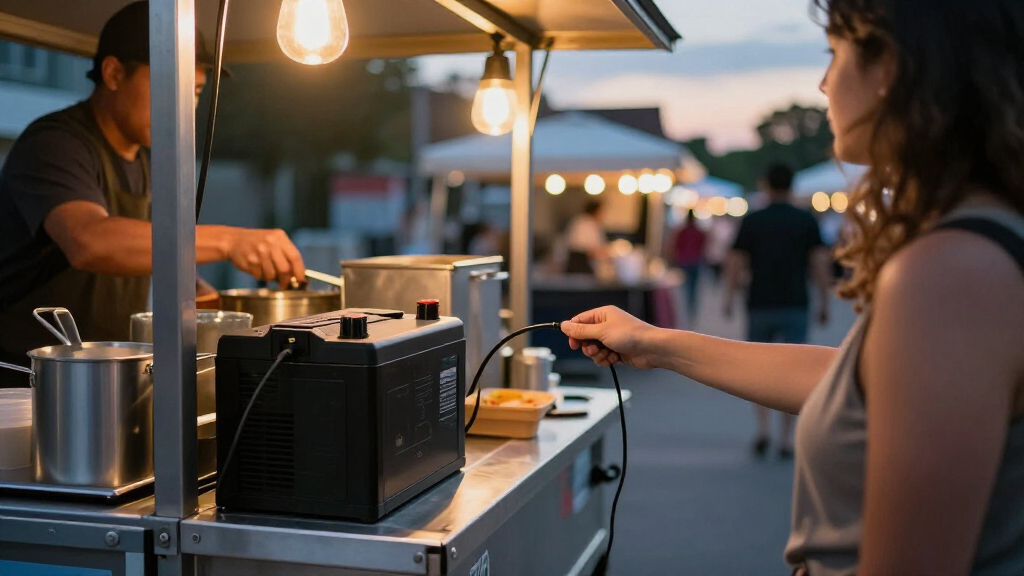
Brooklyn startup PopWheels launched a six-month battery-swapping pilot in July for 10 food vendors near Flushing Meadows Corona Park in Queens, testing whether shared batteries can replace the generators many carts use. Two charging cabinets let participating vendors exchange depleted batteries for charged ones, a model that could reduce generator noise and exhaust without requiring each vendor to buy and charge a battery system.

Get backup power and energy gear delivered free with Prime
- Fast, free delivery on millions of items
- Prime Video, Amazon Music and more included
- Member-only deals all year
The pilot is currently free for participating vendors, supported by $46,000 in grant funding from the City Parks Foundation and $30,900 from nonprofit Resilient Cities Catalyst. PopWheels says it eventually plans to charge a monthly subscription for access to the swapping network, plus a fee to buy or lease the inverter that holds the batteries in a cart. Its stated aim is to make the setup price-competitive with buying and fueling a generator; the source report does not provide a proposed subscription price.
William Arevalo, one of the participating vendors, told Canary Media that the batteries had worked well for his cart and that he would consider paying to continue using the service. He said he spends about $500 to $600 a month on generator fuel, in addition to maintenance and repairs. Arevalo also said generator noise can make it difficult for customers and workers to hear each other, and described concern about exposure to exhaust.
The battery system powers electrical equipment in Arevalo’s food cart, but its grill still runs on propane. PopWheels says its current batteries cannot support an ice cream truck’s energy needs; Arevalo’s nearby ice cream truck continues to use a diesel generator. The trial therefore tests a specific use case rather than a full shift away from fossil fuels for every kind of street vendor.
Food carts that rely on portable generators produce local exhaust and noise where workers and customers spend time. A battery swap service could address those effects while avoiding the upfront purchase of a sufficiently large battery and the need for vendors to charge it themselves. Whether it also eases vendors’ costs depends on the eventual subscription and equipment fees, as well as how many swaps a cart needs during a working day.
The model could also connect two existing PopWheels user groups. The company already operates battery cabinets for New York delivery workers, who pay between $65 and $95 a month for e-bike battery access, according to the report. PopWheels uses the same batteries for the food carts and has had some delivery workers shuttle batteries to vendors farther from cabinets. If that arrangement proves workable, existing cabinets and delivery routes could support more than one type of customer.
Products Worth Considering

LEVOIT Vital 200S-P Smart Air Purifier for Large Rooms, White

Dyson V15 Detect Cordless Stick Vacuum

Dyson V9 Motorbar Cordless Vacuum
As an affiliate, we earn on qualifying purchases.
From E-Bike Batteries to Food Carts
PopWheels has experience running a battery network for delivery workers, with more than 45 cabinets across New York City, according to Canary Media. The food-cart pilot adapts that approach to a new setting: vendors exchange batteries near their work instead of buying a system and arranging charging on their own. NYC Mayor’s Office of Climate and Environmental Justice policy adviser Isabelle Thomas said the technology has been used before, though not necessarily for food vendors.
Buying and charging batteries independently is another option. The report describes a Brooklyn food-truck operator who switched after receiving noise and pollution complaints and charges a battery at a depot. But access to charging varies: some commissaries have enough electrical capacity, while others may need upgrades or lack available outlets, Thomas said. The nonprofit Street Vendor Project also previously ran a pilot in which vendors received batteries they were responsible for charging; the source excerpt does not include details of that program’s results.
““They’re not going to want to switch if it’s more expensive.””
— Ben Rosenn, PopWheels’ director of deployments
Costs and Capacity Still Unproven
The pilot’s grant funding means vendors are not yet paying to use the food-cart service. Its future subscription price, equipment costs and performance at scale are not specified in the source report, so the claim that it can compete with generator costs has not yet been demonstrated for paying customers. Arevalo’s fuel spending provides one comparison point, but each vendor’s expenses and power needs may differ.
It is also unclear how the system would serve carts farther from cabinets over a wider area, how frequently vendors need battery swaps, and whether the existing network has enough capacity for additional users. The current batteries cannot power every type of vendor operation, and the trial does not eliminate propane use in Arevalo’s cart. The source report provides no final pilot results or emissions measurements.
Pilot Results Will Shape Expansion
The six-month Queens trial is the next test of whether the cabinet network and battery logistics can meet vendors’ daily needs. PopWheels has said it wants a paid model that can compete with generator ownership and fuel, but the report does not give a timeline for setting prices or expanding beyond the pilot area. Results on reliability, swap frequency, vendor costs and access to cabinets will help show whether the model can work for more carts.
Broader adoption may also depend on charging infrastructure at vendor depots and on battery systems designed for higher-power operations such as ice cream trucks. For now, PopWheels’ pilot addresses electrical equipment for a limited group of food carts, while grills and some other equipment continue to rely on fossil fuels.
Key Questions
What is PopWheels testing?
PopWheels is testing a service in which participating food vendors exchange depleted batteries for charged ones at two cabinets near Flushing Meadows Corona Park in Queens.
Are vendors paying to use the service?
No. The 10 vendors in the pilot currently use the batteries for free, with the trial supported by grants. PopWheels envisions charging a subscription and a separate fee to buy or lease the cart inverter, but has not provided prices in the source report.
Can the batteries replace every generator?
No. PopWheels says its current system can power electrical equipment in some food carts but cannot meet the energy demands of ice cream trucks. Arevalo’s cart grill still uses propane.
How much does Arevalo spend on his generator?
Arevalo told Canary Media he spends about $500 to $600 a month on fuel, plus generator maintenance and repairs. That is his reported expense; the source does not establish a typical cost for all vendors.
Source: rss