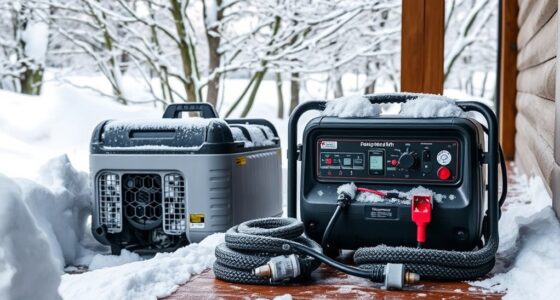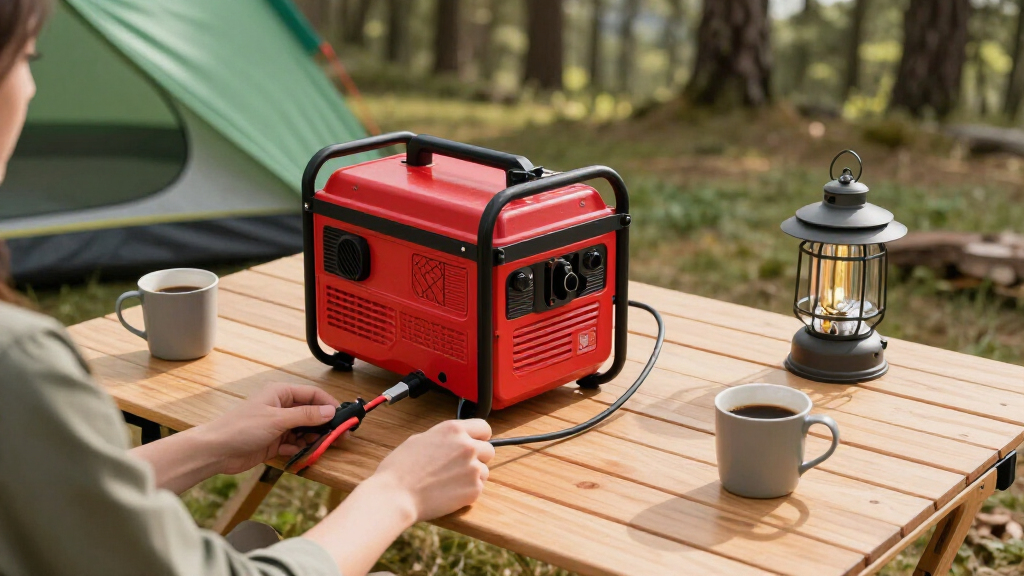

Portable inverter generators differ mainly in raw wattage, fuel flexibility, and noise — and those three factors drive nearly every buying decision in this category. The Westinghouse iGen8200TFc stands out as the most versatile pick thanks to its tri-fuel capability and enough output to run a household essentials panel, while the WEN DF360iX makes more sense for campers and tailgaters who want quiet, dual-fuel operation in a small package. Budget shoppers get real value from the Oxseryn 2800W, which trades peak power for portability and a lower price. The central tradeoff: higher-wattage models like the 6800–8200W units are heavier and louder, while sub-2000W units like the AIVOLT models are easy to carry but can’t run large appliances. Continue reading for the full breakdown of all 15 models.

Get backup power and energy gear delivered free — and shop member deals
- Fast, free delivery on millions of items
- Access to Prime Big Deal Days deals on October 6–7
- Prime Video, Amazon Music and more included
Complete the kit


Key Takeaways
- Fuel flexibility was the biggest differentiator in this lineup: the Westinghouse iGen8200TFc (tri-fuel) and four WEN/PowerSmart dual-fuel models can run on propane, which stores indefinitely and starts more reliably after long idle periods.
- Wattage alone is misleading — the AIVOLT 1750W and 1600W models cover sensitive electronics and light camping loads fine, but adding surge-heavy appliances like refrigerators or well pumps pushes buyers toward the 4000W+ tier (Oxseryn 4400W, Pulsar PGD40ISCO, ERAYAK 4500P).
- Weight scales steeply with output: the smallest units here are one-person carryable, while the 5000W+ models (Oxseryn 5000-Watt, WEN DF680iX) typically need two people or wheels, which matters for camping versus home backup use.
- Two near-identical 4400W Oxseryn units appear in this lineup; differences come down to outlet configuration and included accessories rather than core performance, so buyers should compare spec sheets closely before paying more.
- The WEN models consistently offered the best balance of documented runtime, fuel-switching, and known-brand dealer support, while lesser-known brands won on price per watt.
| Oxseryn 4400W Gas-Powered Inverter Generator |  | Best for RV Owners | Peak Output: 4,400 watts | Running Output: 3,400 watts | Fuel Tank Capacity: 2 gallons | VIEW LATEST PRICE | See Our Full Breakdown |
| Oxseryn 2800W Portable Inverter Generator |  | Best for Campers | Peak Output: 2,800 watts | Running Output: 2,000 watts | Engine: 79.8 cc, 4-stroke OHV | VIEW LATEST PRICE | See Our Full Breakdown |
| Oxseryn 5000-Watt Portable Inverter Generator |  | Best Open-Frame Workhorse | Peak Power: 5,000 watts | Runtime: Up to 6 hours at 50% load | Fuel Tank Capacity: 2 gallons | VIEW LATEST PRICE | See Our Full Breakdown |
| AIVOLT 1750W Portable Inverter Generator |  | Best Lightweight Pick | Running Wattage: 1,350 watts | Peak Wattage: 1,750 watts | Runtime: Up to 7 hours at 25% load | VIEW LATEST PRICE | See Our Full Breakdown |
| WEN DF480iX 4800-Watt Dual-Fuel Portable Inverter Generator |  | Best Dual-Fuel Pick | Engine: 224cc | Fuel Types: Gasoline and propane | Gasoline Output: 4,800 surge / 4,000 rated watts | VIEW LATEST PRICE | See Our Full Breakdown |
| WEN 3600-Watt Portable Inverter Generator (56360i) |  | Best for Weekend Campers | Engine: 149cc | Surge power: 3600 watts | Weight: 46 pounds | VIEW LATEST PRICE | See Our Full Breakdown |
| AIVOLT 1600W Portable Inverter Generator |  | Best Ultra-Light Budget Pick | Starting wattage: 1600 watts | Running wattage: 1260 watts | Engine: 60cc 4-stroke OHV | VIEW LATEST PRICE | See Our Full Breakdown |
| Westinghouse iGen8200TFc Tri-Fuel Portable Inverter Generator |  | Best for Home Backup | Fuel types: Gasoline, propane, natural gas | Gasoline output: 6600 running / 8200 peak watts | Propane output: 5940 running / 7380 peak watts | VIEW LATEST PRICE | See Our Full Breakdown |
| 3000W Portable Inverter Generator |  | Quietest Operator | Starting power: 3000 watts | Running power: 2350 watts | Engine: 97.7cc 4-stroke OHV | VIEW LATEST PRICE | See Our Full Breakdown |
| WEN DF680iX 6800-Watt Dual-Fuel Portable Inverter Generator |  | Best Dual-Fuel Workhorse | Engine: 224cc dual-fuel | Gasoline output: 6800 surge / 5100 rated watts | Propane output: 6000 surge / 4500 rated watts | VIEW LATEST PRICE | See Our Full Breakdown |
| PowerSmart 3800-Watt Dual-Fuel Inverter Generator |  | Best Dual-Fuel Flexibility | Fuel Type: Gasoline and propane | Starting Watts (Gasoline): 3,800 W | Running Watts (Gasoline): 3,300 W | VIEW LATEST PRICE | See Our Full Breakdown |
| ERAYAK 4500P 4500W Portable Inverter Generator |  | Best Runtime Per Tank | Peak Output: 4,500 watts | Running Output: 3,500 watts | Fuel Tank Capacity: 2.25 gallons | VIEW LATEST PRICE | See Our Full Breakdown |
| Pulsar PGD40ISCO 4000W Portable Gas Inverter Generator |  | Best for RV Air Conditioners | Peak Power: 4,000 watts | Fuel Tank Capacity: 1 gallon | Runtime: 4 hours at half load | VIEW LATEST PRICE | See Our Full Breakdown |
| Oxseryn 4400-Watt Gas-Powered Inverter Generator |  | Best Value Power Per Dollar | Peak Output: 4,400 watts | Running Output: 3,400 watts | Fuel Type: Gasoline | VIEW LATEST PRICE | See Our Full Breakdown |
| WEN DF360iX Quiet Dual-Fuel Portable Inverter Generator |  | Best RV-Ready Warranty Pick | Gasoline Output: 3,600 surge / 2,900 rated watts | Propane Output: 3,500 surge / 2,600 rated watts | Fuel Types: Gasoline, propane | VIEW LATEST PRICE | See Our Full Breakdown |
| portable inverter generator | Runtime | Noise Level | Weight | Warranty |
|---|---|---|---|---|
| Oxseryn 4400W Gas-Powered Inve | Up to 14 hours at 25% load | — | 56 lbs | — |
| Oxseryn 2800W Portable Inverte | Up to 9 hours at 25% load | Under 58 dBA at 23 feet | 40 lbs | — |
| Oxseryn 5000-Watt Portable Inv | Up to 6 hours at 50% load | 70 dB at 23 feet | 60 lbs | — |
| AIVOLT 1750W Portable Inverter | Up to 7 hours at 25% load | 52 dBA | 27.6 lbs | 2 years |
| WEN DF480iX 4800-Watt Dual-Fue | Up to 7 hrs at half load (gas); up to 20 hrs at half load (20-lb propane) | 62 dB at quarter load | — | 3-year limited |
| WEN 3600-Watt Portable Inverte | — | — | 46 pounds | Three years |
| AIVOLT 1600W Portable Inverter | Up to 8 hours at 25% load | 57 dBA at 23 ft | 28 lbs | 2 years |
| Westinghouse iGen8200TFc Tri-F | Up to 17 hours at 25% load | Around 60 dBA at 25% load | — | — |
| 3000W Portable Inverter Genera | — | 53–56 dB at 23 ft | 41.8 lbs | — |
| WEN DF680iX 6800-Watt Dual-Fue | Up to 6.1 hours at half load (gasoline); up to 9 hours on 20-lb propane | 64 dB at quarter load | — | 3 years |
| PowerSmart 3800-Watt Dual-Fuel | Up to 8 hrs on gas; up to 24 hrs on 20 lb propane | 59 dBA at 25% load in Eco Mode | — | 2-year limited; lifetime technical support |
| ERAYAK 4500P 4500W Portable In | 16 hours | 60.5 dB(A) | 55.12 lbs | 3-year limited |
| Pulsar PGD40ISCO 4000W Portabl | 4 hours at half load | 59 dB | — | — |
| Oxseryn 4400-Watt Gas-Powered | Up to 14 hours at 25% load (ECO mode) | Under 72 dBA at 23 feet | 56 lbs | — |
| WEN DF360iX Quiet Dual-Fuel Po | — | — | — | Three years |
More Details on Our Top Picks
Oxseryn 4400W Gas-Powered Inverter Generator
This model earns its place as the most RV-ready mid-size option in this lineup, pairing a true 30A RV outlet with enough running wattage (3,400W) to feed an air conditioner and a few appliances at once. Compared with the Oxseryn 2800W, it nearly doubles the running output while still keeping weight at a manageable 56 pounds. The up-to-14-hour runtime at quarter load outlasts the larger Oxseryn 5000-watt unit, which manages only 6 hours at half load, because this one sips fuel in ECO mode. The catch is a small 2-gallon tank — running hard means frequent refills — and units ship after factory testing, so expect a slight gasoline smell out of the box.
Pros:- True 30A RV outlet plus twin 120V outlets and 12V DC
- Up to 14 hours runtime at quarter load in ECO mode
- 56-pound weight is light for this output class
- Cold-start technology and low-oil shutdown for reliability
Cons:- 2-gallon tank demands frequent refueling under heavier loads
- Factory testing leaves a residual gasoline smell on arrival
Best for: RV travelers who need a 30A connection and enough wattage for an AC unit plus basics
Not ideal for: Whole-home backup shoppers — 3,400 running watts won’t carry a fridge, well pump, and AC simultaneously
- Peak Output:4,400 watts
- Running Output:3,400 watts
- Fuel Tank Capacity:2 gallons
- Runtime:Up to 14 hours at 25% load
- Outlets:2 × 120V AC, 30A RV, 12V DC
- Weight:56 lbs
- Features:ECO mode, overload protection, low-oil shutdown, cold-start technology
Our verdict“If your priority is powering an RV without a second generator, this is the strongest 30A-equipped value in the batch.”
Oxseryn 2800W Portable Inverter Generator
For quiet campsites, this model hits a sweet spot the bigger units can’t: under 58 dBA at 23 feet means conversations don’t have to compete with the engine. With 2,000 running watts, it handles a portable fridge, lights, and device charging without strain, and the built-in USB and USB-C ports mean no adapter bricks eating your AC outlets. Compared with the AIVOLT 1750W, you get more headroom and a parallel function for future expansion, though you give up the AIVOLT’s lighter 27.6-pound carry weight. Clean power under 3% THD protects laptops and cameras. Just know that above 4,000 feet of elevation you’ll need a high-altitude kit that isn’t included.
Pros:- Quiet operation under 58 dBA at 23 feet
- Clean power under 3% THD for laptops and cameras
- Dedicated USB and USB-C ports alongside AC and DC
- Parallel-capable for doubling output later
Cons:- High-altitude kit not included for use above 4,000 feet
- Runtime drops well below the 9-hour figure under real loads
Best for: Car campers and tailgaters who want quiet power with USB charging built in
Not ideal for: Buyers at high-elevation campsites — the required jet kit is a separate purchase
- Peak Output:2,800 watts
- Running Output:2,000 watts
- Engine:79.8 cc, 4-stroke OHV
- Runtime:Up to 9 hours at 25% load
- Noise Level:Under 58 dBA at 23 feet
- Total Harmonic Distortion:Less than 3%
- Weight:40 lbs
- Features:Eco mode, parallel function, fuel gauge, fuel shutoff
Our verdict“This is the camper’s pick: quiet, electronics-safe, and portable enough to carry from car to tent without dread.”
Oxseryn 5000-Watt Portable Inverter Generator
This is the highest-output Oxseryn in this batch, and its open-frame design tells you who it’s for: job sites, home backup, and RV use where noise is secondary to wattage. At 5,000 peak watts it outmuscles the Oxseryn 4400W, but the tradeoffs are real — 70 dB at 23 feet makes it the loudest here, and the 6-hour runtime at half load means you’ll be refueling a 2-gallon tank twice a day during an outage. Unlike fully enclosed inverters, the frame construction is easier to service and lift by two people at 60 pounds. Power stays under 5% THD, clean enough for most tools and appliances, if not quite as pristine as the sub-3% smaller units.
Pros:- 5,000 peak watts is the most output among the Oxseryn picks
- 30A outlet supports direct RV connection
- Built-in fuel gauge simplifies refuel planning
- Open frame makes maintenance access straightforward
Cons:- 70 dB at 23 feet is loud for an inverter generator
- Only 6 hours runtime at half load on a 2-gallon tank
Best for: Contractors and homeowners who prioritize raw wattage over quiet operation
Not ideal for: Campers and tailgaters — 70 dB is far too loud for shared outdoor spaces
- Peak Power:5,000 watts
- Runtime:Up to 6 hours at 50% load
- Fuel Tank Capacity:2 gallons
- Noise Level:70 dB at 23 feet
- Total Harmonic Distortion:Less than 5%
- Design:Open-frame inverter generator
- Weight:60 lbs
Our verdict“Buy this when watts matter more than whisper-quiet — skip it if neighbors are within earshot.”
AIVOLT 1750W Portable Inverter Generator
At 27.6 pounds, this is the easiest generator in the roundup to carry one-handed to a campsite or stash in a van — a full 12 pounds lighter than the Oxseryn 2800W. What sets it apart at this size is the CO detection with automatic shutoff, a safety feature some budget small inverters skip entirely. Running at 52 dBA, it’s quiet enough for a quiet-hours campground, and sub-3% THD keeps phones and laptops safe. The tradeoff is capacity: 1,350 running watts covers charging, lights, and a small fridge, but not a microwave plus anything else. Also note the 0.66-gallon tank — tiny, though it stretches to 7 hours at quarter load — and that engine oil ships separately.
Pros:- 27.6-pound weight is the lightest in this batch
- 52 dBA operation suits campgrounds and close quarters
- CO sensor with automatic shutoff adds real safety margin
- Clean sub-3% THD power for sensitive electronics
Cons:- Engine oil not included — buy before first use
- 0.66-gallon tank limits runtime under meaningful loads
Best for: Solo campers, van lifers, and anyone prioritizing carry weight and CO safety in a small package
Not ideal for: Households planning outage backup for a fridge plus appliances — 1,350 watts won’t cover it
- Running Wattage:1,350 watts
- Peak Wattage:1,750 watts
- Runtime:Up to 7 hours at 25% load
- Noise Level:52 dBA
- Total Harmonic Distortion:Less than 3%
- Fuel Tank Capacity:0.66 gallons
- Weight:27.6 lbs
- Safety Features:CO sensor with auto shutoff, low-oil shutdown, overload protection
- Warranty:2 years
Our verdict“The one to grab when portability and safety trump raw wattage, as long as your power needs stay modest.”
WEN DF480iX 4800-Watt Dual-Fuel Portable Inverter Generator
This WEN stands apart by running on gasoline or propane, and that flexibility changes the ownership math. A 20-pound propane tank yields up to 20 hours at half load — triple the runtime of the Oxseryn 5000W on gasoline — and propane stores for years without going stale, which matters for emergency backup. Power quality is the cleanest here at under 1.2% THD at full load, comfortably beating the Oxseryn units. The electric start, wheels, and telescoping handle offset the bulk that comes with 4,000 rated watts. Tradeoffs: propane output drops to 3,600 rated watts, the parallel kit is a separate purchase, and propane reduces cold-weather starting convenience versus gas.
Pros:- Dual-fuel flexibility with propane storage lasting years for emergencies
- Up to 20 hours runtime at half load on a 20-lb propane tank
- Exceptionally clean power under 1.2% THD at full load
- Electric start, wheels, and telescoping handle ease handling
Cons:- Propane mode drops output to 3,600 rated watts
- Parallel connection kit sold separately
Best for: Homeowners prepping for outages who want long-runtime propane backup and easy maneuverability
Not ideal for: Minimalists who want to parallel two units — the required kit costs extra
- Engine:224cc
- Fuel Types:Gasoline and propane
- Gasoline Output:4,800 surge / 4,000 rated watts
- Propane Output:4,320 surge / 3,600 rated watts
- Noise Level:62 dB at quarter load
- Runtime:Up to 7 hrs at half load (gas); up to 20 hrs at half load (20-lb propane)
- Outlets:4 × 120V NEMA 5-20R, 1 × 120V TT-30R RV, 1 × 12V DC, 2 × USB
- Total Harmonic Distortion:Under 1.2% at full load
- Warranty:3-year limited
Our verdict“The most versatile choice in this batch for standby use, provided you accept slightly lower output on propane.”
WEN 3600-Watt Portable Inverter Generator (56360i)
The WEN 56360i hits a sweet spot between the featherweight AIVOLT 1600W and the burly Westinghouse iGen8200TFc: enough rated wattage (2900) to run an RV air conditioner or several appliances at once, yet still carryable at 46 pounds without wheels. Compared with the 3000W model in this lineup, it trades a little quiet for a genuine RV-ready TT-30R outlet, which matters if you want to plug straight into a travel trailer rather than fumbling with adapters. The fuel shutoff feature is a genuinely practical touch — it burns the carburetor dry before shutdown, which cuts down on the gummed-up carburetor problems that plague generators stored between trips. The tradeoff is that it’s gasoline-only, so buyers who want propane flexibility should look at the WEN DF680iX instead.
Pros:- True RV-ready TT-30R outlet without adapters
- Fuel shutoff protects the carburetor during storage
- Clean inverter power safe for laptops and phones
- Light enough at 46 pounds for one-person loading
Cons:- Gasoline-only, with no propane or natural gas option
- No wheels or handle, so 46 pounds gets tiring over long distances
Best for: RV owners and frequent campers who need a gasoline unit light enough to lift into a truck bed but powerful enough for an RV outlet
Not ideal for: Anyone planning whole-home backup — 2900 rated watts won’t carry a fridge, furnace, and well pump simultaneously
- Engine:149cc
- Surge power:3600 watts
- Weight:46 pounds
- AC outlets:Two three-prong 120V receptacles
- RV outlet:One TT-30R receptacle
- DC and USB:One 12V DC receptacle; two 5V USB ports
- Warranty:Three years
Our verdict“A balanced middle-weight for campers and RV travelers who want real outlet variety without hauling a wheeled monster.”
AIVOLT 1600W Portable Inverter Generator
At 28 pounds, the AIVOLT 1600W is the lightest machine in this roundup by a wide margin — nearly 14 pounds lighter than the 3000W model and less than two-thirds the weight of the WEN 56360i. That makes it the one generator here a solo car camper can genuinely toss into a trunk. Its 57 dBA rating puts it in the same quiet tier as bigger units, and the sub-3% THD output means a laptop or camera charger is safe. The limitations are real, though: 1260 running watts covers lights, a fan, and a phone-charging station, but an RV air conditioner will overload it instantly. Compared with the WEN 56360i, you give up the RV outlet and half the wattage in exchange for portability and a lower price of entry.
Pros:- Lightest option in the lineup at 28 pounds
- CO detection with automatic shutdown included at this price
- Runs up to 8 hours at quarter load
- Parallel capable if power needs grow later
Cons:- Parallel kit and engine oil sold separately
- Not legal for sale or use in California
Best for: Solo campers, tailgaters, and van-lifers who prioritize weight over wattage and mainly charge devices or run small appliances
Not ideal for: RV owners or home-backup shoppers — 1260 running watts won’t run an air conditioner, microwave, or fridge comfortably
- Starting wattage:1600 watts
- Running wattage:1260 watts
- Engine:60cc 4-stroke OHV
- Weight:28 lbs
- Noise level:57 dBA at 23 ft
- Runtime:Up to 8 hours at 25% load
- Outlets:2 × 120V outlets; 2 USB ports (Type-A/C)
- Total harmonic distortion:Less than 3%
- Warranty:2 years
Our verdict“The pick for buyers whose top priority is a generator they can carry with one arm, not one that powers a household.”
Westinghouse iGen8200TFc Tri-Fuel Portable Inverter Generator
The iGen8200TFc is the most capable machine in this batch, and the tri-fuel flexibility is the reason it earns the home-backup slot. During an outage, gasoline goes scarce fast — the option to hook up a propane tank or a natural gas line means you’re not rationing fuel runs. The 50A 120/240V outlet is transfer-switch ready, something no other generator here offers, so an electrician can wire it straight into your panel. Compared with the WEN DF680iX, you get more running watts on gasoline (6600 vs 5100) and a third fuel option, at the cost of a heavier, bulkier frame. The honest tradeoff: output drops as you step down fuels (5940 watts on propane, 5280 on natural gas), and long outages will still mean refueling that 3.9-gallon tank.
Pros:- Runs on gasoline, propane, or natural gas
- 50A transfer-switch-ready outlet for whole-panel backup
- Up to 17 hours of runtime at quarter load
- Remote electric start and sub-3% THD clean power
Cons:- Output drops meaningfully on propane and natural gas
- 3.9-gallon tank still needs refueling during multi-day outages
Best for: Homeowners who want a transfer-switch-capable backup generator and the fuel flexibility to run on propane or natural gas during outages
Not ideal for: Campers and tailgaters — this is far more weight, noise, and wattage than a campsite needs, and it lacks true one-hand portability
- Fuel types:Gasoline, propane, natural gas
- Gasoline output:6600 running / 8200 peak watts
- Propane output:5940 running / 7380 peak watts
- Natural gas output:5280 running / 6560 peak watts
- Engine:298cc 4-stroke OHV with cast iron sleeve
- Runtime:Up to 17 hours at 25% load
- Noise level:Around 60 dBA at 25% load
- Key outlets:120/240V 14-50R 50A; 120V TT-30R 30A
- Starting:Remote electric start
Our verdict“The closest thing in this lineup to a whole-home backup solution, thanks to tri-fuel flexibility and a 50A outlet meant for a transfer switch.”
3000W Portable Inverter Generator
Where most generators in this roundup advertise 57–64 dBA, this unbranded 3000W unit claims 53–56 dB at 23 feet, which makes it the quietest option here on paper — a real advantage at a crowded campground where noise rules are enforced. Its Eco Mode throttles the engine to match load, which is how it manages both the low noise floor and decent fuel economy. Output-wise, 2350 running watts sits between the AIVOLT 1600W and the WEN 56360i, and its modern USB-C port is something the WEN lacks — handy for charging current phones and tablets without an adapter brick. The flip side of buying from a lesser-known brand: support, parts availability, and resale confidence all lag behind WEN or Westinghouse, and you’ll want to register the Care Service Plan to get the full warranty coverage.
Pros:- Quietest rating in the lineup at 53–56 dB
- Eco Mode improves fuel economy and noise at partial load
- USB-C output alongside USB-A and 12V DC
- Under 3% THD for safely charging electronics
Cons:- Lesser-known brand means weaker support and parts networks
- Must be operated outdoors away from doors, windows, and vents like any gas generator
Best for: Noise-sensitive campers and anyone in quiet-hours campgrounds who wants modern USB-C charging built in
Not ideal for: Buyers who value long-term support and parts availability — an established brand like WEN or Westinghouse is a safer long-term bet
- Starting power:3000 watts
- Running power:2350 watts
- Engine:97.7cc 4-stroke OHV
- Noise level:53–56 dB at 23 ft
- Weight:41.8 lbs
- Total harmonic distortion:Under 3%
- AC outlets:Dual 120V 20A
- USB outputs:USB-A and USB-C, 5V/3.6A
Our verdict“Choose this if campsite quiet is your top priority and you’re comfortable with a lesser-known brand to get it.”
WEN DF680iX 6800-Watt Dual-Fuel Portable Inverter Generator
The DF680iX occupies the practical middle ground between the WEN 56360i and the Westinghouse iGen8200TFc: 5100 rated watts on gasoline, a dual-fuel option, and — uniquely in this batch — the wheeled, telescoping-handle design that makes 100-plus-pound machines actually movable by one person. Its most distinctive trick is the bonded-neutral 240V output rated for low-power Level 2 EV charging, which no other generator here offers and turns it into an emergency charger for an electric car. Its extremely low THD figures (under 1.2% even at full load) beat every other unit’s specs for clean power. Against the Westinghouse, you give up natural gas and roughly 1500 running watts but gain wheels, an electric start, and a lighter frame. Just know that propane output drops to 4500 rated watts, and the parallel kit and propane tank cost extra.
Pros:- Level 2 EV charging support via bonded-neutral 240V output
- Runs on gasoline or propane for outage flexibility
- Wheels and telescoping handle make it genuinely portable for its class
- Exceptionally low THD under 1.2% at full load
Cons:- Propane mode drops output to 4500 rated watts
- Parallel kit and propane tank sold separately
Best for: EV owners and suburban homeowners who want dual-fuel flexibility, clean 240V power, and a wheeled frame they can actually move alone
Not ideal for: Weight-conscious campers — even with wheels, this is far more machine than a tent trip requires
- Engine:224cc dual-fuel
- Gasoline output:6800 surge / 5100 rated watts
- Propane output:6000 surge / 4500 rated watts
- Starting method:Keyless electric start with recoil backup
- Noise level:64 dB at quarter load
- Runtime:Up to 6.1 hours at half load (gasoline); up to 9 hours on 20-lb propane
- Voltage:120V/240V bonded-neutral
- Total harmonic distortion:Under 0.3% at no load; under 1.2% at full load
- Warranty:3 years
Our verdict“The most versatile mid-size pick here, and the only one that can double as an emergency EV charger.”
PowerSmart 3800-Watt Dual-Fuel Inverter Generator
This model earns its spot for fuel versatility that few competitors in this wattage class match. The ability to run up to 24 hours on a 20-pound propane tank makes it far better suited to overnight home backup than the Pulsar PGD40ISCO, which needs refueling every four hours. Compared with the WEN DF360iX, it delivers more rated watts on gasoline (3,300 vs. 2,900) while matching its 59 dBA quiet rating in Eco Mode. The tradeoff is a small 1.3-gallon gasoline tank, so gasoline runtime trails the ERAYAK 4500P’s larger 2.25-gallon capacity. Safety features like the CO sensor and low oil shutdown round out a package built for buyers who want propane as a storable, long-shelf-life backup fuel.
Pros:- Runs on gasoline or propane for fuel flexibility
- Up to 24 hours of runtime on a 20 lb propane tank
- Quiet 59 dBA operation in Eco Mode
- CO sensor, low oil shutdown, and lifetime technical support
Cons:- Small 1.3-gallon gasoline tank limits gasoline runtime
- Best runtime figures require a separately purchased 20 lb propane tank
Best for: Homeowners prepping for multi-day outages who want to stockpile propane instead of rotating gasoline
Not ideal for: Buyers who plan to run primarily on gasoline and want long stretches between fill-ups
- Fuel Type:Gasoline and propane
- Starting Watts (Gasoline):3,800 W
- Running Watts (Gasoline):3,300 W
- Starting Watts (Propane):3,500 W
- Noise Level:59 dBA at 25% load in Eco Mode
- Runtime:Up to 8 hrs on gas; up to 24 hrs on 20 lb propane
- Outlets:30A L5-30R, 5-20R duplex, 12V DC, dual USB
- Warranty:2-year limited; lifetime technical support
Our verdict“A smart pick for backup-power planners who value propane’s long shelf life over maximum gasoline runtime.”
ERAYAK 4500P 4500W Portable Inverter Generator
The ERAYAK 4500P stands out for its 2.25-gallon fuel tank and 16-hour runtime, comfortably outlasting the Pulsar PGD40ISCO’s four-hour capability and the Oxseryn 4400’s 14-hour figure at light load. Its ultra-low THD of 0.2%–1.2% makes it one of the cleanest power sources in this lineup, a real advantage for laptops, TVs, and CPAP machines. Compared with the PowerSmart 3800, you give up dual-fuel capability entirely — this is gasoline only — but you gain parallel capability, letting two units combine for 9,000 peak watts. Note that the parallel kit costs extra, and the manual recoil start means no push-button convenience. At 55 pounds with a compact footprint, it remains genuinely portable despite the larger tank.
Pros:- Exceptionally low THD output for sensitive electronics
- 16-hour runtime from a 2.25-gallon tank
- Parallel-capable up to 9,000 combined peak watts
- Compact 55 lb design with multiple outlet options
Cons:- Engine oil must be added before first use
- Parallel kit and mobility accessories sold separately
- Manual recoil start only
Best for: Campers and tailgaters who want clean power and all-day runtime without hauling extra fuel
Not ideal for: Buyers who want dual-fuel flexibility or electric start without paying for add-ons
- Peak Output:4,500 watts
- Running Output:3,500 watts
- Fuel Tank Capacity:2.25 gallons
- Runtime:16 hours
- Noise Level:60.5 dB(A)
- THD:0.2%–1.2%
- Weight:55.12 lbs
- Warranty:3-year limited
Our verdict“The strongest choice here for clean, long-running power on a single tank of gasoline.”
Pulsar PGD40ISCO 4000W Portable Gas Inverter Generator
This model makes the list for one specific strength: 13,500 BTU air conditioner compatibility, which is exactly the load that shuts down smaller units like the AIVOLT 1750W. If your priority is running an RV roof AC unit at a quiet 59 dB, this Pulsar handles it where the Oxseryn 4400 — with its sub-72 dBA open frame — would disturb a campground. The obvious tradeoff is the 1-gallon tank and four-hour runtime at half load, the weakest endurance in this batch. The ERAYAK 4500P quadruples that runtime for similar output. Parallel readiness adds expansion potential later, but as a standalone unit, this pick makes the most sense for short stints of high-draw cooling rather than all-day operation.
Pros:- Handles RV air conditioners up to 13,500 BTU
- Quiet 59 dB operation
- Parallel ready for future expansion
- Safe for sensitive electronics
Cons:- Only 4 hours of runtime at half load
- Tiny 1-gallon fuel tank demands frequent refueling
Best for: RV owners who need to run a 13,500 BTU air conditioner quietly for a few hours at a time
Not ideal for: Anyone needing overnight or all-day power between refills
- Peak Power:4,000 watts
- Fuel Tank Capacity:1 gallon
- Runtime:4 hours at half load
- Noise Level:59 dB
- AC Compatibility:Up to 13,500 BTU
- Parallel Ready:Yes
Our verdict“A focused tool for RV cooling duty — just plan around frequent fuel stops.”
Oxseryn 4400-Watt Gas-Powered Inverter Generator
For raw output at this price tier, the Oxseryn 4400 leads the pack with 4,400 peak watts, edging out the ERAYAK 4500P’s running output and clearly outmuscling the WEN DF360iX. The ECO mode stretching runtime to 14 hours at 25% load is competitive with anything here on gasoline. But this is where the value tradeoff shows: the open-frame design and sub-72 dBA noise rating make it the loudest option in this lineup — fine for job sites and home backup, poor for campgrounds where the Pulsar and PowerSmart hum along at 59 dBA. You also give up dual-fuel flexibility and the ultra-low THD figures of the ERAYAK. Still, with an RV outlet, fuel gauge, and reasonable 56-pound weight, it covers the basics well for budget-conscious buyers.
Pros:- Highest peak output in this group at 4,400 watts
- Up to 14 hours of runtime at 25% load with ECO mode
- Includes RV port, DC outlet, and fuel gauge
- Manageable 56 lb weight
Cons:- Under 72 dBA noise is loud compared with 59 dB enclosed rivals
- Open-frame design offers less protection and polish
- Gasoline only, no dual-fuel option
Best for: Budget-minded buyers who want maximum wattage for home backup or job-site use
Not ideal for: Campers and quiet-zone users — the open-frame design is noticeably louder than enclosed models
- Peak Output:4,400 watts
- Running Output:3,400 watts
- Fuel Type:Gasoline
- Fuel Tank Capacity:2 gallons
- Runtime:Up to 14 hours at 25% load (ECO mode)
- Noise Level:Under 72 dBA at 23 feet
- Weight:56 lbs
Our verdict“The most watts per dollar here, as long as noise isn’t a dealbreaker for your setting.”
WEN DF360iX Quiet Dual-Fuel Portable Inverter Generator
This WEN differentiates itself with a three-year warranty — triple the PowerSmart’s coverage — plus a built-in TT-30R RV receptacle that makes hookup to a travel trailer genuinely plug-and-play. The CO Watchdog shutdown sensor adds an extra layer of safety for enclosed or unfamiliar campsites. Compared with the PowerSmart 3800, the tradeoff is output: 2,900 rated watts on gasoline and just 2,600 on propane means it can’t approach the Pulsar’s 13,500 BTU air conditioner capability. Propane mode costs you roughly 300 running watts, so heavy loads are best run on gasoline. The LPG quick connector is a thoughtful touch that speeds up tank swaps. This pick makes the most sense for lighter RV loads and buyers who value long warranty backing over peak wattage.
Pros:- Dual-fuel operation with LPG quick connector
- Built-in TT-30R RV receptacle for direct trailer hookup
- CO Watchdog automatic shutdown sensor
- Three-year warranty, the longest in this group
Cons:- Rated output drops noticeably on propane (2,600 W)
- Lower overall wattage than similarly sized rivals
Best for: Travel trailer owners with modest power needs who prioritize warranty coverage and safety features
Not ideal for: Owners of large RV air conditioners — the 2,600-watt propane output won’t start them
- Gasoline Output:3,600 surge / 2,900 rated watts
- Propane Output:3,500 surge / 2,600 rated watts
- Fuel Types:Gasoline, propane
- Receptacles:Two 120V, one TT-30R RV, one 12V DC
- USB Ports:Two 5V
- Safety Feature:CO Watchdog shutdown sensor
- Warranty:Three years
Our verdict“A well-supported, RV-friendly dual-fuel unit for light loads rather than power-hungry appliances.”
How We Picked
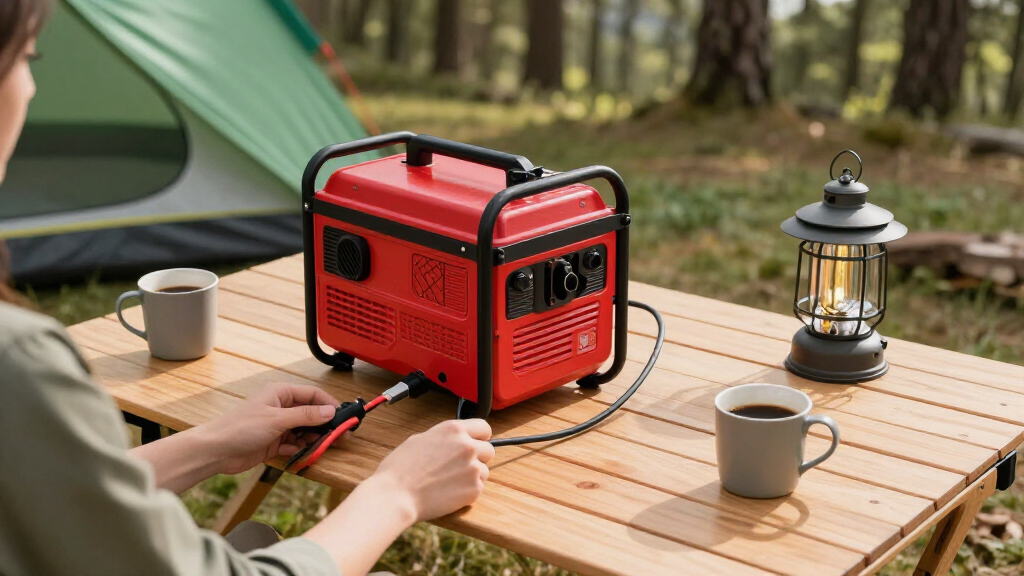
I evaluated each generator against five buyer-relevant criteria. Power delivery came first: I compared rated running watts, surge watts, and whether the unit could realistically handle a refrigerator, space heater, or RV air conditioner — not just phone chargers. Fuel flexibility ranked second, because dual- and tri-fuel capability changes how a generator behaves during a multi-day outage when gasoline degrades or stations lose power. Portability and noise were judged together, since an inverter generator that’s too heavy to move or too loud for a campsite defeats its own purpose.
I also weighed runtime at quarter and half load, because a unit that needs refueling every four hours costs real sleep during an outage. Finally, I factored brand support and warranty infrastructure: WEN and Westinghouse have established parts and service networks, while newer brands like Oxseryn, AIVOLT, and ERAYAK often win on price but carry more long-term uncertainty. Products are ordered to reflect this balance — capability and fuel versatility at the top, with smaller and more affordable units filling specific niches lower down.
Factors to Consider When Choosing Portable Inverter Generators
Before comparing spec sheets, it helps to understand what actually separates a satisfying purchase from a regrettable one. These are the factors I weighed most heavily, plus the mistakes I see buyers make most often.Match Wattage to Your Real Load, Not Your Ambitions
The most common mistake is buying for the generator’s headline number instead of the loads you’ll actually run. List your essential appliances, find each one’s running watts and surge watts, then add 20 percent headroom — motors in refrigerators, well pumps, and air conditioners can draw two to three times their running wattage at startup. A 2000W-class unit handles lights, chargers, and a TV comfortably, but a refrigerator plus a window AC unit usually pushes you into the 3500W+ tier. Oversizing has costs too: bigger units burn more fuel, weigh more, and run louder at low load. Calculate first, then buy once.
Why Fuel Flexibility Matters More Than Most Buyers Expect
Gasoline has two failure modes during emergencies: it degrades in storage within months, and gas station pumps need electricity to dispense it. Propane stores indefinitely and starts more reliably after long idle periods, which is why dual-fuel and tri-fuel models earn their price premium for home backup. Natural gas hookups (as on the Westinghouse tri-fuel) eliminate refueling entirely if your home has service. The tradeoff: propane typically delivers 10–15 percent less wattage than gasoline on the same unit. Single-fuel models still make sense for camping and occasional use, where gasoline convenience wins.
Weight and Noise Determine Whether You’ll Actually Use It
Inverter generators in the 2000W range are usually under 50 pounds and one-person carryable; once you cross 4500W, most units need wheels or a second person. That’s fine for home backup stored in a garage, but a poor fit if you’re loading it into a truck bed every weekend. Noise follows a similar curve — expect 52–60 dB at quarter load for small inverters versus mid-60s or higher for large ones at comparable loads. Check whether the rated decibel figure is measured at quarter load; some brands quote the most flattering number. If you’ll run it near neighbors or at a campground, this spec matters more than peak watts.
Runtime, Fuel Tank Size, and the Overnight Question
Runtime claims are only useful when compared at the same load. A generator advertised at 18 hours at quarter load might run only 7–8 hours at half load, and heavy loads drain faster still. During an outage, the practical question is: will it run overnight without a 2 a.m. refueling? Eco-throttle modes extend runtime considerably at partial loads, so prioritize models with automatic idle control. Larger tanks add weight, so there’s a genuine tradeoff between capacity and portability. Pair any gasoline model with a fuel stabilizer and drain the carburetor before storage — carburetor gumming is the number one reason small generators fail to start after sitting.
Outlets, Parallel Capability, and Clean Power
All inverter generators produce clean-enough power for laptops and phones, but outlet selection decides what you can actually plug in. Look for TT-30 (30-amp RV) if you own a travel trailer, a 30-amp twist-lock for transfer-switch connections, and USB ports for convenience. Parallel capability lets you link two smaller units for the output of one big one — useful if you want portability now and home-backup capacity later. Buyers planning whole-panel backup should verify transfer-switch compatibility before purchase, not after. Cheaper units sometimes cut costs here, so read the outlet list carefully.
Brand Support, Warranty, and the Price-Per-Watt Trap
Price per watt is a seductive metric, but a generator is a 10-year purchase, and warranty service availability varies widely. Established brands like WEN and Westinghouse maintain parts networks, published manuals, and responsive support lines; newer entrants often offer similar hardware with thinner long-term backing. Before buying any lesser-known brand, check whether replacement carburetors, air filters, and spark plugs are readily available, because those are the parts you’ll actually replace. Also confirm the warranty terms cover commercial use if you plan job-site duty. Saving money upfront on an unsupported unit can cost more than the difference when it fails mid-outage.
Frequently Asked Questions
Is a 2000W inverter generator enough for home backup?
For true essentials, sometimes yes — but with tight limits. A 2000W unit like the AIVOLT models will run lights, phone chargers, a TV, and a modem simultaneously, and can typically handle a modern refrigerator alone since most draw 700–1200W with a brief startup surge. Where it fails is combination loads: a refrigerator plus a space heater or a well pump will trip the breaker or overload the inverter. If your priority is keeping food cold and staying connected during short outages, 2000W works. If you want heat, hot water, or an RV air conditioner, move up to the 3500W+ tier in this lineup.
Is dual-fuel really worth the extra cost?
For home backup, yes; for recreational use, it depends. Propane’s advantage is storage: it doesn’t degrade, doesn’t gum up the carburetor, and starts reliably after the generator sits unused for a year — exactly the scenario that kills most gasoline-only units. During extended outages, propane tanks are often easier to source than gasoline when station pumps are down. The downsides are roughly 10–15 percent less wattage on propane and slightly harder cold-weather starts. If you use the generator monthly for camping or tailgating, single-fuel gasoline is simpler and cheaper. If it sits in the garage waiting for a storm, dual-fuel pays for itself the first time it starts on the first pull.
Can I run two of these generators together for more power?
Only if both models explicitly support parallel operation, and usually only when paired with an identical or same-brand sibling unit. Parallel kits connect two inverters’ outputs through a synchronization cable and combine their power at a single outlet, effectively doubling your available watts. This is a smart strategy if you want lightweight portability for camping now and the option of 5000–6000W home-backup capability later — buy a second unit and a parallel kit rather than one heavy machine. Check the spec sheet for a parallel-ready port before assuming compatibility, and note that mixing different wattages or brands rarely works. Several WEN and AIVOLT models in this lineup support it; verify per model.
How loud are these inverter generators compared to conventional models?
Inverter generators run meaningfully quieter than conventional open-frame generators because their engines throttle down to match the load rather than running at full speed constantly. Expect roughly 52–60 decibels at quarter load for the small units here — conversation level — versus 70+ dB for a traditional contractor generator. The catch is that decibel ratings are usually measured at quarter load from 23 feet away, so a small unit running flat-out can approach a large unit loafing along. If noise is your top concern, prioritize models with eco-throttle modes and size the generator so your typical load sits at 25–50 percent capacity. That’s why buying slightly more wattage than you need often results in a quieter generator in practice.
What maintenance do portable inverter generators actually need?
Plan on an oil change after the first 20–30 hours (break-in), then every 50–100 hours of run time or annually, whichever comes first. Air filters and spark plugs are inexpensive and should be checked each season; spark arrestors need occasional cleaning if you use the unit in dry, fire-prone areas. The bigger issue is fuel: gasoline left in the tank for months will gum the carburetor, which is the leading cause of no-start complaints. Run the carburetor dry before storage or add fuel stabilizer, and for dual-fuel models, store and start on propane to keep the fuel system clean. Buy your replacement parts — oil, filters, plugs — at the same time as the generator so they’re on hand when you need them.
Conclusion
The right pick depends entirely on how you’ll use it. For best overall, the Westinghouse iGen8200TFc is the most complete package in this lineup: tri-fuel flexibility, enough wattage for household essentials, and established brand support. The WEN DF680iX is the best premium alternative if you want maximum dual-fuel output without the tri-fuel price, and the WEN DF360iX takes best value by pairing dual-fuel capability with a size most households can actually manage. Beginners should start with the AIVOLT 1600W or 1750W — simple, light, and forgiving while you learn the basics of load management. For camping and tailgating, the Oxseryn 2800W hits the portability sweet spot, while RV owners needing air-conditioning power should look at the ERAYAK 4500P, Pulsar PGD40ISCO, or Oxseryn 4400W models with 30-amp RV outlets. Whatever you choose, size to your real loads, respect the fuel-storage rules, and any of these units will earn its shelf space.
Fall Picks
fall essentials
As an affiliate, we earn on qualifying purchases.