
Fuel quality testing guided by ASTM standards helps you guarantee your vehicle runs smoothly and efficiently. These standards provide reliable methods to detect contaminants like water, dirt, and microbial growth that can harm your engine. By following ASTM protocols, you can verify your fuel’s purity and meet safety regulations. Staying compliant with these guidelines prevents costly repairs and keeps your engine healthy. Keep exploring to find out how these testing procedures can protect your fuel and vehicle.
Key Takeaways
- ASTM International provides standardized testing procedures to evaluate fuel quality and detect contaminants.
- Compliance with ASTM standards ensures fuel meets safety, performance, and environmental criteria.
- Testing methods include visual inspections, laboratory analyses, and spectroscopic techniques for accurate results.
- Regular fuel testing based on ASTM guidelines prevents engine issues caused by water, dirt, and microbial growth.
- ASTM standards help verify fuel purity, ensuring efficient engine operation and reducing costly repairs.
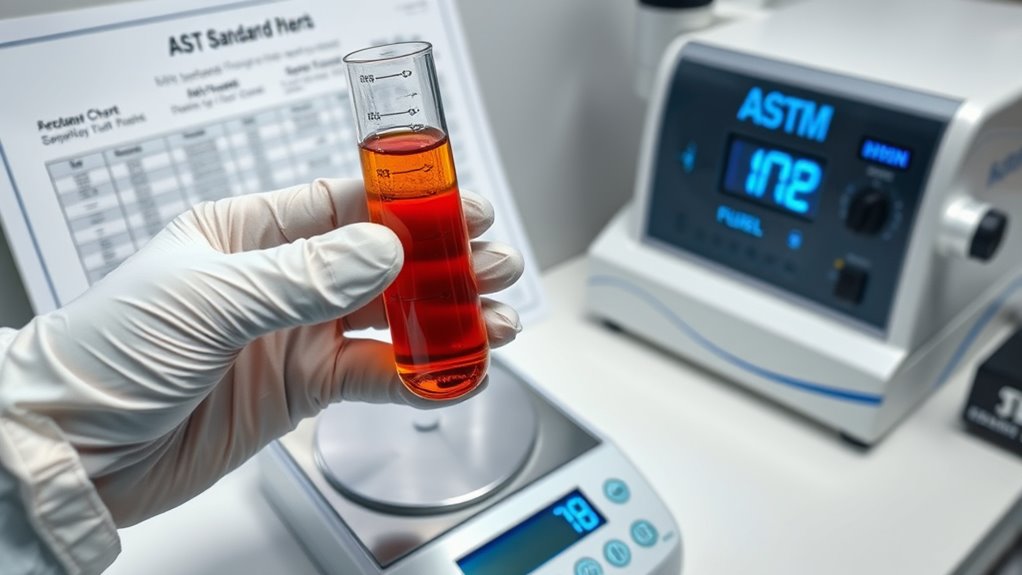
Fuel quality testing is essential to guarantee your vehicle runs smoothly and efficiently. When you consider the importance of clean, high-quality fuel, it’s clear that testing plays a crucial role in maintaining optimal engine performance and preventing costly repairs. One of the key concerns in fuel testing is identifying fuel contamination, which can significantly impact your vehicle’s operation. Contaminants like water, dirt, rust, or microbial growth can infiltrate fuel during storage, transportation, or handling. Detecting these impurities early is vital to avoid engine misfires, knocking, or complete engine failure. To accomplish this, testing methodologies have been developed that allow precise identification of contaminants and fuel quality issues. These methods include a variety of laboratory procedures and field tests designed to evaluate fuel composition, detect impurities, and ensure compliance with industry standards.
Your fuel might look clean, but contamination isn’t always visible to the naked eye. Fuel contamination can originate from several sources, such as poor storage conditions, contaminated supplies, or equipment malfunctions. Addressing these issues requires reliable testing methods, which can range from simple visual inspections to advanced analytical techniques. For example, one common testing methodology involves performing a water separation test, which helps determine if water is present in the fuel—a major cause of engine corrosion and poor combustion. Other techniques include spectroscopic analysis, which identifies chemical impurities, and microbiological testing, to detect microbial growth that can clog fuel filters and injectors. These testing methodologies allow you to accurately assess fuel quality and take corrective measures before using compromised fuel in your vehicle. Regular testing based on industry standards such as those established by ASTM International provide clear guidelines for fuel testing. ASTM standards set thresholds for acceptable levels of contaminants and define testing procedures to verify compliance. By adhering to these standards, you ensure that the fuel you use meets the quality requirements necessary for safe and efficient operation. Regular testing based on ASTM methodologies helps you catch issues early, saving you money and preventing potential breakdowns. It also gives you peace of mind knowing that your fuel conforms to recognized quality benchmarks. Whether you’re managing a fleet or just caring for your personal vehicle, understanding and applying these testing methodologies aligned with ASTM standards can make a significant difference in maintaining fuel integrity and engine health.
Frequently Asked Questions
How Often Should Fuel Quality Tests Be Conducted?
You should conduct fuel quality tests regularly, ideally every time you receive a new fuel shipment or at least monthly to maintain fuel sample integrity. Following testing compliance procedures is vital to guarantee accurate results and prevent contamination. Frequent testing helps catch issues early, safeguarding your equipment and operations. Always document your test results carefully and adhere to your company’s testing schedule to stay compliant and verify consistent fuel quality.
What Equipment Is Used for Fuel Testing?
You’ll need specialized testing equipment to analyze fuel quality effectively. A fuel sampling kit ensures you gather representative samples, while devices like hydrometers, viscometers, and spectrometers help measure properties like density, viscosity, and contaminants. Testers for flash point and sulfur content are also vital. Using reliable testing equipment, you can detect issues early and prevent costly damage—your fuel analysis toolbox is your best weapon against subpar fuel!
Are There Regional Variations in ASTM Standards?
Regional compliance influences ASTM standard variations, so you’ll notice differences depending on where you operate. These variations guarantee standards suit local environmental conditions, regulations, and fuel formulations. You should always check regional requirements because some standards might be more stringent or adapted for specific climates. Staying informed helps you maintain compliance and quality control, ensuring your fuel meets local regulations and performs reliably across different regions.
How Do Fuel Additives Affect ASTM Test Results?
Think of fuel additives as mischievous actors on a stage—they can dramatically influence the scene. Additive impact on ASTM test results can either enhance or hinder test accuracy, making it tricky to get a true measure of fuel quality. Some additives may mask impurities or alter properties, leading to skewed data. To guarantee reliable results, it’s essential to understand how these substances interact with testing procedures.
What Are the Penalties for Non-Compliance With ASTM Standards?
If you don’t comply with ASTM standards, you face significant compliance penalties, including fines, product recalls, and operational shutdowns. Enforcement measures are strict, and authorities monitor adherence closely. Non-compliance can damage your reputation and lead to legal action, so it’s vital to guarantee your fuel products meet all ASTM requirements. Staying compliant helps you avoid penalties and maintain trust with regulators and customers alike.
Conclusion
By understanding fuel quality testing and ASTM standards, you guarantee your engine runs smoothly and efficiently. Regular testing helps catch issues early, saving you time and money. Remember, a stitch in time saves nine—staying proactive keeps your equipment in top shape. Trust in proper standards and testing to keep your fuel reliable and your performance high. When you prioritize quality, you fuel success every time.