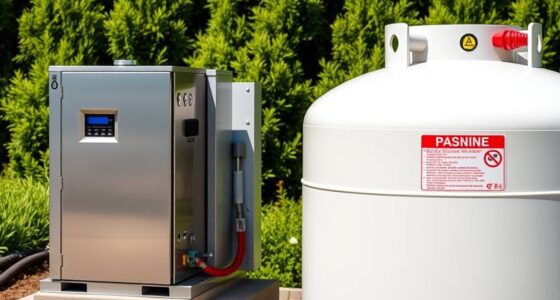

To effectively manage fuel leaks and spills, you should use properly calibrated sensors for accurate detection and install robust containment materials like berms and absorbent pads. Regularly test and maintain your systems, ensuring sensors respond promptly and containment areas are ready for immediate action. Strategic system layout and staff training further enhance safety. By combining these practices, you can prevent environmental damage and stay compliant—continue to explore for detailed strategies and best practices.
Key Takeaways
- Regular calibration of sensors ensures accurate detection of fuel leaks and reduces false alarms.
- Implementing secondary containment systems like berms and spill trays prevents fuel spread during leaks.
- Strategic placement of containment materials enables quick response and minimizes environmental contamination.
- Integrating sensor maintenance with containment protocols enhances overall spill management effectiveness.
- Training staff on detection calibration and spill response procedures ensures rapid and effective containment actions.

Detecting fuel leaks early and containing spills promptly are pivotal steps in preventing environmental damage and ensuring safety. When it comes to leak detection, sensor calibration plays an essential role. Properly calibrated sensors are indispensable for accurately identifying even small leaks before they escalate into major issues. Regular sensor calibration ensures that the detection equipment remains sensitive and reliable, reducing false alarms and missed leaks. You should routinely test and adjust sensors according to manufacturer guidelines, especially after maintenance or sensor replacement. This proactive approach helps you maintain confidence in your detection system, allowing you to respond swiftly when a leak occurs.
Regular sensor calibration is vital for reliable leak detection and swift response.
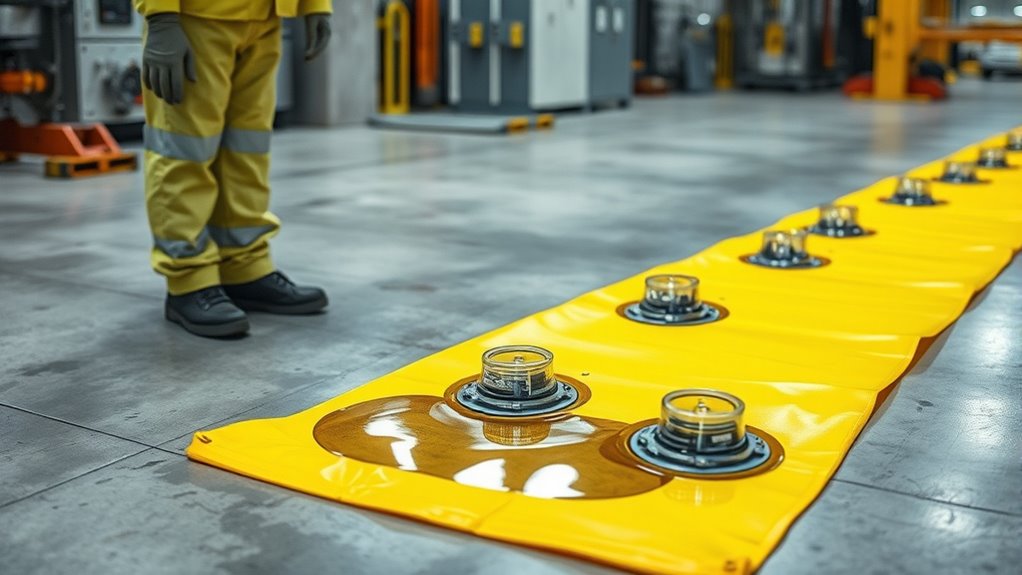
In addition to sensor calibration, choosing the right containment materials is indispensable for effective spill management. The materials you select for containment must withstand exposure to fuel and environmental conditions, preventing leaks from spreading and causing further damage. Common containment materials include durable berms, absorbent pads, and spill pallets made from high-density polyethylene or other resistant plastics. These materials should be stored nearby and inspected regularly to guarantee integrity. When a spill happens, having the appropriate containment materials at hand enables you to act immediately, minimizing the risk of soil or water contamination.
You should also consider the layout of your containment setup. Properly designed containment zones can direct spilled fuel away from sensitive areas and towards collection points. Incorporate secondary containment systems, such as double-walled tanks or spill trays, to provide an extra layer of security. These systems are especially useful in high-risk environments where leaks could cause significant environmental or safety hazards. Regular inspection and maintenance of containment materials help you detect signs of wear or degradation early, so you can replace them before they fail.
Implementing a thorough leak detection and spill containment plan involves integrating sensor calibration procedures with the strategic placement of containment materials. Training your staff on proper calibration techniques and spill response protocols ensures everyone is prepared to act quickly. By maintaining calibrated sensors and using suitable containment materials, you create a robust defense against fuel leaks and spills. This combination not only helps you comply with environmental regulations but also protects your personnel, assets, and the surrounding environment. In the end, being proactive in these areas reduces the potential for costly cleanup operations and environmental fines, reinforcing your commitment to safety and sustainability. Additionally, understanding the different types of camping gear and how to select the right equipment can help ensure your safety and comfort during emergency response situations.
Frequently Asked Questions
What Are the Latest Innovations in Fuel Leak Detection Technology?
You can now leverage advanced sensors and drone surveillance for the latest innovations in fuel leak detection. Advanced sensors provide real-time data, quickly identifying leaks before they cause significant damage. Drones offer an efficient way to monitor large areas, capturing high-resolution imagery and detecting leaks from above. Together, these technologies improve detection accuracy, reduce response times, and enhance safety measures, making leak prevention more effective and proactive.
How Often Should Spill Containment Systems Be Inspected?
You should inspect spill containment systems regularly, ideally based on your maintenance schedules and local regulations. Typically, inspections occur monthly or quarterly to ensure they function properly. During these checks, look for signs of damage, leaks, or deterioration. Promptly address any issues you find to prevent environmental contamination or costly repairs. Consistent inspection frequency helps uphold system integrity and ensures compliance with safety standards.
Are There Legal Requirements for Spill Containment in Different Industries?
Yes, there are legal requirements for spill containment across different industries. You must follow legal standards set by local, state, or federal agencies to ensure industry compliance. These regulations vary depending on your industry, such as chemical manufacturing or oil storage, and often specify spill containment measures, reporting procedures, and inspection schedules. Staying informed about these legal standards helps you avoid penalties and safeguard the environment effectively.
How Do Climate Conditions Affect Spill Containment Effectiveness?
Climate impact markedly influences spill containment effectiveness by introducing containment challenges such as heavy rainfall, temperature fluctuations, and strong winds. These conditions can weaken barriers, cause spills to spread faster, or hinder cleanup efforts. You should regularly assess and adapt your containment strategies to account for climate variations, ensuring that your spill response remains effective despite changing weather patterns. Proactive planning helps mitigate risks posed by climate impact on containment systems.
What Training Is Necessary for Personnel Handling Fuel Leak Detection?
You need specialized training in safety protocols and emergency response to handle fuel leak detection effectively. This includes understanding how to identify leaks quickly, use detection equipment properly, and follow safety procedures to safeguard yourself and others. Additionally, training should cover spill containment measures, reporting protocols, and emergency response actions to minimize environmental impact and ensure safety during incidents. Regular refresher courses keep your skills sharp and up to date.
Conclusion
By implementing effective fuel leak detection and spill containment measures, you can prevent costly environmental damage. Did you know that over 1.3 million gallons of fuel are spilled annually worldwide? Staying proactive not only protects the environment but also saves you money and legal trouble. Take quick action when needed, regularly inspect your systems, and stay informed about the latest technology. Your efforts make a significant difference in keeping our planet safe and clean.