
To master lightning and surge basics in a weekend, start by understanding how thunderstorms build static charges and produce lightning through stepped leaders and positive streamers. Learn how electrical surges happen from lightning strikes or power grid issues, and identify vulnerable equipment. Implement simple protective measures like grounding, installing surge protectors, and maintaining proper wiring. By grasping these essentials, you’ll be better prepared; exploring further reveals even more ways to protect your home and devices effectively.

Get backup power and energy gear delivered free with Prime
- Fast, free delivery on millions of items
- Prime Video, Amazon Music and more included
- Member-only deals all year
Key Takeaways
- Understand lightning formation: static charge buildup, stepped leaders, and the connection with ground positive streamers.
- Identify common causes of surges: lightning strikes and power grid issues affecting electrical devices.
- Learn essential surge protection devices: surge protectors, arresters, TVS diodes, and MOVs, and their proper installation.
- Implement grounding and bonding techniques: use dedicated rods, connect metal parts, and ensure tight, corrosion-free connections.
- Develop a basic lightning and surge safety plan: install protective devices, stay indoors during storms, and keep emergency supplies ready.
Understanding Lightning: Nature’s Power and How It Forms
Lightning is one of nature’s most powerful displays of energy, occurring when static electricity builds up in thunderstorms. During this process, charges separate within the cloud, creating a difference between positively and negatively charged regions. When this electric potential becomes too strong, a sudden discharge happens—known as a cloud-to-ground strike. The lightning formation begins with a stepped leader, a channel of ionized air that moves downward from the cloud. As it nears the ground, positive streamers rise to meet it. When they connect, a powerful surge of electricity travels along this path, lighting up the sky. This process releases an immense burst of energy, producing the flash we see and the thunder we hear. Understanding this natural phenomenon helps you appreciate its raw power and complexity, especially considering how high contrast ratios in projectors can mimic the dramatic variations in lighting and shadow.
The Science of Electrical Surges: What They Are and How They Occur
Electrical surges are sudden increases in voltage that can flow through your electrical systems, often causing damage to appliances and electronics. These surges happen when there’s a rapid transfer of electrical energy, frequently caused by lightning formation or power grid issues. Lightning strikes are a common surge cause, sending a powerful jolt through power lines. Understanding how surges occur helps you protect your devices better. Additionally, the rise in cybersecurity threats emphasizes the importance of safeguarding your digital infrastructure from surge-like disruptions.
Key Factors Influencing Surge and Lightning Damage
Your home’s grounding system plays a crucial role in directing lightning strikes safely away, reducing damage risk. The vulnerability of your equipment determines how easily it can be harmed by surges, making protection measures essential. Surge protection devices can considerably limit damage, but their effectiveness depends on proper installation and maintenance. Additionally, adopting a lifestyle of regular maintenance and awareness can significantly enhance your overall surge and lightning safety strategy.
Grounding Effectiveness
Have you ever wondered how effective grounding can minimize surge and lightning damage? Grounding effectiveness plays a vital role in protecting your electrical system. Proper lightning grounding ensures that lightning strikes are safely directed into the earth, reducing the risk of damage. The quality of your grounding system—its resistance, placement, and materials—directly impacts its ability to dissipate energy quickly. A well-designed lightning grounding system creates a low-resistance path, preventing dangerous voltage buildup. Ensuring compliance with safety standards and regulations helps maintain the integrity of your grounding system. If your grounding isn’t effective, surges can seek alternative paths, increasing the likelihood of damage to sensitive equipment. Regular testing and maintenance of your grounding system are essential to ensure it remains effective over time. Prioritize quality lightning grounding to safeguard your property and keep your electrical systems resilient against lightning strikes.
Equipment Vulnerability Levels
The vulnerability of equipment to surge and lightning damage depends on several key factors that influence how susceptible it is to voltage spikes. Your equipment vulnerability is shaped by design, age, and shielding. Older devices or those lacking proper insulation are more prone to damage. Equipment resilience refers to how well your devices can withstand transient voltages; higher resilience means better protection against surges. Sensitive electronics with minimal built-in protection face greater risks, especially if they’re connected directly to power lines. Additionally, the quality of internal components influences resilience—robust components can better absorb or divert voltage surges. The presence of surge protectors can significantly mitigate risks and reduce potential damage during electrical disturbances. Recognizing these factors helps you assess which equipment needs extra protection, ensuring you minimize damage and extend your gear’s lifespan during lightning storms or power surges.
Surge Protection Devices
What factors determine the effectiveness of surge protection devices (SPDs) in guarding your equipment against lightning strikes and power surges? First, consider the SPD’s Joule rating—the higher, the better at absorbing energy. Proper installation is critical; an SPD must be correctly grounded and positioned at your service entrance. Be aware of lightning myths, like believing SPDs prevent all damage—they don’t. Similarly, surge myths suggest SPDs eliminate all risk, which isn’t true. Instead, SPDs reduce the risk by diverting excess energy, but no device is foolproof. Choose SPDs certified by recognized standards, and ensure they match your system’s voltage. Regular maintenance and timely replacement are essential to keep protection reliable. Additionally, understanding risk management strategies can help you better prepare for unexpected power events, ensuring your equipment remains safe.
Recognizing Vulnerable Systems and Equipment
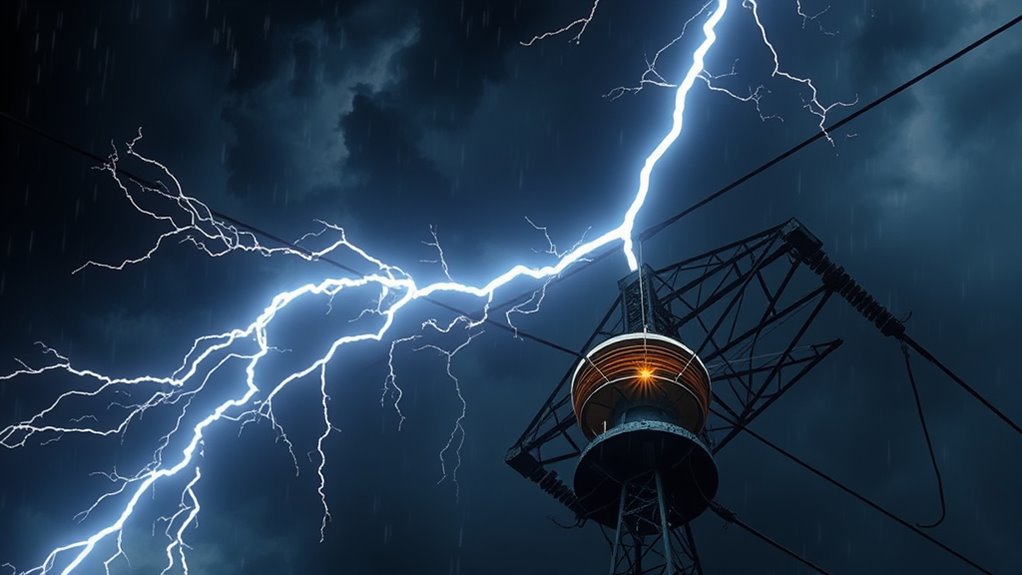
Understanding which systems and equipment are most vulnerable during lightning and surge events is essential for effective protection. Vulnerable electronics, such as computers, modems, and home entertainment systems, are especially at risk because of their sensitivity to voltage spikes. System susceptibility varies depending on factors like age, design, and shielding. For instance, older devices or those lacking proper surge protection are more prone to damage. Identifying these vulnerable components allows you to prioritize safeguarding critical equipment. Pay close attention to devices connected directly to power lines or external sources, as they face higher risks. Recognizing the susceptibility of your systems helps you implement targeted protection measures and avoid costly damage from lightning-induced surges. Additionally, understanding which electronic components are most prone to damage can help you make better decisions about protective devices and strategies.
Basic Methods for Protecting Against Lightning Strikes
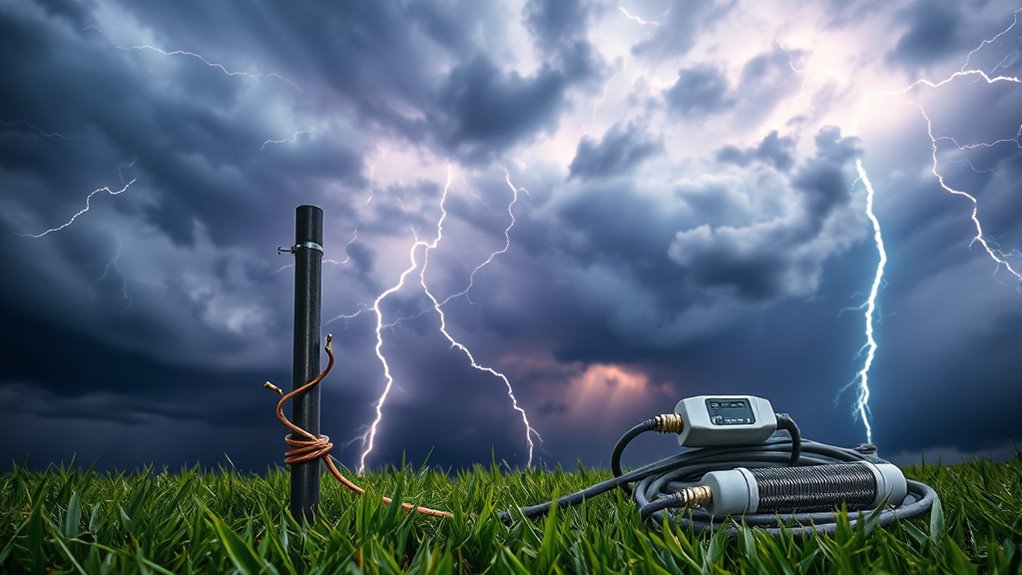
Protecting your systems from lightning strikes begins with implementing straightforward, effective measures that reduce the risk of damage. Start by understanding storm safety practices, such as staying indoors during thunderstorms and avoiding contact with water or conductive materials. Debunk common lightning myths—like thinking tall structures are always safe—to prevent risky assumptions. Installing proper grounding and lightning rods direct strikes safely into the ground, shielding your equipment. Keep cables and antennas away from windows and exterior walls, where strikes are more likely. Regularly inspect and maintain these protective measures to ensure they’re functioning correctly. Utilizing aesthetic wall organization systems can also help keep cables and wires tidy and less vulnerable during storms. While no method guarantees complete protection, combining storm safety awareness with basic lightning protection techniques substantially lowers your risk of damage and keeps your systems safe during thunderstorms.
Essential Surge Protection Devices and How They Work
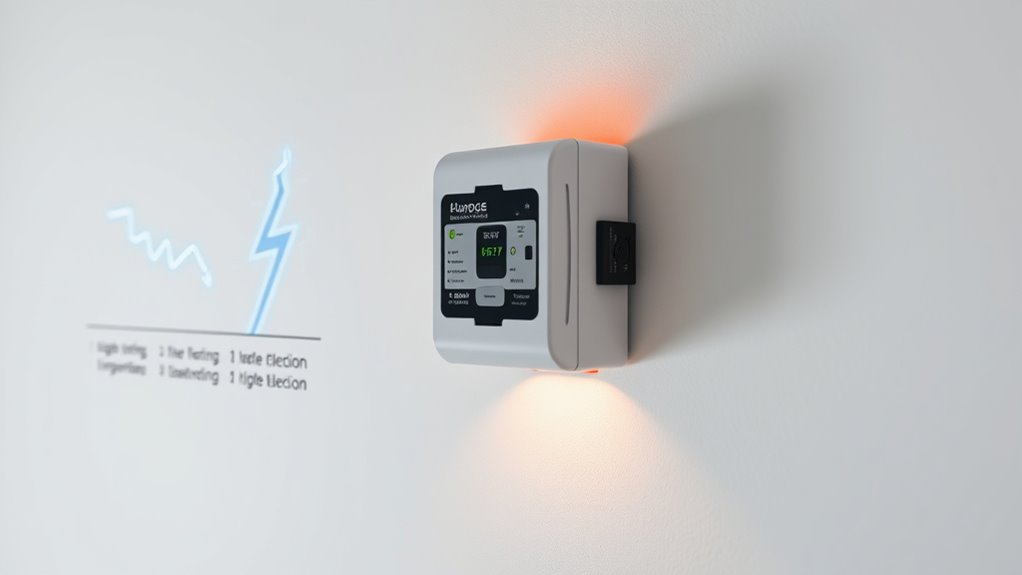
Surge protection devices are essential tools that safeguard your electrical systems from voltage spikes caused by lightning strikes, power fluctuations, or other electrical disturbances. They can absorb or divert transient events and electromagnetic pulses that could damage your equipment. Common devices include surge protectors, surge arresters, and transient voltage suppressors (TVS). These devices work by shunting excess energy away from sensitive circuits, preventing high-voltage surges from reaching your devices. Here’s a quick comparison:
| Device Type | How It Works |
|---|---|
| Surge Protectors | Divert excess voltage to ground during transient events |
| Surge Arresters | Protect equipment by limiting voltage spikes |
| TVS Diodes | Clamp high-voltage pulses from electromagnetic pulses or lightning strikes |
| Metal Oxide Varistors (MOVs) | Absorb surge energy and protect connected circuits |
Additionally, understanding the importance of proper installation is crucial to ensure these devices function effectively during electrical surges.
Practical Steps to Minimize Risk and Damage at Home or Work
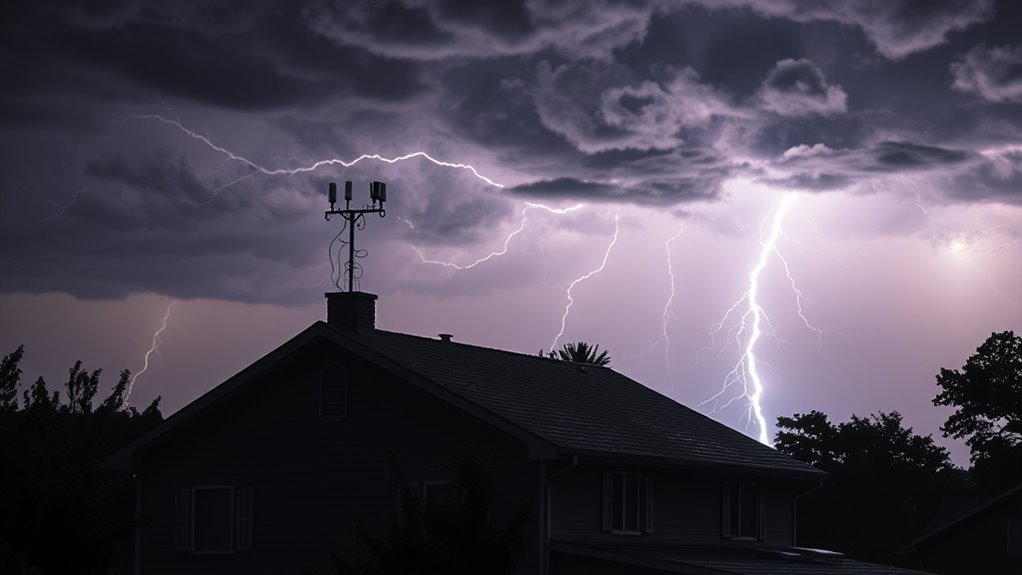
You can reduce lightning and surge risks by ensuring proper grounding and bonding of your electrical system. Installing surge protection devices (SPDs) provides an extra layer of defense for your appliances and electronics. Taking these practical steps helps safeguard your home or workplace from unexpected power surges and damage.
Grounding and Bonding Techniques
Grounding and bonding are essential practices for reducing the risk of electrical damage caused by lightning strikes and power surges. Proper grounding techniques guarantee that excess energy is safely directed into the earth, while effective bonding methods keep electrical systems at the same potential, preventing dangerous voltage differences. To implement these techniques:
- Use a dedicated grounding rod connected to your main electrical panel with a thick copper wire.
- Bond all metal components, such as water pipes and conduit, to the grounding system.
- Regularly inspect connections to ensure they’re tight and corrosion-free, maintaining system integrity.
- Incorporate surge protection devices to further safeguard your electrical system against transient voltage increases.
Surge Protection Devices (SPDs)
Have you taken steps to protect your electrical systems from sudden voltage spikes? Surge Protection Devices (SPDs), like surge suppressors, are essential for minimizing damage caused by lightning strikes or power surges. Installing SPDs near your main electrical panel or outlets helps block excess voltage from reaching sensitive devices. Consider adding lightning rods to direct lightning strikes safely into the ground, reducing the risk of surges. Here’s a quick comparison:
| Device Type | Purpose |
|---|---|
| Surge suppressors | Limit voltage spikes in outlets |
| Lightning rods | Redirect lightning safely to ground |
| Whole-house SPDs | Protect entire electrical system |
Using these devices effectively minimizes risk, keeping your home or work environment safer during storms.
Developing a Simple Lightning and Surge Preparedness Plan
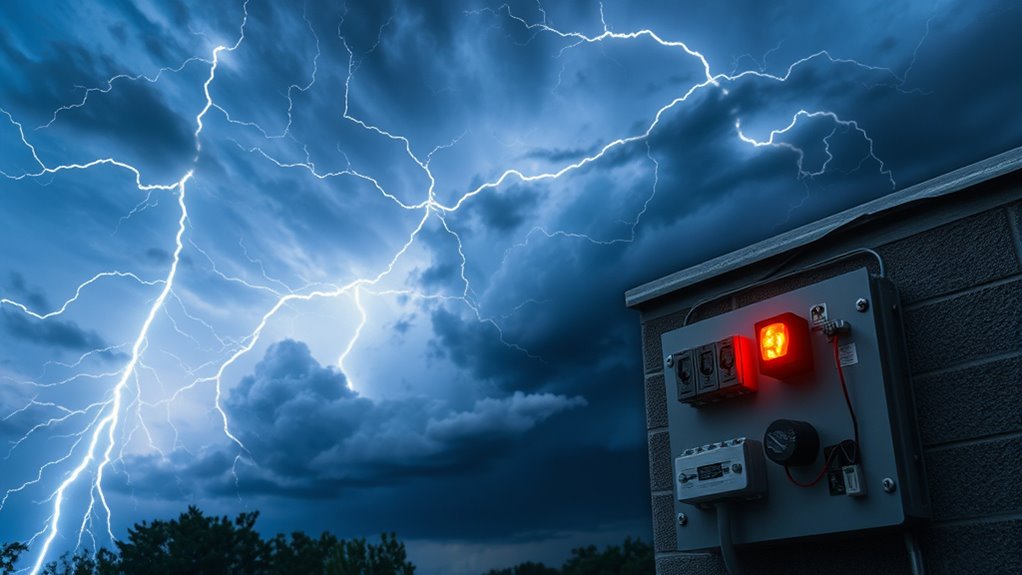
Creating a straightforward lightning and surge preparedness plan is essential for protecting your home and electronics. To improve lightning safety and surge prevention, you need clear steps. First, identify safe areas in your home, like a basement or interior room, where you can take shelter during a storm. Second, install surge protection devices on main electrical panels and sensitive electronics to prevent damage. Third, stay informed about weather forecasts and lightning alerts, so you can act quickly. Keep a lightning safety kit handy with batteries, flashlights, and emergency contacts. By establishing these simple measures, you reduce risks and ensure you’re prepared for any surge or lightning event. A solid plan keeps your family safe and your devices protected.
Frequently Asked Questions
How Do I Identify if My Electrical System Is Vulnerable to Lightning Strikes?
You can identify if your electrical system is vulnerable to lightning strikes by inspecting your grounding techniques and ensuring they are properly installed and maintained. Check for a solid connection to a grounding rod or system. Also, verify if you have surge protection devices in place on your main electrical panel and key appliances. If you notice any weaknesses, upgrade your grounding and install surge protectors to reduce vulnerability to lightning damage.
What Are the Most Cost-Effective Surge Protection Options for Homeowners?
You should consider affordable solutions like surge protector strips for your electronics and whole-house surge protectors for your main panel. These options are cost-effective and offer good protection against lightning-induced surges. Many surge protectors feature DIY installation, allowing you to save on professional fees. Prioritize devices with high joule ratings for better durability. Combining these solutions helps safeguard your home without breaking the bank, ensuring peace of mind during storm season.
How Often Should Surge Protection Devices Be Tested or Replaced?
You should perform surge device maintenance and testing at least once a year to guarantee proper protection. Regular testing helps identify if your surge protection devices are still functioning effectively, especially after thunderstorms or power surges. Replace any devices showing signs of wear or if they’ve been damaged during a surge. Staying proactive with testing frequency keeps your home’s electrical system safe and reduces the risk of damage from future surges.
Can Lightning Damage Be Completely Prevented With Basic Precautions?
You can’t fully prevent lightning damage, but with proper grounding techniques and lightning rods, you can reduce risks markedly. Statistically, lightning strikes cause billions in damages annually, yet effective precautions protect your property. Installing lightning rods directs strikes safely to the ground, while grounding techniques dissipate electrical surges. While no method guarantees complete prevention, combining these strategies minimizes the chance of damage and keeps your electronics and structures safer during storms.
What Are the Signs of Surge Damage in Electronic Equipment?
You’ll notice surge damage through electronic symptoms like devices not powering on, unusual noises, or frequent resets. Surge damage often causes visible signs such as burnt components or a burnt smell. If your equipment exhibits these symptoms after a storm or power fluctuation, it’s likely affected by surge damage. Regularly inspecting and testing your devices helps catch issues early, preventing further damage and ensuring your electronics stay protected.
Conclusion
So, after mastering lightning and surge basics in just a weekend, you’d think you’re invincible, right? Ironically, the more you know, the more you realize how unpredictable and relentless nature’s power can be. While your new protections can save your equipment, they can’t stop a freak lightning strike. So, enjoy your newfound knowledge—just remember, even the best plans can be swept away by a storm’s whim. Stay prepared, and stay humble.
Halloween Picks
halloween
As an affiliate, we earn on qualifying purchases.