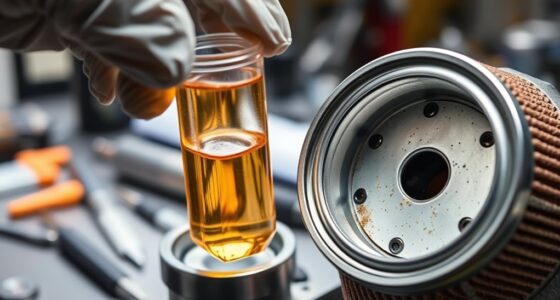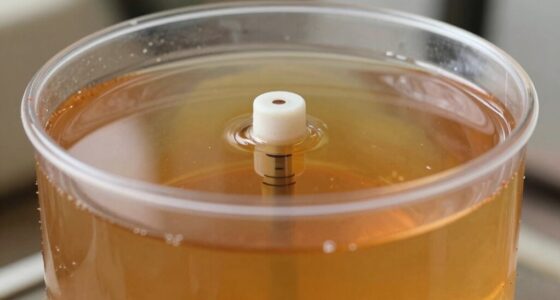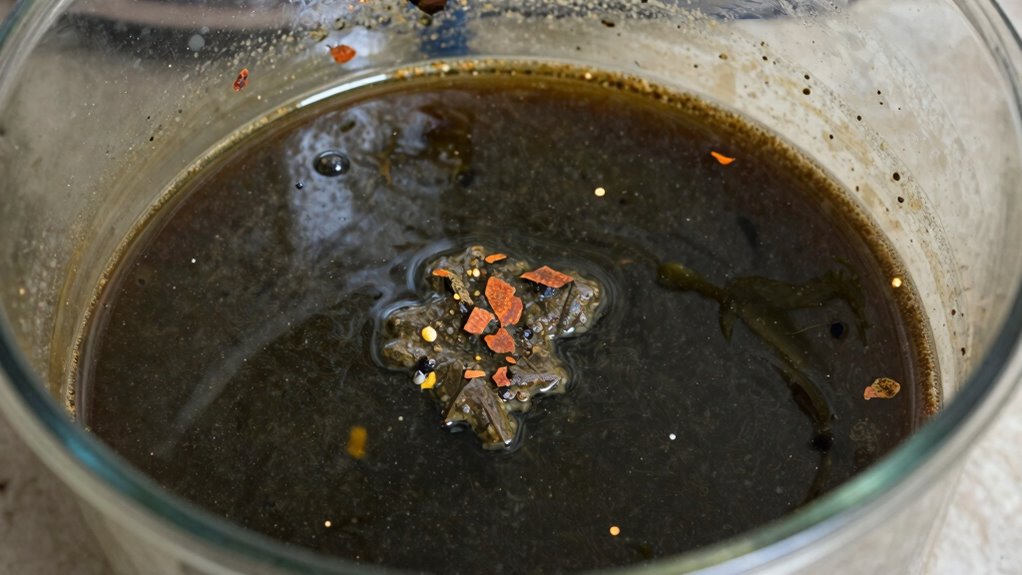

Fuel polishing removes harmful contaminants like dirt, rust, microbial growth, and water from your fuel system. It clears out sludge and tiny particles that can clog filters and damage injectors. By eliminating water, it helps prevent corrosion and microbial contamination that impair engine performance. This process guarantees your engine receives cleaner, high-quality fuel, improving efficiency and prolonging lifespan. Keep going to discover how fuel polishing keeps your system running smoothly and protects your investment.

Get backup power and energy gear delivered free with Prime
- Fast, free delivery on millions of items
- Prime Video, Amazon Music and more included
- Member-only deals all year
Key Takeaways
- Dirt, rust, and particulate matter that contaminate fuel and cause engine wear
- Water from fuel, preventing corrosion and microbial growth
- Microbial colonies and their sludge that clog fuel lines and filters
- Impurities from storage tanks and environmental exposure
- Fuel degradation products that reduce fuel quality and efficiency
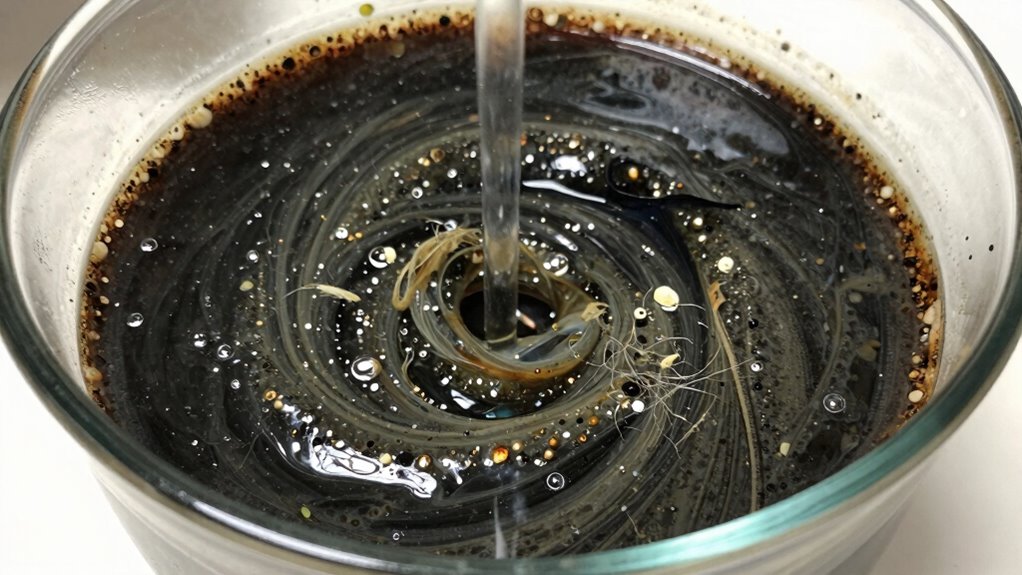
Fuel polishing is a crucial process that improves the quality and performance of your fuel system. When you invest in fuel polishing, you’re actively removing harmful substances that can compromise your engine’s efficiency. Over time, fuel can become contaminated with various impurities, which, if left unchecked, can lead to clogged filters, poor combustion, and even engine damage. The primary goal of fuel polishing is to clear out these fuel contaminants, guaranteeing your fuel remains clean and your engine runs smoothly.
During the process, your fuel is circulated through specialized equipment that filters out particles, water, and other impurities. These contaminants often originate from storage tanks, environmental exposure, or degraded fuel over time. Common fuel contaminants include dirt, rust, microbial growth, and water. Microbial growth, in particular, can be insidious, forming sludge that clogs fuel lines and filters, impairing fuel flow and reducing engine efficiency. Fuel polishing effectively removes these microbial colonies and their byproducts, preventing them from causing operational issues.
Fuel polishing circulates fuel through specialized filters to remove particles, water, and microbial growth, protecting engine performance.
Water is a significant concern in fuel systems because it doesn’t burn and can lead to corrosion and microbial growth. Fuel polishing separates and removes water from the fuel, which helps maintain the integrity of your fuel system and prevents corrosion of metal components. Proper separation of water also minimizes fuel system corrosion, which can cause long-term damage. This process also aids in preventing microbial contamination, which is critical for maintaining fuel quality over time. By eliminating these unwanted substances, you reduce the risk of fuel line blockages and engine misfires, consequently enhancing overall engine efficiency. Additionally, removing water can prevent fuel degradation, which occurs when water facilitates the breakdown of fuel quality over time. Implementing regular fuel polishing can also help detect early signs of fuel deterioration, allowing for timely maintenance.
Furthermore, fuel polishing also removes fine particulate matter, such as dirt and rust particles, that can enter the fuel system through contaminated storage or handling. These tiny particles can cause wear and tear on fuel injectors and pumps, leading to decreased performance over time. Removing these particles ensures that your fuel burns more completely and efficiently, translating into smoother engine operation and better fuel economy.
In essence, fuel polishing is about more than just cleaning fuel—it’s about protecting your entire fuel system. It removes fuel contaminants like dirt, rust, microbial growth, and water that can hinder engine efficiency and cause costly repairs. By regularly polishing your fuel, you guarantee that your engine receives clean, high-quality fuel, enabling it to perform at its best. This process not only prolongs the life of your engine but also saves you money in the long run by reducing maintenance needs and improving fuel economy. Proper fuel maintenance, including fuel stabilization, is vital for ensuring fuel quality over time and preventing degradation.
Frequently Asked Questions
Can Fuel Polishing Remove Water From the Fuel Tank?
Yes, fuel polishing can remove water from your fuel tank. It works through water removal techniques that separate and extract water and contaminants, preventing issues like microbial growth. While primarily designed to clean fuel, fuel polishing also enhances microbial control by removing water that fosters bacteria and fungi. Regularly polishing your fuel ensures cleaner fuel, reduces corrosion, and maintains ideal engine performance.
Does Fuel Polishing Eliminate All Types of Bacteria?
Fuel polishing greatly reduces microbial growth and removes many fuel contaminants, but it doesn’t eliminate all bacteria. Some bacteria can be resistant or hidden within sediments, making complete eradication challenging. While fuel polishing improves fuel quality by targeting microbial growth and contaminants, it’s wise to perform regular maintenance and testing to confirm your fuel tank remains free of harmful bacteria, especially if you notice fuel-related issues.
How Often Should Fuel Polishing Be Performed?
Coincidentally, the right interval for fuel polishing depends on your fuel’s stability and sediment buildup. Typically, you should perform fuel polishing every 6 to 12 months, or whenever you notice decreased engine performance or contamination signs. Regular maintenance helps prevent sediment accumulation and maintains fuel quality. Keep an eye on fuel stability and sediment levels, as these factors influence how often you’ll need to polish your fuel for peak engine health.
Will Fuel Polishing Improve Engine Performance Immediately?
Fuel polishing can improve engine performance quickly by enhancing fuel quality, which directly boosts engine efficiency. As you use the process, you’ll notice smoother operation and potentially better fuel economy. Fuel polishing removes contaminants like water, dirt, and sediments, helping your engine run cleaner and more efficiently. While some improvements are immediate, maintaining regular fuel polishing guarantees consistent engine performance and longevity over time.
Is Fuel Polishing Effective for All Fuel Types?
Surprisingly, fuel polishing isn’t a one-size-fits-all solution. It works best when your fuel is compatible and easily filtered. If you’re dealing with biodiesel or ethanol blends, you might find limited benefits because of their unique properties. The process’s filtration efficiency varies depending on fuel type, so it’s not equally effective across everything. Always check fuel compatibility first, or you might just be polishing a problem that doesn’t improve.
Conclusion
By now, you understand that fuel polishing is your secret weapon against the chaos lurking in your tanks. It’s not just a simple process—it’s like a mighty purifier, sweeping away contaminants, water, and microbial growth with the precision of a laser. When you invest in fuel polishing, you’re fundamentally safeguarding your engine’s life, ensuring it runs smoother than a silk ribbon in a hurricane. Don’t let dirty fuel be the villain—fight back with the power of pristine clarity.
Evergreen bestsellers Picks
bestsellers
As an affiliate, we earn on qualifying purchases.