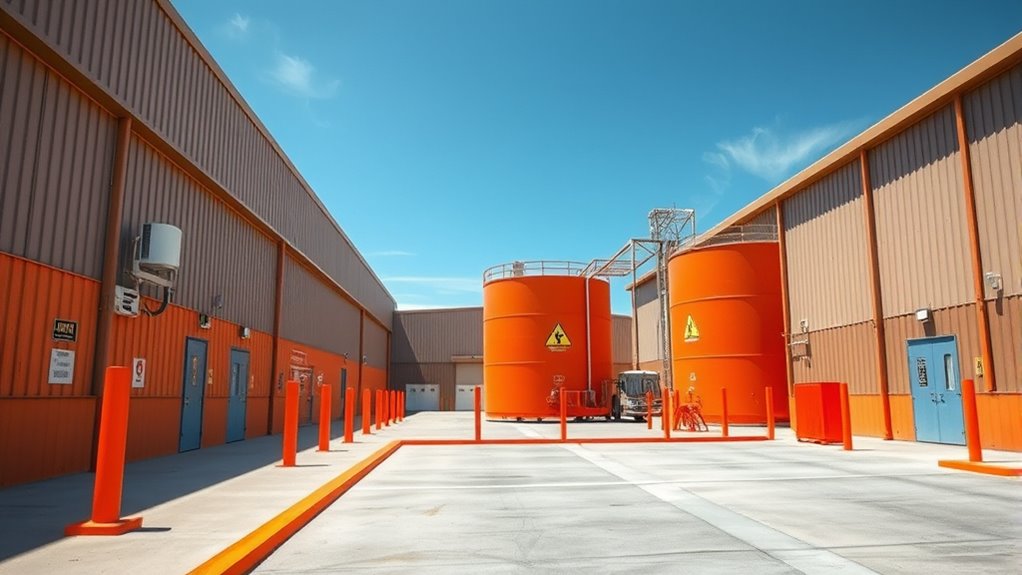

To meet fire code requirements for fuel storage buildings, you must use approved, fire-resistant containers and guarantee proper placement away from ignition sources, buildings, and property lines. You need effective ventilation systems to prevent vapor buildup and secondary containment like spill pallets. Installing automatic sprinklers or foam suppression systems and keeping fire extinguishers nearby are essential. Proper personnel training and compliance with local safety standards help minimize fire risks—discover more safety measures and regulations to stay compliant and protect your property.
Key Takeaways
- Store fuels in approved, fire-resistant containers with proper labeling and secondary containment systems.
- Maintain minimum clearance distances from buildings, ignition sources, and property lines per fire code.
- Equip storage areas with adequate ventilation to prevent vapor accumulation and ensure safe dispersion.
- Install fire suppression systems, such as sprinklers or foam, and keep fire extinguishers accessible nearby.
- Ensure personnel are trained on safety procedures, emergency response, and stay updated on local regulations and code amendments.
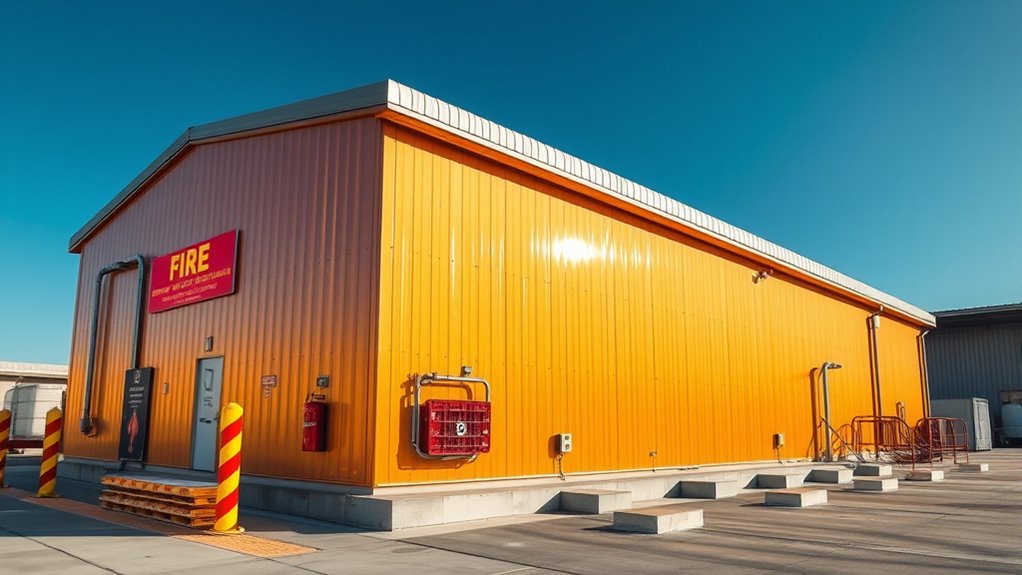
When it comes to storing fuel safely, adhering to fire code requirements is essential to prevent accidents and protect property. Proper fuel safety begins with understanding and following the storage regulations set by local authorities and safety organizations. These regulations are designed to minimize risks associated with flammable liquids and ensure that storage facilities operate within safe parameters. When planning or managing a fuel storage building, you need to guarantee compliance with these codes to avoid costly penalties and, more importantly, safeguard lives.
Adhering to fire code requirements is vital for safe, compliant fuel storage that safeguards lives and property.
Fuel safety hinges on many factors, including the choice of storage containers, the placement of tanks, and the overall layout of the facility. Storage regulations specify the types of containers permitted, emphasizing the use of approved, fire-resistant tanks that reduce the chances of leaks or spills. These containers must be properly labeled and maintained to prevent deterioration that could compromise safety. Additionally, the placement of tanks must adhere to minimum distances from buildings, ignition sources, and property lines, reducing the risk of fire spreading in case of an incident. You should also consider installing secondary containment systems, such as dikes or spill pallets, to contain any leaks or spills and prevent environmental contamination.
Ventilation is another critical aspect of fuel safety. Storage buildings should be equipped with proper ventilation systems to prevent the accumulation of flammable vapors. Fire code requirements often specify the level of ventilation needed based on the quantity and type of fuel stored. This not only minimizes the risk of vapor buildup but also ensures that any accidental releases are quickly dispersed, reducing the chance of ignition. Proper ventilation can also help in maintaining a safe working environment for personnel.
Fire suppression systems are a fundamental element of storage regulations. Many codes require automatic sprinklers or foam systems tailored for flammable liquids. You should also keep fire extinguishers rated for Class B fires nearby, ensuring quick response if a fire breaks out. Regular inspections and maintenance of these safety systems are essential to keep them functional and compliant with fire codes.
Finally, training personnel on fuel safety procedures is a must. Everyone working around fuel storage should understand the risks, proper handling techniques, and emergency response protocols. Staying up-to-date with local storage regulations and fire code amendments helps you maintain compliance and guarantees that safety remains a top priority in your facility. By following these guidelines, you safeguard your property, your employees, and the environment from the dangers associated with fuel storage. Understanding fire safety regulations is crucial for maintaining a compliant and safe storage environment.
Frequently Asked Questions
Are There Specific Ventilation Standards for Fuel Storage Buildings?
Yes, there are specific ventilation standards for fuel storage buildings. You need to design your ventilation system to meet exhaust airflow standards that effectively remove vapors and prevent buildup. Make certain your ventilation system design incorporates adequate airflow rates, typically specified by local codes, to maintain safe air quality levels. Regular maintenance and inspections are essential to keep exhaust airflow standards consistent, reducing fire hazards and ensuring compliance with fire safety regulations.
How Often Must Fire Safety Inspections Be Conducted?
You must conduct fire safety inspections at least annually to guarantee safety compliance. Regular inspections help identify potential hazards and verify that all safety measures are in place, keeping your fuel storage building compliant with fire codes. Depending on local regulations, more frequent inspections might be necessary, especially if the storage involves large quantities or hazardous materials. Staying consistent with inspection frequency is key to preventing accidents and maintaining safety standards.
What Are the Signage Requirements for Fuel Storage Areas?
Think of signage like a lighthouse guiding ships safely; your fuel storage area’s signs must be highly visible and easy to read. You should include clear warning symbols that instantly communicate dangers, such as flammable or explosive hazards. Make sure signs are placed at all entry points and around the perimeter, maintained in good condition, and comply with fire code standards. This way, everyone can easily recognize hazards and take proper precautions.
Are There Exemptions for Small-Scale Fuel Storage Facilities?
You should know that small-scale exemptions often apply if your fuel storage facility stays within specific storage size limitations. These exemptions mean you might not need to follow all standard fire code requirements, but you should verify local regulations because rules can vary. Always check with your local fire authorities to confirm if your storage setup qualifies for exemptions, ensuring you stay compliant while avoiding unnecessary regulations.
What Training Is Required for Personnel Handling Fuel Storage?
You need to make certain your personnel handling fuel storage complete proper safety training and obtain the necessary personnel certification. This training covers safe handling, storage procedures, emergency response, and hazard prevention. By staying compliant with certification requirements and providing thorough safety training, you minimize risks and improve safety standards. Regularly update training programs to reflect current regulations and best practices, ensuring everyone on your team is prepared for potential emergencies.
Conclusion
So, next time you think those fire code rules are just extra paperwork, remember—they’re there to protect your fuel storage building and everyone around it. Ironically, ignoring these requirements might save you a little time now, but it could cost you everything later. It’s funny how safety measures, designed to prevent disaster, often seem like a hassle—until disaster strikes. Stay compliant, stay safe, and maybe, just maybe, you’ll avoid the fiery irony of neglect.