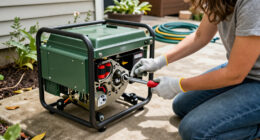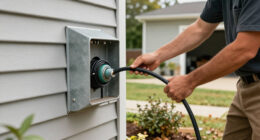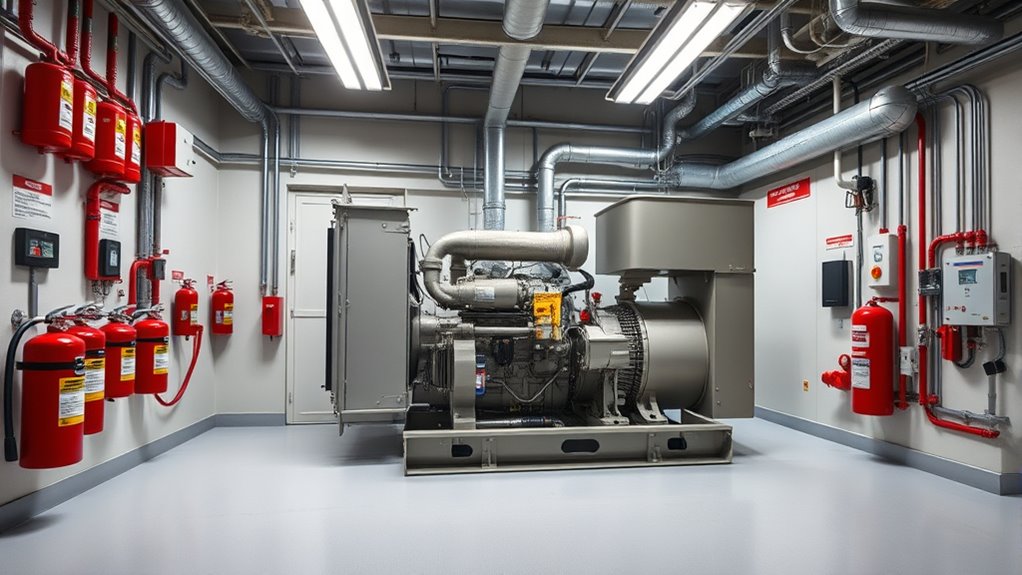
NFPA 37 specifies that your generator must be installed with proper fuel storage, keeping fuel in approved containers away from ignition sources, and in well-ventilated, cool locations. You should implement fire prevention measures like barriers, regular inspections, and maintaining a debris-free environment. Emergency shutdown systems need to be accessible and tested regularly, and staff should be trained on safety protocols. Continuing with this, you’ll discover essential steps to guarantee your setup meets all fire safety standards effectively.

Get backup power and energy gear delivered free with Prime
- Fast, free delivery on millions of items
- Prime Video, Amazon Music and more included
- Member-only deals all year
Key Takeaways
- Maintain proper separation distances between generators and combustible materials per NFPA 37 standards.
- Install fire-resistant barriers or shields around the generator to contain potential fires.
- Ensure fuel storage is in approved containers, well-ventilated, and kept away from ignition sources.
- Implement emergency shutdown systems with accessible switches and safety sensors for automatic hazard detection.
- Conduct regular inspections, testing, and personnel training to ensure compliance and readiness for fire safety protocols.
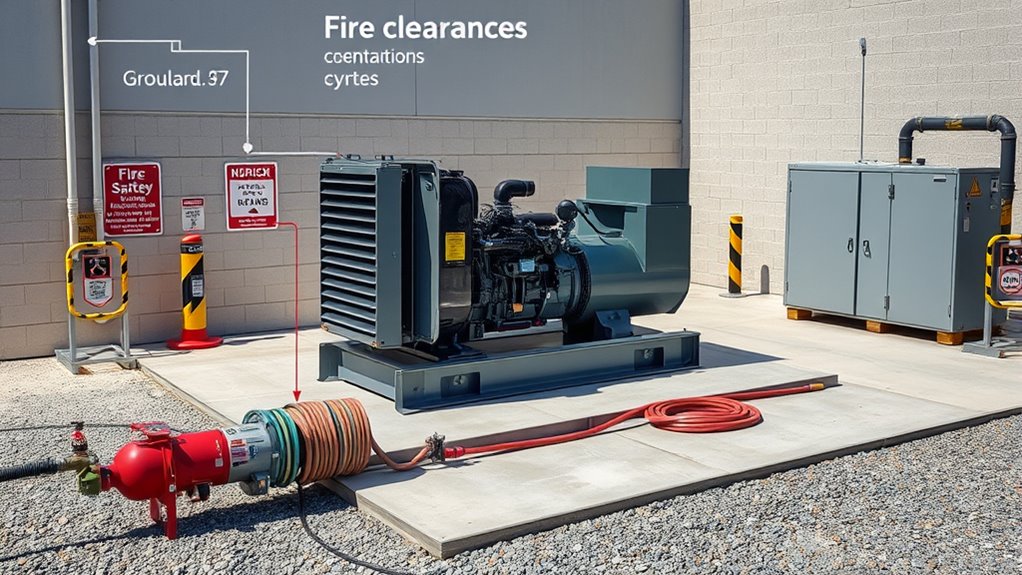
When installing a generator, adhering to NFPA 37 fire safety requirements is essential to guarantee safe operation and protect your property. One of the most important aspects is proper fuel storage. You need to ensure that fuel is stored in approved containers and in designated areas away from ignition sources. Keeping fuel tanks in well-ventilated, cool locations reduces the risk of leaks, spills, or fires. It’s also imperative to prevent fuel from accumulating near electrical equipment or sources of heat, which could ignite vapors. Regular inspections of fuel storage tanks and lines help catch leaks early, minimizing fire hazards. Using spill containment systems and secondary containment can further prevent accidental spills from spreading, reducing the risk of fire and environmental damage. Implementing these measures in accordance with safety standards helps create a comprehensive fire prevention strategy.
Another critical element outlined by NFPA 37 is the implementation of an emergency shutdown system. This system is designed to quickly shut down the generator in case of fire, fuel leaks, or other hazardous conditions. You should install emergency shutoff switches in accessible locations, clearly marked and easy to activate in an emergency. The shutdown system must be integrated with safety sensors that detect abnormal conditions, such as high temperature, smoke, or fuel leaks. When triggered, these sensors automatically activate the emergency shutdown, preventing escalation. Regular testing and maintenance of the shutdown system ensure it functions reliably when needed most. Proper training for personnel on how to activate the emergency shutdown is equally essential to respond swiftly during an emergency.
Adhering to these fire safety measures isn’t just about compliance; it’s about safeguarding lives and property. Proper fuel storage reduces the likelihood of ignition caused by leaks or spills, while an effective emergency shutdown system provides a critical fail-safe. You should also ensure that your generator installation includes adequate fire separation distances and that combustible materials are kept away from the unit. Installing fire-resistant barriers or shields around the generator can offer additional protection. Remember, following NFPA 37 standards isn’t optional; it’s a necessary step to minimize risks and ensure your generator operates safely and efficiently. Staying vigilant with routine inspections, maintenance, and staff training will help you stay compliant and ready to respond in case of an emergency. Protecting your property and lives begins with strict adherence to these essential fire safety requirements.
Frequently Asked Questions
How Often Should Generator Fire Safety Inspections Be Conducted?
You should conduct generator fire safety inspections at least annually. During these inspections, follow proper testing procedures to identify potential fire hazards, such as fuel leaks or electrical issues. Regular inspections help uphold your generator remains safe and compliant. Additionally, more frequent checks might be necessary if your generator operates under heavy use or in hazardous environments, so always assess your specific needs.
Are There Specific Fire Suppression Systems Required for Generators?
You should install fire suppression systems tailored for generators to enhance fire safety. These systems help contain fires quickly, reducing damage and ensuring safety during emergencies. Implementing appropriate fire suppression can streamline your emergency response, minimizing risks to personnel and property. Always follow local codes and standards, and consider consulting fire safety experts to select the right suppression system for your generator setup.
What Are the Fire Safety Requirements for Outdoor Generator Installations?
Think of your outdoor generator as a vigilant guardian in the open air. You need to install a fire barrier around it to contain potential fires and prevent them from spreading. Make certain easy access to an emergency shutdown to swiftly cut power when needed. Regular inspections and proper placement away from combustible materials are key to keeping your setup safe, like a sturdy shield protecting your assets from unseen threats.
How Does NFPA 37 Address Combustible Material Clearance?
NFPA 37 emphasizes maintaining proper combustible material clearance to reduce fire hazards. You should keep combustible materials at least 36 inches away from the generator’s sides and 48 inches from the top, depending on specific conditions. This clearance helps prevent fire hazards by reducing the risk of heat buildup and ignition. Regular inspections and clearances are essential to ensure ongoing safety and compliance with fire safety standards.
Are Special Fire Safety Protocols Needed During Generator Maintenance?
Sure, during generator maintenance, you definitely need special fire safety protocols—because who doesn’t love a little extra excitement? You’re responsible for fire hazard mitigation and safety protocol implementation, ensuring the area stays cool and safe. This means checking for fuel leaks, keeping fire extinguishers handy, and avoiding combustible materials nearby. Your diligence prevents fires and guarantees your maintenance session won’t turn into an unintended fireworks show.
Conclusion
By following NFPA 37 fire safety requirements, you guarantee your generator operates safely and reliably. Proper installation and maintenance reduce fire risks and protect your property. Are you ready to prioritize safety and keep your generator compliant? Remember, taking these precautions isn’t just about codes—it’s about safeguarding what matters most. Stay diligent, stay prepared, and enjoy peace of mind knowing you’ve done everything to prevent fire hazards.
Fall Picks
fall essentials
As an affiliate, we earn on qualifying purchases.