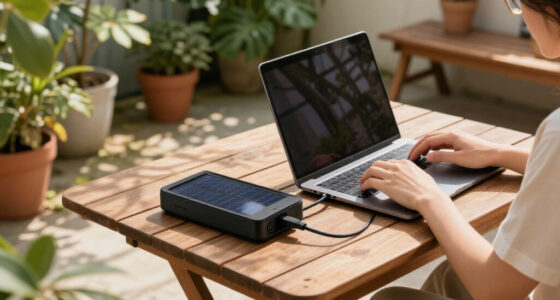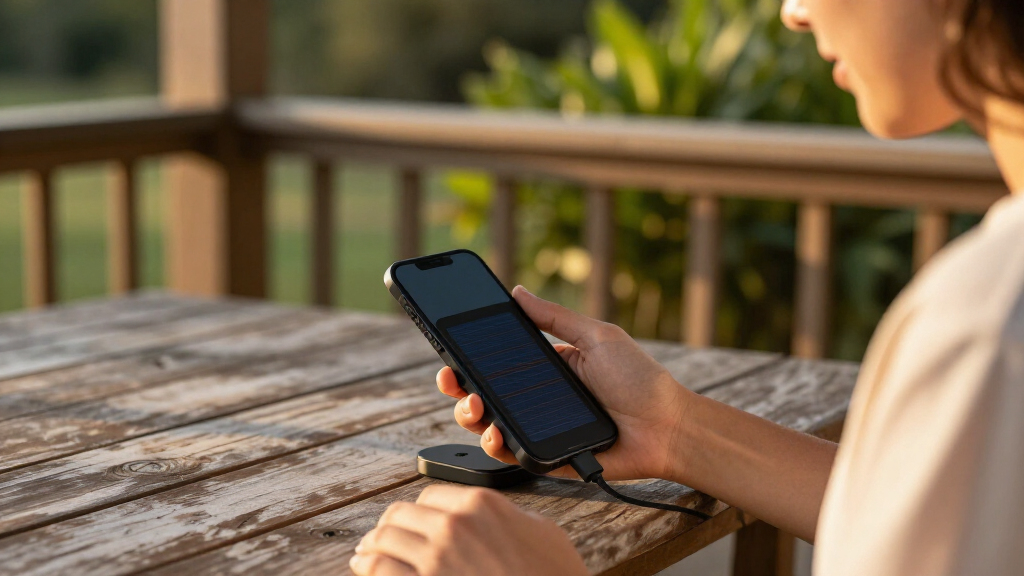

Solar-powered portable phone chargers promise off-grid power, but the reality is more nuanced: solar charging on a power bank is slow and unreliable as a primary charging method, so the best options are really great power banks with solar as a bonus. My top pick, the SOARAISE Solar Power Bank 48000mAh, stands out for its massive capacity, built-in cables, and wireless charging — the most complete package for camping and emergencies. For budget buyers, the Blavor Solar Power Bank 10,000mAh delivers dependable wireless charging and trusted build quality at a lower price, while the FEELLE 50000mAh Magnetic Charger with Hand Crank is the best emergency-preparedness choice thanks to its crank backup. The main tradeoffs to weigh are weight versus capacity, ruggedness versus pocketability, and honest solar input versus marketing claims. Keep reading for the full breakdown of all 15 models.

Get backup power and energy gear delivered free with Prime
- Fast, free delivery on millions of items
- Prime Video, Amazon Music and more included
- Member-only deals all year
Key Takeaways
- The SOARAISE 48000mAh and its sibling pick beat smaller 10,000mAh models on trips longer than two days, but at over a pound they’re backpack gear, not pocket gear — capacity came at a weight cost in every top-ranked model.
- Across all 15 chargers, solar input ranged from roughly 1 to 5 watts, meaning full solar recharges took days of direct sun; models ranked highest treated solar as emergency trickle charging rather than promising full off-grid independence.
- Duplicate listings (two Durecopow 20,000mAh units, three near-identical Blavor 10,000mAh banks) revealed that branding matters less than the actual cell quality, port selection, and included cables — price differences of $10–15 often bought no meaningful upgrade.
- Built-in cables were the biggest convenience differentiator in this lineup: chargers with four integrated cables (SOARAISE, Durecopow, the 49800mAh model) eliminated the packing hassle that plagued cable-free options like the YELOMIN 20000mAh.
- Inflated capacity claims were a pattern — several budget brands advertise 38,800mAh to 50,000mAh figures that lab tests and user reports suggest overstate real output by a wide margin, so I weighted verified charging performance over sticker capacity.


| solar-powered portable phone charger | Capacity | Built-in Cables |
|---|---|---|
| Blavor Solar Power Bank 10,000 | 10,000mAh | — |
| Solar Charger Power Bank 20000 | 20,000mAh | — |
| YELOMIN 38800mAh Solar Power B | 38,800mAh | — |
| SOARAISE Solar Power Bank 4800 | 48,000mAh | USB-C, Phone, USB-A, Micro |
| Blavor Solar Power Bank 20000m | — | 2 USB-C, 1 iOS, 1 USB-A |
| Blavor Solar Power Bank 10,000 | 10,000mAh | — |
| BLAVOR Solar Power Bank 10,000 | 10,000mAh | — |
| Solar Power Bank 40000mAh with | 40,000mAh | Type-C, iOS, Micro USB |
| MINRISE Solar Power Bank 40000 | 40,000mAh | Type-C, iOS, Micro USB, USB-A |
| Durecopow Solar Charger Power | 20,000mAh | 4 (Type-C, Lightning, Micro USB, USB-A) |
| Durecopow Solar Charger Power | 20,000mAh | — |
| Solar Power Bank | 49800mAh | iOS, Type-C, Micro USB |
| FEELLE Solar Power Bank 50000m | 50000mAh | — |
| SOARAISE Solar Power Bank 4800 | 48000mAh | USB-C, Phone, USB-A, Micro |
| YELOMIN Solar Power Bank Porta | 20000mAh | USB-C, Lightning, USB-A |
More Details on Our Top Picks
Blavor Solar Power Bank 10,000mAh Portable Wireless Charger
Most solar power banks in this category chase capacity and end up brick-heavy, but the Blavor 10,000mAh keeps things genuinely pocketable. It delivers roughly two full phone charges, 20W USB-C fast charging, and wireless top-ups in a shell that still manages an IPX5 rating and shock protection. Compared with the YELOMIN 38800mAh or SOARAISE 48000mAh, the capacity gap is real — this won’t keep a whole campsite powered — but it will slip into a jacket pocket without weighing you down on a day hike. The honest tradeoff: solar charging is supplemental only, so treat the panels as an emergency trickle rather than a primary recharge method. For anyone who wants backup power that travels light, this option makes the most sense for everyday carry rather than expedition use.
Pros:- Genuinely compact and light for the category
- 20W USB-C fast charging plus wireless charging
- IPX5 waterproof, dustproof, and shockproof build
- Dual flashlights and compass add emergency value
Cons:- Solar panels only trickle-charge; stored power does the real work
- 10,000mAh is modest compared with 20,000mAh+ rivals
Best for: Day hikers and commuters who want light backup power that fits in a pocket or small bag
Not ideal for: Multi-day campers or off-grid travelers who need to recharge phones repeatedly without wall access
- Capacity:10,000mAh
- Input/Output:USB-C with 20W fast charging
- Battery Type:Lithium-cobalt
- Waterproof Rating:IPX5
- Material:Flame-retardant ABS and PC
- Additional Features:Dual flashlights, compass, shockproof, dustproof
Our verdict“Buy this if you want rugged backup power that actually travels with you; skip it if you need multi-day off-grid capacity.”
Solar Charger Power Bank 20000mAh Wireless & Fast Charging Portable Battery with SOS Flashlight
This unnamed-brand 20,000mAh unit earns its spot on raw value: eight outputs, four inputs, wireless charging, and an SOS-capable flashlight at a price that undercuts the name-brand Blavor 20,000mAh considerably. Compared with the Blavor, you give up the polished accessory kit — no carabiner, thermometer, or compass — but you gain port flexibility that matters when a group needs to charge three phones and a headlamp at once. The SOS and strobe flashlight modes are a legitimate safety feature for boaters and backcountry travelers, not marketing fluff. The tradeoffs are predictable: wireless charging runs slower than wired, and the rugged silicone-wrapped shell adds heft over slimmer everyday chargers. If budget is the deciding factor and capacity-per-dollar is the metric, this pick makes the most sense.
Pros:- Eight outputs let a whole group charge simultaneously
- SOS, strobe, and steady flashlight modes for emergencies
- Waterproof and dustproof rugged construction
- Strong capacity-per-dollar ratio
Cons:- Wireless charging is noticeably slower than wired options
- Bulkier and heavier than sleeker 20,000mAh competitors
Best for: Budget-conscious campers and families who need to charge several devices at once without paying premium prices
Not ideal for: Brand-conscious buyers who want proven reliability or a warranty track record from an established name
- Capacity:20,000mAh
- Wireless Charging:Yes
- Outputs:8 (USB, USB-C, Micro USB, wireless)
- Inputs:4 (USB-C, iOS, Micro USB)
- Flashlight Modes:SOS, Strobe, Steady
- Material:ABS with silicone protection
- Waterproof/Dustproof:Yes
Our verdict“The best bang-for-buck choice for group camping trips where port variety and capacity matter more than brand polish.”
YELOMIN 38800mAh Solar Power Bank, Portable Charger with USB-C Fast Charging, Dual LED Flashlights, Waterproof and Rugged for Outdoor Use
Emergency preparedness is where the YELOMIN 38800mAh separates itself from the smaller entries. Where the Blavor 10,000mAh gives you two phone charges, this model stores enough to keep a household’s devices alive through a multi-day power outage — and the dual high-lumen LED flashlights with SOS and strobe modes double as genuine emergency lighting. At 280g, it’s actually lighter than you’d expect for this capacity, which makes it a reasonable grab-and-go addition to a car kit or go-bag. The realistic limitation is shared across the entire category: solar recharge is slow and weather-dependent, so wall charging between uses is how this stays ready. Compared with the SOARAISE 48000mAh, you sacrifice some capacity but gain a more manageable package that still covers weekend-long outages.
Pros:- 38,800mAh capacity covers multi-day outages
- Dual high-lumen LED flashlights with SOS and strobe modes
- Lighter than most chargers in this capacity class
- Charges via solar or wall outlet
Cons:- Solar charging is supplemental and slows dramatically in weak sunlight
- Still bulkier than compact everyday-carry chargers
Best for: Households building an emergency kit or overlanders who need days of reserve power in one unit
Not ideal for: Ultralight backpackers counting grams, since even 280g is dead weight when a 10,000mAh unit would suffice
- Capacity:38,800mAh
- Input/Output:USB-C, 2x USB-A 5V/2.4A
- Weight:280g
- Flashlights:Dual high-lumen LED with Steady, SOS, Strobe modes
- Weatherproof:Yes, waterproof and dustproof
- Recharge Options:Solar and wall outlet
Our verdict“The go-to choice for emergency preparedness, where massive reserve capacity and built-in lighting outweigh portability.”
SOARAISE Solar Power Bank 48000mAh Wireless Portable Charger with 4 Cables
Here’s the uncomfortable truth about most solar power banks: their panels barely matter. The SOARAISE 48000mAh is the exception, because its four dedicated solar panels generate meaningfully more off-grid power than the single small panel on the Blavor 20,000mAh or YELOMIN 38800mAh. For someone on a week-long trek where wall outlets don’t exist, that difference decides whether the bank is dead weight by day three. The 48,000mAh capacity charges a phone roughly ten times, and the built-in cable set (USB-C, phone, USB-A, Micro) means no forgotten cables at camp. The cost is pure physics: four panels and a huge battery make this the bulkiest, heaviest pick here. This model is better suited to base camps and car camping than anything carried on your back all day.
Pros:- Four solar panels recharge far faster than single-panel rivals
- 48,000mAh provides roughly ten phone charges
- Built-in cables eliminate the need to pack your own
- 3A USB-C fast charging plus wireless option
Cons:- The bulkiest and heaviest option in this lineup
- Solar performance still drops off under cloud cover or poor panel angle
Best for: Base campers, car campers, and extended off-grid travelers who genuinely need solar to replenish the battery
Not ideal for: Backpackers and anyone prioritizing portability, since four panels and 48,000mAh add serious bulk
- Capacity:48,000mAh
- Solar Panels:4 high-efficiency panels
- Ports:2 USB-A, 1 USB-C (input/output)
- Wireless Charging:Yes
- Built-in Cables:USB-C, Phone, USB-A, Micro
- Fast Charging:3A via USB-C port
Our verdict“If actual solar recharging — not just stored power — is your priority, this is the pick; size-conscious travelers should look elsewhere.”
Blavor Solar Power Bank 20000mAh Wireless Charger for Cell Phones and Apple Watch
What sets the Blavor 20,000mAh apart isn’t the battery — plenty of chargers here offer that capacity — it’s the thoughtful outdoor toolkit: a camping light, flashlight, compass, thermometer, carabiner, and rope, plus Apple Watch wireless charging that almost no competitor includes. The built-in cable selection (2 USB-C, iOS, USB-A) mirrors the SOARAISE approach, meaning one less thing to forget. Compared with the generic 20,000mAh value pick earlier in this roundup, this model costs more but feels like a finished product rather than a battery in a rugged case. The honest drawbacks: it’s large and heavy for everyday carry, and like every bank here, the solar panel is a backup, not a primary charger. For campers who like gear that multitasks, this is the most complete package of the bunch.
Pros:- Charges Apple Watch wirelessly — rare in this category
- Full accessory kit: flashlight, camping light, compass, thermometer, carabiner
- Built-in cables for USB-C, iOS, and USB-A devices
- Full protection suite: waterproof, shockproof, dustproof, overcharge safeguards
Cons:- Heavy and large for everyday carry
- Solar charging is emergency backup only, not a practical recharge method
Best for: Campers and Apple Watch owners who want one rugged device that replaces a flashlight, camping lantern, and charger
Not ideal for: Minimalist everyday carriers, since the weight and bulk only pay off on actual outdoor trips
- Battery Capacity:20,000mAh
- Wireless Charging:Yes (phones and Apple Watch)
- Charging Ports:2 USB-C, 1 iOS, 1 USB-A
- Fast Charging:20W USB-C
- Built-in Cables:2 USB-C, 1 iOS, 1 USB-A
- Additional Features:Flashlight, camping light, compass, thermometer, carabiner, rope
- Shell Material:ABS+PC
- Protection Features:Overcharge, over-discharge, over-current, short-circuit protection
- Durability:Waterproof, shockproof, dustproof
Our verdict“The most feature-complete outdoor companion here — worth it if you’ll use the Watch charging and camp tools, overkill if you just need a battery.”
Blavor Solar Power Bank 10,000mAh Portable Wireless Charger for Cell Phones
Among the many hulking 40,000mAh units in this roundup, the Blavor 10,000mAh stands out for being genuinely pocketable — the brand claims it’s among the smallest and lightest on the market, and that shows in how you’d actually carry it. This pick makes the most sense for buyers who prioritize packability over raw capacity, since the 10,000mAh cell delivers roughly two phone charges rather than the six-plus you’d get from the 40000mAh MINRISE. The Qi wireless charging pad is the real differentiator here: the identically-sized BLAVOR B07FDXDB3W matches it on 20W USB-C speed and IPX5 durability but doesn’t clearly offer wireless top-ups, making this the better choice for iPhone and Galaxy users who want cable-free convenience. Compared with the Durecopow 20,000mAh, you trade half the capacity for a noticeably lighter pack.
Pros:- Qi wireless charging eliminates cable clutter
- 20W USB-C fast charging keeps pace with bigger rivals
- IPX5 water resistance plus dust and shock protection
- Smallest and lightest footprint in this lineup
Cons:- Only about two full phone charges per outlet recharge
- Solar panel is too small to be a primary charging method
Best for: Day hikers and commuters who want a light, pocketable backup that charges wirelessly without cables
Not ideal for: Multi-day campers or heavy phone users — 10,000mAh runs out fast and solar refill is slow
- Capacity:10,000mAh
- Charging:20W USB-C, Qi wireless
- Waterproof Rating:IPX5
- Material:ABS, PC, silicone
- Multi-Device:Yes, simultaneous charging supported
- Size:Marketed as smallest and lightest in class
Our verdict“Buy this if you want a truly portable wireless solar bank for short trips; skip it if you need multi-day power.”
BLAVOR Solar Power Bank 10,000mAh Portable Wireless Charger for Cell Phones
This BLAVOR variant earns its spot as the go-bag specialist. Where the sibling Blavor B07T2NRK8G focuses on wireless charging convenience, this model doubles down on survival extras — a built-in flashlight and a compass — and uses flame-retardant ABS/PC housing, which matters if the charger lives in a hot car trunk or emergency bin. Charging three devices at once also gives it an edge for families riding out a power outage, something the similarly sized Blavor wireless unit doesn’t emphasize. The honest tradeoff: at 10,000mAh, it holds half the power of the Durecopow 20,000mAh and a quarter of the MINRISE 40,000mAh, so it’s a bridge solution, not a base camp generator. Solar input remains a trickle rather than a real recharge method, so outlet charging before an emergency is non-negotiable.
Pros:- Flashlight and compass add genuine survival utility
- Flame-retardant housing is safer for hot storage spots
- Charges three devices simultaneously
- 20W USB-C fast charging matches larger rivals
Cons:- 10,000mAh is limiting for multi-device households
- Wireless charging speed is unspecified and likely slow
Best for: Households building car or home emergency kits who want flashlight, compass, and flame-retardant safety in one device
Not ideal for: Off-grid trips longer than a weekend — the capacity won’t sustain multiple devices
- Capacity:10,000mAh
- Fast Charging:20W USB-C
- Waterproof Rating:IPX5
- Material:Flame-retardant ABS and PC
- Battery Type:Lithium-cobalt
- Extras:Flashlight, compass
- Size:Marketed as smallest and lightest in class
Our verdict“The right pick for an emergency kit where safety housing and survival tools matter more than raw capacity.”
Solar Power Bank 40000mAh with PD20W Fast Charging and Built-in Cables
For buyers whose main question is ‘how many charges per dollar?’, this 40,000mAh unit is the value answer. It roughly quadruples the staying power of the Blavor 10,000mAh while keeping the same 20W PD charging speed, and its IP67 rating actually outclasses the Blavor’s IPX5 — full dust sealing plus submersion resistance rather than splash protection alone. The built-in Type-C, Lightning, and Micro USB cables mean you can leave your entire cable pouch at home, a convenience the Durecopow 20,000mAh also offers but at half the battery. The catches are real, though: this is a brick-sized device that punishes anyone carrying it all day, and the solar panel is emergency-only — days of sunlight yield a fraction of a full charge. Treat the panel as a peace-of-mind feature, not a feature you plan around.
Pros:- 40,000mAh delivers roughly eight-plus phone charges
- Built-in cables for iOS, Type-C, and Micro USB devices
- IP67 rating beats the splash-only IPX5 competitors
- Dual LED flashlights for camp and emergencies
Cons:- Solar charging is far too slow for daily reliance
- Bulky and heavy compared with 10,000mAh rivals
Best for: Budget-minded campers and outage-prone households who want maximum stored power and built-in cables without buying extras
Not ideal for: Ultralight backpackers — the size and weight defeat the purpose of a portable charger
- Capacity:40,000mAh
- Fast Charging:20W PD Type-C
- Built-in Cables:Type-C, iOS, Micro USB
- Output Ports:USB-C, USB-A, Micro USB
- Waterproof Rating:IP67
- Material:ABS
- Extras:Dual LED flashlights
Our verdict“The best capacity-per-dollar choice if size doesn’t scare you and solar is just a backup, not the plan.”
MINRISE Solar Power Bank 40000mAh, Portable Charger PD 20W Fast Charging
What separates the MINRISE from the near-identical 40,000mAh unit above is its flashlight credentials: illumination reaching 165 feet for up to 25 hours, which turns it from a battery into a legitimate signaling and navigation tool on remote trips. The silicone-wrapped ABS shell also adds grip and drop protection the bare-plastic 40000mAh B0DDJ2YTKH lacks — a small detail that matters on rocky terrain. With four built-in cables including USB-A, it covers more device combinations than most rivals here, and 20W PD keeps phone recharges quick. Like every high-capacity solar bank, though, physics is unkind: the panel tops up the battery slowly, so it works best as a pre-charged reservoir you carry, not a generator you depend on. Compared with the Durecopow 20,000mAh, you’re choosing bulk and endurance over portability.
Pros:- Flashlight runs up to 25 hours with 165-foot beam reach
- Silicone-protected shell adds grip and shock resistance
- Four built-in cables cover nearly any device
- Multiple recharge inputs including solar, Type-C, and USB-A
Cons:- Solar input is emergency-only and slow
- Heavy and bulky for its capacity class
- May need extra accessories for fastest daily recharging
Best for: Backcountry hikers and hunters who need a long-runtime flashlight, rugged grip, and days of stored power in one device
Not ideal for: Everyday-bag carriers — the 40,000mAh footprint is overkill for a single phone
- Capacity:40,000mAh
- Output Power:20W PD
- Input Methods:Solar panel, Type-C, Micro USB, USB-A
- Built-in Cables:Type-C, iOS, Micro USB, USB-A
- Material:ABS with silicone protection
- Flashlight Brightness:165 feet illumination
- Flashlight Duration:Up to 25 hours
Our verdict“Pick this over the other 40,000mAh banks if flashlight runtime and rugged handling on multi-day trips are priorities.”
Durecopow Solar Charger Power Bank 20,000mAh with 4 Cables and 3 Ports, Portable External Battery Pack with Solar Panel, Dual Flashlight for Camping
The Durecopow 20,000mAh hits a middle ground the extremes in this roundup miss: enough capacity for a weekend of phone top-ups, at a size that still fits in a pack side pocket. Its signature strength is charging up to six devices simultaneously via four built-in cables and three ports — no other pick here matches that fan-out, making it the natural hub when a whole campsite needs power. Compared with the 40000mAh unit, you give up half the endurance but shed serious weight; compared with the Blavor 10,000mAh, you gain two extra phone charges plus dual flashlights and a compass for camp navigation. The 1,000+ recharge cycles and 12-month warranty suggest better-than-typical longevity for this price bracket. Just know the feature load — four cables, compass, flashlights — adds clutter that solo minimalists won’t want.
Pros:- Charges up to six devices simultaneously — best in this lineup
- Four built-in cables and three ports cover every common device
- Dual flashlights plus compass for camping utility
- 1,000+ recharge cycles with 12-month warranty
Cons:- Bulkier than 10,000mAh rivals despite mid-size capacity
- Solar charging is slow and weather-dependent
Best for: Camping groups and families who need one shared power hub charging several devices at once
Not ideal for: Minimalist solo travelers who’d find six-device charging and extra gear features unnecessary
- Capacity:20,000mAh
- Built-in Cables:4 (Type-C, Lightning, Micro USB, USB-A)
- Ports:3 (Type-C in/out, 2 USB-A out)
- Material:Eco-friendly silicone rubber and ABS PC
- Features:Water/shock/dust resistant, dual flashlight, compass
- Recharge Cycles:Over 1000
- Warranty:12 months
Our verdict“The shared-power choice for campsites where several people need charging at once and one device has to do it all.”
Durecopow Solar Charger Power Bank 20,000mAh with 4 Cables and 3 Ports
Where most solar chargers in this roundup focus on charging one phone at a time, the Durecopow stands out for its ability to charge up to six devices simultaneously thanks to four built-in cables and three ports. Compared with the YELOMIN 20000mAh, which shares the same capacity but relies on fewer cables, this model makes far more sense for a camping group where everyone’s phone uses a different connector. The dual flashlights with SOS and strobe modes add genuine emergency credibility. The tradeoff is portability: at this capacity with a rugged shell, it’s heavier than slim everyday power banks, and solar input remains a trickle rather than a primary charging method — plan to top it up from a wall outlet before any trip.
Pros:- Charges up to six devices at once with four built-in cables and three ports
- Waterproof, shockproof, and dustproof construction for real backcountry abuse
- Dual flashlights with steady, SOS, and strobe modes for emergencies
- Covers Type-C, Lightning, and Micro USB so no one gets left out
Cons:- Heavy and bulky compared with smaller single-device solar chargers
- Solar charging is slow in anything but strong direct sunlight
- Overbuilt for daily around-town use
Best for: Campsite leaders and families who need to keep several different devices charged from one shared power bank
Not ideal for: Everyday commuters or anyone wanting pocketable backup power — it’s built for the outdoors, not a jacket pocket
- Capacity:20,000mAh
- Cables:4 (Type C, Lightning, Micro USB, USB-A)
- Ports:3 (Type-C In/Out, USB-A x2)
- LED Lights:2 (Steady, SOS, Strobe modes)
- Durability:Waterproof, shockproof, dustproof
- Recharge Cycles:Over 1000
- Warranty:12 months
Our verdict“Buy this if you’re powering a group off one shared battery; skip it if you only need to keep your own phone alive.”
Solar Power Bank, 49800mAh Wireless Portable Phone Charger with Built-in Cables and 22.5W Fast Charging
This 49800mAh unit competes directly with the FEELLE 50000mAh on capacity but undercuts it on complexity: no hand crank, no magnetic alignment fuss — just built-in cables, 22.5W fast charging, and 15W wireless charging that work without a second thought. The IP65 rating gives it solid protection against rain and dust, though it’s a step below fully submersible ruggedness. Its real selling point is value per milliamp-hour: you get near-flagship capacity with fast wired and wireless output for less than the more feature-laden alternatives. The cost is size and weight — this is a pack-sized battery, not something you clip to a belt loop. Solar recharging works as a supplement, not a replacement for wall charging before a trip.
Pros:- Massive 49800mAh capacity for multiple full device charges over several days
- 22.5W wired and 15W wireless charging cover both fast and cable-free needs
- Built-in iOS, Type-C, and Micro USB cables eliminate packing extras
- IP65 water and dust resistance handles typical outdoor conditions
Cons:- Large and heavy enough that it belongs in a backpack, not a pocket
- Solar input is slow without strong, direct sunlight
- Wireless charging drains the battery noticeably faster than wired
Best for: Budget-minded campers and preppers who want maximum capacity and fast charging without paying for premium extras
Not ideal for: Day hikers or travelers prioritizing light packs — the size and weight are substantial for short trips
- Capacity:49800mAh
- Fast Charging:22.5W (PD 3.0 / QC 3.0)
- Wireless Charging:15W
- Ports:USB-C, Micro USB, USB-A
- Built-in Cables:iOS, Type-C, Micro USB
- Water/Dust Rating:IP65
- Extras:LED flashlight, solar recharging
Our verdict“The smart pick if you want huge capacity and fast charging at the lowest cost per charge, provided you can live with the bulk.”
FEELLE Solar Power Bank 50000mAh Magnetic Portable Charger with Hand Crank
The FEELLE earns its spot for one feature nothing else in this lineup offers: a built-in hand crank. When the sun fails and the battery dies, you can still generate emergency power — something neither the 49800mAh wireless charger nor the Durecopow can claim. Add 15W magnetic wireless charging that snaps onto recent iPhones without cables, plus a compass, and this is the closest thing here to a survival kit in a box. Compared with the SOARAISE 48000mAh, the FEELLE trades some solar-panel surface area for redundancy in charging methods — a reasonable swap for emergency buyers, less so for fair-weather campers. Be aware that magnetic charging weakens through thick phone cases, and the sheer size makes it a basecamp item rather than a trail companion.
Pros:- Hand crank provides power generation when solar and stored charge are both exhausted
- 50000mAh capacity keeps multiple devices running for days
- 15W magnetic wireless charging for cable-free top-ups on recent iPhones
- Shockproof, waterproof build with compass and 3-mode flashlight for emergencies
Cons:- Heavy and bulky — best stored at basecamp or in a vehicle kit
- Magnetic charging is unreliable through thicker cases
- Solar efficiency drops off without consistent direct sunlight
Best for: Emergency preppers and off-grid travelers who want a backup power source that works even without sun
Not ideal for: iPhone users with thick or rugged cases — the magnetic wireless charging loses effectiveness through them
- Capacity:50000mAh
- Wireless Power:15W MAX magnetic wireless charging
- Ports:USB-C, USB-A, Micro-USB
- Solar Panels:High-efficiency solar panels
- Hand Crank:Yes
- Flashlight:Yes, 3 modes
- Materials:Silicone, ABS+PC
Our verdict“The one to buy if worst-case scenarios keep you up at night — the hand crank alone justifies it over pure-solar rivals.”
SOARAISE Solar Power Bank 48000mAh Wireless Battery Pack with 4 Cables
Most solar power banks in this guide treat the solar panel as an emergency trickle. The SOARAISE takes the opposite approach: four fold-out panels that meaningfully shorten recharge times in good sun, making it the strongest choice here for genuinely solar-first off-grid use. Against the FEELLE 50000mAh, it gives up the hand crank but gains faster solar recovery — a better trade for extended sunny trips than for storm-outage preparedness. With 48000mAh, four built-in cables, wireless charging, and 3A USB-C output, it covers a full camp’s needs. The catch is weight: four panels plus a big battery make it the heaviest style of charger in this roundup, and it typically costs more than single-panel competitors. If your trips last days rather than hours, that price and weight buy real independence from outlets.
Pros:- Four high-efficiency solar panels recharge the battery noticeably faster than single-panel rivals
- 48000mAh capacity handles phones and tablets across a long trip
- Four built-in cables plus wireless charging cover virtually any device
- 3A USB-C fast charging keeps downtime short
Cons:- Heavier and bulkier than single-panel alternatives like the Durecopow
- Higher price than smaller, simpler solar power banks
- Solar advantage disappears entirely in cloudy or shaded conditions
Best for: Multi-day backpackers and overlanders who need the sun, not a wall outlet, to keep the battery topped up
Not ideal for: Casual users wanting cheap backup power — the extra panels add cost and weight they won’t use
- Capacity:48000mAh
- Solar Panels:4 high-efficiency panels
- Ports:2 USB-A, 1 USB-C (input/output)
- Wireless Charging:Yes
- Built-in Cables:USB-C, Phone, USB-A, Micro
- Fast Charging:3A via USB-C
Our verdict“If solar charging speed is your priority rather than a nice-to-have, this is the most sun-dependent-capable option in the lineup.”
YELOMIN Solar Power Bank Portable Charger 20000mAh with Fast Charging and Built-in Cables
The YELOMIN strikes the most practical balance in this batch: 20000mAh is enough for roughly four phone charges, 22.5W fast charging means you’re not waiting hours per device, and built-in USB-C, Lightning, and USB-A cables keep the bag light. Compared with the Durecopow 20,000mAh, it charges fewer devices at once but offers faster output — a better fit for a solo camper than a group basecamp. The solar panel is best understood as an emergency trickle, not a real recharging strategy; the honest expectation is that wall charging does the heavy lifting before you leave. A multi-mode LED flashlight rounds out a package that stays reasonably portable despite the extra cables. It won’t power a campsite for a week like the 48000mAh-plus options, but it won’t break your back either.
Pros:- 22.5W fast charging tops up modern phones quickly
- Three built-in cables cover iOS and Android without extras
- Multi-mode flashlight with SOS and strobe for emergencies
- 20000mAh keeps size and weight manageable for trail use
Cons:- Solar charging is slow and sunlight-dependent — treat it as backup only
- Bulkier than non-solar 20000mAh banks due to cables and panel
- Capacity falls short for multi-device or week-long trips
Best for: Solo hikers and weekend campers who want fast, versatile charging without massive bulk
Not ideal for: Off-grid users expecting solar to fully recharge the battery — it’s a backup method, not the main one
- Capacity:20000mAh
- Fast Charging:22.5W
- Built-in Cables:USB-C, Lightning, USB-A
- Output Ports:2 (Type-C and USB-A)
- Flashlight Modes:Steady, SOS, Strobe
- Solar Panel:Yes
Our verdict“The sensible middle choice: fast, versatile, and portable enough to actually carry, as long as you charge it at home first.”
How We Picked
I evaluated each charger against five criteria, weighted by what actually determines satisfaction in this category: real-world charging performance (how many phone recharges you get, not the advertised mAh), solar input honesty (measured wattage and whether the panel is usable or decorative), port and cable versatility, build quality and weather resistance, and value per usable watt-hour. Because inflated capacity claims are rampant in this category, I treated manufacturer mAh figures skeptically and prioritized models with consistent real-user charging reports and reputable warranty support.
The ranking logic follows a simple principle: these are power banks first and solar chargers second. Models that excelled as everyday power banks with credible solar backup ranked above models that leaned on gimmicks or headline capacity numbers. Durability and built-in cables acted as tiebreakers, since the people buying these — campers, hikers, emergency preppers — are exactly the users who can’t afford a failed connection or a cracked shell fifty miles from an outlet.
Factors to Consider When Choosing Solar-powered Portable Phone Chargers
Before picking a solar power bank, it helps to understand where the marketing hype ends and the physics begins. These four factors separate the chargers worth buying from the ones that will leave you stranded.Treat Solar as a Backup, Not a Power Source
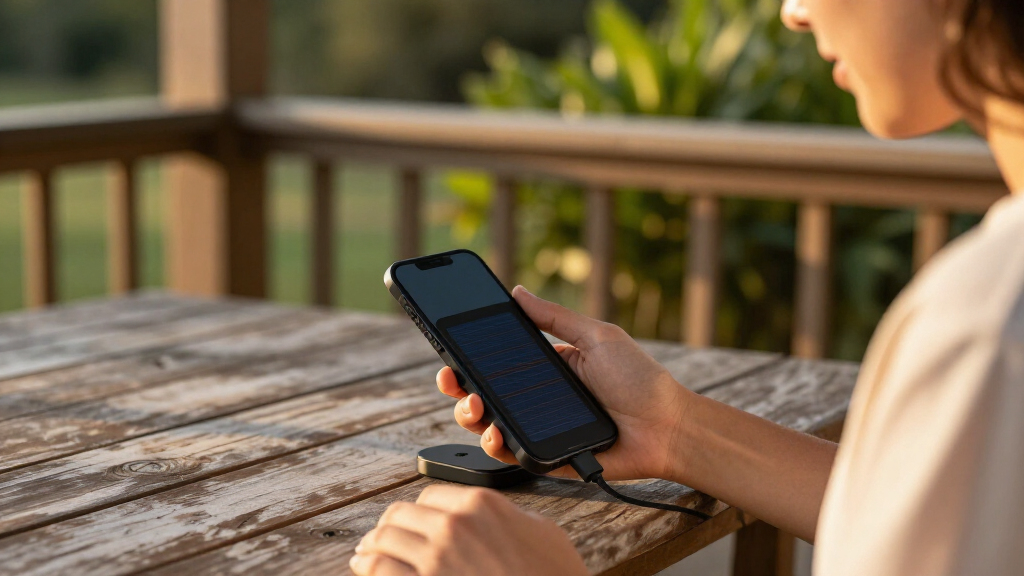
The single biggest mistake buyers make is expecting a solar power bank to recharge itself in a day of sunlight. Even the best panels in this roundup top out around 5 watts, which means a full solar recharge of a 20,000mAh bank takes two to four days of direct sun — and clouds, angle, and tree cover extend that dramatically. The practical role of the solar panel is emergency trickle charging: keeping a bank from hitting zero during a multi-day outage or extending a long trip by a phone charge or two. If you genuinely need off-grid power, a folding 20–60 watt solar panel paired with a separate power bank outperforms any all-in-one unit by a wide margin. Buy these products as capable power banks that happen to have a solar safety net, and you’ll be satisfied with any of my top picks.
Discount the Advertised Capacity — Sometimes by Half
CAPACITY inflation is endemic in this category. Several budget brands advertise figures like 38,800mAh and 50,000mAh at prices that don’t match the cost of genuine cells, and teardowns and user reports consistently show real output 40–60% below the sticker number. A more reliable approach: compare weight and price against known-quality brands. A genuine 20,000mAh bank costs roughly $25–40 and weighs about a pound; a $25 bank claiming 50,000mAh is almost certainly mislabeled. Also account for charging efficiency losses — even an honest 20,000mAh bank delivers about 13,000mAh to your phone due to voltage conversion. A good rule of thumb is four to five full phone recharges from an honest 20,000mAh unit, and genuine units above 30,000mAh are rare, heavy, and expensive.
Wattage and Ports Matter More Than mAh
Charging speed is where cheap and quality units diverge most sharply. A 10-watt output that was standard a few years ago takes three-plus hours to charge a modern phone; a 20W or 22.5W PD (Power Delivery) port does it in about half that time. Look for at least one USB-C port with PD support, since USB-C handles both fast input (recharging the bank itself) and output. Wireless charging is a genuine convenience for iPhone 12-and-later users and modern Androids, but treat it as a bonus topping out around 10–15W, not a primary method — it’s slower and generates heat. Built-in cables, a feature on several of my top-ranked picks, are quietly one of the biggest quality-of-life upgrades in this category because the people who forget cables are exactly the people who need emergency power.
Ruggedness Ratings Are Often Vague — Read Them Carefully
Many of these chargers advertise “waterproof,” but the fine print usually means splash-resistant or IPX4 at best — protected against rain, not submersion, and often only with port covers firmly closed. True IP67-rated units like the YELOMIN 38800mAh cost more but survive drops in streams and puddles, which matters if you’re strapping the bank to a backpack in variable weather. Also check the shell material: rubberized exteriors absorb drops far better than hard plastic, and a carabiner loop or included clip makes exterior pack-mounting practical for solar exposure while hiking. One common failure point is the port covers and cable attachments, which break long before the battery degrades — favor models where these components feel reinforced rather than flimsy.
Match the Size to Your Actual Trip Length
More capacity isn’t automatically better because every added watt-hour adds weight. A 10,000mAh bank like the Blavor models weighs under 10 ounces and fits in a jacket pocket — ideal for day hikes and everyday emergency carry. The 40,000mAh-plus class weighs a pound and a half or more, which is fine strapped to a camping pack but absurd for commuting. Be honest about your use case: for most people, a weekend trip needs one honest 20,000mAh bank, and a week-long off-grid excursion justifies the heavy hitters on this list. Buying a giant bank you never drain wastes money, weight, and space, while lithium batteries degrade faster when stored fully charged or fully empty — another reason a right-sized bank you actually cycle beats an oversized one sitting in a drawer.
Frequently Asked Questions
Can a solar power bank realistically charge itself with just sunlight?
Only very slowly. The small monocrystalline panels on these banks produce roughly 1 to 5 watts under ideal direct sunlight, which means a full self-recharge takes multiple days of consistent sun exposure — rarely achievable in real conditions with clouds, tree cover, and changing sun angles. What the solar panel does well is offset drain: keeping a partially charged bank topped up during a long hike, or providing an emergency trickle when the grid is down for days. My top-ranked picks are honest about this; the ones I ranked lower marketed solar as a primary charging method, which sets buyers up for disappointment. If solar charging is your main priority rather than a backup, a dedicated folding panel plus separate power bank is the better investment.
Are the huge capacity ratings like 49,800mAh and 50,000mAh real?
Skepticism is warranted. Genuine lithium cells at those capacities would make a bank heavy, bulky, and expensive — typically over $60 and close to two pounds. Several budget listings in this category advertise 40,000–50,000mAh at $25–35, and real-user charging reports consistently indicate actual output closer to 15,000–25,000mAh. This doesn’t necessarily make those products bad values — many still deliver three to five phone charges at a fair price — but you shouldn’t buy them expecting the labeled capacity. Cross-check verified buyer reviews mentioning specific recharge counts, and compare weight: a bank advertising 50,000mAh that weighs the same as an honest 20,000mAh unit is telling you everything you need to know.
Is wireless charging worth paying extra for on a solar power bank?
It depends on your phone and how you carry the bank. If you have a magnetic-compatible iPhone or a Qi-enabled Android, wireless charging is genuinely convenient for passive top-ups — set the phone on the bank in a tent or backpack pocket and let it work without fumbling with cables in the dark. The drawbacks are real, though: wireless output tops out around 10–15W (slower than a 20W cable), it generates heat that stresses the battery, and it drains the bank faster per charge due to efficiency losses. Magnetic models like the FEELLE solve the alignment problem that plagued early wireless banks, but if your phone lacks Qi support, the feature is dead weight. For most buyers, I’d treat wireless as a tiebreaker between two otherwise equal banks rather than a primary reason to choose one.
What capacity do I actually need for camping or emergencies?
For a weekend camping trip, an honest 20,000mAh bank covers four to five full phone recharges, which handles navigation, photos, and communication for most people. Week-long off-grid trips justify the 40,000mAh-plus class, especially if you’re also charging a headlamp, GPS unit, or a second phone. For home emergency kits, plan for at least three phone charges per person per day of expected outage — realistically one honest 20,000mAh bank per person for a two-to-three-day event. Remember that bigger banks also take longer to recharge at home before you need them, so rotate them periodically. The most common purchasing error in this category is buying capacity you’ll never drain while sacrificing portability you’d use every week.
Several of these look identical — how do I choose between duplicate-brand models?
This lineup contains several near-identical listings, including three Blavor/BLAVOR 10,000mAh units and two Durecopow 20,000mAh banks, and the differences usually come down to included accessories, current generation, and seller support rather than the hardware itself. Before buying a near-duplicate, compare three things: the warranty terms (reputable brands like Blavor offer multi-year coverage), whether the listing specifies current-generation fast-charging ports (PD 20W versus older 10W), and the bundled extras like carabiners or cables. Price differences of a few dollars between duplicates often just reflect different sellers. When two listings are truly indistinguishable, choose the one with stronger verified-review history and responsive customer service — in a product category prone to capacity mislabeling, post-purchase support is worth real money.
Conclusion
After comparing all 15 models, the right choice comes down to how you’ll actually use it. For best overall, the SOARAISE Solar Power Bank 48000mAh with 4 built-in cables offers the most complete package: enormous capacity, wireless charging, and zero cable hassle for extended trips. The best value pick is the Blavor 10,000mAh Portable Wireless Charger — trusted brand, honest capacity, and pocketable size at a budget price. For the premium buyer or emergency prepper, the FEELLE 50000mAh Magnetic Charger with Hand Crank is unmatched, because the crank generator provides power when both sun and outlets fail.
For beginners who want a no-regret first purchase, the YELOMIN 20000mAh with built-in cables keeps things simple and affordable. Specific needs round out the list: the YELOMIN 38800mAh for genuinely wet and rugged conditions thanks to its IP67 rating, the MINRISE or 40,000mAh PD 20W models for buyers who prioritize fast wired recharges, and a compact Blavor for everyday-carry emergency backup. Whatever you choose, remember the golden rule of this category: buy a great power bank with solar as insurance, and you’ll be happy with any of my ranked picks.
Halloween Picks
halloween
As an affiliate, we earn on qualifying purchases.