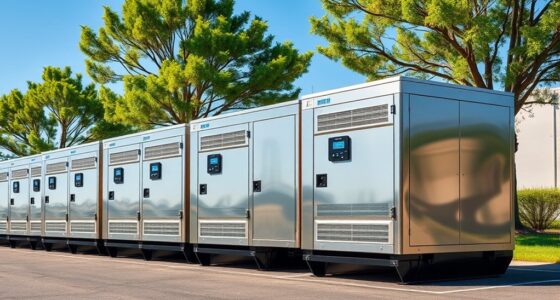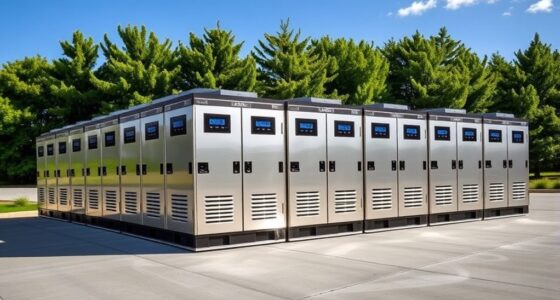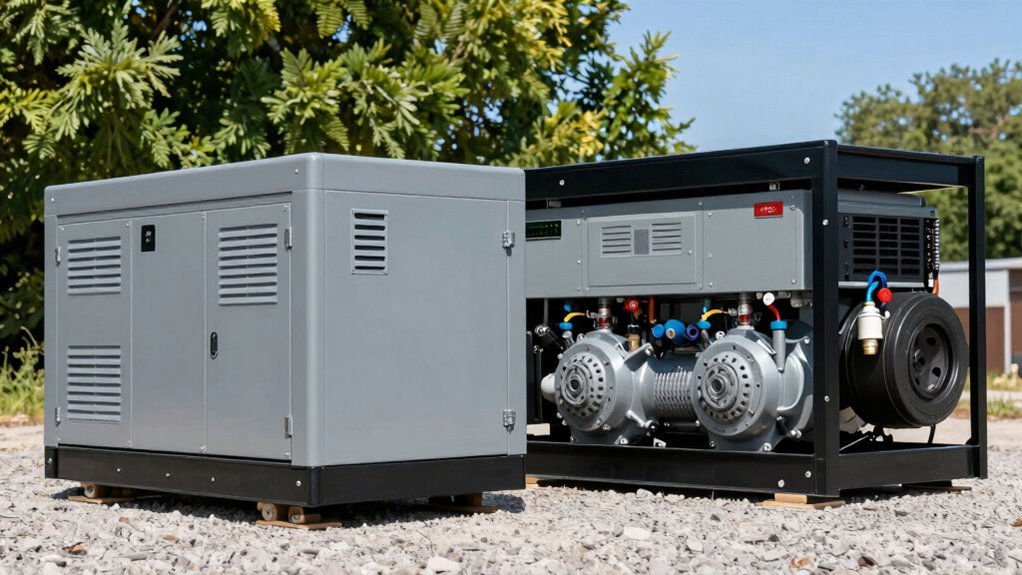

Choosing between tri-fuel and dual-fuel backup power depends on your priorities. Dual-fuel units are more affordable and easier to install, making them ideal for basic needs and quick setups. Tri-fuel systems, though more complex and costly upfront, offer greater fuel flexibility, allowing you to use renewable fuels and adapt to changing energy goals. To make the best decision for your home or business, explore how these options align with your long-term sustainability and budget plans.
Key Takeaways
- Tri-fuel generators offer greater fuel flexibility, supporting renewable energy integration and environmental goals.
- Dual-fuel systems are more affordable and easier to install, ideal for basic backup power needs.
- Tri-fuel units typically involve higher initial costs but provide long-term savings with renewable fuel options.
- Maintenance complexity is higher for tri-fuel systems, requiring more involved upkeep.
- Choice depends on budget, sustainability priorities, and the need for fuel versatility.
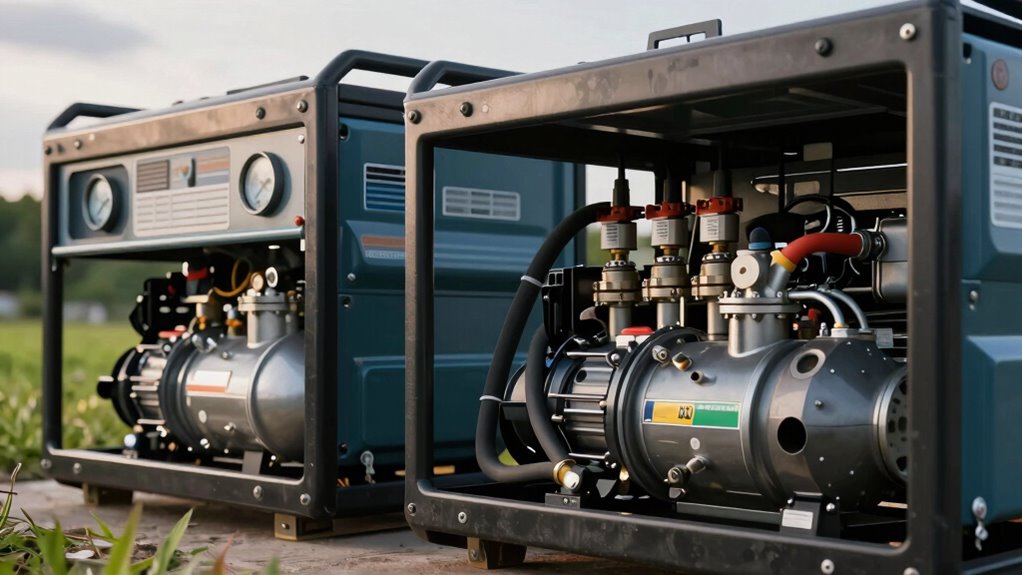
When choosing a backup power system, understanding the differences between tri-fuel and dual-fuel generators is essential to making the right decision. Both options offer reliable power, but they serve different needs based on your priorities, especially when considering renewable integration and cost comparison. If your goal is to maximize flexibility and incorporate renewable energy sources, a tri-fuel generator might be more suitable. These systems can run on three fuel types—typically gasoline, propane, and natural gas—allowing you to adapt to various fuel availabilities and environmental goals. This fuel versatility** can facilitate renewable integration, as you can choose cleaner or more sustainable fuels when available, reducing your carbon footprint. On the other hand, dual-fuel generators operate on two fuel sources, often gasoline and propane or natural gas, making them a simpler, more streamlined choice. They still provide versatility but might not match the renewable integration capabilities of tri-fuel units. Additionally, understanding the fuel compatibility of each system can help you optimize your energy management and fuel sourcing strategies. Moreover, advancements in fuel technology continue to improve the efficiency and environmental impact of both systems, further influencing your decision-making process. For instance, fuel flexibility** enables adapting to fluctuating fuel prices and availability, which can be a significant advantage in certain regions.
Cost comparison is another critical factor. Generally, dual-fuel generators tend to be more affordable upfront and easier to install, making them appealing for homeowners and small businesses seeking reliable backup power without a hefty investment. Tri-fuel systems, while more versatile, usually come with a higher initial cost due to their advanced fuel compatibility and additional components. However, over time, the ability to switch between fuels—especially if renewable fuels or alternative sources become more economical—can offset the higher initial expense. Additionally, maintenance requirements for tri-fuel generators may be more involved due to their complexity, which is an important consideration for long-term ownership. When evaluating costs, consider not only the purchase price but also ongoing fuel expenses, maintenance, and potential upgrades to renewable energy systems. If renewable integration is a priority, investing in a tri-fuel generator could be more advantageous, allowing you to blend traditional and renewable fuels seamlessly, which might lead to cost savings and a smaller environmental impact in the long run.
Ultimately, your decision hinges on your specific needs and future plans. If you’re focused on maximizing renewable energy use and reducing long-term costs, a tri-fuel generator offers greater flexibility. If simplicity, initial affordability, and straightforward operation are more important, a dual-fuel system might be the better fit. Both options provide dependable backup power, but understanding these key differences ensures you make a choice aligned with your energy goals and budget.

Porch Shield Generator Cover for 5500-15000W, 38 x 28 x 30 inch, Black
- Compatible - More sizes for 5500w -15000w gas...
- Upgrade Material - Made of 600D polyester fabric...
- Tear Resistant & Waterproof - The high-level double...
As an affiliate, we earn on qualifying purchases.
Frequently Asked Questions
How Does Fuel Availability Affect Backup Power Reliability?
Fuel availability directly impacts your backup power reliability. If your fuel storage is limited or inconsistent, your power stability suffers, risking outages when fuel runs low or isn’t accessible. Dual-fuel systems offer flexibility, letting you switch fuels based on availability, ensuring continuous power. Tri-fuel options provide even greater reliability by utilizing multiple fuel sources, so your backup power stays steady regardless of fuel supply disruptions.
What Are the Environmental Impacts of Tri-Fuel Systems?
Tri-fuel systems have a lower environmental impact because they can incorporate renewable alternatives like biodiesel or propane, reducing reliance on fossil fuels. This flexibility allows you to choose cleaner energy sources, helping you achieve emission reduction goals. By switching fuels based on availability and environmental preference, you minimize pollution and carbon footprint, making your backup power more sustainable and eco-friendly.
Can Existing Dual-Fuel Generators Be Upgraded to Tri-Fuel?
Yes, you can upgrade your existing dual-fuel generator to tri-fuel, but it depends on your generator’s fuel compatibility and compatibility with additional components. You’ll need to check if your generator’s engine and control system support propane or natural gas conversion. Usually, upgrading involves installing a conversion kit designed for your model. Always consult with a professional to guarantee proper installation and compatibility to avoid damaging your generator.
What Maintenance Differences Exist Between Tri-Fuel and Dual-Fuel Generators?
Think of maintenance differences as a dance—tri-fuel requires more steps. You’ll need to check and clean additional fuel system components, which can impact fuel efficiency and noise levels over time. Dual-fuel generators are simpler, with fewer parts to service, making maintenance quicker. In contrast, tri-fuel systems demand extra attention to guarantee all fuel sources operate smoothly, possibly leading to higher upkeep costs but offering more versatility.
How Do Initial Costs Compare for Tri-Fuel Versus Dual-Fuel Systems?
You’ll find that tri-fuel systems generally have higher initial costs than dual-fuel ones because of increased fuel system complexity and components. While the fuel cost can be lower with tri-fuel options due to flexibility in fuel choices, the installation complexity is also greater, potentially adding to your upfront expenses. Consider these factors when budgeting, as the initial investment for tri-fuel systems tends to be higher but offers more versatility.
Porch Shield Generator Cover for 5000-10000W, 32 x 24 x 24 inch, Black
- Compatible - More sizes for 5000w -10000w gas...
- Upgrade Material - Made of 600D polyester fabric...
- Tear Resistant & Waterproof - The high-level double...
As an affiliate, we earn on qualifying purchases.
Conclusion
Choosing between tri-fuel and dual-fuel backup power depends on your specific needs and priorities. Did you know that 60% of homeowners who invest in tri-fuel systems report greater peace of mind during outages? With the ability to switch between multiple fuel sources, you’re not just ensuring power—you’re securing your family’s comfort and safety. Make an informed decision today, and rest easier knowing you’ve prepared for any emergency that comes your way.

Portable Solar Generator 300W Portable Power Station with 60W Solar Panel
- Portable Generator with 60W Solar Panel Included: with a big battery pack,...
- Multiple Charging outlets for camping gear with SOS Flashlight: with 2* 300W Max AC...
- Multiple Charging Optional, Solar Panel Charger 60W Included: ZeroKor portable power bank generator...
As an affiliate, we earn on qualifying purchases.

SOARAISE Solar Power Bank 48000mAh Wireless Portable Charger with 4 Cables
- Upgraded High-Efficiency 4 Solar Panels: Equipped with 4 premium solar...
- Massive 48000mAh Solar Power Bank: Featuring a high-capacity 48000mAh lithium-polymer...
- Built-in 4 Cable for Multi-Device Compatibility: Designed for multi-device charging, this...
As an affiliate, we earn on qualifying purchases.