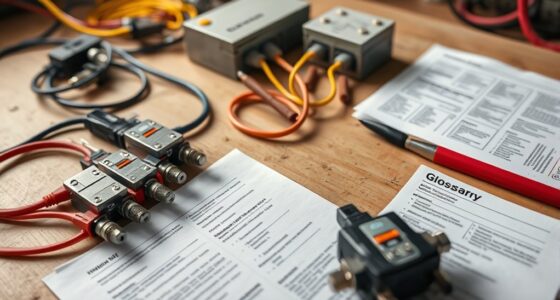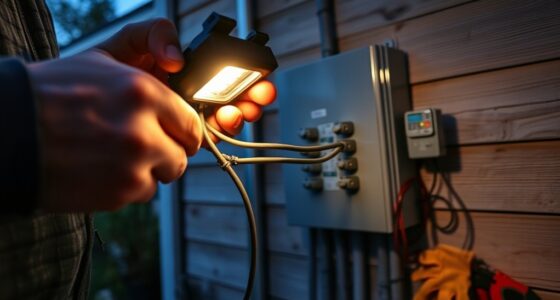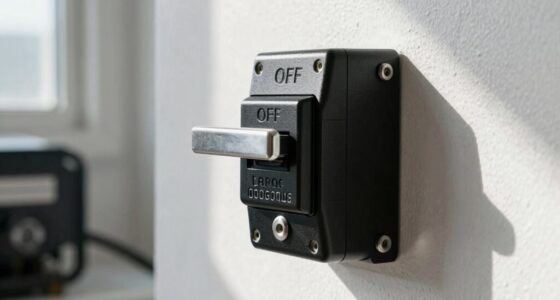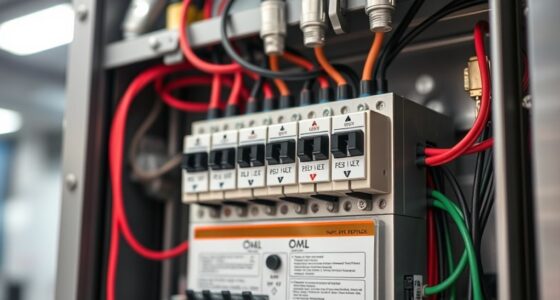
Generator interlocks and transfer switches both keep your electrical system safe and code compliant, but they differ in operation. Interlocks are mechanical devices that physically block utility breakers when the generator is active, requiring manual operation. Transfer switches, especially automated ones, switch power sources seamlessly and include built-in safety features to prevent backfeeding. While transfer switches offer more convenience and dependability, proper installation of either device is essential. If you want to understand these differences more deeply, keep exploring.

Get backup power and energy gear delivered free with Prime
- Fast, free delivery on millions of items
- Prime Video, Amazon Music and more included
- Member-only deals all year
Key Takeaways
- Transfer switches are automated and meet stricter electrical code standards, enhancing safety and reliability.
- Generator interlocks physically prevent utility and generator breakers from closing simultaneously, relying on manual operation.
- Transfer switches include built-in safeguards to prevent backfeeding, complying with safety codes more consistently.
- Proper installation, grounding, and wiring are critical for both devices to ensure code compliance and safety.
- Transfer switches reduce human error through automation, offering a safer, code-compliant solution during power transitions.
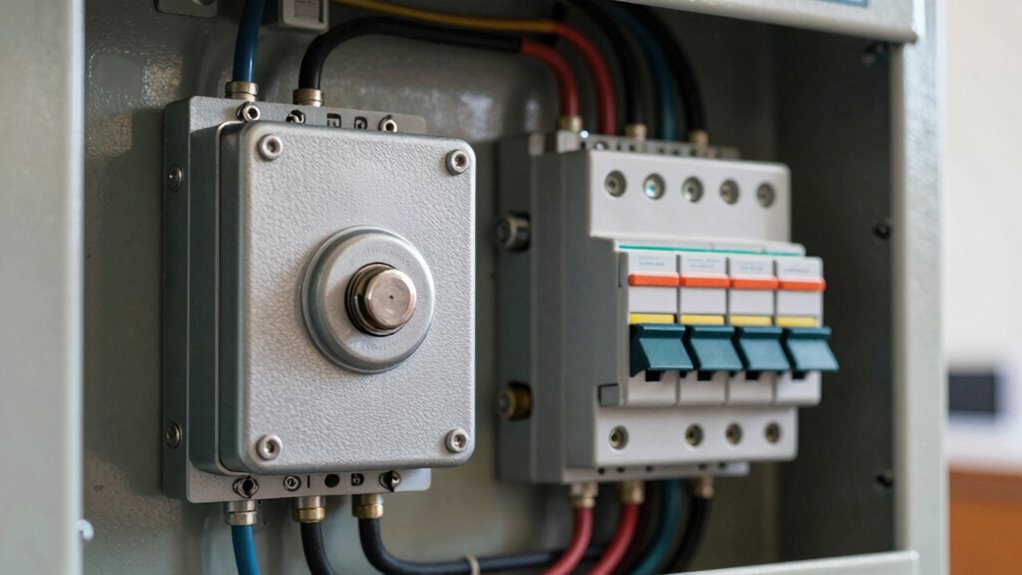
When choosing a backup power solution, understanding the differences between a generator interlock and a transfer switch is vital. Both devices serve to connect your generator to your home’s electrical system, but they do so in different ways, affecting how you maintain safety and comply with electrical codes. As you consider these options, keep in mind that automation safety is a key factor—your setup needs to prevent backfeeding and protect utility workers—and that proper installation procedures are essential for ensuring code compliance and reliable operation.
Choosing between a generator interlock and transfer switch impacts safety, code compliance, and reliable backup power operation.
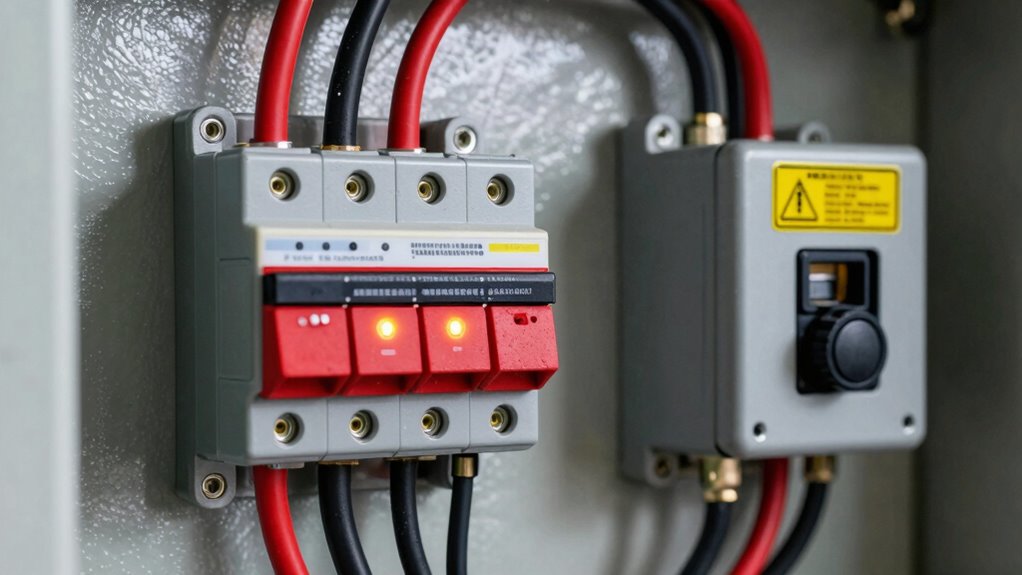
A generator interlock is a mechanical device installed on your main breaker panel. Its primary function is to prevent both the main utility breaker and the generator breaker from being turned on simultaneously, avoiding dangerous backfeed into the grid. When you activate the generator, the interlock physically blocks the utility breaker from closing, ensuring only one power source supplies your home at a time. This setup is often preferred for its simplicity, affordability, and ease of installation, especially for DIY enthusiasts. However, it’s important to note that interlocks don’t automatically switch power sources; you must manually operate the breakers, which means you need to follow proper installation procedures and safety protocols closely. Proper installation procedures are crucial for maintaining safety and ensuring the device functions as intended.
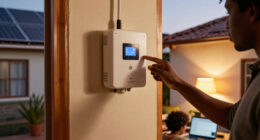
In contrast, a transfer switch is an electrical device that automatically or manually switches the load between utility power and generator power. Automatic transfer switches detect power outages and activate the generator seamlessly, providing continuous power without manual intervention. This automation enhances safety by reducing the risk of human error—such as forgetting to switch off utility power—thus protecting both your appliances and utility workers. Transfer switches comply with strict electrical codes and standards, and their installation requires careful adherence to these procedures to guarantee proper functioning and safety.
From a code and safety perspective, transfer switches are generally regarded as more dependable because they incorporate safety features that automate the switching process, reducing potential mistakes. They often include built-in safeguards to prevent backfeeding and ensure that power sources are isolated from each other. On the other hand, generator interlocks, while compliant when installed correctly, rely heavily on manual operation and proper installation procedures to stay safe and effective. Both solutions require careful attention to local electrical codes and standards, which emphasize safety, proper grounding, and correct wiring practices. Additionally, understanding electrical code compliance, and how it relates to backfeeding prevention, is essential for ensuring that your backup power setup meets all safety regulations and standards.
Frequently Asked Questions
Can a Generator Interlock Be Used With a Portable Generator?
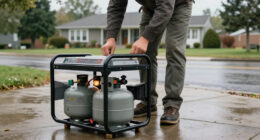
Yes, you can use a generator interlock with a portable generator, but there are some limitations to take into account. Portable compatibility depends on the interlock’s design, and many interlocks are intended for permanent installations, not portable setups. Interlock limitations include potential difficulty in installation and ensuring proper wiring. Always check if the interlock device is rated for portable use and complies with local electrical codes to guarantee safety and functionality.
Are There Specific Building Codes for Generator Interlocks?
You can’t just wing it—code compliance and safety standards are non-negotiable. Building codes do specify requirements for generator interlocks, ensuring they prevent backfeeding and protect utility workers. Always check local building codes and electrical standards before installing a generator interlock. Following these regulations guarantees your setup is safe and legal, because safety doesn’t take a backseat. When in doubt, consult a licensed electrician to keep everything up to code.
How Long Does Installation of a Transfer Switch Typically Take?
The installation of a transfer switch typically takes about 4 to 8 hours, depending on your setup’s complexity. You should consider the installation timeline and labor considerations, such as whether your electrical panel needs modifications or additional wiring. If you’re installing a larger system or multiple circuits, it might take longer. Hiring a licensed electrician guarantees the process is done safely and efficiently, meeting all necessary codes.
Is Maintenance Required for Generator Interlock Devices?
Maintenance isn’t typically required for generator interlock devices, but regular inspections are recommended to guarantee safety and proper function. You should check for wear or damage during routine maintenance procedures, and keep the interlock’s lifespan in mind—most last many years if properly maintained. Periodic testing helps confirm the device works correctly, preventing electrical issues and ensuring safe operation during power outages.
Can a Transfer Switch Be Installed Outdoors?
Yes, you can install a transfer switch outdoors. About 80% of outdoor electrical equipment is weather-resistant, making outdoor installation feasible. When installing outdoors, guarantee the transfer switch has proper weather resistance to protect against moisture, dust, and temperature fluctuations. Use weatherproof enclosures and follow local codes to guarantee safety and durability. Proper outdoor installation extends your generator’s safety and efficiency during power outages.
Conclusion
Choosing between a generator interlock and a transfer switch isn’t just about safety; it’s about peace of mind when darkness falls. Think of the interlock as a sturdy gate, controlling access to your home’s power, while the transfer switch is a reliable bridge, seamlessly connecting your generator to your house. Both protect your family, but understanding their differences helps you create a safe, resilient sanctuary—bright and secure, no matter what the storm brings.
Halloween Picks
halloween
As an affiliate, we earn on qualifying purchases.