
To guarantee safe and effective transfer switch placement, choose a location that’s accessible, well-ventilated, and protected from moisture. Whether indoors or outdoors, make sure there’s enough clearance for maintenance and that it’s secured properly to prevent movement. Follow electrical codes, use appropriate safety gear during installation, and regularly inspect the switch for damage or corrosion. For detailed tips on ideal placement and safety practices, keep exploring more best methods.
Key Takeaways
- Place the transfer switch in a dry, accessible location with at least 3 feet clearance for safe operation and maintenance.
- Ensure proper grounding, secure mounting, and avoid areas near water sources or excessive dust.
- Use appropriate safety gear—insulated gloves, safety glasses, and protective clothing—during installation and inspections.
- Regularly inspect for damage, corrosion, and loose connections, and test switch functionality quarterly.
- Follow local electrical codes, proper wiring, and labeling to ensure compliance and safe operation.
Understanding the Role of Transfer Switches in Home Safety
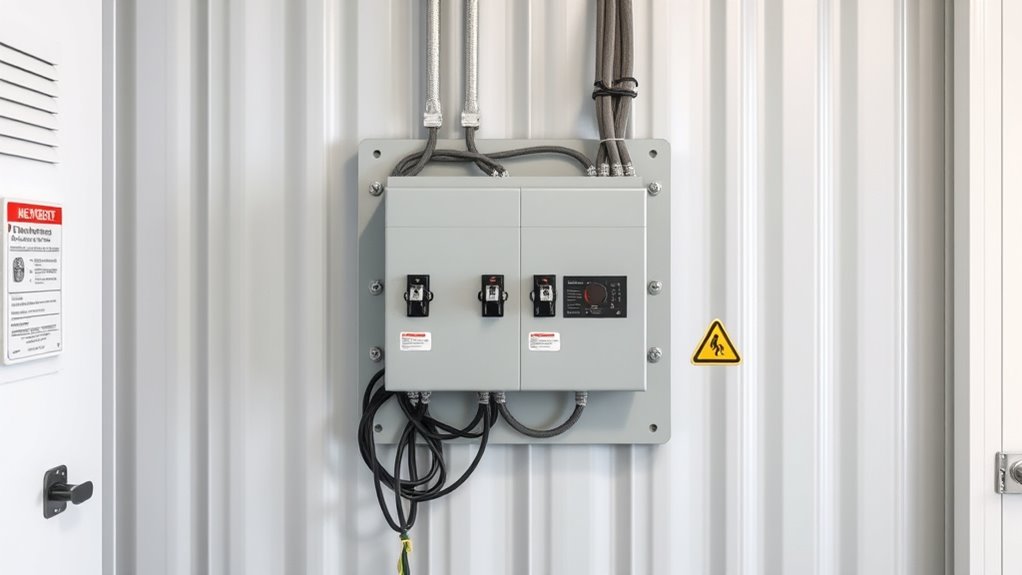
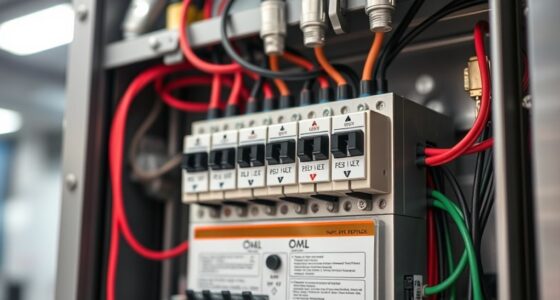
Have you ever wondered how you can keep your home safe during a power outage? Transfer switches are essential for this, as they quickly and safely redirect power from your generator to your home’s electrical system. When choosing a transfer switch, consider its durability—high-quality switches withstand frequent use and harsh conditions, ensuring long-term safety. Additionally, installation aesthetics matter because a well-placed switch blends seamlessly with your home’s interior or exterior, preserving visual appeal. A durable, visually unobtrusive transfer switch not only provides reliable protection but also maintains your home’s aesthetic integrity. Proper placement and quality equipment help prevent electrical mishaps, keeping your family safe and your home protected during unexpected outages. Incorporating advanced safety standards in your transfer switch selection further enhances overall home security and compliance with electrical regulations.
Key Factors to Consider Before Placement
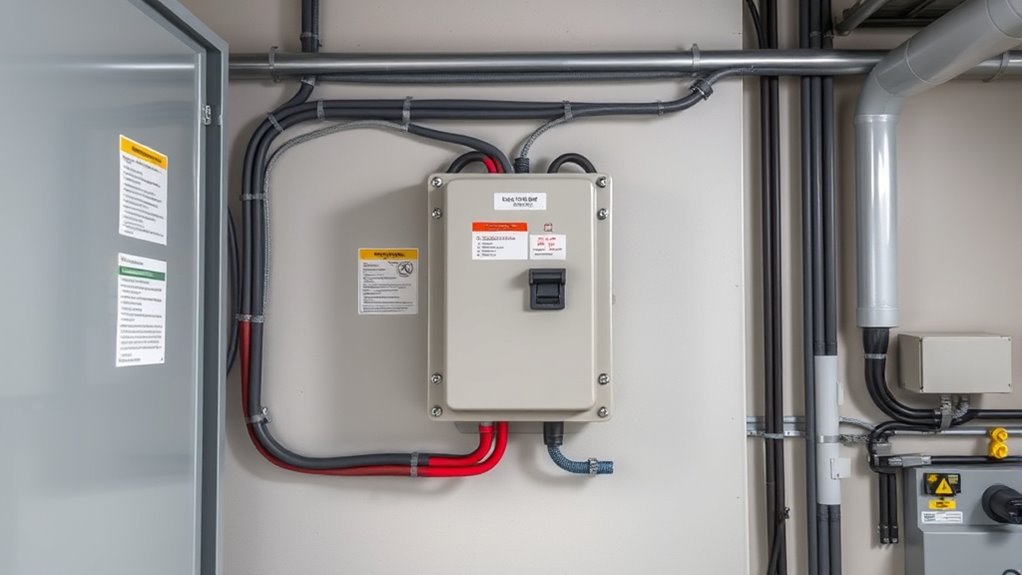
Before installing a transfer switch, it’s important to evaluate several key factors to guarantee ideal placement. Transfer switch positioning impacts your power outage readiness, assuring quick and safe operation during outages. Consider accessibility; the switch should be easy to reach for maintenance and emergency use. You also need to assess proximity to the main electrical panel, minimizing wiring complexity and potential hazards. Ventilation and environmental conditions are vital—avoid damp or dusty areas that could cause malfunctions. Additionally, think about load capacity and future expansion, so the switch can handle your current and anticipated power needs. Proper placement guarantees reliable operation, reduces installation issues, and enhances safety. Taking these factors into account upfront ensures your system is both efficient and resilient when power outages occur. Be mindful of electrical connections to ensure compatibility and safe operation.
Location Selection: Indoor vs. Outdoor Placement
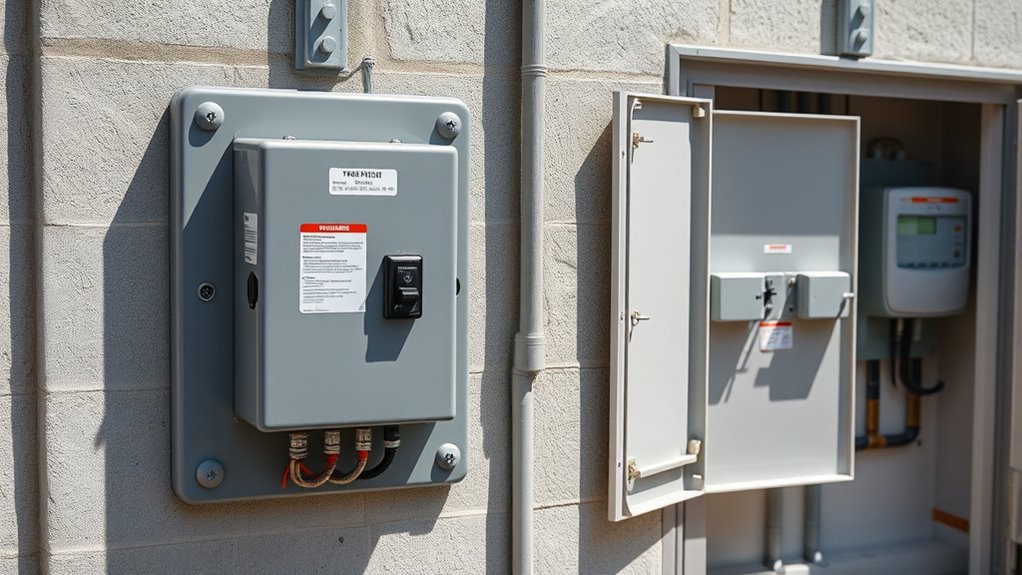
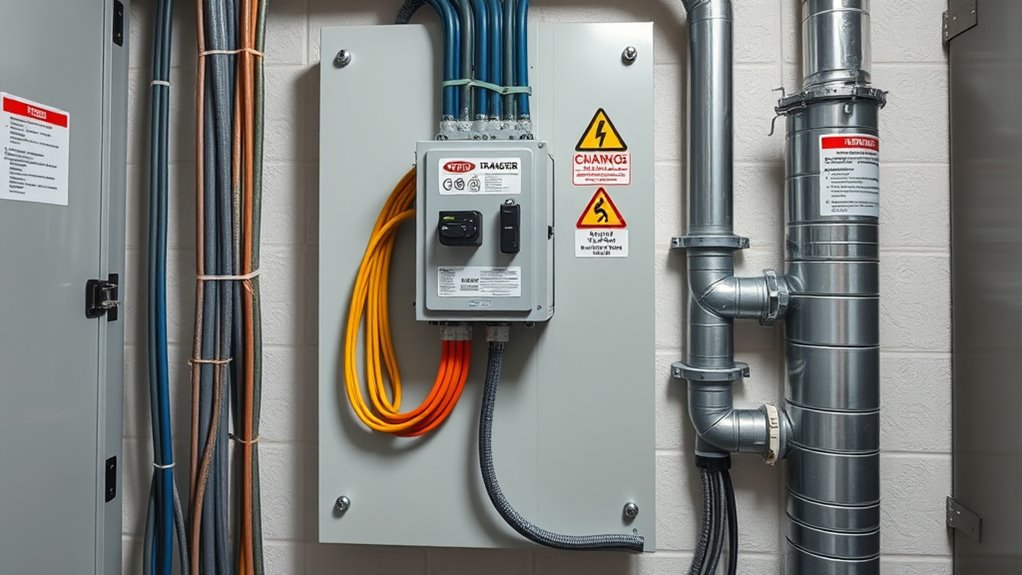
Choosing between indoor and outdoor placement for your transfer switch depends on your specific needs and environment. Indoor placement offers protection from the elements, which can enhance transfer switch durability and reduce weatherproofing considerations. However, it may require additional space and proper ventilation. Outdoor placement provides easier access for maintenance and allows for direct weatherproofing, making it ideal in harsh climates. When selecting a location, consider exposure to moisture, temperature extremes, and potential physical damage. Proper weatherproofing is essential if you opt for outdoor installation to ensure the transfer switch withstands environmental conditions. Ultimately, your choice should balance durability, safety, and accessibility, aligning with your home’s layout and local weather factors. Additionally, understanding local regulations and safety standards can help ensure your installation is compliant and secure.
Ensuring Accessibility and Ease of Use
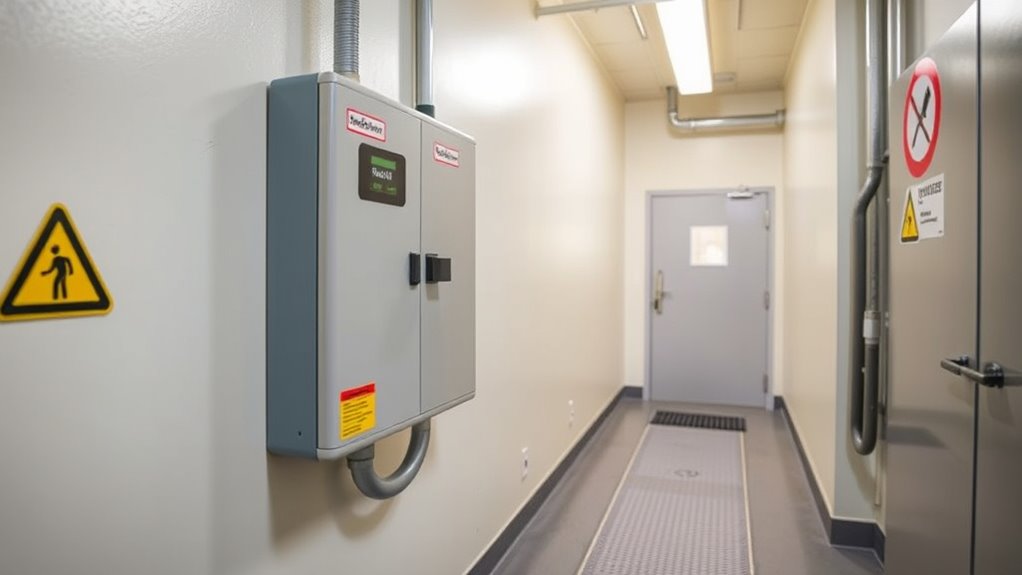
Ensuring accessibility and ease of use is essential when selecting the location for your transfer switch. During emergencies, quick access can make all the difference in your overall preparedness. Choose a spot that’s easy to reach without obstacles, so you can operate the switch swiftly during power outages. Clear access also simplifies electrical troubleshooting, saving you time if issues arise. Consider placing the switch at a height and location that’s visible and reachable for all users, including those with mobility challenges. Avoid cramped or hidden areas that could delay response times. Proper placement guarantees you can confidently switch power sources when needed, enhancing safety and efficiency. Prioritizing accessibility helps ensure your transfer switch serves its purpose effectively during critical moments. Additionally, understanding viral commercial star trends can inform you about effective communication and visibility strategies for safety equipment.
Maintaining Proper Clearance and Ventilation
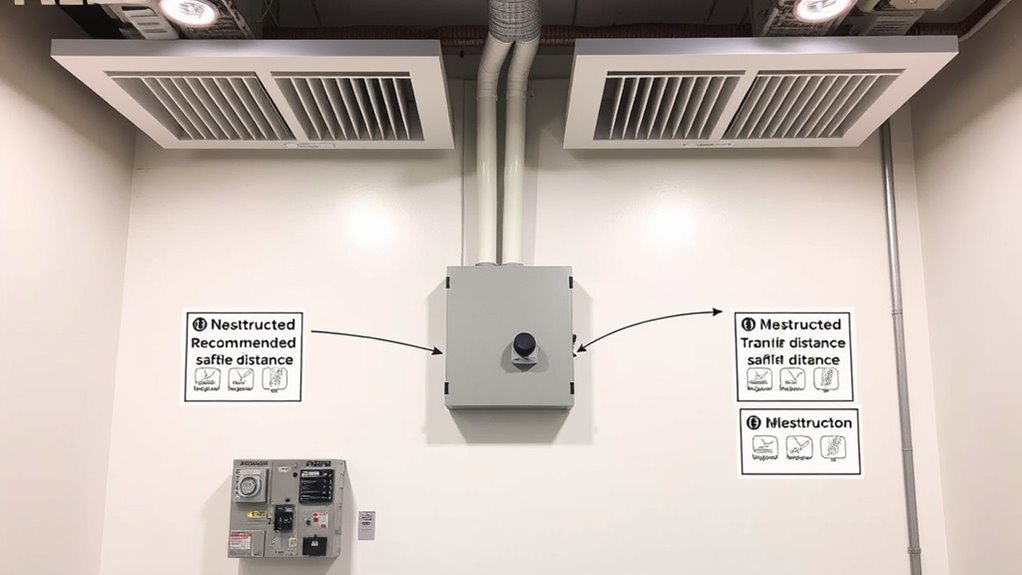
To keep your transfer switch operating safely, you need to provide enough clearance around it. Make sure there’s proper ventilation to prevent overheating by installing it in a well-ventilated space or using fans if needed. Paying attention to these details guarantees reliable performance and longevity of your equipment. Additionally, understanding market research can help you choose the best location based on environmental factors and local regulations.
Adequate Space Requirements
Maintaining proper clearance and ventilation around your transfer switch is essential for safe and reliable operation. Adequate space guarantees the power supply functions efficiently and protects the equipment’s durability. Without enough room, heat can build up, risking damage or failure. Proper spacing also allows for easy maintenance and inspection, reducing downtime and safety hazards. Consider these key points:
- Keep at least 3 feet of clearance on all sides
- Avoid clutter or obstructions around the switch
- Ensure unobstructed airflow for cooling
- Place the switch in a dry, well-ventilated area
- Regularly inspect for dust and debris buildup
- Incorporate remote monitoring to oversee system performance and quickly identify issues.
Proper Ventilation Methods
Proper ventilation is crucial for the safe and efficient operation of your transfer switch. Adequate ventilation airflow prevents overheating and ensures reliable performance. To achieve this, maintain proper clearance around the switch and incorporate exhaust ventilation where needed. Good airflow allows heat to dissipate and keeps components cool, reducing fire risks. Additionally, understanding home theatre projector placement can help optimize your setup for safety and performance.
Adhering to Electrical Codes and Safety Standards
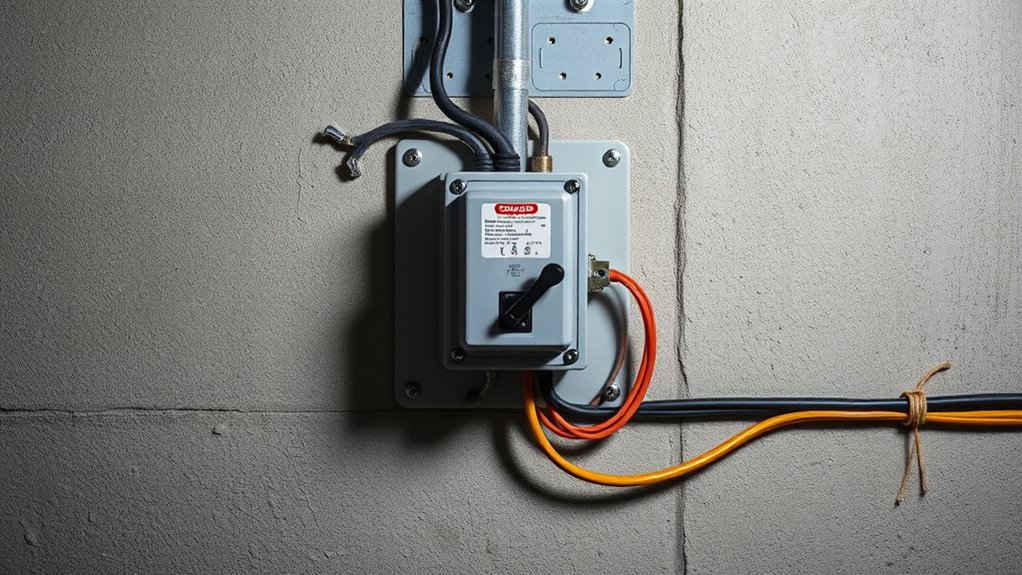
You need to follow electrical codes and safety standards to guarantee your transfer switch is installed correctly. Make sure you understand the specific compliance requirements for your area before starting work. Always wear proper safety gear to protect yourself during installation and inspection. Familiarizing yourself with essential safety tips can help prevent accidents and ensure a safe installation process.
Code Compliance Requirements
Have you ever wondered why strict adherence to electrical codes is essential when installing a transfer switch? Following these standards ensures your safety and system reliability. You’ll need to meet specific circuit protection requirements to prevent overloads and faults. Grounding requirements are critical to prevent shock hazards and ensure proper system operation. Additionally, compliance guarantees that your installation passes inspections and avoids costly penalties. Here are key points to contemplate:
- Use approved circuit protection devices
- Properly size and install grounding conductors
- Follow local electrical code regulations
- Take into account correct placement of the transfer switch for accessibility
- Maintain proper clearance and labeling for safety
- Understanding cookie categories and user consent management is vital to ensure your installation complies with privacy and data protection standards, especially if your setup involves smart or network-connected devices.
Staying compliant helps protect you, your property, and your loved ones from electrical hazards.
Proper Safety Gear
Ensuring safety during transfer switch installation starts with wearing the right safety gear that complies with electrical codes and standards. Protective clothing keeps you shielded from electrical sparks and accidental contact, while insulated gloves provide a vital barrier against shocks. Always wear gear rated for the voltage you’re working with. Here’s a quick guide:
| Safety Gear | Purpose |
|---|---|
| Protective Clothing | Protects skin from sparks and burns |
| Insulated Gloves | Prevents electrical shocks |
| Safety Glasses | Shields eyes from debris and sparks |
Proper safety gear is essential for minimizing risks associated with electrical work.
Common Mistakes to Avoid During Installation
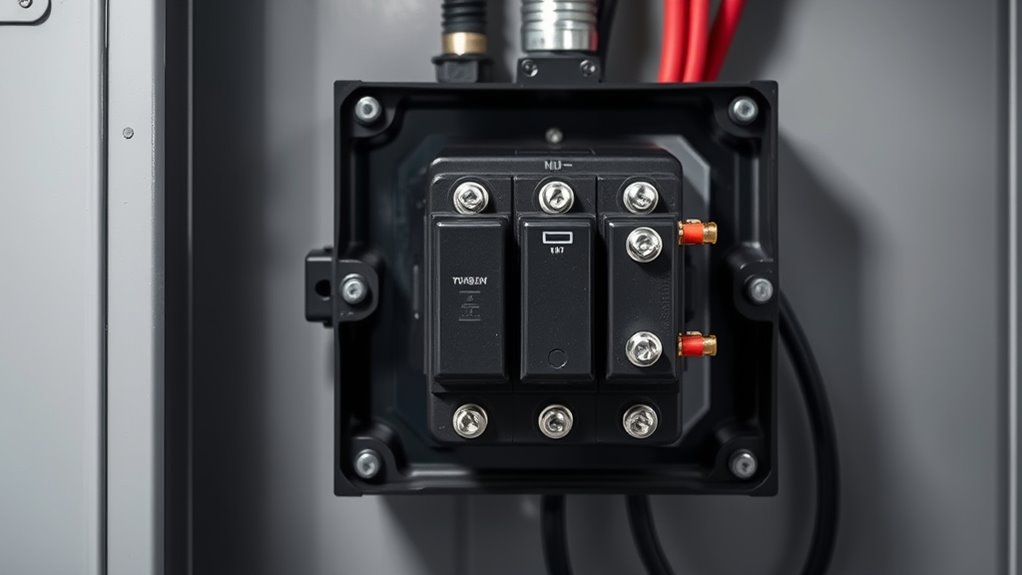
One common mistake during transfer switch installation is placing the switch in an unsuitable location, which can lead to safety hazards or operational issues. Poor placement may cause difficulties in wiring or maintenance, increasing the risk of incorrect wiring or inadequate grounding. To avoid these problems, pay attention to these common pitfalls:
- Installing the switch too close to water sources or damp areas
- Ignoring clearance requirements for easy access
- Overlooking proper ventilation and airflow
- Failing to properly secure the switch to prevent movement
- Neglecting to verify correct wiring and grounding connections
Regular Maintenance and Safety Checks
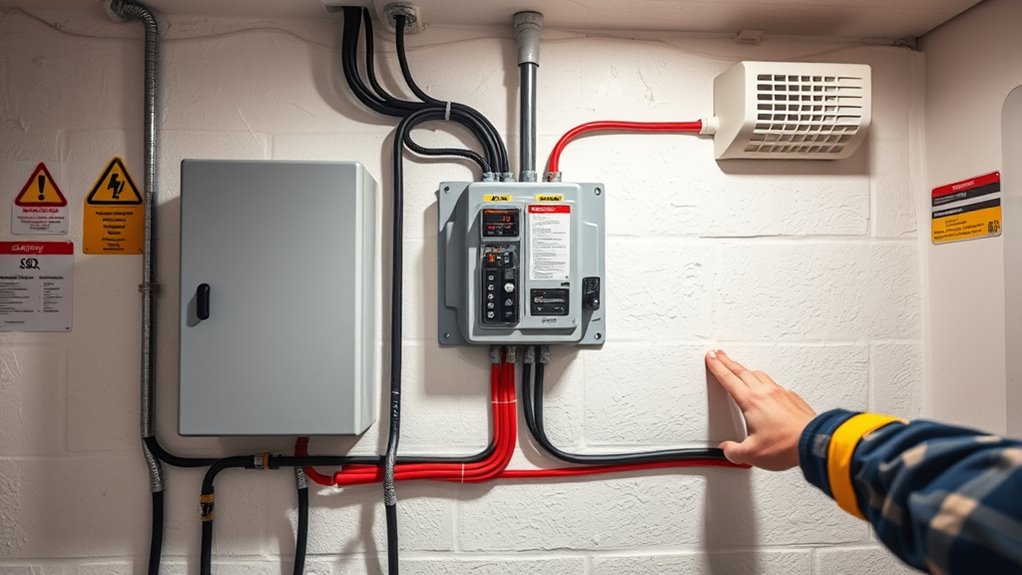
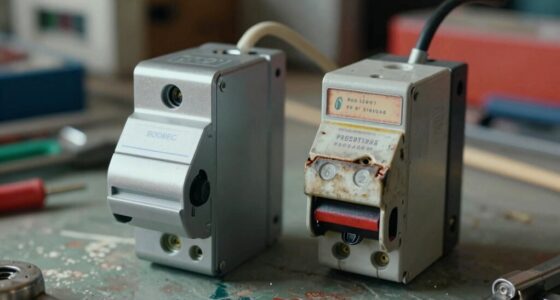
Regular maintenance and safety checks are essential to keep your transfer switch operating reliably and safely over time. Regular transfer switch testing ensures it functions correctly during a power outage, enhancing your emergency preparedness. Conduct visual inspections for signs of wear, corrosion, or loose connections. Schedule routine testing to verify proper transfer operation and identify issues early. Use the table below to guide your checks:
| Task | Frequency | Purpose |
|---|---|---|
| Visual Inspection | Monthly | Detect damage or corrosion |
| Transfer Switch Testing | Quarterly | Ensure proper operation |
| Safety Checks | Annually | Confirm safety features work |
Staying proactive minimizes risks, prevents failures, and guarantees your system performs when needed most. Regular maintenance is a crucial part of responsible system management.
Frequently Asked Questions
What Are the Cost Implications of Indoor Versus Outdoor Transfer Switch Placement?
Indoor transfer switches typically have higher installation costs due to the need for specialized enclosures and electrical work, but they often incur lower maintenance expenses since they’re protected from weather. Outdoor switches usually cost less upfront for installation, as they’re built for weather resistance, but you might face higher maintenance expenses over time due to exposure to the elements. Consider your environment and long-term costs when choosing placement.
How Does Transfer Switch Placement Affect Home Insurance Policies?
They say, “A stitch in time saves nine,” and that applies to your home insurance. Proper transfer switch placement can influence your insurance implications by making sure you meet policy requirements, especially if installed outdoors or indoors. Incorrect placement may lead to coverage issues or higher premiums. To avoid surprises, check with your insurer about specific safety standards and placement guidelines, and ensure your setup complies to protect both your home and policy.
Are There Environmental Factors Influencing Outdoor Transfer Switch Longevity?
Environmental factors like exposure to moisture, extreme temperatures, and UV rays can markedly impact outdoor transfer switch longevity. You should regularly inspect for corrosion risks, especially in humid or salty environments, as these can damage the switch’s components over time. Proper placement in sheltered areas and applying protective coatings help reduce environmental exposure, ensuring your transfer switch remains reliable and functions correctly during power outages.
Can Transfer Switches Be Integrated With Smart Home Systems?
Think of your transfer switch as the hero connecting your home’s power securely. Yes, you can integrate it with smart home systems for seamless automation. With smart home integration, you can control your transfer switch via apps or voice commands, making backup power management effortless. Voice automation adds convenience, letting you activate or monitor your transfer switch hands-free. This setup ensures your home stays powered smoothly, just like a well-orchestrated symphony.
What Are the Warranty Considerations Based on Installation Location?
Your warranty coverage depends on the installation environment. If you install the transfer switch in a protected, dry location, you’re more likely to maintain full warranty benefits. However, if it’s exposed to moisture, extreme temperatures, or physical damage, the warranty could be voided or limited. Always follow manufacturer guidelines for ideal placement to guarantee your warranty remains valid and your system stays protected.
Conclusion
Properly placing your transfer switch is essential for safe, reliable power transfer during outages. By following best practices and respecting electrical codes, you’ll guarantee your system functions smoothly and safely. Some might worry about the complexity, but with careful planning and regular maintenance, you’ll avoid hazards and extend your switch’s lifespan. Investing time now guarantees peace of mind later—keeping your home protected and your family safe in any emergency.