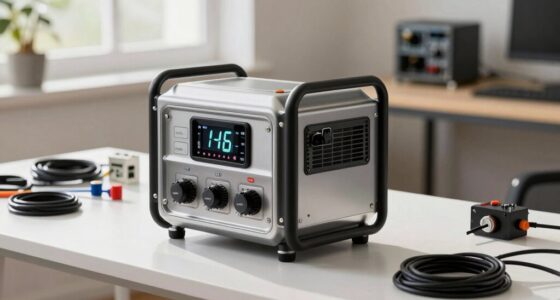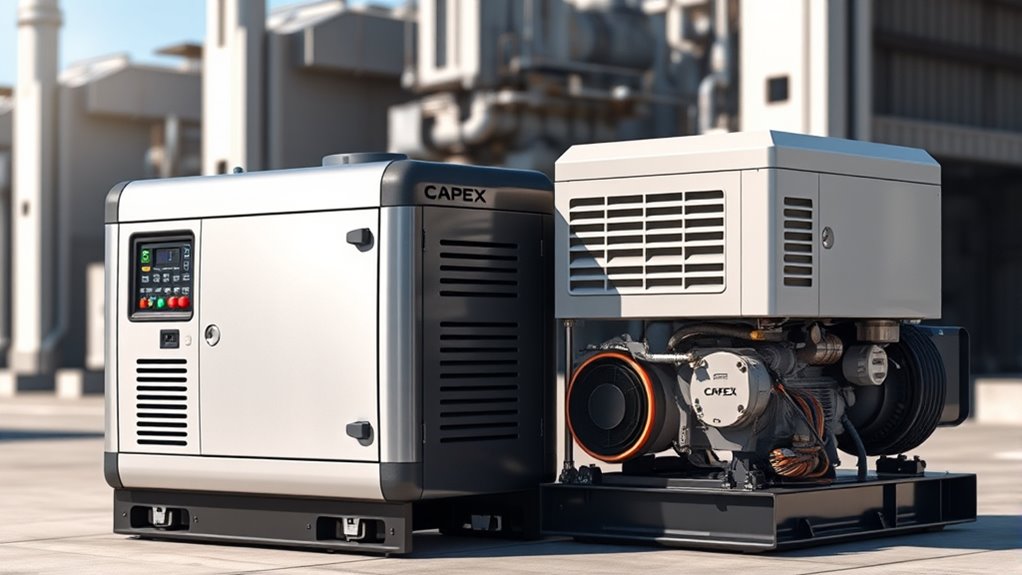

When calculating generator costs, you need to balance upfront expenses (CAPEX) with ongoing operational costs (OPEX) like fuel and maintenance. Choosing a cheaper generator might save money initially but could cost more over time due to higher fuel consumption and frequent repairs. Investing in a fuel-efficient, durable unit may be pricier upfront but can lower your long-term expenses. To optimize your investment, consider both costs carefully—you’ll find useful insights ahead.
Key Takeaways
- Assess initial purchase cost (CAPEX) alongside projected fuel and maintenance expenses (OPEX) over the generator’s lifespan.
- Compare fuel efficiency ratings to estimate ongoing fuel costs and understand long-term operational savings.
- Schedule maintenance based on manufacturer recommendations to balance reliability and repair expenses.
- Analyze total cost of ownership by integrating upfront costs with expected fuel and maintenance expenses.
- Consider usage frequency, fuel prices, and maintenance needs to determine the most cost-effective generator option.
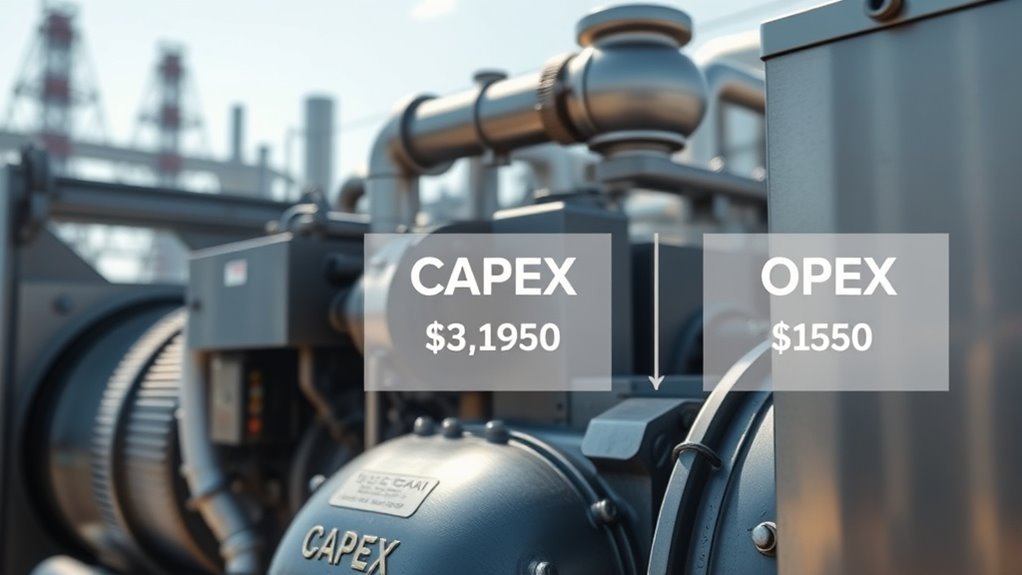
Calculating generator costs is essential for determining the most economical and efficient power solutions. When you’re evaluating options, understanding how initial investment costs (CAPEX) compare to ongoing operational expenses (OPEX) helps you make smarter decisions. One of the key factors in this process is fuel efficiency. A generator that consumes less fuel per hour can substantially lower your ongoing costs, especially if you’ll be running it frequently. By analyzing fuel consumption rates, you can forecast long-term expenses more accurately, ensuring you choose a model that balances upfront costs with lower operational bills. Fuel efficiency directly impacts your total cost of ownership, so it’s worth spending time researching generators with proven fuel-saving features. Additionally, easy document management can help you organize and track your maintenance schedules and expenses more effectively. Maintenance scheduling also plays a crucial role in calculating generator costs. Proper maintenance ensures your generator runs smoothly, reduces unexpected breakdowns, and extends its lifespan. When you factor in maintenance scheduling, you need to consider both the frequency and the cost of routine services like oil changes, filter replacements, and inspections. Regular maintenance can prevent costly repairs down the line, but it also means you need to plan for ongoing expenses. Some generators require more frequent servicing, which can increase OPEX, while others might be designed for longer intervals between maintenance. Understanding these differences helps you predict ongoing costs more accurately and avoid surprises that could blow your budget. Balancing CAPEX and OPEX requires examining both initial purchase prices and the long-term costs associated with operation and upkeep. A cheaper generator upfront might seem attractive, but if it has poor fuel efficiency or demands frequent, expensive maintenance, the total cost of ownership could be higher over time. Conversely, investing in a higher-quality, fuel-efficient unit with a well-designed maintenance schedule can save you money in the long run, even if the initial cost is higher. It’s essential to analyze your specific needs—how often you’ll run the generator, the availability of maintenance services, and fuel costs in your area—to determine which balance makes the most sense. In the end, calculating generator costs isn’t just about comparing sticker prices. It’s about considering how fuel efficiency impacts ongoing expenses and how maintenance scheduling affects reliability and longevity. By taking both into account, you can select a solution that offers the best value over its lifespan, ensuring you get reliable power without breaking the bank. Remember, the goal is to find a generator that not only fits your initial budget but also minimizes your total operating costs over time.

Porch Shield Generator Cover for 5500-15000W, 38 x 28 x 30 inch, Black
- Compatible - More sizes for 5500w -15000w gas...
- Upgrade Material - Made of 600D polyester fabric...
- Tear Resistant & Waterproof - The high-level double...
As an affiliate, we earn on qualifying purchases.
Frequently Asked Questions
How Do Maintenance Costs Influence OPEX Over the Generator’s Lifespan?
Maintenance costs directly impact your OPEX over the generator’s lifespan. By scheduling regular maintenance, you reduce unexpected breakdowns and repair expenses. Keeping a well-managed spare parts inventory ensures quick repairs and minimizes downtime, helping control costs. Proper maintenance planning and inventory management keep your generator running efficiently, lowering overall operational expenses and extending its lifespan, which ultimately saves you money in the long run.
What Factors Cause CAPEX Variations Between Different Generator Types?
You know what they say, “You get what you pay for.” Different generator technologies, like diesel, gas, or hybrid, cause CAPEX variations due to factors such as build quality, efficiency, and complexity. Cost comparison depends on upfront expenses for equipment, installation, and advanced features. Higher-performance or newer tech often means higher initial costs, but could save money long-term. Your choice should balance initial investment and operational needs.
How Does Fuel Price Fluctuation Impact Overall Generator Costs?
Fuel price fluctuations considerably impact your overall generator costs due to fuel’s role in operational expenses. Fuel volatility causes price sensitivity, meaning sudden increases can raise OPEX dramatically. When fuel prices spike, your running costs go up, making it crucial to take into account fuel efficiency and hedging strategies. Staying aware of market trends helps you manage risks and optimize your generator’s economic performance in the face of fluctuating fuel prices.
What Is the Typical Payback Period for Generator Investments?
You can expect a typical payback period of 3 to 7 years for generator investments, depending on installation costs and fuel prices. To shorten this period, consider financing options that spread out upfront expenses. Keep in mind, higher installation costs or fluctuating fuel prices can extend payback time, while efficient financing can make the investment more attractive and financially sustainable over the long term.
How Do Government Incentives Affect Total Generator Project Costs?
Government incentives can substantially soften the financial landscape of your generator project, especially with renewable integration and stricter emission regulations. You might find that tax credits, grants, or rebates lower upfront costs and ongoing expenses, making it easier to align your project with eco-friendly standards. These benefits help you navigate compliance and sustainability goals more smoothly, ultimately reducing your total project costs and boosting your investment’s long-term viability.

Portable Solar Generator 300W Portable Power Station with 60W Solar Panel
- Portable Generator with 60W Solar Panel Included: with a big battery pack,...
- Multiple Charging outlets for camping gear with SOS Flashlight: with 2* 300W Max AC...
- Multiple Charging Optional, Solar Panel Charger 60W Included: ZeroKor portable power bank generator...
As an affiliate, we earn on qualifying purchases.
Conclusion
So, when you’re choosing between capex and opex for your generator, remember—getting it right could save you more money than winning the lottery or discovering a hidden treasure! Neglecting these costs might leave you drowning in expenses or stuck in the dark when it matters most. Do the math wisely, and you’ll be the genius who keeps the lights on and the wallet happy—trust me, it’s a game-changer!
Porch Shield Generator Cover for 5000-10000W, 32 x 24 x 24 inch, Black
- Compatible - More sizes for 5000w -10000w gas...
- Upgrade Material - Made of 600D polyester fabric...
- Tear Resistant & Waterproof - The high-level double...
As an affiliate, we earn on qualifying purchases.

Jackery Explorer 300 Portable Power Station,292Wh
- Ultra-Lightweight: At only 7.5 lbs, the...
- Versatile Power for 6 Devices: Equipped with 2 AC outlets,...
- Built to Last: Upgraded with premium LiFePO4 chemistry,...
As an affiliate, we earn on qualifying purchases.