
Starting watts are the higher power needed to activate your devices, helping them overcome inertia, while running watts are the steady power used during normal operation. Knowing the difference is key to avoiding overloads and choosing the right power source. Some appliances need a surge at startup, so you must account for this when planning. If you want to master these details and ensure safe operation, there’s more to learn below.
Key Takeaways
- Starting watts are the initial power surge needed to activate a device, often much higher than its running watts.
- Running watts refer to the continuous power a device consumes during normal operation.
- Knowing both helps prevent overloads and ensures the device starts and runs smoothly.
- Always check device labels or manuals for specific starting and running wattage information.
- Properly differentiating between the two aids in selecting the right power source or generator.

Porch Shield Generator Cover for 5500-15000W, 38 x 28 x 30 inch, Black
- Compatible - More sizes for 5500w -15000w gas...
- Upgrade Material - Made of 600D polyester fabric...
- Tear Resistant & Waterproof - The high-level double...
As an affiliate, we earn on qualifying purchases.
What Are Starting Watts and Why Do They Matter?

Starting watts are the surge of power a device needs to turn on, often much higher than its regular operating power. This is especially true during motor startup, where a motor requires extra energy to overcome inertia and start spinning. Appliances like refrigerators, air conditioners, and power tools experience this appliance surge. If you don’t account for starting watts, you might underestimate the power needed, leading to circuit overloads or tripped breakers. Understanding starting watts helps you choose the right generator or power source to handle these initial bursts of energy. Without considering this surge, your device may fail to start properly or cause unnecessary electrical issues. Recognizing the importance of starting watts ensures safe, reliable operation of your appliances during startup. Additionally, knowing the difference between starting and running watts can prevent equipment damage and improve your overall power management.
Porch Shield Generator Cover for 5000-10000W, 32 x 24 x 24 inch, Black
- Compatible - More sizes for 5000w -10000w gas...
- Upgrade Material - Made of 600D polyester fabric...
- Tear Resistant & Waterproof - The high-level double...
As an affiliate, we earn on qualifying purchases.
How to Determine the Running Watts Needed for Your Devices
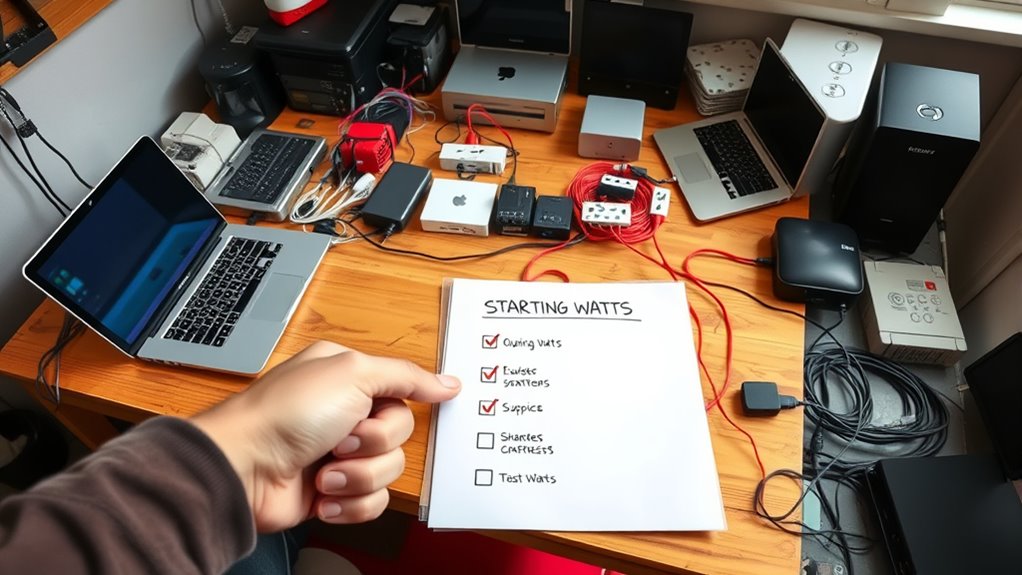
To determine the running watts your devices require, start by checking the labels or manuals that list their power consumption. This information helps you understand how much continuous power your devices need during operation. Keep in mind that electrical surges can occur, so choosing a generator with slightly higher capacity guarantees safety and reliability. Knowing the running watts also helps optimize power efficiency, preventing overloading and extending your generator’s lifespan. Some devices may list only starting watts, so be sure to distinguish between the initial surge and steady-state power use. Additionally, for wireless devices, Bluetooth compatibility can affect power requirements and should be considered when planning your setup. By accurately calculating your devices’ running watts, you ensure your generator provides consistent power without waste or risk, making your setup safer and more efficient.
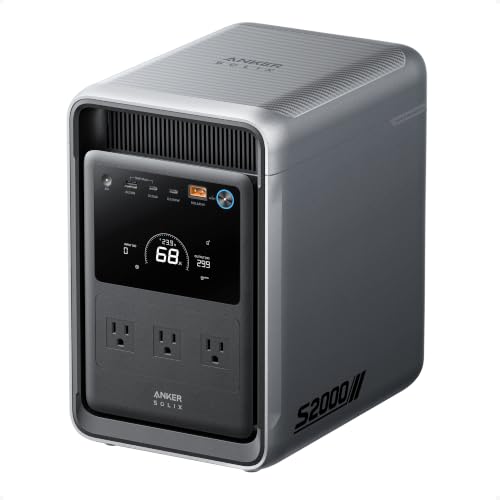
Anker SOLIX S2000 Portable Power Station, 2,010Wh, 1,500W, Home Backup, UPS
- Up to 35-Hour Fridge Backup: With 6W idle power draw...
- 10,000-Cycle LFP Battery: Powered by 314Ah LFP cells,...
- Smallest and Lightest 2kWh Power Station: 30% smaller and 25% lighter...
As an affiliate, we earn on qualifying purchases.
Frequently Asked Questions
Can I Use a Generator With Lower Starting Watts Than My Device Requires?
No, you shouldn’t use a generator with lower starting watts than your device needs. Generator compatibility depends on meeting or surpassing your device’s starting wattage to ensure wattage safety. If your generator’s starting watts are too low, your device might not start properly, or it could cause damage. Always check your device’s starting watts and choose a generator that provides at least that amount for safe, reliable operation.
How Often Should I Calculate My Total Wattage Needs?
You should calculate your total wattage needs regularly, ideally every few months, to stay ahead of power consumption changes. Why? Because your load calculation can shift as you add or remove devices, impacting your generator’s performance. Staying vigilant guarantees your setup remains reliable. Frequent calculations help you avoid overloads and keep everything running smoothly—so don’t wait too long, check your power needs often and adjust accordingly.
Do Appliances With Motors Have Different Starting Watt Requirements?
Yes, appliances with motors have different starting watt requirements due to motor startup, which causes an appliance surge. When a motor first powers on, it needs a higher wattage to overcome inertia, often considerably more than its running wattage. This initial surge can strain your generator or power source if not properly accounted for. Always check the appliance’s starting wattage to ensure your system can handle both the surge and continuous operation.
Can Running Watts Change Over the Lifespan of a Device?
Think of your device as a car; over time, it can lose some horsepower. Running watts can change as your device ages due to reduced device efficiency and power fluctuations. These changes might make your device draw slightly more power during operation, especially if components wear out or become less efficient. Regular maintenance helps keep running watts stable, ensuring your device runs smoothly without unexpected power demands.
What’s the Best Way to Test My Generator’s Starting and Running Watts?
To test your generator’s starting and running watts, you should follow specific testing procedures. First, use a wattmeter or a clamp meter to measure wattage during startup and steady operation. Connect your devices, turn them on, and record the wattage readings. This wattage measurement will give you accurate data on both starting and running watts. Repeat the process for consistency, ensuring your generator can handle your devices’ power needs.

Jackery Solar Generator 1000 v2 and 200W Solar Panel,1070Wh,1500W AC
- Powerful yet Compact: Boasting a 1,500W AC output...
- One Hour Fast Charging: Charge your Explorer 1000 v2...
- 10 Year Lifespan: The Explorer 1000 v2 portable...
As an affiliate, we earn on qualifying purchases.
Conclusion
Understanding the difference between starting and running watts helps you choose the right generator and avoid overloads. Remember, appliances can require up to three times their running watts to start, so always account for that surge. Did you know that a typical refrigerator’s starting watts can be 2-3 times its running watts? Being aware of these numbers guarantees you’re prepared for emergencies and keeps your devices running smoothly without surprises.