To troubleshoot starting circuit and ignition issues, first check your battery’s condition and connections, ensuring it’s fully charged and terminals are clean. Inspect your spark plugs and wires for wear or damage, and verify that the ignition switch functions properly. Don’t forget to check fuses related to your starting system. If wires are loose or corroded, repair or replace them. For more detailed steps on diagnosing and fixing these common problems, keep exploring further.

Get backup power and energy gear delivered free — and shop member deals
- Fast, free delivery on millions of items
- Access to Prime Big Deal Days deals on October 6–7
- Prime Video, Amazon Music and more included
Key Takeaways
- Check the battery’s health, connections, and voltage to ensure sufficient power for starting the engine.
- Inspect spark plugs, wires, and ignition coils for wear, fouling, or damage to guarantee reliable spark generation.
- Test the ignition switch and fuse box for faults or blown fuses that may interrupt the starting circuit.
- Examine wiring connections and look for corrosion or loose terminals disrupting electrical flow.
- Perform a systematic diagnosis of all components to identify simple fixes or determine if professional repair is needed.
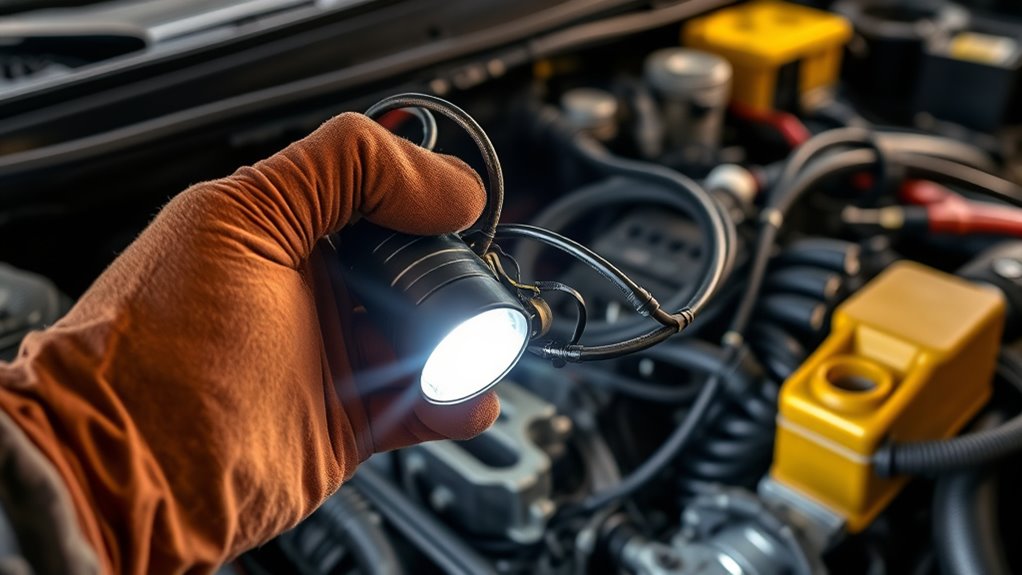
When your vehicle won’t start, it’s often due to problems in the starting circuit or ignition system. One of the first things to check is your battery health. A weak or dead battery can prevent your engine from turning over, so it’s vital to assess whether your battery has enough charge. Look for corrosion on the terminals, loose connections, or signs of aging that might indicate it needs replacing. You can also try turning on the headlights; if they’re dim or don’t turn on at all, that’s a strong sign your battery isn’t providing sufficient power. Regularly testing your battery’s voltage with a multimeter can help you determine if it’s still in good condition or if it’s time for a new one.
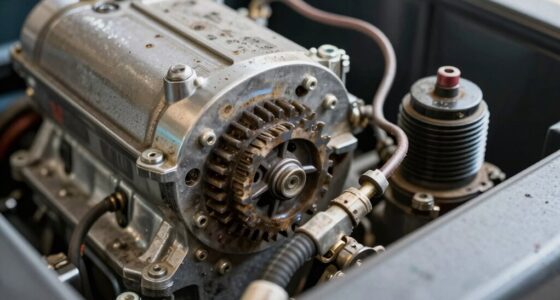
Beyond the battery, spark plug condition plays a significant role in starting issues. Spark plugs generate the spark necessary to ignite the fuel-air mixture in your engine, so if they’re worn out, fouled, or damaged, your vehicle might fail to start. Remove a spark plug to inspect its electrodes; if they’re dirty, covered in carbon deposits, or show signs of wear, it’s time to replace them. Properly gapped and clean spark plugs ensure a strong spark, which is essential for reliable starts. Also, consider the condition of the spark plug wires and ignition coils, as cracks or faults here can disrupt the spark flow, leading to difficulty starting your vehicle.
Spark plug condition is crucial; worn or fouled plugs can prevent your vehicle from starting reliably.
Another aspect to check is the ignition switch itself. If turning the key doesn’t result in the engine cranking, the switch might be faulty or worn out. Sometimes, a simple jiggle or turn of the key can temporarily restore function, but long-term issues require a professional diagnosis. Additionally, examine the fuses related to the starting circuit; a blown fuse can cut off power to critical components, preventing the engine from firing up. If you find a blown fuse, replacing it might resolve the issue, but it’s wise to identify what caused it to blow in the first place to avoid repeated failures.
Finally, wiring and connections in the starting and ignition systems should not be overlooked. Loose or corroded wires can interrupt the flow of electricity, causing starting problems. Ensure all connectors are tight and free of corrosion, and consider replacing any damaged wiring. A thorough understanding of vehicle electrical systems can help you troubleshoot more effectively. By systematically checking these components—battery health, spark plug condition, ignition switch, fuses, and wiring—you can pinpoint the cause of your vehicle’s starting trouble and determine whether it’s a simple fix or if professional assistance is needed. Taking the time to troubleshoot these areas can save you money and prevent further damage to your vehicle’s ignition system.
Frequently Asked Questions
How Can I Test My Vehicle’s Starter Relay?
To test your vehicle’s starter relay, start by locating it in the fuse box or relay panel. Use a multimeter for relay testing: set it to measure continuity, then remove the relay and check for a closed circuit when the ignition is turned on. If the relay fails, try relay replacement techniques by swapping it with a similar known working relay. If that doesn’t work, replace the faulty relay to restore proper starting function.
What Are Signs of a Failing Ignition Switch?
If your vehicle’s ignition switch is failing, you might notice ignition switch symptoms like difficulty turning the key, the engine not starting, or intermittent power loss. During electrical system diagnosis, you could find inconsistent voltage or no power at all when turning the key. These signs indicate that the ignition switch isn’t functioning properly, and replacing it can restore reliable starting and electrical system operation.
How Do I Check for a Blown Fuse in the Ignition Circuit?
You check for a blown fuse in the ignition circuit by opening your fuse box and locating the relevant fuse. Use a circuit tester to see if the fuse has continuity; if it doesn’t, the fuse is blown. Replace it with a new one of the same amperage. Always inspect the fuse visually as well, looking for a broken wire or a blackened appearance.
Can a Weak Battery Cause Ignition Issues?
Like a faint heartbeat in your car’s electrical system, a weak battery can cause ignition issues. When the battery drain is high, it struggles to supply enough power, leading to difficulty starting or stalling. If your battery isn’t holding a charge, it hampers the electrical system’s ability to energize the ignition, much like a flickering flame. Ensuring your battery is strong and healthy helps keep your engine humming smoothly.
What Tools Do I Need to Diagnose Starting Problems?
You’ll need a digital multimeter to check voltage and wiring connections, and a test light to verify circuit power. Start with battery maintenance—ensure terminals are clean and connections tight. Then, perform wiring inspection, looking for frayed or loose wires. These tools help you pinpoint issues like dead batteries or faulty wiring, making it easier to diagnose starting problems effectively. Always prioritize safety and double-check your connections during testing.
Conclusion
By carefully checking each component of your starting circuit and ignition system, you can identify and fix most issues quickly. Remember, a faulty connection or worn-out part might be the culprit behind that stubborn start. Are you ready to turn the key and see your engine roar to life? With patience and some basic troubleshooting, you’ll restore your vehicle’s power and get back on the road in no time. Don’t let small problems stall your journey—take control today.
Evergreen bestsellers Picks
bestsellers
As an affiliate, we earn on qualifying purchases.