To prevent engine overheating, regularly check your coolant level—make sure it’s between the “low” and “full” marks in the transparent reservoir. Inspect the radiator cap for damage or looseness, as a faulty cap can cause pressure loss and leaks. Replace any worn or damaged parts promptly. Monitoring these simple steps helps keep your engine running efficiently and avoids costly repairs. Keep going to discover more tips on maintaining your cooling system effectively.

Get backup power and energy gear delivered free with Prime
- Fast, free delivery on millions of items
- Prime Video, Amazon Music and more included
- Member-only deals all year
Key Takeaways
- Regularly inspect the coolant reservoir to ensure the level is between the “low” and “full” marks.
- Verify that the radiator cap is secure and in good condition to maintain proper system pressure.
- Replace a faulty or damaged radiator cap to prevent coolant leaks and pressure loss.
- Check the thermostat for proper operation; replace if it’s stuck open or closed.
- Monitor for signs of overheating and perform routine maintenance to keep the cooling system efficient.
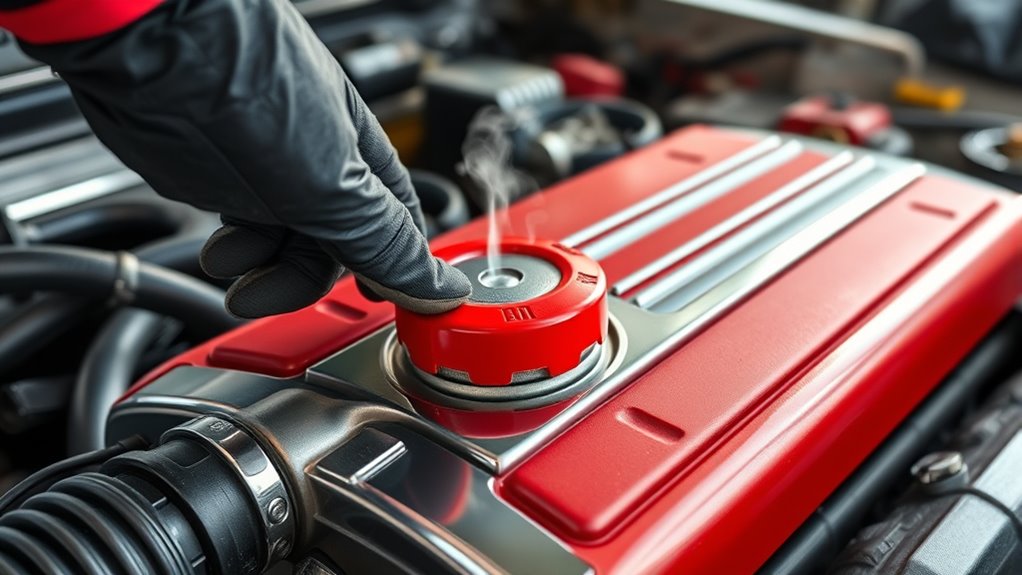
Regularly checking your vehicle’s coolant level is essential to prevent overheating and keep your engine running smoothly. When you do this, start by inspecting the coolant reservoir, which is usually a translucent plastic tank near the radiator. Ensure the coolant level is between the “low” and “full” marks. If it’s below the recommended level, add the appropriate coolant mixture as specified in your vehicle’s owner’s manual. Maintaining proper coolant levels helps your engine stay at an optimal temperature, avoiding heat buildup that can cause serious damage.
A crucial component in this process is the radiator cap. The radiator cap isn’t just a cover; it’s a vital part of your cooling system that maintains the pressure within the radiator. When the coolant heats up, it expands, and the cap allows excess pressure to escape safely, preventing damage to hoses and the radiator itself. If the cap isn’t sealing properly or is damaged, it can lead to coolant leaks or a loss of pressure, which reduces the system’s efficiency and increases the risk of overheating. Always check that the radiator cap is secure and in good condition when inspecting your coolant levels. Replacing a faulty cap is a quick fix that can save you from more costly repairs down the road.
Understanding the thermostat function is also key to preventing overheating. The thermostat acts as a gatekeeper for coolant flow, opening when the engine reaches a designated temperature and allowing coolant to circulate through the radiator and engine. When the engine cools down, the thermostat closes, helping the engine reach its optimal operating temperature quickly. If your thermostat malfunctions — either sticking open or closed — it can cause temperature fluctuations. A stuck-open thermostat may prevent the engine from warming up properly, leading to inefficient fuel consumption, while a stuck-closed thermostat traps hot coolant in the engine, causing it to overheat. Regularly checking your thermostat’s condition and replacing it if it shows signs of wear ensures your cooling system functions correctly.
Being aware of factors affecting cooling system efficiency can help you take proactive steps to prevent overheating before it becomes a serious issue.
Frequently Asked Questions
How Often Should I Replace My Coolant?
You should replace your coolant every 30,000 to 50,000 miles or every 2 to 5 years, whichever comes first. When doing so, consider coolant type selection to guarantee compatibility with your vehicle. Regularly check for coolant contamination risks like rust or debris, which can cause overheating. Proper coolant maintenance helps prevent engine damage, so stick to your vehicle manufacturer’s recommendations and inspect your coolant regularly for peak performance.
Can I Use Tap Water Instead of Coolant?
You shouldn’t use tap water instead of coolant because tap water risks corrosion and mineral deposits that can damage your engine. While some consider water as a coolant alternative temporarily, it’s not ideal for long-term use. Tap water lacks the antifreeze and corrosion inhibitors found in proper coolant, which help prevent overheating and engine damage. Always stick with a proper coolant for reliable protection and performance.
What Are Signs of a Failing Radiator Cap?
Think of your radiator cap as a gatekeeper—if it’s failing, trouble brews. You’ll notice signs like coolant leaks around the cap, overflowing coolant, or difficulty maintaining pressure. During radiator cap inspection, check the pressure release mechanism for corrosion, cracks, or a broken spring. If it doesn’t seal tightly or releases pressure prematurely, it’s time to replace it. A functioning cap keeps your cooling system running smoothly and prevents overheating.
How Does Ambient Temperature Affect Cooling System Performance?
Ambient heat directly affects your cooling system‘s performance. When the outside temperature rises, it can reduce cooling efficiency because the radiator struggles to dissipate heat effectively. High ambient heat causes your engine to run hotter, increasing the risk of overheating. To maintain ideal cooling, make certain your radiator and cooling fans are in good condition, and avoid strenuous driving in extreme heat, which can strain your system further.
Is It Necessary to Flush the Cooling System Regularly?
Yes, you should regularly flush the cooling system to prevent coolant contamination, which can cause overheating and engine damage. Many overlook this maintenance step, but neglecting it can lead to costly repairs. Regular cooling system maintenance ensures your radiator and hoses stay clean, coolant stays effective, and your engine runs smoothly. Don’t wait for issues—proactively flushing your system keeps everything working efficiently and extends the lifespan of your vehicle.
Conclusion
By regularly checking your coolant, you’re acting as the guardian of your engine’s heartbeat, ensuring it doesn’t burn out in the heat of the moment. Think of it as tending to a delicate garden—water it well, and it’ll flourish; neglect, and it wilts under pressure. Keep an eye on those levels, prevent overheating, and your vehicle will glide smoothly through every journey, a steadfast steed unbowed by the fiery trials of the road.
Evergreen bestsellers Picks
bestsellers
As an affiliate, we earn on qualifying purchases.