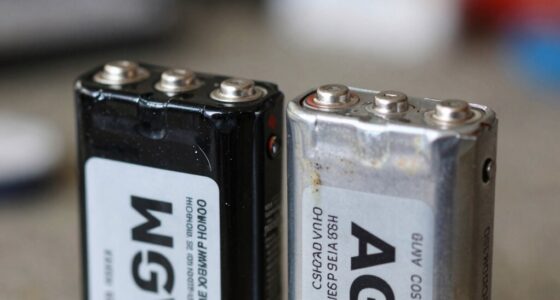
If your vehicle won’t start, start by inspecting the battery for corrosion around the terminals—look for white, ashy buildup—and clean it with a baking soda and water mixture if needed. Check the connections are tight and test the battery voltage with a voltmeter; it should be around 12.6 volts when the engine is off. If the voltage drops below 13.8 volts when running, your alternator might be failing. Continuing further helps you understand how to troubleshoot these issues effectively.

Get backup power and energy gear delivered free — and shop member deals
- Fast, free delivery on millions of items
- Access to Prime Big Deal Days deals on October 6–7
- Prime Video, Amazon Music and more included
Key Takeaways
- Check for white, ashy corrosion around battery terminals and clean if present.
- Measure battery voltage with a voltmeter; it should be around 12.6 volts when off.
- Test the battery’s ability to hold charge; replace if it shows signs of weakness or fails the test.
- Inspect and ensure terminal connections are tight and free of corrosion for proper electrical contact.
- Verify the alternator’s function by measuring voltage during engine run; it should be between 13.8 and 14.4 volts.

Starting a vehicle with a dead or weak battery can be frustrating, but many common issues are easy to diagnose and fix. One of the first things you should check is whether your battery is suffering from corrosion. Battery corrosion appears as a white, ashy substance around the battery terminals and cables. This buildup can prevent proper electrical contact, making it harder for your vehicle to start. To inspect, turn off your engine, open the hood, and look at the terminals. If you notice buildup, you’ll want to clean it off carefully using a mixture of baking soda and water, a wire brush, or a battery terminal cleaner. Make sure to wear gloves and eye protection, as the corrosion can be irritating. After cleaning, ensure that the terminals are tightly secured, as loose connections can also cause starting problems.
Another common culprit behind starting issues is alternator problems. Even if your battery seems fine, a faulty alternator might not be charging it properly when the engine runs. This can lead to a weak or dead battery over time, especially if you notice dimming headlights or electrical components acting up. To check this, start your vehicle and use a voltmeter to measure the voltage across the battery terminals. A healthy charging system should produce around 13.8 to 14.4 volts. If the reading is lower, your alternator might be failing. In some cases, the alternator warning light on your dashboard will illuminate if the system detects a problem. Keep in mind that alternator issues can stem from a worn-out belt, faulty diodes, or internal component failure, all of which require professional diagnosis and repair. Understanding the importance of home theatre projectors can help you make informed decisions about your vehicle’s electrical system.
It’s important to recognize that corrosion and alternator issues often work together to cause starting difficulties. Corrosion hampers the electrical flow, while a malfunctioning alternator prevents the battery from maintaining a proper charge. Regular maintenance, including inspecting and cleaning your battery terminals and ensuring your alternator is functioning correctly, can prevent many starting problems. If cleaning the terminals doesn’t improve starting performance and your voltage readings indicate a weak charge, it’s time to think about replacing the battery or having the alternator checked by a mechanic. Taking these simple steps can save you time, money, and the inconvenience of being stranded with a vehicle that refuses to start.
Frequently Asked Questions
How Long Should a Car Battery Typically Last Before Needing Replacement?
A car battery typically lasts about 3 to 5 years before needing replacement. Your battery lifespan depends on factors like climate, driving habits, and maintenance. If you notice slower engine starts, dim lights, or frequent jump-starts, it’s time to contemplate replacement. Don’t wait too long, as failing batteries can leave you stranded. Regular inspections help determine the ideal replacement timing, ensuring your vehicle runs smoothly and reliably.
Can Extreme Temperatures Significantly Affect Battery Performance?
Extreme temperatures definitely influence your battery’s performance. Cold weather causes thermal effects that reduce your battery’s ability to generate current, making it harder to start your car. Conversely, excessive heat accelerates chemical reactions inside the battery, leading to faster degradation and potential failure. You should be aware that temperature impact varies with conditions, and protecting your battery from extreme heat or cold can extend its lifespan and ensure reliable starts.
Is It Safe to Jump-Start a Dead Battery at Home?
It’s generally safe to jump-start a dead battery at home if you follow safety precautions and proper jumper cable techniques. Always wear gloves and eye protection, check for cracks or leaks, and connect the cables correctly—positive to positive, negative to ground. Avoid sparks or contact with moving parts. If unsure, consult your vehicle’s manual or seek professional help to prevent damage or injury.
What Are the Signs of a Failing Alternator Affecting the Battery?
You notice alternator warning signs like dim headlights, dashboard battery lights, or a burning smell, indicating your alternator might be failing. Pay attention to battery drain patterns, such as frequent dead batteries or slow engine starts, which can also point to alternator issues. If these signs appear, it’s time to get your vehicle inspected, as a faulty alternator can severely impact your battery’s health and overall vehicle performance.
How Often Should I Have My Battery Tested Professionally?
You should have your battery tested professionally at least once a year to guarantee peak performance. Regular battery maintenance and testing frequency help catch issues early, preventing unexpected failures. If you frequently drive short distances or experience extreme temperatures, consider testing more often, perhaps every six months. Staying proactive with these checks extends your battery’s lifespan and keeps your vehicle reliable, saving you money and hassle down the road.
Conclusion
Think of your starting battery as the heart of your vehicle’s engine—when it falters, the whole system struggles. Just like a steady heartbeat keeps life flowing, a well-maintained battery guarantees smooth starts. By troubleshooting issues early, you’re tending to this essential organ, preventing it from slipping into silence. Stay vigilant, and your battery will beat strong, keeping your journey steady and reliable, much like a trusted heartbeat that keeps you moving forward.
Evergreen bestsellers Picks
bestsellers
As an affiliate, we earn on qualifying purchases.