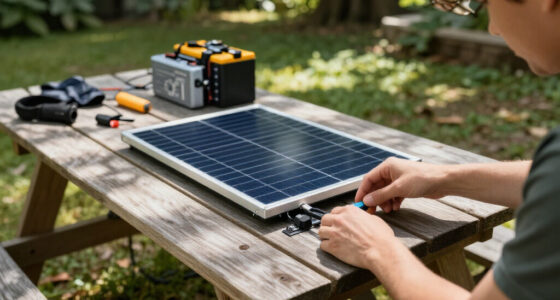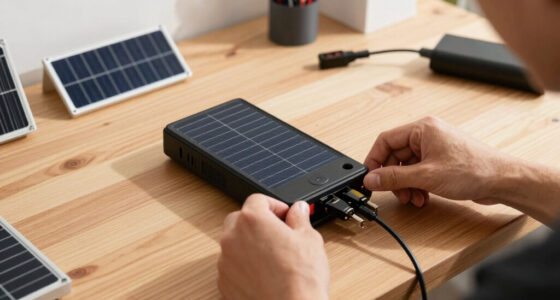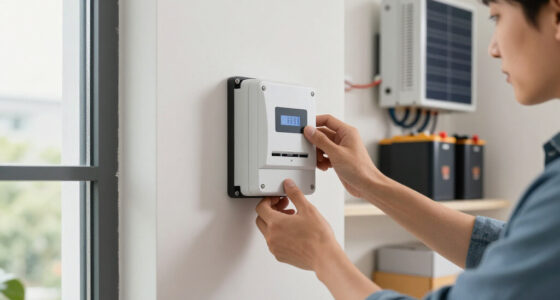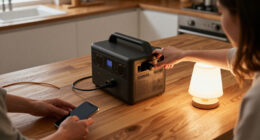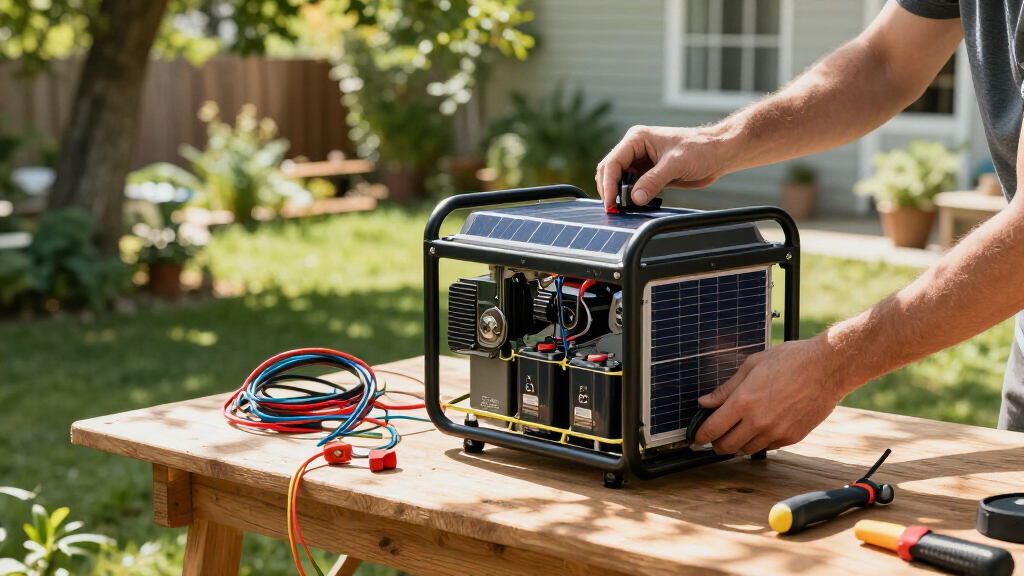

The best solar-powered backup generator for most homes in 2026 is the Jackery HomePower 3000, which pairs a 3072Wh battery with 3600W of AC output and two 200W panels — enough to run refrigerators, medical devices, and routers through an extended outage. If whole-home coverage is the goal, the EcoFlow DELTA Pro (3600Wh, expandable) goes further, while budget buyers get real capability from the BLAVOR 1024Wh with its built-in solar panel. The main tradeoff in this category is between capacity and portability: big stations keep essentials running for days but weigh 60+ pounds, while compact 300W units are easy to carry but only bridge short outages. Battery chemistry, solar recharge speed, and expandability separate the winners from the compromises. Read on for the full ranking and what each pick does best.

Get backup power and energy gear delivered free with Prime
- Fast, free delivery on millions of items
- Prime Video, Amazon Music and more included
- Member-only deals all year
Complete the kit


Key Takeaways
- Three products in this lineup are near-duplicates — the BLAVOR and both BROWEY units share the same 1024Wh LiFePO4 / 1600W platform — so the differentiators come down to built-in solar practicality, warranty, and street price rather than raw specs.
- The Jackery HomePower 3000 wins overall because it is the only mid-list option that bundles serious capacity (3072Wh) with a genuine solar charging kit included, closing the gap between the bare EcoFlow Delta 3 Ultra station and the pricier DELTA Pro.
- Every sub-$300 option here (MARBERO 237Wh, Jackery Explorer 300, generic 300W kit) has the same limitation: no AC input for a 200W panel means multi-day recharge times, making them camping tools rather than true home backup.
- Built-in solar panels (BLAVOR, BROWEY) are convenient but capped around 60–100W, meaning these units take 15+ hours of sun to refill — buyers who can set up a separate 200W+ panel will recharge 3x faster with the Anker SOLIX C1000 or Jackery 1000 V2.
- Only the EcoFlow DELTA Pro and Delta 3 Ultra offer battery expansion, so anyone planning to grow their system over time should choose EcoFlow despite the higher entry price.


| solar-powered backup generator | Capacity | Battery Type |
|---|---|---|
| Jackery HomePower 3000 with 2x | 3072Wh | LiFePO4 |
| MARBERO 237Wh Solar Generator | — | — |
| BLAVOR Portable Power Station | 1024Wh | LiFePO4 |
| Jackery Explorer 300 Portable | 292Wh | — |
| Portable Solar Generator 300W | — | — |
| Jackery HomePower 3600 Plus Po | 3584Wh | LFP |
| Jackery Solar Generator 1000 V | 1070Wh | LFP |
| Anker SOLIX C1000 Gen 2 Portab | 1024Wh | — |
| EF ECOFLOW Delta 3 Ultra 3072W | 3072Wh | LiFePO4 |
| Jackery Explorer 1000 v2 Porta | 1070Wh | LFP |
| BLAVOR Portable Power Station | 1024Wh | LiFePO4 |
| BROWEY 1600W Portable Power St | 1024Wh | LiFePO4 |
| BROWEY 1600W Portable Power St | 1024Wh | LiFePO4 |
| Jackery Solar Generator 300 an | 292Wh | LiFePO4 |
| EF ECOFLOW Portable Power Stat | — | LiFePO4 |
More Details on Our Top Picks
Jackery HomePower 3000 with 2x200W Solar Panels
This option stands out as the most complete home backup solution in this lineup, pairing a 3072Wh capacity with a hefty 3600W AC output — enough to run refrigerators, space heaters, and power tools simultaneously. Compared with the BLAVOR 1024Wh station, it triples the runtime and handles appliances the smaller unit simply can’t start. The LiFePO4 chemistry with 4,000 cycles means it will still be useful a decade from now, and the 1.7-hour hybrid recharge is the fastest wall-top-up here. The tradeoffs are real: even at 47% lighter than comparable models, it’s still a two-person lift, and the two included 200W panels take up to 9 hours to reach 80% — so solar is a supplement, not the primary recharge method. Panels also ship separately, which can complicate delivery.
Pros:- 3072Wh capacity runs large appliances for hours, not minutes
- 3600W output with 7200W surge handles motor-driven devices like fridges and pumps
- LiFePO4 battery rated for 4,000 cycles for roughly a decade of regular use
- Fast 1.7-hour hybrid recharge minimizes downtime between outages
Cons:- Solar recharge to 80% takes up to 9 hours with the included panels
- Heavy enough to require planning (or two people) to move despite weight savings
- Panels ship separately, so the full system may not arrive together
Best for: Homeowners who want whole-fridge, multi-appliance outage coverage with a true long-term battery lifespan
Not ideal for: Campers and van lifers — at this capacity and output, the size and weight defeat the purpose of portability
- Capacity:3072Wh
- AC Output:3600W (7200W surge)
- Battery Type:LiFePO4
- Cycle Life:4,000 cycles
- Recharge Time (Hybrid AC/DC):1.7 hours
- Recharge Time (Solar):Up to 80% in 9 hours
- Included Panels:2x 200W
Our verdict“If a blackout means keeping your kitchen and essentials running, this is the pick that justifies its price.”
MARBERO 237Wh Solar Generator with Foldable 60W Solar Panel
This bundle wins on complete-out-of-the-box value: a 237Wh power station, a foldable 60W panel, and a full accessory set for less than most bare power stations cost. Compared with the Jackery Explorer 300 — a similar-capacity unit at 292Wh — you give up some watt-hours but gain a solar panel in the box, where the Jackery’s panel costs extra. The 21.5–23.5% solar conversion rate is the best panel efficiency in this batch, meaning faster top-ups per hour of direct sun. The compromises are the 300W device ceiling, which rules out anything beyond laptops, fans, drones, and CPAP machines, and the capacity simply won’t stretch to overnight multi-device camping. It also demands direct sunlight — cloudy days turn solar charging into a slow trickle.
Pros:- Includes a matched 60W foldable panel, so everything works together from day one
- Highest solar conversion efficiency (21.5–23.5%) in this batch
- Pure sine wave AC output is safe for sensitive electronics
- Lightweight and genuinely portable for hiking and car camping
Cons:- 237Wh capacity drains quickly with multiple devices
- 300W output ceiling excludes most kitchen appliances and power tools
- Solar charging slows dramatically without direct sunlight
Best for: Budget-conscious campers and first-time buyers who want a matched panel-plus-station kit without separate purchases
Not ideal for: Anyone backing up a fridge or medical equipment — 237Wh and a 300W cap can’t handle it
- Battery Capacity:237Wh / 64,000mAh
- AC Output:2x 300W pure sine wave
- USB Ports:4 (including USB-C and QC3.0)
- DC Output:12–16.8V/10A
- Solar Panel:60W foldable
- Solar Conversion Rate:21.5–23.5%
Our verdict“The most sensible entry point if you want to start solar powered without a second purchase or a big spend.”
BLAVOR Portable Power Station 1600W with Built-in Solar Panel
The standout trick here is the built-in foldable 40W solar panel — no separate panel to carry, connect, or forget at the campsite. That makes this the most self-contained option in the lineup, unlike the Jackery Explorer 300 or MARBERO, which both need external panels for solar input. The 1024Wh LiFePO4 battery and 1600W output put it in real appliance territory, closer to the Jackery HomePower 3000 in capability than to the small units, while staying far more portable. The tradeoff is solar speed: 40W of integrated panel means multi-day recharges from sun alone, so think of it as a battery-first device with a solar trickle feature. It’s also heavier than the compact picks, and the price reflects the premium chemistry and integrated design rather than raw value.
Pros:- Built-in foldable panel eliminates separate panel storage and cables
- 1024Wh capacity runs mini-fridges, microwaves, and most household appliances
- 100W two-way USB-C fast charging handles modern laptops without adapters
- LiFePO4 chemistry retains 80% capacity after 4,000+ cycles
Cons:- Only 40W of built-in solar input makes sun-only recharging extremely slow
- Heavier and bulkier than dedicated compact stations
- Premium price for the integrated-panel convenience
Best for: RV owners and home-backup buyers who want one carryable unit with solar capability always onboard
Not ideal for: Anyone counting on fast solar recharging — 40W built-in input is a trickle compared to even the MARBERO’s 60W panel
- Capacity:1024Wh
- Rated Power:1600W (3200W peak)
- Battery Type:LiFePO4
- Solar Panel:40W built-in, foldable
- USB-C:100W two-way fast charging
- Cycle Life:3,500+ cycles (80% capacity after 4,000+)
- Display:LCD with input/output and battery status
Our verdict“Pick this if you value grab-and-go simplicity over recharge speed and want solar always attached, never forgotten.”
Jackery Explorer 300 Portable Power Station
At 7.5 lbs, nothing else in this roundup comes close on weight, and that alone justifies its slot for anyone carrying power on foot. The 292Wh capacity sits right alongside the MARBERO’s 237Wh, but the Explorer 300 adds a 100W USB-C PD port — enough to fast-charge a full-size laptop, something the MARBERO’s port selection can’t match. The LiFePO4 chemistry with 4,000+ cycles is unusual at this size, where cheaper units often use shorter-lived cells. Two honest drawbacks shape the buying decision: the solar panel is not included, so this is a power station, not a complete solar kit, and the 300W rated output caps it at small electronics. If you want a matched panel in the box at a similar price, the MARBERO kit is the stronger package.
Pros:- 7.5 lbs is the lightest option here by a wide margin
- 100W USB-C PD fast-charges laptops without a separate adapter
- LiFePO4 battery rated for 4,000+ cycles, rare at this size and price
- Versatile port mix: 2 AC, 2 USB-A, USB-C, and a 120W car port
Cons:- Solar panel not included, adding cost to reach full solar capability
- 300W output limit excludes appliances beyond small electronics
Best for: Hikers, backpackers, and drone pilots who prioritize carrying weight and need laptop-grade USB-C charging
Not ideal for: Buyers wanting a complete solar generator out of the box — the panel costs extra and must be purchased separately
- Capacity:292Wh
- Weight:7.5 lbs
- AC Outlets:2
- USB-C:100W PD
- USB-A Ports:2
- Car Port:120W
- Charge Cycles:4,000+ (LiFePO4)
Our verdict“The clear choice when every ounce counts and solar charging is an add-on you’ll buy deliberately.”
Portable Solar Generator 300W with 60W Solar Panel
This kit competes directly with the MARBERO bundle on price and concept — 300W station plus 60W panel — but trades a little panel efficiency (20.5% versus the MARBERO’s 21.5–23.5%) for a broader accessory package, including a cigarette lighter adapter and car charging cable so you can top up while driving. That makes it the more vehicle-oriented budget option of the two. The port spread covers the basics well: two AC outlets, four USB ports with quick charge, and a DC port, plus a battery management system for safe unattended charging. The limitations mirror its rivals — 300W max output means phones, tablets, cameras, and lights only — and the non-waterproof junction box demands care in wet weather that some competitors handle better. Expect best results if you keep it charged rather than letting it sit depleted.
Pros:- Complete kit with 60W monocrystalline panel and car-charging accessories included
- Car charging support lets you recharge on the road between campsites
- Battery management system and cooling protect against overcharge and overheating
- Four USB ports plus two AC outlets cover most small-device needs at once
Cons:- 300W ceiling and modest capacity limit it strictly to small electronics
- Junction box is not waterproof and must be kept dry outdoors
- Battery performance degrades if left uncharged for long periods
Best for: Road-trippers and occasional campers who want the cheapest complete solar kit and can recharge from the car between stops
Not ideal for: Wet-weather adventurers — the junction box isn’t waterproof, so rain-soaked campsites are a real risk
- Power Output:300W
- Solar Panel:60W monocrystalline
- AC Outlets:2 x 300W max
- USB Ports:3x 5V/3A + 1x QC 5V/3A, 9V/2A
- DC Port:9V–12.6V/10A max
- Charging Methods:AC outlet, solar (DC5521), 12V carport
- Conversion Efficiency:20.5%
Our verdict“A sensible low-cost starter kit, especially for car-based travel, as long as rain isn’t part of your forecast.”
Jackery HomePower 3600 Plus Portable Power Station with Solar Panels
When the goal shifts from weekend camping to whole-home emergency backup, this option makes the most sense in the lineup. The 3584Wh base capacity and 3600W output can run refrigerators, medical devices, and power tools simultaneously, and the ability to expand up to 21kWh puts it in a different class than midrange picks like the Anker SOLIX C1000 Gen 2, which can’t scale beyond its fixed 1024Wh. Compared with the similarly powerful EcoFlow Delta 3 Ultra, the 3600 Plus leans harder into portability — the luggage-style wheels and telescopic handle make repositioning it during an outage far less of a chore. The tradeoffs are real, though: solar panels arrive in a separate shipment, and hitting that 21kWh ceiling means buying expansion batteries, which multiplies the cost quickly.
Pros:- 3600W output runs large household appliances without strain
- Expandable up to 21kWh for multi-day outages
- LFP battery rated for 6,000 cycles and 10 years
- Hybrid charging recharges fully in about 2 hours
Cons:- Solar panels and expansion batteries ship separately, complicating delivery
- Reaching maximum capacity requires purchasing multiple expansion units
- Weight may still be substantial despite the wheeled design
Best for: Homeowners preparing for multi-day outages who want to start with one unit and expand capacity over time
Not ideal for: Campers and van lifers — this is built for home backup duty and is overkill (and overpriced) for charging phones and running a cooler
- Power Output:3600W
- Capacity:3584Wh
- Expandable Capacity:Up to 21kWh
- Battery Type:LFP
- Lifespan:6,000 cycles, 10 years
- Charging Time:AC in 2.5 hrs, solar in 4 hrs, hybrid in 2 hrs
- Design:Luggage-style with wheels and telescopic handle
Our verdict“Buy this if a multi-day home outage is your primary fear and you want capacity you can grow into; skip it if portability for outdoor trips matters more than raw power.”
Jackery Solar Generator 1000 V2 with 200W Solar Panel, 1070Wh, 1500W AC
Unlike most entries here, this one arrives as a true solar generator — the 200W panel is bundled in the box, so there’s no second purchase required before you can recharge off-grid. That’s the key difference from the nearly identical Jackery Explorer 1000 v2, which ships without any panel. The 1070Wh capacity with 1500W AC output is enough for a cooler, lights, and laptop charging across a long weekend, and the 23.8-pound frame is genuinely car-trunk friendly. An emergency fast-charge mode takes it from empty to full in about an hour when you’re near an outlet. The annoyances: the panel and station travel in separate packages, fast charging requires app activation first, and a full solar recharge takes roughly six hours with the single included panel.
Pros:- Includes a 200W solar panel, so it works off-grid out of the box
- Lightweight at 23.8 lbs for genuine portability
- One-hour emergency fast charging when near AC power
- LFP battery rated for over 10 years of use
Cons:- Full solar recharge takes about 6 hours with the single included panel
- Fast charging must be activated through the app first
- Cannot ship to PO Box addresses
Best for: Campers and road-trippers who want one purchase that covers both battery and solar recharging
Not ideal for: Anyone planning home-appliance backup — 1070Wh can’t sustain a refrigerator through an extended outage
- Capacity:1070Wh
- AC Output:1500W
- Surge Peak:3000W
- Weight:23.8 lbs
- Charging Time:1 hr fast charge, 3 hrs full AC, 6 hrs solar
- Battery Type:LFP
- Ports:2 USB-C, 1 USB-A, 1 DC car port, 3 AC ports
Our verdict“This pick makes the most sense for buyers who want a grab-and-go solar kit with nothing left to buy afterward.”
Anker SOLIX C1000 Gen 2 Portable Power Station, 1024Wh, 2000W, Camping
Where the Jackery Solar Generator 1000 V2 offers a bundled panel, this option counters with raw speed and power: 2000W of continuous output from a 1024Wh battery — enough headroom to run power tools or a microwave that would trip the Jackery’s 1500W limit. The standout feature is HyperFlash recharging to full in roughly 49 minutes, which means a quick stop at a coffee shop outlet can undo a weekend of drain. A built-in UPS function also lets it sit between a wall outlet and sensitive electronics like a router or CPAP machine, switching over instantly during an outage. At 4,000 cycles the battery should outlast most camping gear. The costs: it’s priced above comparable 1000Wh units, and deeper power management lives behind Anker’s app rather than on the unit itself.
Pros:- HyperFlash recharge reaches full capacity in about 49 minutes
- 2000W output handles devices beyond typical midsize limits
- Built-in UPS mode for seamless backup of sensitive electronics
- Compact frame is 14% smaller and 11% lighter than similar models
Cons:- Higher price than competing 1000Wh power stations
- Advanced power management requires the companion app
Best for: Buyers who want midsize capacity but refuse to wait hours for a recharge, plus anyone needing UPS protection for a router or CPAP
Not ideal for: Budget-conscious shoppers — the same capacity is available for less from Jackery and BLAVOR if charging speed isn’t a priority
- Capacity:1024Wh
- Power Output:2000W (3000W peak)
- Recharge Time:49 minutes with HyperFlash
- Solar Recharge:Approximately 1.8 hours
- Ports:10 ports
- Battery Cycles:4,000 cycles to at least 80% capacity
Our verdict“Choose this over the Jackery 1000 V2 when recharge speed and the 2000W ceiling matter more than having a solar panel included.”
EF ECOFLOW Delta 3 Ultra 3072Wh Power Station with XT60 Solar Cable
This model is better suited to buyers who care about what a backup system sounds like inside a home. Operating at roughly 25dB, it’s quieter than a whisper — a genuine advantage over the Jackery HomePower 3600 Plus if the unit will live in a bedroom or nursery rather than a garage. The 3072Wh capacity with 3600W continuous output and 7200W surge covers well pumps, furnaces, and kitchen appliances, and the automatic UPS switchover means lights stay on before you notice the grid failed. Charging flexibility is a strength, accepting wall, solar, car, and EcoFlow’s Smart Generator input simultaneously. The honest tradeoffs: this is one of the pricier entries in the roundup, and at this capacity class it’s heavy and bulky — treat it as an install-and-station unit, not something you haul to a campsite.
Pros:- Extremely quiet at 25dB, suited to bedrooms and nurseries
- 3600W continuous / 7200W surge powers demanding appliances
- Automatic UPS for seamless outage switchover
- LiFePO4 battery rated for a 10-year lifespan
Cons:- Heavy and bulky compared with 1000Wh-class units
- Premium price point among roundup entries
Best for: Households that want near-silent, automatic whole-appliance backup in living spaces rather than a garage
Not ideal for: Campers and anyone on a tight budget — the weight and price make it impractical for outdoor portability or casual use
- Capacity:3072Wh
- Continuous Power:3600W
- Surge Power:7200W
- Battery Type:LiFePO4
- Noise Level:25dB
- Charging Methods:Wall outlet, solar, car input, EcoFlow Smart Generator
- Cooling:Advanced cooling design
Our verdict“Worth the premium for noise-sensitive home backup scenarios where silent UPS performance justifies skipping cheaper, louder alternatives.”
Jackery Explorer 1000 v2 Portable Power Station, 1070Wh, 1500W
This is essentially the Jackery Solar Generator 1000 V2 without the bundled panel — same 1070Wh capacity, same 1500W output, same 23.8-pound body. Why does that earn it a spot? Because plenty of buyers already own panels or plan to add a larger one later, and skipping the bundle saves money up front. The one-hour fast charging and 4,000-cycle LFP battery keep it competitive with the Anker SOLIX C1000 Gen 2 on durability, though Anker wins clearly on recharge speed and output wattage. The catch is ecosystem lock-in: solar charging is limited to compatible Jackery panels, so third-party panels are off the table without workarounds, and you’ll need the app to unlock the fastest charging profile. Treat this as the chassis-first option, not a complete solar generator.
Pros:- 1070Wh capacity supports multiple devices across a weekend trip
- One-hour fast charging from AC power
- LFP battery rated for 4,000 cycles and 10+ years
- Light 23.8-pound build with USB-C PD 100W output
Cons:- No solar panel included, and only Jackery panels are compatible
- Fast charging requires app setup to enable
- Cheaper entry but total system cost rises once a panel is added
Best for: Buyers who already own Jackery panels or want to choose a bigger panel separately rather than accept the bundled 200W unit
Not ideal for: Off-grid beginners who need solar capability on day one — nothing in the box will recharge it away from an outlet
- Capacity:1070Wh
- AC Output:1500W
- Surge Peak:3000W
- Weight:23.8 lbs
- Charging Time:1 hour fast charging
- Battery Type:LFP
- Charge Cycles:4,000
- Ports:2 USB-C, 1 USB-A, 1 DC car port, 3 AC
Our verdict“The right call if you’re building your solar setup piece by piece within the Jackery ecosystem rather than buying a kit outright.”
BLAVOR Portable Power Station 1600W with Built-in Solar Panel, 1024Wh LiFePO4 Battery
Most solar generators make you buy panels separately, which is why this BLAVOR unit stands out for its built-in 40W panel — there is nothing extra to purchase or remember before a trip. With 1024Wh of LiFePO4 capacity and 1600W of rated output, it sits in the same class as the Anker SOLIX C1000, but the integrated solar hardware gives it a genuine self-sufficiency edge for extended outages. The 100W two-way USB-C port means a single laptop charger tops it up fast indoors, and the 3500+ cycle rating translates to roughly a decade of regular use. The honest tradeoff: a 40W panel recharges this battery slowly, so buyers expecting fast solar recovery should pair it with external panels rather than relying on the built-in one alone.
Pros:- Built-in 40W solar panel means no separate panel purchase
- 1024Wh LiFePO4 battery rated for 3500+ cycles
- 100W two-way USB-C fast charging for wall and laptop chargers
- 1600W rated / 3200W peak output handles most household appliances
Cons:- Heavy and bulky compared with compact units like the Jackery Explorer 300
- Built-in 40W panel is too slow to meaningfully recharge a 1024Wh battery on its own
Best for: Campers and RV owners who want one purchase that generates power out of the box without shopping for panels
Not ideal for: Anyone needing rapid solar recharging — the built-in 40W panel is a trickle, not a fast-recovery solution
- Capacity:1024Wh
- Rated Power:1600W
- Peak Power:3200W
- Battery Type:LiFePO4
- Built-in Solar Panel:40W
- USB-C Port:100W two-way fast charge
- Charge Cycles:Over 3,500
- Charging Methods:Wall outlet, car socket, built-in solar, external solar
Our verdict“Buy this if you want a mid-size backup that starts harvesting solar the moment you unbox it, and add external panels if speed matters.”
BROWEY 1600W Portable Power Station with 1024Wh LiFePO4 Battery and Built-in Solar Panel
Where the BLAVOR above leans on its integrated panel as the headline feature, this BROWEY model earns its place with recharge speed: 80% in about three hours, which is genuinely quick for a 1024Wh battery at this price. The MPPT controller squeezes more usable watts out of solar input than basic charge controllers, and the eight-port array covers AC, DC, and 100W USB-C PD simultaneously. A pure sine wave inverter makes it safe for sensitive electronics like CPAP machines and laptops, matching what the bigger EcoFlow DELTA Pro offers at a fraction of the size. The frustration is transparency — weight, dimensions, and price are not clearly published, so buyers comparison-shopping against the nearly identical BROWEY on this list have to guess at portability before ordering.
Pros:- Reaches 80% charge in roughly 3 hours
- MPPT controller maximizes solar charging efficiency
- Pure sine wave output safe for sensitive electronics
- Eight ports allow simultaneous device charging
Cons:- Weight and dimensions undisclosed, making portability a gamble
- Brand recognition and support network trail established names like Jackery
Best for: Budget-conscious buyers who prioritize fast recharge times and safe pure sine wave power for sensitive devices
Not ideal for: Detail-oriented comparison shoppers — missing weight and pricing specs make it hard to evaluate against rivals before buying
- Capacity:1024Wh
- Power Output:1600W (3200W peak)
- Battery Type:LiFePO4
- Ports:8 including AC, DC, USB-C PD 100W
- Recharge Time:3 hours to 80%
- Inverter Type:Pure sine wave
- Solar Charging:Built-in panel with MPPT controller
Our verdict“A sensible mid-capacity pick if recharge speed matters more to you than brand reputation and published specs.”
BROWEY 1600W Portable Power Station with 1024Wh LiFePO4 Battery and Built-in Solar Panel (Fast-Charge Model)
This second BROWEY entry covers the same 1024Wh / 1600W territory as its sibling above, but its positioning favors first-time backup power buyers who want one box that does everything without configuration. The built-in solar panel plus AC, car, and solar inputs mean you can charge it however your situation allows, and the 3000+ cycle LiFePO4 chemistry removes the battery-anxiety that older lithium-ion units created. Compared with the Jackery Solar Generator 300 later in this list, you get more than three times the capacity for powering fridges or medical devices overnight — something the 292Wh Jackery simply cannot do. The tradeoff is twofold: solar charging only performs well in direct sun, and the advanced feature set pushes the price above simpler competitors, which stings if you only need occasional weekend power.
Pros:- 1024Wh capacity powers appliances overnight, not just gadgets
- LiFePO4 battery rated for 3000+ cycles
- Four charging methods including built-in solar
- 1600W pure sine wave output with 3200W surge handling
Cons:- Solar charging performance drops sharply without direct sunlight
- Priced higher than simpler, lower-capacity alternatives
Best for: First-time buyers setting up emergency home backup for appliances like fridges or CPAP machines
Not ideal for: Casual campers who only need phone and lantern charging — a smaller, cheaper unit like the Jackery Explorer 300 fits better
- Capacity:1024Wh
- Power Output:1600W (3200W peak)
- Battery Type:LiFePO4
- Charge Cycles:Over 3,000
- Ports:8 (AC/DC/USB-C PD 100W)
- Charging Time:3 hours to 80%
- Inverter Type:Pure sine wave
Our verdict“The easiest entry point into serious home backup if you want capacity and solar in a single purchase and can accept the premium price.”
Jackery Solar Generator 300 and 40W Solar Panel
At 7.5 pounds, this Jackery weighs less than half of any 1000Wh-class unit on this list, and that changes how you use it — this is a power station that fits in a backpack, not a trunk. The 292Wh capacity and 300W output put it in a different category than the BROWEY models: it is built for phones, cameras, drones, and laptops rather than refrigerators. Its standout credential is battery chemistry — LiFePO4 with over 4,000 cycles, which outlasts many larger competitors despite the small size. Solar math matters here: the included 40W panel takes roughly 7.5 hours for a full charge, so stepping up to a 100W panel cuts that to under 3. Compared with the MARBERO 237Wh kit, you get Jackery’s stronger build and support network, though the MARBERO bundles more panel wattage for less money.
Pros:- 7.5 lb weight makes it genuinely backpack-portable
- LiFePO4 battery rated for over 4,000 charge cycles
- Fast recharge with a 100W panel in roughly 2.8 hours
- Trusted Jackery warranty and support ecosystem
Cons:- 300W output cannot run high-wattage appliances like microwaves or power tools
- Included 40W panel is slow — full solar recharge takes about 7.5 hours
Best for: Hikers, photographers, and weekend campers who prioritize carrying weight over raw capacity
Not ideal for: Home backup seekers — 292Wh cannot run a refrigerator or sustain a household through even a brief outage
- Capacity:292Wh
- Output:300W (600W peak)
- Weight:7.5 lbs
- Battery Type:LiFePO4
- Charge Cycles:Over 4,000
- AC Outlets:2
- USB-C PD:1 x 100W
- Solar Recharge:~7.5 hrs with 40W panel; ~2.8 hrs with 100W panel
Our verdict“The clear choice when weight is the deciding factor, as long as your power needs stay in the gadget range rather than the appliance range.”
EF ECOFLOW Portable Power Station 3600Wh DELTA Pro, 120V 3600W AC Output
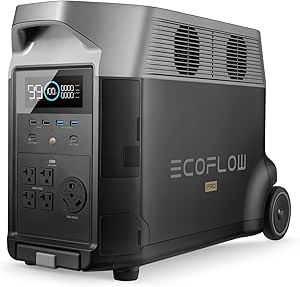
The DELTA Pro plays in a different league from everything else here. With 3600Wh of capacity and 3600W of AC output (4500W with X-Boost), it can run refrigerators, well pumps, and window AC units — tasks that stall both BROWEY models and are impossible for the Jackery 300. Its flexibility is the real story: recharge from wall, solar, car, an EV charging station, or a smart generator, and hit 80% in under two hours from 240V. Pair it with up to four 400W panels and expansion batteries, and the system scales to 25kWh, which edges toward true whole-home territory and competes directly with the Jackery HomePower 3600 Plus. Be clear-eyed about costs: the expansion ecosystem is where the price climbs, and at this capacity the unit is a two-person lift, not a camping companion.
Pros:- 3600Wh capacity with 4500W X-Boost runs major appliances
- Charges via EV station, solar, wall, car, or smart generator in as little as 1.8 hours
- Expandable up to 25kWh with extra batteries
- App control over Wi-Fi and Bluetooth for remote monitoring
Cons:- Expensive, and meaningful capacity expansion requires further investment in batteries or panels
- Heavy and bulky — practical for fixed home backup, not for carrying
Best for: Homeowners building a serious outage-ready system that can scale toward whole-house coverage
Not ideal for: Campers and casual users — the weight, cost, and capacity are wasted on weekend trips and gadget charging
- Battery Capacity:3600Wh
- Battery Type:LiFePO4
- AC Output:3600W (4500W with X-Boost)
- Recharge Time:1.8 hrs (240V); 2.7 hrs (1800W wall); 2.8 hrs (solar)
- Solar Input:Up to 4x400W panels
- Expansion:Up to 25kWh with extra batteries or smart generator
- Ports:5 AC, 2 USB-C 100W, 4 USB-A, 2 DC, car port, Anderson
- Control:EcoFlow app via Wi-Fi or Bluetooth
Our verdict“If your goal is riding out multi-day outages with appliances running, this is the ceiling of this lineup — just budget for the ecosystem, not just the unit.”
How We Picked
I evaluated these solar-powered backup generators against four buyer-relevant criteria, weighted in this order: usable capacity and output (whether the unit can actually run a refrigerator or just charge phones), solar recharge speed (how many watts of panel input the unit accepts, and whether panels are included), battery chemistry and lifespan (LiFePO4 units rated for 3000+ cycles ranked above older NMC packs), and value as a complete solution — a station sold with no panels scores differently than a bundled kit, because the real cost of a solar generator includes the panels.
Ranking also reflected realistic use cases. A 292Wh unit was judged as a camping and short-outage tool, not penalized for failing to run a fridge. Where two products share near-identical hardware — the BLAVOR/BROWEY trio — I separated them by included accessories, warranty terms, and price volatility, and flagged the duplication so buyers don’t pay more for a rebrand. Portability, inverter surge ratings for motor-driven appliances, and expansion options broke ties at the top of the list.
| solar-powered backup generator | Battery Type |
|---|---|
| Jackery HomePower 3000 with 2x | LiFePO4 |
| MARBERO 237Wh Solar Generator | — |
| BLAVOR Portable Power Station | LiFePO4 |
| Jackery Explorer 300 Portable | — |
| Portable Solar Generator 300W | — |
| Jackery HomePower 3600 Plus Po | LFP |
| Jackery Solar Generator 1000 V | LFP |
| Anker SOLIX C1000 Gen 2 Portab | — |
| EF ECOFLOW Delta 3 Ultra 3072W | LiFePO4 |
| Jackery Explorer 1000 v2 Porta | LFP |
| BLAVOR Portable Power Station | LiFePO4 |
| BROWEY 1600W Portable Power St | LiFePO4 |
| BROWEY 1600W Portable Power St | LiFePO4 |
| Jackery Solar Generator 300 an | LiFePO4 |
| EF ECOFLOW Portable Power Stat | LiFePO4 |
Factors to Consider When Choosing Solar-powered Backup Generators
Before settling on one of the fifteen picks above, it helps to understand the structural decisions in this market. Most buyer regret in this category comes from mismatched expectations — usually a capacity that seemed huge on paper but shrank fast against a refrigerator’s real draw.
Size Your Battery to Real Outage Math, Not Marketing
The most common mistake is buying capacity based on watt-hours alone. A 1000Wh station sounds substantial, but a refrigerator drawing 150W intermittently will consume roughly 1,200–1,500Wh per day — a full discharge of that battery. Divide every watt-hour figure by your critical loads (fridge, router, CPAP, a few lights) and think in days of runtime, not total Wh. Also subtract 10–15% for inverter inefficiency, which marketing numbers never mention. Buyers targeting whole-home essentials should start at 3,000Wh like the HomePower 3000 or DELTA Pro; anything under 300Wh is a phone-and-laptop bridge, not backup power. Finally, remember that solar input during an outage partially offsets consumption, so daily panel harvest matters as much as stored capacity.
Solar Input Rating Matters More Than Panel Wattage
A unit’s maximum solar input wattage determines how fast it refills, and many budget stations quietly cap this. A 1024Wh station accepting 200W of input recharges in a sunny day; the same battery limited to 60W of built-in panel takes several days. Check the maximum solar input rating before assuming a bigger panel will help — some 300Wh units accept only 60–90W regardless of what you connect. Also verify the connector type (MC4 vs. proprietary) because proprietary inputs, common on Jackery and EcoFlow, can limit third-party panel choices. MPPT charge controllers, standard on the mid-range and premium picks here, harvest meaningfully more than PWM controllers on budget models, especially in partial shade. If your region averages three peak sun hours or fewer in winter, oversize your panels by 50% over the manufacturer’s bundle.
Battery Chemistry Sets Your Total Cost of Ownership
LiFePO4 (lithium iron phosphate) chemistry, found in the BLAVOR, BROWEY, Anker, and newer Jackery units, typically lasts 3,000+ charge cycles — roughly six to ten years of daily cycling — versus 500–800 cycles for older NMC packs in cheaper stations. That difference dwarfs the upfront savings on an NMC unit if you use it regularly. LiFePO4 also tolerates being stored at partial charge without degrading, which suits an emergency tool that sits idle most of the year. The tradeoff is weight: LiFePO4 packs are heavier per watt-hour, which is why the premium high-capacity units in this roundup push past 60 pounds. If your generator will live on a shelf until an outage, chemistry matters more than portability — pay for the cycles.
Inverter Surge Ratings Decide What Actually Starts
Refrigerator compressors, well pumps, and power tools draw two to four times their running wattage at startup, and an undersized inverter will simply shut off. A 1,600W-rated unit with a 3,200W surge rating can start most fridges; a 300W unit cannot, regardless of remaining battery. Check both the continuous rating and surge rating, and confirm your largest appliance’s starting watts before buying. Pure sine wave output, standard on everything in this lineup except the cheapest kits, protects sensitive electronics and variable-speed compressors. One pattern from the comparison worth repeating: mid-size units like the Anker SOLIX C1000 punch above their capacity class on surge, which is why a 1,024Wh unit can outperform a bigger battery with a weak inverter on real appliances.
Bundled Kits vs. Buying Panels Separately
Several products here are sold as bare stations, which makes price comparisons misleading. The EcoFlow Delta 3 Ultra with just an XT60 cable requires a separate $200–400 panel investment, while the Jackery HomePower 3000 bundle includes 400W of panels — suddenly the price gap narrows or reverses. Bundles also guarantee connector compatibility and matched charging behavior, which matters if you’re not comfortable with adapters. The counterargument: bundle panels are often the manufacturer’s most basic models, and buying a quality third-party panel separately can get you better performance per dollar. My rule of thumb: beginners and gift-buyers should buy the bundle; experienced users comfortable with MC4 wiring can piece together a better system station-by-station.
Watch for Rebrands and Spec Duplication
This roundup contains a near-identical 1024Wh / 1600W LiFePO4 platform sold under at least three brand names — a pattern common across this whole market, where white-label manufacturers sell the same chassis to multiple resellers. Before buying any mid-range station, compare dimensions, battery specs, and port layouts across brands; if they match, you’re choosing between warranties, firmware support, and price, not hardware. Established brands like Jackery, EcoFlow, and Anker maintain apps, firmware updates, and replacement parts for years, while rebrands may offer neither. That support gap matters most for a product you’ll own for the better part of a decade. Check the warranty length and whether the company has a real US service presence before paying a premium for what is otherwise identical hardware.
Frequently Asked Questions
Can a solar-powered backup generator run my refrigerator during an outage?
Yes, but only if both the battery and inverter are sized correctly. A typical fridge needs a surge capacity of 1,200–2,000W at compressor startup, which rules out everything under 1,000W of continuous output in this lineup — the 300Wh-class units will overload instantly. The Jackery HomePower 3000, EcoFlow DELTA Pro, and the 1,600W LiFePO4 units can all start a standard fridge; from a full 1,024Wh battery, expect roughly 15–20 hours of fridge runtime. With 200W of solar input and decent sun, you can extend that to two days or more on the mid-size units. Measure your fridge’s actual draw with a plug-in meter before an emergency — ratings vary enormously between models.
Are built-in solar panels worth it compared to separate panels?
Built-in panels (as on the BLAVOR and BROWEY units) trade charging speed for convenience: no cables, no setup, just set the unit in the sun. The catch is physics — a panel folded into a station’s chassis captures maybe 60–100W, versus 200–400W from properly angled external panels, so recharging takes days rather than hours. If your use case is trickle-charging between weekend camping trips, built-in solar is genuinely handy. For home backup where you need to refill daily during a multi-day outage, external panels are close to mandatory. The best compromise is a unit with a high solar input rating plus a portable folding panel you can position and re-aim through the day.
How long do these batteries last before needing replacement?
Chemistry is the deciding factor. LiFePO4 units — the BLAVOR, BROWEY, Anker C1000, and newer Jackery models — are rated for roughly 3,000 cycles to 80% capacity, which translates to eight or more years even with weekly use, and longer for an emergency-only unit. Older NMC chemistry, found in some budget kits, degrades to that level after 500–800 cycles, or about two years of regular cycling. For a device that mostly sits idle, both chemistries lose some capacity to calendar aging regardless of cycles, so store at 50–60% charge and top up every few months. Treat battery replacement cost — often $300–800 for large packs — as part of the long-term price when comparing a cheap NMC station against a pricier LiFePO4 one.
Why do two products with identical specs have different prices?
Frequently because they are the same hardware. White-label manufacturers build a standard power station chassis and sell it to multiple brands, which is exactly what’s happening with the 1024Wh / 1600W LiFePO4 platform appearing under BLAVOR and BROWEY branding in this comparison. What differs is the package: warranty length, customer support quality, included cables and panels, firmware, and app support. Established brands charge a premium that buys real service infrastructure; smaller rebrands sometimes undercut by $50–100 but can leave you without recourse if the unit fails at month fourteen. If the hardware is identical, compare warranties line by line — that’s the only meaningful difference left.
Should I buy one large generator or several smaller ones?
One large station is almost always better for home backup because a single inverter can run appliances with high startup surges, while several small units cannot combine output. Three 300Wh stations still can’t start a refrigerator, even though together they hold similar energy to one 1,000Wh unit. The multi-unit approach makes sense for a different reason: distributing power — one station upstairs for medical devices, one in the kitchen, one packed for evacuation. It also provides redundancy if one unit fails mid-outage. Expansion-capable systems like the EcoFlow DELTA Pro offer a third path: start with one big battery and add capacity later without buying a second inverter, which is the most cost-efficient route if your needs might grow.
Conclusion
The right pick depends less on specs and more on what you’re actually backing up. For best overall, the Jackery HomePower 3000 bundle wins because it arrives as a complete, genuinely powerful system — 3072Wh, 3600W output, and 400W of included panels — without the à-la-carte panel shopping the EcoFlow stations require. For best premium, the EcoFlow DELTA Pro is the choice for whole-home ambitions and future expansion, provided you budget for panels and possibly a second battery. For best value, the BLAVOR 1024Wh delivers the most usable backup per dollar thanks to its built-in solar and LiFePO4 chemistry — just accept the slow recharge. For beginners and campers, the Jackery Explorer 300 or MARBERO 237Wh kit offer a low-risk, low-cost entry into solar power, ideal for learning before committing to a $2,000+ system. And for balanced mid-size needs — weekend camping plus occasional home backup — the Anker SOLIX C1000 or Jackery Solar Generator 1000 V2 hit the sweet spot of fast solar input, real appliance capability, and manageable weight. Whatever you choose, size to your fridge first; it’s the appliance that separates real backup power from an oversized phone charger.
Fall Picks
fall essentials
As an affiliate, we earn on qualifying purchases.