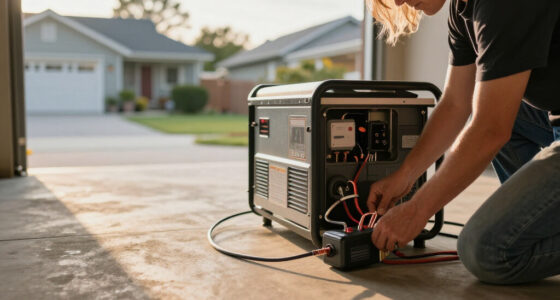
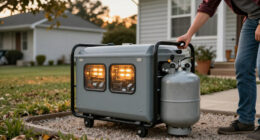
For most households comparing dual fuel generators for home backup, I rank the Westinghouse WGen10500DFc as the best overall balance of output and fuel flexibility. The DuroMax XP13000HX suits buyers who need more capacity for heavy loads, while the PowerSmart 3800-Watt inverter is a better fit for lighter, quieter backup needs. The main tradeoff is straightforward: larger open-frame generators can run more household equipment, but they take more space, fuel, and effort to manage. Smaller inverter models are easier to live with but cannot support as many circuits or appliances. Read on for the full breakdown, including how the models compare and what to check before choosing one.

Get backup power and energy gear delivered free with Prime
- Fast, free delivery on millions of items
- Prime Video, Amazon Music and more included
- Member-only deals all year
Complete the kit


Key Takeaways
The WGen10500DFc leads for balanced backup. It sits between the more demanding 13,000-watt class and smaller models designed for essentials, making it a practical starting point for many homes.
Maximum output is not the only measure of home coverage. The DuroMax XP13000HX and DS13000MX target heavier loads, but buyers still need to match running and starting watts to the appliances they plan to operate.
Inverter models fill a different role. The PowerSmart 3800 and WEN DF360iX prioritize compact operation and lower-load use rather than broad household coverage.
Tri-fuel models trade a strict dual-fuel match for another supply option. The Westinghouse WGen11500TFc and Generac GP9500E may appeal where natural gas access matters, but they are not direct dual-fuel equivalents.
Starting convenience and safety features vary across the lineup. Remote or electric start, CO sensing, wheel kits, and transfer-switch readiness can shape day-to-day usability as much as headline wattage.
| Westinghouse WGen10500DFc Dual Fuel Portable Generator |  | Best Overall for High-Load Home Backup | Gasoline output: 13,500 peak watts; 10,500 running watts | Propane output: 12,500 peak watts; 9,500 running watts | Fuel types: Gasoline, propane, and natural gas | VIEW LATEST PRICE | See Our Full Breakdown |
| Westinghouse 6600-Watt Dual-Fuel Portable Generator with Remote Electric Start |  | Best for Convenient Mid-Range Backup | Gasoline output: 6,600 peak watts; 5,300 running watts | Propane output: 5,900 peak watts; 4,800 running watts | Fuel: Gasoline or propane | VIEW LATEST PRICE | See Our Full Breakdown |
| DuroStar DS13000MX 13,000-Watt Dual-Fuel Portable Generator |  | Best for Transfer-Switch Capacity | Peak output: 13,000 watts | Running output: 10,500 watts | Fuel: Gasoline or propane | VIEW LATEST PRICE | See Our Full Breakdown |
| Westinghouse 6500-Watt Dual-Fuel Portable Generator |  | Best Value for Essential-Circuit Backup | Gasoline output: 6,500 peak watts; 5,300 running watts | Propane output: 5,800 peak watts; 4,800 running watts | Fuel tank: 4.7 gallons | VIEW LATEST PRICE | See Our Full Breakdown |
| Westinghouse 4650 Peak Watt Dual Fuel Portable Generator |  | Best Compact Pick for Modest Backup Needs | Peak output: 4,650 watts on gasoline; 4,650 watts on propane | Fuel: Gasoline or propane | Engine: 212cc 4-stroke OHV | VIEW LATEST PRICE | See Our Full Breakdown |
| WEN DF475T Dual-Fuel Portable Generator with Wheel Kit and Electric Start |  | Best for Midrange Home Backup | Fuel types: Gasoline and propane | Running output: 3,800 W gasoline; 3,500 W propane | Surge output: 4,750 W gasoline; 4,350 W propane | VIEW LATEST PRICE | See Our Full Breakdown |
| PowerSmart 3800-Watt Dual-Fuel Inverter Generator | 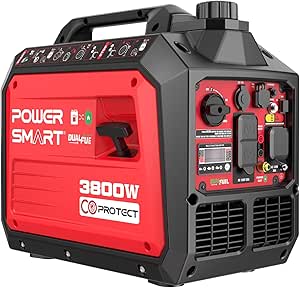 | Best Compact, Quieter Backup | Fuel types: Gasoline and propane | Starting output: 3,800 W gasoline; 3,500 W propane | Running output: 3,300 W gasoline; 3,100 W propane | VIEW LATEST PRICE | See Our Full Breakdown |
| DuroMax XP13000HX 13,000-Watt Dual-Fuel Portable Generator |  | Best High-Output Dual-Fuel Pick | Fuel types: Gasoline and propane | Starting output: 13,000 W | Running output: 10,500 W | VIEW LATEST PRICE | See Our Full Breakdown |
| Westinghouse WGen11500TFc Tri-Fuel Portable Generator |  | Best for Fuel Flexibility and Extended Backup | Fuel types: Gasoline, propane, and natural gas | Gasoline output: 14,500 W peak; 11,500 W running | Propane output: 13,500 W peak; 10,500 W running | VIEW LATEST PRICE | See Our Full Breakdown |
| Westinghouse WGen5300cv Portable Generator with CO Sensor |  | Best Gasoline-Only Alternative | Fuel type: Gasoline | Running and peak output: 5,300 W running; 6,600 W peak | Engine: 274cc 4-stroke OHV | VIEW LATEST PRICE | See Our Full Breakdown |
| WEN DF1100T 11,000-Watt Dual-Fuel Portable Generator with Electric Start and Wheel Kit | 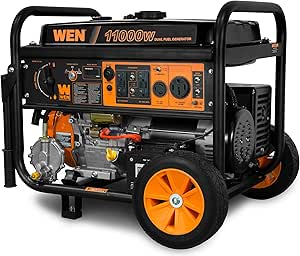 | Best Value for High-Load Backup | Fuel: Gasoline or propane | Running output: 8,300 watts gasoline; 7,500 watts propane | Surge output: 11,000 watts gasoline; 9,500 watts propane | VIEW LATEST PRICE | See Our Full Breakdown |
| Generac GP9500E Tri-Fuel Portable Generator with Electric Start |  | Best for Three-Fuel Flexibility | Fuel types: Gasoline, liquid propane, and natural gas | Running power: 9,500 watts | Starting power: 12,500 watts on gasoline | VIEW LATEST PRICE | See Our Full Breakdown |
| WEN DF360iX 3600-Watt Dual-Fuel Portable Inverter Generator |  | Best Compact Option for Essential Loads | Fuel: Gasoline or propane | Surge output: 3,600 watts gasoline; 3,500 watts propane | Engine: 149cc, 4-stroke | VIEW LATEST PRICE | See Our Full Breakdown |
| Westinghouse WGen11500DFc Dual-Fuel Portable Generator | 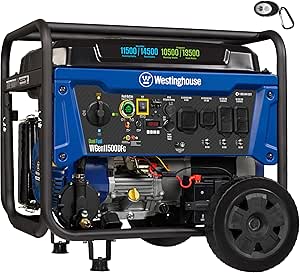 | Best for High-Demand Home Backup | Fuel: Gasoline or propane | Running output: 11,500 watts gasoline; 10,500 watts propane | Peak output: 14,500 watts gasoline; 13,500 watts propane | VIEW LATEST PRICE | See Our Full Breakdown |
| Westinghouse WGen9500DF Dual-Fuel Portable Generator |  | Best for Remote Start and Balanced Runtime | Fuel: Gasoline or propane | Running output: 9,500 watts gasoline; 8,500 watts propane | Peak output: 12,500 watts gasoline; 11,200 watts propane | VIEW LATEST PRICE | See Our Full Breakdown |
| dual fuel generators for home backup | Engine | Warranty | Voltage | Fuel tank |
|---|---|---|---|---|
| Westinghouse WGen10500DFc Dual | 500cc 4-stroke OHV | 3-year limited warranty | — | 9.5 gallons |
| Westinghouse 6600-Watt Dual-Fu | 274cc 4-stroke OHV | — | 120/240 volts | 4.7 gallons |
| DuroStar DS13000MX 13,000-Watt | 500cc 4-stroke OHV | — | 240 volts | 8.3 gallons |
| Westinghouse 6500-Watt Dual-Fu | 274cc Westinghouse 4-stroke OHV | 3-year limited service, labor, and parts coverage | 120/240 volts | 4.7 gallons |
| Westinghouse 4650 Peak Watt Du | 212cc 4-stroke OHV | 3-year limited service, labor, and parts coverage | — | 4 gallons |
| WEN DF475T Dual-Fuel Portable | 224cc 4-stroke OHV | 2 years | 120V/240V | — |
| PowerSmart 3800-Watt Dual-Fuel | 149cc | 2 years | 120V | — |
| DuroMax XP13000HX 13,000-Watt | 500cc 4-stroke OHV | — | 120/240V | — |
| Westinghouse WGen11500TFc Tri- | 550cc 4-stroke OHV | — | — | — |
| Westinghouse WGen5300cv Portab | 274cc 4-stroke OHV | 3-year limited warranty | 120/240V | — |
| WEN DF1100T 11,000-Watt Dual-F | 457cc, 4-stroke OHV | Two years | 120V/240V | 6.6 gallons |
| Generac GP9500E Tri-Fuel Porta | 500cc Generac OHV | 3-year residential / 2-year commercial limited | — | 7.5 gallons |
| WEN DF360iX 3600-Watt Dual-Fue | 149cc, 4-stroke | 3-year limited | 120V | 1.5 gallons |
| Westinghouse WGen11500DFc Dual | 550cc, 4-stroke OHV | 3-year limited | 240V | — |
| Westinghouse WGen9500DF Dual-F | 457cc, 4-stroke OHV | 3-year limited | 120/240V | — |
More Details on Our Top Picks
Westinghouse WGen10500DFc Dual Fuel Portable Generator
For a home backup plan built around running several major loads, I’d put the WGen10500DFc ahead of the smaller Westinghouse 6600-Watt model: its 10,500 running watts on gasoline and 9,500 on propane leave more room for overlapping household needs. It also supports gasoline, propane, and natural gas, giving owners more fuel choices than the two-fuel options here. Remote and electric start can make startup easier when the generator is stationed outdoors, while the CO sensor and low-oil shutdown add useful safeguards.
The tradeoff is scale: its 500cc engine and 9.5-gallon tank make it a substantial machine to store and manage. The DuroStar DS13000MX matches its gasoline running output, but this Westinghouse offers broader fuel flexibility and a stated 19-hour maximum runtime. Choose it for capacity and fuel options, not compact storage.
Pros:- High running output: 10,500 watts on gasoline and 9,500 watts on propane
- Accepts gasoline, propane, and natural gas
- Remote, electric, and recoil starting options
- CO sensor, low-oil shutdown, and up to 19 hours of stated runtime
Cons:- Large 500cc engine and 9.5-gallon tank take substantial storage space
- Requires fuel and some assembly before use
Best for: Households seeking to support multiple high-demand appliances and wanting the option to use natural gas as well as gasoline or propane.
Not ideal for: Buyers with limited storage space or modest backup needs who would find a large 500cc generator more machine than they need.
- Gasoline output:13,500 peak watts; 10,500 running watts
- Propane output:12,500 peak watts; 9,500 running watts
- Fuel types:Gasoline, propane, and natural gas
- Engine:500cc 4-stroke OHV
- Fuel tank:9.5 gallons
- Maximum runtime:Up to 19 hours
- Starting methods:Remote, electric, and recoil
- Safety features:CO sensor, low-oil shutdown, and overload protection
- Warranty:3-year limited warranty
Our verdict“I’d choose the WGen10500DFc for a larger home backup setup that benefits from strong output and three fuel choices, provided there is room to store it.”
Westinghouse 6600-Watt Dual-Fuel Portable Generator with Remote Electric Start
I’d favor this Westinghouse when remote starting and practical connection options matter more than powering a long list of large appliances. Its 5,300 gasoline running watts and 4,800 propane running watts sit well below the WGen10500DFc, but may suit a smaller backup plan with selected household circuits. The included 120/240V output and transfer-switch-ready L14-30R outlet support a more direct home-backup setup, and the RV-ready outlet adds flexibility for other uses.
The remote key fob and push-button start are a useful convenience, particularly when reaching the unit is awkward. Compared with the similar Westinghouse 6500-Watt model, this version’s listed peak output is slightly higher on gasoline, while both offer 4.7-gallon tanks and up to 14.5 hours of runtime. Its smaller capacity is the main limit: buyers planning to run several high-demand appliances should look at the WGen10500DFc instead.
Pros:- Remote key fob and push-button electric start
- Transfer-switch-ready 120/240V outlet and RV-ready outlet
- Runs on gasoline or propane
- Automatic low-oil and carbon monoxide shutdown
Cons:- Running output is limited compared with the larger 10,500-watt models
- 4.7-gallon tank runtime varies with fuel and electrical load
Best for: Homeowners who want a remote-start generator for selected household circuits, with a transfer-switch-ready connection and RV outlet.
Not ideal for: Households expecting to run several high-wattage appliances at once; its running output is far below the WGen10500DFc.
- Gasoline output:6,600 peak watts; 5,300 running watts
- Propane output:5,900 peak watts; 4,800 running watts
- Fuel:Gasoline or propane
- Engine:274cc 4-stroke OHV
- Fuel tank:4.7 gallons
- Maximum runtime:Up to 14.5 hours
- Voltage:120/240 volts
- Outlets:Household 20A duplex, RV-ready TT-30R 30A, and transfer-switch-ready L14-30R 30A
- Safety and warranty:Low-oil and CO shutdown, overload protection, and 3-year limited warranty
Our verdict“I’d pick this model for convenient, moderate-capacity home backup with remote starting, but not for a plan that depends on powering many large loads.”
DuroStar DS13000MX 13,000-Watt Dual-Fuel Portable Generator
The DS13000MX is a strong match for buyers who want 10,500 running watts and a 50-amp transfer-switch connection without moving up to a three-fuel model. Its gasoline running output matches the Westinghouse WGen10500DFc, making either a candidate for larger backup loads. The difference is fuel flexibility: the Westinghouse also accepts natural gas, while this DuroStar runs on gasoline or propane. The DS13000MX’s 8.3-gallon tank and stated 17-hour runtime make it a substantial backup unit, though runtime will depend on load and fuel.
Electric start and a CO sensor with automatic shutdown address two practical concerns for home use. Against the smaller Westinghouse 6600-Watt model, the DuroStar offers much more running capacity, but it also brings the storage and handling demands of a 500cc machine. I’d choose it for transfer-switch-based backup, not for a space-constrained setup.
Pros:- 10,500 running watts on gasoline for substantial backup capacity
- 50-amp outlet suited to transfer-switch connection
- Runs on gasoline or propane
- Electric start, CO sensor, and low-oil shutdown
Cons:- Large 500cc engine can be difficult to store and transport
- Does not offer the natural-gas option listed for the Westinghouse WGen10500DFc
Best for: Homeowners with a transfer-switch plan who need high running output and expect to rely on gasoline or propane.
Not ideal for: Buyers who need natural-gas operation or have little space for a large portable generator.
- Peak output:13,000 watts
- Running output:10,500 watts
- Fuel:Gasoline or propane
- Engine:500cc 4-stroke OHV
- Fuel tank:8.3 gallons
- Runtime:Up to 17 hours
- Voltage:240 volts
- Outlets:5, including a 50-amp transfer-switch-ready outlet
- Safety features:CO sensor with automatic shutdown and low-oil shutdown
Our verdict“I’d choose the DS13000MX for high-capacity, transfer-switch-ready backup on gasoline or propane, if its size fits the storage plan.”
Westinghouse 6500-Watt Dual-Fuel Portable Generator
This 6500-watt Westinghouse makes sense when a household wants transfer-switch and RV connections without the output or storage demands of the large WGen10500DFc. It supplies 5,300 running watts on gasoline and 4,800 on propane, putting it close to the Westinghouse 6600-Watt model for everyday backup capacity. Both have 4.7-gallon tanks and up to 14.5 hours of stated runtime; this version’s listed gasoline peak output is 6,500 watts, just below the other model’s 6,600 watts.
Its 120/240V outlets, low-oil shutdown, and CO shutdown make it a straightforward choice for selected home circuits. Included accessories and three-year service, labor, and parts coverage add practical setup support. The tradeoff is that this is still a mid-range generator, not a substitute for the larger DuroStar DS13000MX when several heavy loads need to run together. Some assembly is required.
Pros:- 120/240V output with transfer-switch-ready and RV-ready outlets
- Runs on gasoline or propane
- Up to 14.5 hours of stated runtime from a 4.7-gallon tank
- Low-oil and carbon monoxide shutdown with three-year coverage
Cons:- 5,300 gasoline running watts limit simultaneous high-demand loads
- Requires some assembly, and factory testing may leave residual fuel or oil odor
Best for: Households backing up essential circuits with a transfer switch, especially those who also want an RV-ready outlet.
Not ideal for: Buyers who need high-capacity backup for multiple large appliances or want remote-start convenience.
- Gasoline output:6,500 peak watts; 5,300 running watts
- Propane output:5,800 peak watts; 4,800 running watts
- Fuel tank:4.7 gallons
- Maximum runtime:Up to 14.5 hours
- Voltage:120/240 volts
- Engine:274cc Westinghouse 4-stroke OHV
- Outlets:5–20R household duplex, TT-30R 30A RV-ready, and L14-30R 30A transfer-switch-ready
- Safety features:Automatic low-oil and carbon monoxide shutdown
- Warranty:3-year limited service, labor, and parts coverage
Our verdict“I’d choose this Westinghouse for essential-circuit backup and useful outlet options, while larger homes should step up to the DuroStar DS13000MX.”
Westinghouse 4650 Peak Watt Dual Fuel Portable Generator
For buyers who want a simpler, lower-capacity backup unit, this Westinghouse is easier to justify than the 6500-watt model when the plan is limited to selected essential loads. It has a 212cc engine and a 4-gallon tank, with up to 14 hours of stated runtime. Its RV-ready TT-30R outlet and covered connections also make it useful beyond home outages. The tradeoff is clear in the lineup: unlike the 6500-watt Westinghouse or the DuroStar DS13000MX, this model’s supplied data lists peak output but no running-watt rating, so buyers have less information for matching continuous household loads.
Automatic low-oil and CO shutdown add safety features, and gasoline or propane operation offers fuel choice. But the stated propane output is lower than gasoline output, and this generator does not have the larger models’ stated capacity for broader home backup. I’d check appliance running and starting needs before choosing it.
Pros:- Runs on gasoline or propane
- 4-gallon tank with up to 14 hours of stated runtime
- Includes an RV-ready 30A outlet and a 30A L5-30R outlet
- Automatic low-oil and carbon monoxide shutdown
Cons:- Listed specifications provide peak output but no running-watt rating
- Lower-capacity choice than the Westinghouse 6500-Watt and DuroStar DS13000MX
- Propane rated output is lower than gasoline output
Best for: Owners of smaller homes or cabins who need a portable generator for a limited set of essential loads and value an RV-ready outlet.
Not ideal for: Households planning to run several major appliances or buyers who need a published running-watt figure to size a transfer-switch backup plan.
- Peak output:4,650 watts on gasoline; 4,650 watts on propane
- Fuel:Gasoline or propane
- Engine:212cc 4-stroke OHV
- Fuel tank:4 gallons
- Maximum runtime:Up to 14 hours per tank
- Outlets:5–20R 120V duplex, TT-30R 30A, and L5-30R 30A
- Safety features:Automatic low-oil and carbon monoxide shutdown
- Warranty:3-year limited service, labor, and parts coverage
Our verdict“I’d choose this model for modest, carefully planned backup needs, but step up to the Westinghouse 6500-Watt if you need a clearer path to supporting more household circuits.”
WEN DF475T Dual-Fuel Portable Generator with Wheel Kit and Electric Start
The WEN DF475T suits buyers who need a practical step up from small inverter models but do not need a whole-home-scale generator. Its 3,800 running watts on gasoline, 120/240V output, and L14-30R connection give it more home-circuit flexibility than the 120V-only PowerSmart 3800-Watt Inverter Generator. Electric start also makes routine startup less demanding, while the included wheel kit helps with positioning its portable frame.
The tradeoff is fuel capacity: the 4-gallon tank supports up to 11 hours at half load, so heavier backup use means more frequent refueling than with larger-tank models such as the Westinghouse WGen11500TFc. Its output also falls well short of that generator’s capacity. I’d choose the WEN for a modest set of essential circuits, not for running many large loads at once.
Pros:- Runs on gasoline or propane
- 120/240V output and an L14-30R outlet support a wider range of home connections than 120V-only models
- Electric start reduces the effort of starting the generator
- Includes a wheel and handle kit, LPG hose, and oil
Cons:- The 4-gallon gasoline tank requires more frequent refueling than larger home-backup models
- Running output is limited to 3,800 watts on gasoline and 3,500 watts on propane
- No natural-gas option
Best for: Households seeking 120/240V support for a modest set of essential circuits, with electric start and a movable generator.
Not ideal for: Buyers who need to run multiple high-draw appliances for long stretches or want natural-gas capability and a larger fuel reserve.
- Fuel types:Gasoline and propane
- Running output:3,800 W gasoline; 3,500 W propane
- Surge output:4,750 W gasoline; 4,350 W propane
- Voltage:120V/240V
- Engine:224cc 4-stroke OHV
- Starting method:Electric start
- Gasoline tank and runtime:4 gallons; up to 11 hours at half load
- Outlets:Two 120V GFCI 5-20R; one 120V/240V L14-30R; one 12V DC outlet
- Warranty:2 years
Our verdict“Choose the WEN DF475T for modest home backup when 120/240V output and electric start matter more than extended fuel capacity.”
PowerSmart 3800-Watt Dual-Fuel Inverter Generator
The PowerSmart 3800-Watt Dual-Fuel Inverter Generator favors portability and lower operating noise over whole-home coverage. At 50.7 pounds and a listed 59 dBA in Eco Mode at 25% load, it is easier to move and better suited to close quarters than the 245-pound DuroMax XP13000HX. Its inverter format, CO sensor, and low-oil shutdown also make it a more manageable choice for running selected electronics and smaller essentials, provided the load stays within its limits.
That compact design comes with a clear home-backup constraint: it supplies 120V only, unlike the WEN DF475T’s 120/240V output, and its gasoline runtime is listed as up to eight hours. Propane can extend operation to up to 24 hours on a 20-pound tank, but this remains a lower-output option. I’d skip it if your backup plan depends on 240V equipment or several large appliances running together.
Pros:- Dual-fuel operation offers gasoline or propane flexibility
- Compact 50.7-pound weight is far easier to move than large-frame backup generators
- Listed 59 dBA noise level in Eco Mode at 25% load
- CO sensor, low-oil shutdown, and overload and short-circuit protection
Cons:- 120V-only output excludes 240V appliances and connections
- Gasoline runtime is up to eight hours, requiring attention during extended use
- Running output is 3,300 watts on gasoline and 3,100 watts on propane
Best for: Apartment, townhouse, and RV owners who need portable 120V backup for smaller loads and value quieter Eco Mode operation.
Not ideal for: Households needing 240V appliance support, broad circuit coverage, or high running wattage during an outage.
- Fuel types:Gasoline and propane
- Starting output:3,800 W gasoline; 3,500 W propane
- Running output:3,300 W gasoline; 3,100 W propane
- Voltage:120V
- Noise level:59 dBA at 25% load in Eco Mode
- Runtime:Up to 8 hours on gasoline; up to 24 hours on a 20 lb propane tank
- Weight:50.7 lb
- Engine:149cc
- Warranty:2 years
Our verdict“Pick the PowerSmart when portability and quieter 120V backup matter more than powering 240V home circuits.”
DuroMax XP13000HX 13,000-Watt Dual-Fuel Portable Generator
For a household prioritizing substantial output from a dual-fuel generator, the DuroMax XP13000HX is the standout in this group. It provides 10,500 running watts and a 120/240V, 50A outlet that is transfer-switch-ready, giving it a much broader home-backup role than the WEN DF475T. Electric start and CO Alert add practical conveniences to a generator intended to support more than a small set of essentials.
That capacity comes with a serious portability cost: it weighs 245 pounds and measures 30 x 29 x 26 inches, so moving and storing it takes planning. The Westinghouse WGen11500TFc offers higher gasoline output and adds natural-gas operation, making it the more flexible choice for buyers with a gas line. The DuroMax makes more sense for those who want high output with gasoline or propane and can accommodate its large frame.
Pros:- 10,500 running watts provide far more capacity than compact dual-fuel options
- Gasoline or propane operation offers fuel choice during outages
- 120/240V 50A outlet is transfer-switch-ready
- Electric start and CO Alert add useful starting and safety features
Cons:- At 245 pounds, it is difficult to move without suitable equipment or help
- Large dimensions demand substantial storage space
- The Westinghouse WGen11500TFc offers greater gasoline output and a third fuel option
Best for: Homeowners with a transfer-switch setup who need high dual-fuel output for several circuits and have a fixed storage spot.
Not ideal for: Buyers who need a generator they can move frequently, have limited storage, or want natural-gas operation.
- Fuel types:Gasoline and propane
- Starting output:13,000 W
- Running output:10,500 W
- Voltage:120/240V
- Engine:500cc 4-stroke OHV
- Starting system:Electric start
- Runtime:Up to 17 hours
- Weight and dimensions:245 lb; 30 x 29 x 26 in
- Outlets:Four 120V GFCI outlets; 120V 30A; 120/240V 30A twist-lock; 120/240V 50A
Our verdict“Choose the DuroMax XP13000HX if you need high-output gasoline-or-propane backup and can manage its substantial size and weight.”
Westinghouse WGen11500TFc Tri-Fuel Portable Generator
The Westinghouse WGen11500TFc earns its place for households that want multiple fueling routes and strong output for extended outages. Its three fuel options—gasoline, propane, and natural gas—can reduce dependence on stored gasoline when a compatible natural-gas connection is available. On gasoline, it delivers 11,500 running watts and lists up to 19 hours of runtime, while remote and electric start offer easier startup than the recoil-only Westinghouse WGen5300cv.
It also brings low-THD output, listed below 5%, plus a CO sensor and automatic low-oil shutdown. The cost of this flexibility is a large, heavy-duty format, and propane runtime is listed as up to seven hours with a 20-pound tank. Compared with the DuroMax XP13000HX, it adds natural-gas support and higher gasoline running output, but it is still a substantial machine that needs room and a planned connection setup.
Pros:- Gasoline, propane, and natural gas provide three fueling choices
- 11,500 gasoline running watts suit demanding home-backup loads
- Up to 19 hours of gasoline runtime reduces refueling frequency
- Remote and electric start, CO sensor, and low-THD output support convenient, electronics-conscious backup
Cons:- Large, heavy-duty design is difficult to move and store
- Propane runtime is listed as up to seven hours with a 20 lb tank
- Natural-gas operation depends on access to a suitable connection
Best for: Homeowners with a natural-gas connection or a multi-fuel outage plan who need high output and extended gasoline runtime.
Not ideal for: People with limited storage, no way to position a large generator safely, or a preference for a lightweight portable unit.
- Fuel types:Gasoline, propane, and natural gas
- Gasoline output:14,500 W peak; 11,500 W running
- Propane output:13,500 W peak; 10,500 W running
- Natural-gas output:12,000 W peak; 9,500 W running
- Engine:550cc 4-stroke OHV
- Gasoline tank and runtime:9.5 gallons; up to 19 hours
- Voltage and frequency:240V; 60Hz
- THD:Less than 5%
- Starting and warranty:Electric and remote start; 3-year limited warranty
Our verdict“Choose the WGen11500TFc for high-output backup when three fuel options and long gasoline runtime justify its large footprint.”
Westinghouse WGen5300cv Portable Generator with CO Sensor
The Westinghouse WGen5300cv is the deliberate exception in a dual-fuel roundup: it runs on gasoline only. I include it for buyers who want a clear point of comparison between fuel flexibility and a simpler, moderate-output backup setup. Its 5,300 running watts, 120/240V selector, and 30A transfer-switch-ready outlet offer more home-connection flexibility than the 120V-only PowerSmart, while its 4.7-gallon tank is listed for up to 14.5 hours of runtime.
That runtime and outlet mix may suit a prepared household, but the recoil starter and gasoline-only operation are meaningful compromises beside the electric-start, dual-fuel WEN DF475T. It also lacks a dual-fuel fallback if gasoline is scarce. CO and low-oil shutdown, steel construction, and never-flat wheels help its practical case, though it is not the right choice for shoppers who made propane operation a requirement.
Pros:- 5,300 running watts and 120/240V selection support a range of home loads
- 30A transfer-switch-ready and RV-ready outlets
- Up to 14.5 hours of listed runtime from a 4.7-gallon tank
- CO and automatic low-oil shutdown, with never-flat wheels
Cons:- Gasoline-only operation offers no propane fallback
- Recoil starting takes more effort than electric start on the WEN DF475T
- Some assembly is required
Best for: Households that already plan around gasoline and want 120/240V output, a 30A transfer-switch connection, and portable wheels.
Not ideal for: Buyers who require propane backup, electric start, or a fuel option beyond gasoline during a prolonged outage.
- Fuel type:Gasoline
- Running and peak output:5,300 W running; 6,600 W peak
- Engine:274cc 4-stroke OHV
- Voltage:120/240V
- Fuel tank and runtime:4.7 gallons; up to 14.5 hours
- Starting system:Recoil
- Outlets:5-20R 120V 20A; TT-30R 30A; L14-30R 30A
- Safety features:Automatic low-oil and CO shutdown
- Warranty:3-year limited warranty
Our verdict“Choose the WGen5300cv only if gasoline-only operation fits your outage plan and you value its 120/240V and 30A connection options.”
WEN DF1100T 11,000-Watt Dual-Fuel Portable Generator with Electric Start and Wheel Kit
I’d shortlist the WEN DF1100T for households that want substantial 120V/240V output without moving up to the Westinghouse WGen11500DFc’s higher gasoline capacity. Its 8,300 running watts on gasoline can support a broader mix of home loads than the compact WEN DF360iX, while the included 50A outlet gives a compatible transfer setup a direct connection option. Electric start and the wheel kit make this large portable unit less cumbersome to operate and reposition.
The tradeoff is fuel management: its 6.6-gallon tank runs up to 8.5 hours at half load, shorter than the WGen9500DF’s stated 12-hour maximum. Propane output also falls to 7,500 running watts, so I’d size a backup plan around the fuel you expect to use rather than the gasoline rating alone. It’s a strong capacity-for-cost pick, but not the best fit for buyers prioritizing long intervals between refueling.
Pros:- Provides 8,300 running watts on gasoline and 7,500 on propane
- 120V/240V output includes a 50A receptacle
- Electric start and included wheel kit ease operation and movement
- Includes an LPG hose and a two-year warranty
Cons:- Gasoline runtime is up to 8.5 hours at half load, shorter than the WGen9500DF’s stated maximum
- Propane running output is 800 watts below its gasoline rating
- Large generator format is less suited to tight storage than the WEN DF360iX
Best for: Households seeking strong 120V/240V backup output, electric start, and a 50A connection without stepping up to the Westinghouse WGen11500DFc.
Not ideal for: Buyers who need extended gasoline runtime between refills or expect to run near the generator’s full capacity on propane.
- Fuel:Gasoline or propane
- Running output:8,300 watts gasoline; 7,500 watts propane
- Surge output:11,000 watts gasoline; 9,500 watts propane
- Voltage:120V/240V
- Engine:457cc, 4-stroke OHV
- Fuel tank:6.6 gallons
- Runtime:Up to 8.5 hours at half load
- Starting system:Electric start
- Warranty:Two years
Our verdict“Choose the DF1100T if you want substantial home-backup output and a 50A outlet, and can accept more frequent refueling than the WGen9500DF.”
Generac GP9500E Tri-Fuel Portable Generator with Electric Start
The Generac GP9500E earns its place for backup plans that need more than a gasoline-or-propane choice: it also accepts natural gas. That can give a household another supply option during a disruption, though the listed output figures are for gasoline and I wouldn’t assume they carry over to other fuels. Against the dual-fuel WEN DF1100T, this Generac trades some emphasis on gasoline surge output for a third fuel choice, plus COsense shutdown, AVR, and a 3-year residential warranty.
Its 9,500 running watts, 50A outlet, and transfer-switch compatibility suit substantial household loads when properly connected. The 7.5-gallon tank is rated for up to 9.5 hours at 50% load on gasoline. At 219 pounds, though, this is not a generator I’d pick for frequent solo repositioning; its wheels and folding handle help, but don’t make the weight disappear. Fuel flexibility is the draw, not lightweight handling.
Pros:- Runs on gasoline, liquid propane, or natural gas
- Delivers 9,500 running watts and includes a 120/240V 50A outlet
- COsense shutdown, AVR, low-oil shutdown, and GFCI outlets add useful protections
- Electric start, wheels, and folding handle support setup and relocation
Cons:- Weighs 219 pounds, making solo movement difficult despite the wheels
- Listed 9,500-watt running output is specified for gasoline, not all three fuels
- Gasoline runtime varies with load and is limited to up to 9.5 hours at 50% load
Best for: Homeowners with access to natural gas who want gasoline and propane as alternatives, along with transfer-switch-ready output and CO shutdown protection.
Not ideal for: Buyers who need a lightweight unit or want published running-output figures for every fuel type before planning their backup loads.
- Fuel types:Gasoline, liquid propane, and natural gas
- Running power:9,500 watts
- Starting power:12,500 watts on gasoline
- Engine:500cc Generac OHV
- Fuel tank:7.5 gallons
- Gasoline runtime:Up to 9.5 hours at 50% load; up to 14 hours at 25% load
- Outlets:Two 120V 20A GFCI duplex; one 120/240V 30A L14-30R; one 120/240V 50A 14-50R
- Weight:219 pounds
- Warranty:3-year residential / 2-year commercial limited
Our verdict“Pick the GP9500E if natural-gas access and fuel-choice flexibility matter more than easy handling or a lighter generator.”
WEN DF360iX 3600-Watt Dual-Fuel Portable Inverter Generator
For a smaller backup footprint, I’d look at the WEN DF360iX rather than the much larger WEN DF1100T or Westinghouse WGen11500DFc. Its 49-pound weight and inverter design make it easier to store and more appropriate for electronics than a conventional high-output unit, while the CO shutdown sensor adds a safety feature. That compact format comes with a firm limit: 3,600 surge watts on gasoline is for selected essentials, not the broad household coverage offered by the larger models.
Fuel choice helps it adapt to what’s available, and the propane runtime is listed at up to 14 hours at half load with a 20-pound tank. Gasoline runtime is only up to five hours at half load, so extended operation calls for fuel planning. Its 120V-only output also rules out 240V home circuits. I’d choose this for targeted backup and portability, not as a substitute for a transfer-switch setup with higher capacity.
Pros:- 49-pound weight is much easier to manage than the WEN DF1100T or WGen11500DFc
- Inverter output is designed for sensitive electronics
- Runs on gasoline or propane, with long stated propane runtime at half load
- Includes a CO shutdown sensor, fuel shutoff, RV outlet, and USB ports
Cons:- 3,600-watt gasoline surge output is far below the lineup’s larger home-backup generators
- 120V output does not support 240V circuits
- Gasoline runtime is up to five hours at half load, and the parallel kit is sold separately
Best for: Apartment, cabin, or small-house owners who need portable 120V backup for selected electronics and essential appliances rather than whole-home coverage.
Not ideal for: Households needing 240V circuits, high starting capacity, or enough output to power several large appliances at once.
- Fuel:Gasoline or propane
- Surge output:3,600 watts gasoline; 3,500 watts propane
- Engine:149cc, 4-stroke
- Voltage:120V
- Noise level:65 decibels at quarter load
- Fuel tank:1.5 gallons
- Runtime:Up to 5 hours at half load on gasoline; up to 14 hours at half load on a 20-pound propane tank
- Weight:49 pounds
- Warranty:3-year limited
Our verdict“Choose the DF360iX for portable, limited-load 120V backup, but choose a larger model if your plan includes 240V circuits or multiple major appliances.”
Westinghouse WGen11500DFc Dual-Fuel Portable Generator
When the backup plan calls for the most running capacity in this five-product group, the Westinghouse WGen11500DFc is the clear fit: it supplies 11,500 running watts on gasoline and 10,500 on propane. That exceeds the WEN DF1100T on both fuels and gives a household more room to run several substantial loads, subject to proper load planning and connection. Remote and electric start are practical during an outage, while the fuel gauge and hour meter help track operation without relying on guesswork.
Its stated gasoline runtime reaches up to 19 hours, but propane runtime is up to seven hours on a 20-pound tank, so fuel type changes the operating rhythm. The 550cc engine and heavy-duty portable format also make it a poor match for frequent lifting or cramped storage. Low THD below 5% is a useful spec for electronics, though this remains a large conventional generator rather than the lighter inverter-style WEN DF360iX.
Pros:- Highest listed running output in this group: 11,500 watts on gasoline and 10,500 on propane
- Remote and electric start simplify operation during an outage
- Gasoline runtime is stated at up to 19 hours
- CO sensor, fuel gauge, hour meter, and less-than-5% THD support safer, more informed operation
Cons:- Heavy-duty size makes storage and relocation harder than with the WEN DF360iX
- Propane runtime is up to seven hours on a 20-pound tank
- High output can encourage overloading unless household loads and connection limits are planned carefully
Best for: Households with high combined backup loads, a compatible transfer setup, and enough space to store and position a large generator.
Not ideal for: Buyers who need a lightweight, frequently moved unit or expect long propane operation from a single 20-pound tank.
- Fuel:Gasoline or propane
- Running output:11,500 watts gasoline; 10,500 watts propane
- Peak output:14,500 watts gasoline; 13,500 watts propane
- Engine:550cc, 4-stroke OHV
- Gas tank:9.5 gallons
- Runtime:Up to 19 hours on gasoline; up to 7 hours on a 20-pound propane tank
- Voltage:240V
- Total harmonic distortion:Less than 5%
- Warranty:3-year limited
Our verdict“Choose the WGen11500DFc if your priority is high dual-fuel output for substantial home loads and you can accommodate its size.”
Westinghouse WGen9500DF Dual-Fuel Portable Generator
The Westinghouse WGen9500DF balances substantial home-backup output with a useful choice of starting methods: remote, electric, or recoil. That flexibility separates it from the WEN DF1100T, which lists electric start but not remote start, and may be welcome when the generator is positioned outside and safely away from living areas. Its 9,500 running watts on gasoline and 8,500 on propane provide more headroom than the compact WEN DF360iX, though less than the WGen11500DFc.
The stated 12-hour gasoline runtime comes from a 6.6-gallon tank, making it a better fit for longer stretches between refills than the DF1100T’s listed half-load runtime. The tradeoff is lower output than Westinghouse’s larger model, and the heavy-duty form still needs meaningful storage space. I’d pick it for a household that values remote starting and practical capacity over maximum wattage; buyers with very high loads should step up to the WGen11500DFc.
Pros:- Remote, electric, and recoil starting offer multiple ways to operate it
- Provides 9,500 running watts on gasoline and 8,500 on propane
- Up to 12 hours of stated gasoline runtime on a 6.6-gallon tank
- Includes transfer-switch and RV-ready outlet options, wheels, and a digital display
Cons:- Running output is lower than the Westinghouse WGen11500DFc
- The heavy-duty design requires substantial storage and positioning space
- Requires some assembly before operation
Best for: Homeowners who want remote start, 120/240V backup connections, and substantial capacity without moving up to the WGen11500DFc.
Not ideal for: Households with especially high simultaneous loads or buyers who lack room to store a heavy-duty portable generator.
- Fuel:Gasoline or propane
- Running output:9,500 watts gasoline; 8,500 watts propane
- Peak output:12,500 watts gasoline; 11,200 watts propane
- Engine:457cc, 4-stroke OHV
- Gasoline tank:6.6 gallons
- Runtime:Up to 12 hours on gasoline
- Starting methods:Remote, electric, and recoil
- Voltage:120/240V
- Warranty:3-year limited
Our verdict“Choose the WGen9500DF for remote-start convenience and solid dual-fuel capacity, or move to the WGen11500DFc if your household needs more running watts.”

How We Picked
I ranked these generators for home backup usefulness, not by peak wattage alone. The main criteria were usable running output, capacity for motor-starting surges, fuel flexibility, starting method, portability, and features that can make outage operation easier. I also weighed whether each model’s format fits its likely role: a larger open-frame unit for more household loads, or a compact inverter for a smaller set of essentials.
The order reflects the balance of those factors and how clearly each product serves a distinct buyer. Dual-fuel models are the closest match to the roundup, while the tri-fuel entries are included as useful alternatives for homes with access to natural gas. No portable generator should be treated as a whole-house solution without checking load requirements and arranging safe, code-compliant connection; lower-ranked products are not necessarily poor choices, but they serve narrower needs or involve more tradeoffs.
Factors to Consider When Choosing Dual Fuel Generators For Home Backup
Choosing a generator for home backup starts with the loads you need to protect, then moves to fuel, installation, and practical operation. I would settle those questions before comparing brand names or choosing the largest wattage figure.
Size for Essential Loads and Starting Surges
List the appliances and circuits you actually expect to use during an outage, then note both their running watts and starting requirements. Refrigerators, sump pumps, well pumps, and air conditioners may draw a brief surge when their motors start, so a generator that appears large enough on running watts can still struggle. Avoid adding every appliance’s maximum draw if you will not run them at the same time; a planned rotation can reduce the capacity you need. On the other hand, sizing too close to the limit leaves little room for a pump or compressor to cycle on. Check appliance labels and manuals, and ask an electrician to help estimate loads for circuits connected through a transfer switch.
Check Fuel Availability During an Outage
Dual fuel gives you a choice between gasoline and propane, but the useful choice depends on what you can store and obtain locally. Gasoline is familiar and widely used, yet it needs suitable storage and can degrade if left untreated for long periods. Propane stores for longer in approved tanks, though available runtime depends on tank size, temperature, and generator load. Do not assume the same wattage or runtime on both fuels; consult the model’s specifications for each fuel type. If your home has natural gas service, a tri-fuel generator may be worth comparing, but it is a different category and needs a correctly installed gas connection.
Plan a Safe Connection to Household Circuits
A portable generator is not a substitute for a permanently installed standby system, and connecting one directly to a wall outlet can create a dangerous backfeed. For powering selected household circuits, ask a licensed electrician about a transfer switch or an approved interlock arrangement compatible with the generator. Confirm the generator’s outlet types and amperage match the planned setup before buying; a high wattage rating alone does not confirm connection compatibility. Extension cords can work for individual appliances when they are rated for the load and kept in safe condition, but they may be inconvenient for repeated outages. Decide how you will connect the unit before choosing a model so the setup does not become an after-purchase surprise.
Balance Output Against Noise, Space, and Portability
Large open-frame models generally offer more capacity for household loads, but they also take up more storage space and can be harder to move. A wheel kit helps on level ground; it does not make a heavy generator easy to lift into a vehicle or move over stairs. Inverter models usually suit buyers who value a smaller footprint and lower-load operation, but they are not a shortcut to running every major appliance. Think about where the generator will sit during use, how far it is from doors and windows, and whether its sound will affect household members or neighbors. Carbon monoxide can be fatal, so every portable generator must run outdoors, well away from openings, following the manufacturer’s placement guidance.
Compare Starting, Monitoring, and Safety Features
Electric start can reduce the effort needed to get a generator running, while remote start can be handy when the unit is set up at a safe distance. These conveniences do not remove the need to inspect fuel, oil, and the battery, and battery condition can matter after long storage. A CO sensor adds a layer of protection, but it is not permission to operate the generator indoors, in a garage, or near open windows. Check which outlets, circuit protection, and status indicators are included, then compare them with the way you intend to use the generator. Features are most useful when they solve a real setup problem rather than simply adding complexity.
Think Beyond Purchase Day: Maintenance and Storage
Backup equipment may sit idle for months, so maintenance habits affect whether it is ready when needed. Follow the manual’s schedule for oil changes, filter checks, test runs, and fuel-system care; storage instructions differ by model and fuel. Keep propane cylinders and gasoline containers in approved locations, and never store fuel beside a running generator. A periodic test run can reveal a weak battery or starting issue before an outage, but run the unit outdoors with safe clearance. Before committing to a model, check that you can obtain the required maintenance parts and are comfortable with its storage and service routine.
Frequently Asked Questions
How do I know whether a portable generator can run my central air conditioner?
Check the air conditioner’s nameplate or manual for running amperage and starting requirements, then compare those figures with the generator’s output on your chosen fuel. Central air can require a substantial startup surge, so peak watts alone do not prove compatibility. Add the other loads you expect to run at the same time, including pumps or refrigeration. An electrician can assess the circuit and whether a compatible soft-start device may reduce the startup demand. If the figures leave little headroom, plan to run fewer loads or choose a higher-capacity setup.
Should I choose a tri-fuel model instead of a dual-fuel generator?
A tri-fuel model makes sense when access to natural gas gives you a useful alternative during a long outage or when storing gasoline and propane is inconvenient. That option depends on a suitable gas supply and a connection installed according to the manufacturer’s requirements and local rules. Compare output on each fuel, since capacity can vary by fuel source. If you do not have natural gas access, the extra fuel option may add little value over a dual-fuel model. The tri-fuel Westinghouse and Generac entries in this roundup are alternatives, not direct replacements for every dual-fuel pick.
Can I connect one of these generators to my home’s electrical panel?
Some portable generators can supply selected household circuits through a compatible transfer switch or approved interlock, but the connection must be designed and installed correctly. Never plug a generator into a household outlet to feed the panel; that can send power back onto utility lines and put people at risk. Check the generator’s outlet and output specifications against the connection equipment before purchase. A licensed electrician can confirm which circuits are suitable and explain any local requirements. You can also power individual appliances with properly rated cords, while keeping the generator outdoors and away from openings.
Is an inverter generator enough for home backup, or do I need an open-frame model?
An inverter can suit a household that mainly needs to cover a few essentials and values a smaller, often quieter unit. The PowerSmart 3800 and WEN DF360iX illustrate that role in this lineup, but their lower output limits how many larger loads can run together. Open-frame models are generally the more practical direction when you need more capacity for pumps, refrigerators, or several circuits. The right answer comes from a load list, not from the generator type alone. Include starting surges and check the manufacturer’s fuel-specific ratings before deciding.
What should I do if I cannot store gasoline safely?
Propane operation may be a better fit because approved cylinders can be stored without managing gasoline in a fuel can, provided you follow local rules and the cylinder maker’s instructions. Check how the generator connects to a propane tank and whether the tank size suits the runtime you need. Output and runtime can differ from gasoline operation, so compare the specifications for propane rather than assuming the ratings are identical. A tri-fuel model may also be relevant if your home has a suitable natural-gas connection. No fuel choice removes the need for outdoor operation, safe clearance, and regular equipment checks.
Conclusion
For a broad mix of household backup needs, I would start with the Westinghouse WGen10500DFc as the best overall, while confirming its fuel-specific output suits the planned loads. The WEN DF475T is my value-minded choice for buyers who need a simpler, lower-output setup rather than a 13,000-watt-class machine. For a premium-capacity direction, compare the DuroMax XP13000HX and DS13000MX against your starting-load needs and connection plan. Beginners may prefer a model with electric or remote starting and a manageable load plan, such as the Westinghouse 6600-watt remote-start option, while remembering that start convenience does not replace safe setup. For compact, lighter-load needs, look at the PowerSmart 3800 or WEN DF360iX; for natural-gas access, compare the tri-fuel Westinghouse WGen11500TFc and Generac GP9500E. Choose by the circuits you need, the fuel you can maintain, and the safe way you will connect and operate the generator.