
TL;DR

Get backup power and energy gear delivered free with Prime
- Fast, free delivery on millions of items
- Prime Video, Amazon Music and more included
- Member-only deals all year
A homeowner writing for GreenBuildingAdvisor described adding a separate enclosure for an electricity monitor after the monitor would not fit inside an HVAC subpanel. The installation also involved adding a breaker for the monitor’s electrical reference; the report stresses that panel work should be done only with proper safety precautions and attention to local codes.
A homeowner who wanted to track the electricity use of two heat pumps found that a Refoss EM16P monitor would not fit inside the HVAC subpanel, and installed it in a separate weatherproof enclosure instead. The account, published by GreenBuildingAdvisor, describes the equipment and extra breaker involved, while warning that working inside electrical panels can pose serious safety risks and may be subject to local code requirements.
The author said the home’s electrical system became more complicated after a basement remodel. It includes a 200-amp main panel, a basement subpanel, an HVAC subpanel, a panel beneath the meter and a photovoltaic system. The author already had three electricity monitors installed and wanted another to track the heat pumps supplied by the HVAC panel.
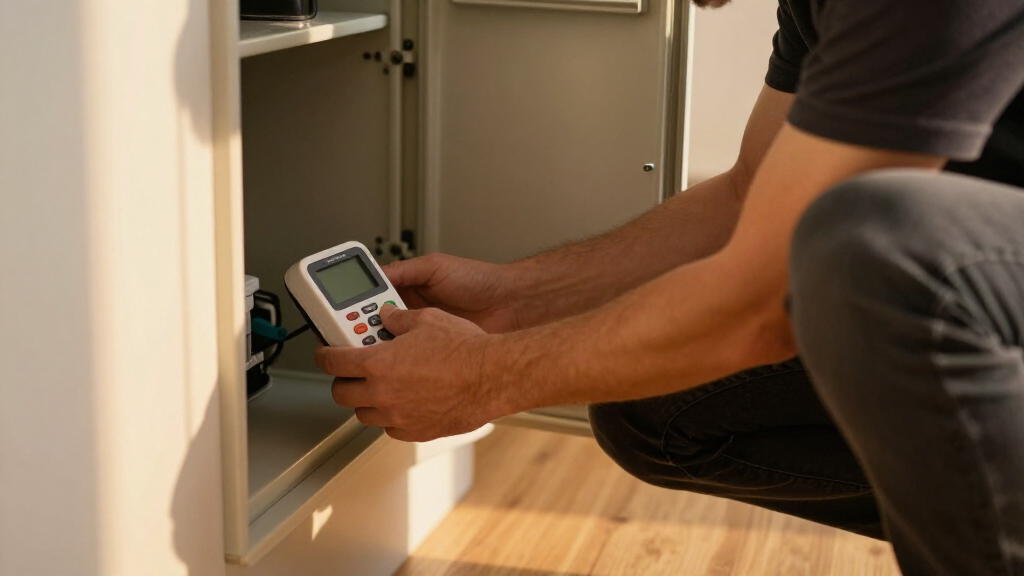
Although the subpanel appeared to have space, the monitor itself was too large to fit. The current transformers, or CTs, that measure current could be placed in the panel, but they connect back to the monitor. The author’s solution was to mount the monitor in a separate enclosure above the subpanel and connect the two with fittings and conduit. The report says the panel had an opening at the top that could be used with fittings made for that panel design.
The installation also required an additional breaker to provide the monitor with power and an electrical reference. The author said the existing breakers included two double-pole 40-amp breakers for the heat pumps and a 20-amp breaker for an outdoor receptacle. Because of the heat-pump wires’ size, the author said a standard pigtail was not suitable and connecting a monitor wire directly with a heat-pump wire at a breaker raised code and safety concerns. The account says a fourth breaker, matching the receptacle breaker, was added. It reports that the monitor has worked since installation.
Monitoring Heat-Pump Electricity Use
The report illustrates a practical obstacle for homeowners seeking more detailed energy-use data: the monitor’s size and wiring needs may not suit the available space in a subpanel, even when the CTs themselves can fit. A separate enclosure was the author’s workaround, allowing monitoring of the heat pumps without placing the main monitor inside the crowded panel.
That can matter to people trying to understand how much electricity major equipment uses. Heat pumps are a substantial part of an all-electric home’s electrical system, and monitoring them can provide information about their operation and energy consumption. The source describes this installation but does not provide measured savings, cost reductions or other performance results, so it does not establish that adding a monitor lowers energy bills.
The account is also a reminder that this is not simply a matter of finding a box for a device. The project involved panel connections, a new breaker, enclosure fittings and conduit. Electrical hazards and differing local requirements make qualified advice important; the author explicitly recommends consulting a licensed electrician when a homeowner is unsure how to proceed.
From One Panel to Several
The author said electricity monitoring began in 2022, when the all-electric home had only one panel to monitor. A basement remodel added complexity, and the author later installed three monitors across the system. The HVAC subpanel presented a separate challenge because the monitor chosen for the project was too large for its interior.
In the report, the author describes shopping for an enclosure and compatible fittings, then connecting it to the subpanel through the opening at the top. The work took about 30 hours and involved multiple trips to hardware stores, according to the account. The author used one-inch conduit, describing it as just large enough for the installation. These details describe one homeowner’s setup; they are not a general specification for other panels or installations.
The source emphasizes that the panel was fully de-energized before the author touched anything: the upstream breaker was shut off, and the author verified that the panel was dead. It cautions readers not to assume that switching off a breaker alone makes a panel safe. The author also notes that electrical codes vary by location and that the account is not professional advice.
“The monitor is clearly too large to fit into my subpanel.”
— The GreenBuildingAdvisor report’s author
Limits of the Installation Report
The account does not give the monitor’s measured electricity use, accuracy results, installation cost or any change in household bills. It also does not identify the applicable local code provisions or establish that the same enclosure and breaker arrangement would be allowed or suitable in other homes. The author reports that the monitor works, but no independent testing or electrician’s assessment is included in the supplied material.
The source excerpt ends while explaining the new breaker, so it does not provide further detail about the completed wiring or the monitor’s final configuration. Readers should not infer that the described arrangement is a universal installation method. The safety of any panel work depends on the specific equipment, wiring and local requirements.
Check Panel Requirements Before Work
The report describes the installation as complete and says the monitor has continued working. It does not announce a planned follow-up, inspection or additional performance data. For anyone considering a similar project, the next step is to check the panel and monitor instructions alongside local electrical requirements, and consult a licensed electrician before making changes.
Anyone undertaking panel work must follow appropriate safety procedures, including de-energizing the equipment and verifying that it is dead rather than relying on a breaker position alone. The source stresses that electrical codes vary by jurisdiction; whether a separate enclosure, conduit route or added breaker is acceptable must be determined for the specific installation.
Key Questions
Why did the homeowner use a separate enclosure?
The Refoss EM16P monitor was too large to fit inside the HVAC subpanel. The author mounted it in a separate enclosure and connected that enclosure to the panel.
What equipment was the monitor intended to track?
It was intended to monitor the HVAC subpanel supplying the home’s two main heat pumps. The report says current transformers fit inside the panel while the monitor itself did not.
Why was another breaker added?
The author said the monitor needed power and an electrical reference, including a reference for the panel’s two sides. The existing heat-pump wires were too large for the standard pigtail approach described in the report, so the author added a fourth breaker. That is a description of this project, not a recommendation for other panels.
Is this a do-it-yourself guide?
No. The report presents the author’s experience and expressly says it is not professional advice. Panel work can cause injury or property damage, and local electrical codes vary. Consult a licensed electrician if you are not qualified to assess the work.
Does the report show that monitoring reduced electricity bills?
No. It says the monitor was working after installation, but provides no bill comparisons, measured savings or other evidence that monitoring reduced electricity use or costs.
Source: rss
Halloween Picks
halloween
As an affiliate, we earn on qualifying purchases.