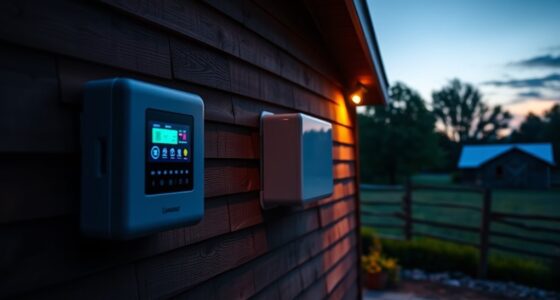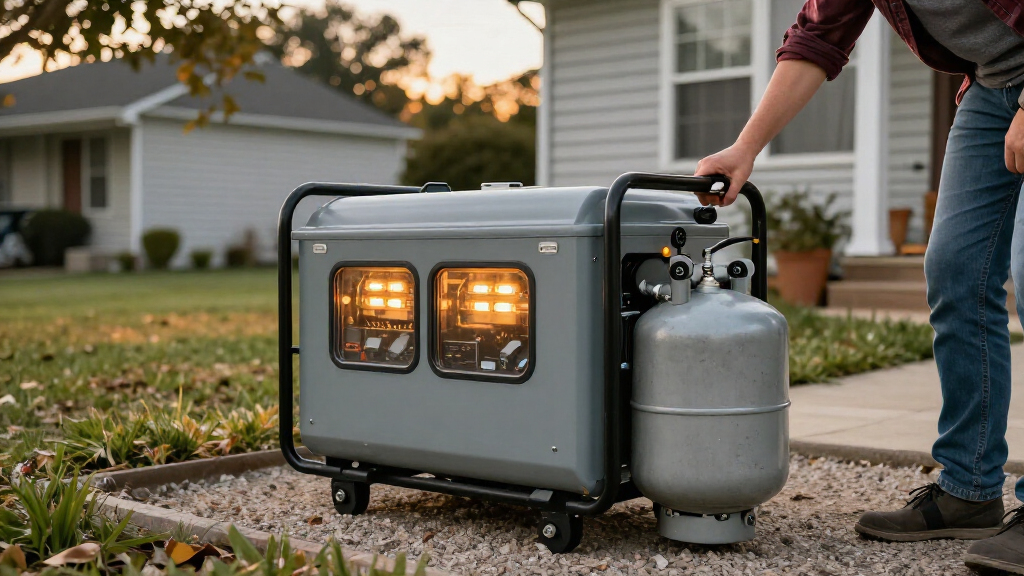

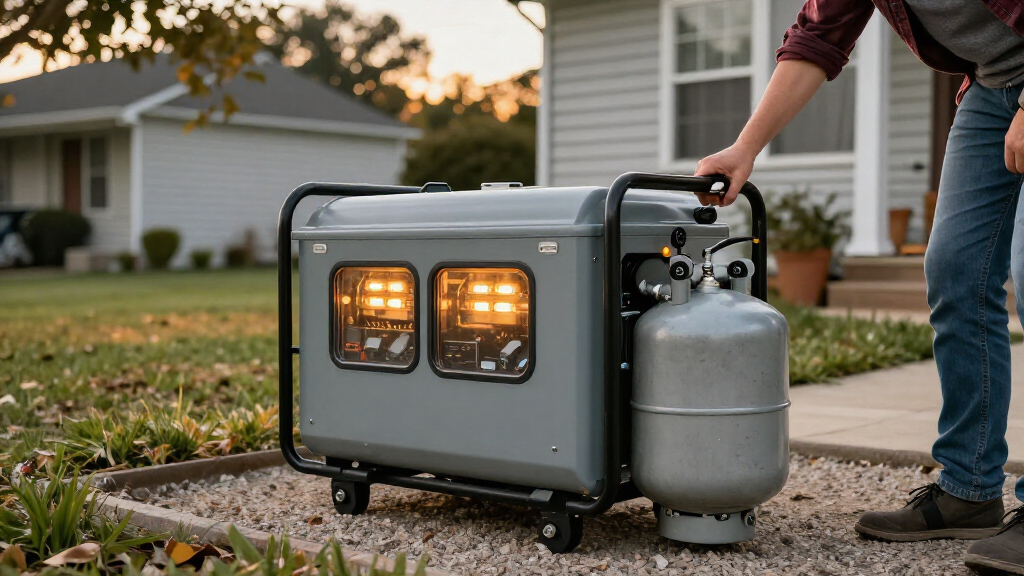
Whole-house propane generators range from automatic standby systems wired to a transfer switch to portable models that need manual setup. My best overall pick is the Generac 22 kW standby generator with a 200-amp transfer switch, which pairs substantial capacity with automatic home backup. The Generac 26 kW models suit larger electrical loads, while the Westinghouse WGen14500TFc offers a portable, tri-fuel alternative for buyers who can manage connections and startup themselves. The central tradeoff is convenience and installed integration versus portability and a different setup burden. Continue reading for the full breakdown, selection criteria, and guidance on matching generator capacity to your home.

Get backup power and energy gear delivered free with Prime
- Fast, free delivery on millions of items
- Prime Video, Amazon Music and more included
- Member-only deals all year
Complete the kit


Key Takeaways
- Standby and portable generators solve different problems: Generac’s listed whole-home models pair with transfer switches and cellular connectivity, while the Westinghouse and DuroMax options are portable units that require a suitable transfer setup and hands-on operation.
- The Generac 22 kW with a 200-amp transfer switch is the strongest all-around fit: it combines a high output class with a transfer switch, while the separate 22 kW listing does not specify that switch in its product name.
- The 26 kW Generac models target higher-demand homes: one listing includes a 200-amp transfer switch and the other does not specify one, so buyers should compare included equipment rather than assume the packages match.
- Portable output figures need careful reading: the Westinghouse iGen12000DFc and DuroMax XP12000EH are described by 12,000 peak watts, while the XP13000EH lists 13,000 watts; peak output alone does not establish continuous capacity for household loads.
- Fuel flexibility varies across the portable picks: the WGen9500TFc and WGen14500TFc are tri-fuel, while several other Westinghouse and DuroMax models are dual-fuel, so verify that the exact unit supports propane and the fuel arrangement you plan to use.
| Westinghouse iGen12000DFc Dual-Fuel Portable Inverter Generator |  | Best Portable Pick for Cleaner Power | Fuel types: Gasoline and propane | Running watts on propane: 8,100 watts | Peak watts on propane: 11,000 watts | VIEW LATEST PRICE | See Our Full Breakdown |
| Westinghouse WGen14500TFc Tri-Fuel Portable Generator |  | Best Portable Pick for High Output and Fuel Choice | Fuel types: Gasoline, propane, and natural gas | Peak power: 18,000 watts | Running power: 14,500 watts | VIEW LATEST PRICE | See Our Full Breakdown |
| Generac 10kW Whole-Home Standby Generator with Transfer Switch and Cellular Connectivity |  | Best Entry Point for Automatic Standby Backup | Power output: 10,000 watts | Fuel types: Natural gas or liquid propane | Transfer switch: Automatic 16-circuit | VIEW LATEST PRICE | See Our Full Breakdown |
| Generac 26 kW Whole-Home Standby Generator with 200 Amp Transfer Switch and Cellular Connectivity |  | Best for High-Demand Whole-Home Backup | Power output: 26 kW | Fuel compatibility: LP or natural gas | Transfer switch: 200-amp automatic | VIEW LATEST PRICE | See Our Full Breakdown |
| Generac 24kW Whole-Home Standby Generator with 200 Amp Transfer Switch and Cellular Connectivity | | Best Midrange Standby Capacity | Power output: 24 kW | Fuel compatibility: LP or natural gas | Transfer switch: 200-amp automatic | VIEW LATEST PRICE | See Our Full Breakdown |
| Generac 22 kW Whole-Home Standby Generator with Cellular Connectivity |  | Best Balanced Standby Capacity | Power output: 22 kW | Fuel compatibility: Natural gas or LP | Voltage: 240 V | VIEW LATEST PRICE | See Our Full Breakdown |
| Generac 26 kW Whole-Home Standby Generator with Cellular Connectivity | | Best for High Backup Demand | Running wattage: 26 kW | Starting wattage: 26,000 watts | Fuel types: Natural gas and propane | VIEW LATEST PRICE | See Our Full Breakdown |
| Generac 14 kW Whole-Home Standby Generator with 200-Amp Transfer Switch and Cellular Connectivity | | Best for a Smaller Standby System | Power output: 14 kW | Fuel compatibility: Natural gas or liquid propane | Transfer switch: 200 amp | VIEW LATEST PRICE | See Our Full Breakdown |
| DuroMax XP12000EH 12,000-Watt Dual-Fuel Portable Generator |  | Best Portable Propane Backup | Starting wattage: 12,000 watts | Running wattage: 9,500 watts | Fuel types: Gasoline and propane | VIEW LATEST PRICE | See Our Full Breakdown |
| Westinghouse WGen9500TFc Tri-Fuel Portable Generator with Remote Start and CO Sensor |  | Best Fuel-Flexible Portable Pick | Fuel types: Gasoline, propane, and natural gas | Running wattage on propane: 8,500 watts | Running wattage on natural gas: 7,500 watts | VIEW LATEST PRICE | See Our Full Breakdown |
| Westinghouse WGen14500DFc Dual-Fuel Portable Generator with Remote Electric Start and CO Sensor |  | Best High-Output Portable | Fuel: Gasoline and propane | Running wattage: 14,500 watts | Peak wattage: 18,000 watts | VIEW LATEST PRICE | See Our Full Breakdown |
| Westinghouse WGen9500DF Dual Fuel Portable Generator, 12,500 Peak Watts |  | Best for Portable Backup on a Simpler Scale | Fuel: Gasoline and propane | Running wattage: 9,500 watts on gasoline; 8,500 watts on propane | Peak wattage: 12,500 watts on gasoline; 11,200 watts on propane | VIEW LATEST PRICE | See Our Full Breakdown |
| Generac 18 kW Whole-Home Standby Generator with Transfer Switch and Cellular Connectivity | | Best Automatic Standby for Moderate Home Loads | Fuel: Natural gas or liquid propane | Transfer switch: 200A automatic transfer switch | Voltage: 240 volts | VIEW LATEST PRICE | See Our Full Breakdown |
| Generac 22 kW Whole-Home Standby Generator with 200 Amp Transfer Switch and Cellular Connectivity | | Best Higher-Capacity Automatic Standby | Fuel: Natural gas or liquefied petroleum gas | Transfer switch: 200A automatic transfer switch | Voltage: 240 volts | VIEW LATEST PRICE | See Our Full Breakdown |
| DuroMax XP13000EH 13,000-Watt Dual-Fuel Portable Generator |  | Best Rugged Portable for Manual Backup | Fuel: Gasoline and propane | Running wattage: 10,500 watts | Starting wattage: 13,000 watts | VIEW LATEST PRICE | See Our Full Breakdown |
| whole house propane generator | Voltage | Weight | Dimensions |
|---|---|---|---|
| Westinghouse iGen12000DFc Dual | 120/240 V | — | — |
| Westinghouse WGen14500TFc Tri- | — | — | — |
| Generac 10kW Whole-Home Standb | 120 V | 384 pounds | 47.3 × 25.6 × 30.7 inches |
| Generac 26 kW Whole-Home Stand | 240 V | 524 pounds | 46.4 × 26.3 × 30.7 inches |
| Generac 24kW Whole-Home Standb | 240 V | 461 pounds | 46.4 × 26.3 × 30.7 inches |
| Generac 22 kW Whole-Home Stand | 240 V | 451 lb | 46.4 × 26.3 × 30.7 in |
| Generac 26 kW Whole-Home Stand | 240 V | 524 lb | 46.4 × 26.3 × 30.7 in |
| Generac 14 kW Whole-Home Stand | 240 V | 391 lb | 46.4 × 26.3 × 30.7 in |
| DuroMax XP12000EH 12,000-Watt | — | 224 lb | — |
| Westinghouse WGen9500TFc Tri-F | — | — | — |
| Westinghouse WGen14500DFc Dual | 120/240 volts | — | — |
| Westinghouse WGen9500DF Dual F | — | — | — |
| Generac 18 kW Whole-Home Stand | 240 volts | 426 pounds | 46.4 × 26.3 × 30.7 inches |
| Generac 22 kW Whole-Home Stand | 240 volts | 451 pounds | 46.4 × 26.3 × 30.7 inches |
| DuroMax XP13000EH 13,000-Watt | — | 234 pounds | 30 × 29 × 26 inches |
More Details on Our Top Picks
Westinghouse iGen12000DFc Dual-Fuel Portable Inverter Generator
The iGen12000DFc suits buyers who want a propane-capable portable generator with inverter output, rather than a permanently installed standby system. Its 8,100 running watts on propane can support a useful group of household loads, while the 50-amp outlet and transfer-switch-ready connections give it a path to a home backup setup. Compared with the much larger WGen14500TFc, this model gives up substantial output and the natural-gas option, but its ≤3% THD rating is the stronger fit for sensitive electronics. Remote and electric start make operation less hands-on; wheels and a folding handle help with positioning, though they do not make a heavy generator easy to move alone. The supplied fuel-tank and runtime figures conflict, so I would verify those details before planning long outages.
Pros:- Runs on propane or gasoline, giving owners a choice of available fuel.
- ≤3% THD is suited to sensitive electronics.
- 50A outlet and transfer-switch-ready connections support a home backup setup.
- Remote and electric start, CO sensing, and low-oil shutdown add useful operating safeguards.
Cons:- Propane running output is 8,100 watts, well below the WGen14500TFc’s stated 14,500 running watts on gasoline.
- It does not provide automatic outage detection or standby operation.
- The listed tank capacity and runtime figures conflict, making outage planning less certain.
Best for: Homeowners who need portable propane backup for selected household circuits and want low-THD inverter power for electronics.
Not ideal for: Buyers seeking automatic whole-home outage response, natural-gas operation, or clearly documented runtime and fuel capacity.
- Fuel types:Gasoline and propane
- Running watts on propane:8,100 watts
- Peak watts on propane:11,000 watts
- Running watts on gasoline:9,000 watts
- Total harmonic distortion:≤3%
- Engine:457 cc, 4-stroke OHV
- Voltage:120/240 V
- Starting system:Electric start and remote start
Our verdict“Choose this portable inverter when cleaner power and propane flexibility matter more than automatic operation or maximum household output.”
Westinghouse WGen14500TFc Tri-Fuel Portable Generator
For buyers committed to a portable setup, the WGen14500TFc offers the lineup’s broadest fuel flexibility: gasoline, propane, or natural gas. Its stated 14,500 running watts and 50A connection make it a stronger candidate for supporting numerous home circuits than the iGen12000DFc, though the listed output is not broken down by fuel, so propane capacity deserves confirmation before purchase. Remote and push-button starting reduce the effort of getting it running, and transfer-switch readiness supports a wired backup installation. Unlike the Generac 10kW standby, it does not automatically start when utility power fails; a portable unit also requires placement and setup. Less than 5% THD is a useful electronics-friendly specification, but it is not as low as the iGen’s stated ≤3%.
Pros:- Three fuel options can help owners adapt to fuel availability.
- Stated 14,500 running watts provide more capacity than the iGen12000DFc’s propane rating.
- 50A and 30A 120/240V outlets and transfer-switch readiness support home backup wiring.
- Remote and push-button start, CO sensing, and low-oil shutdown add convenience and protection.
Cons:- It will not automatically detect an outage and start like the Generac standby models.
- Runtime is stated as up to 16 hours only at 25% load on gasoline.
- The supplied data does not specify running output on propane or natural gas.
Best for: Homeowners who want a high-output portable generator and the option to use propane, gasoline, or natural gas.
Not ideal for: Buyers who need automatic outage response, a permanently installed system, or a confirmed propane-specific output figure before sizing their loads.
- Fuel types:Gasoline, propane, and natural gas
- Peak power:18,000 watts
- Running power:14,500 watts
- Engine:713 cc 4-stroke OHV V-twin
- Gasoline tank capacity:10.5 gallons
- Gasoline runtime:Up to 16 hours at 25% load
- Total harmonic distortion:Less than 5%
- Starting system:Push-button electric and remote start
- Transfer-switch ready:Yes
Our verdict“Pick this model if portable high output and three fuel choices matter more than automatic standby operation.”
Generac 10kW Whole-Home Standby Generator with Transfer Switch and Cellular Connectivity
The Generac 10kW is the clearest fit here for buyers who value automatic response over portable versatility. It detects a utility outage and starts on liquid propane or natural gas, while its included 16-circuit automatic transfer switch moves selected household circuits onto generator power. That built-in handoff makes it a more hands-off choice than either Westinghouse portable, but the 10,000-watt rating is well below the 24kW and 26kW Generac models, so buyers with larger loads may need to prioritize circuits. Cellular monitoring adds remote visibility, though app monitoring and control require a premium subscription. At 384 pounds with a substantial footprint, this is an installation project, not a movable backup option; its main advantage is automatic operation at a more modest listed capacity.
Pros:- Automatically detects outages and starts without manual generator setup.
- Runs on liquid propane or natural gas.
- Includes an automatic 16-circuit transfer switch.
- Cellular monitoring, oil-level monitoring, and cold-start support add readiness features.
Cons:- Its 10,000-watt output is substantially lower than the 24kW and 26kW Generac standby options.
- Mobile Link remote monitoring and control require a premium subscription.
- At 384 pounds, it requires permanent installation planning and is not portable.
Best for: Households that want automatic propane or natural-gas backup for selected circuits and do not need the higher output of the 24kW or 26kW Generac models.
Not ideal for: Owners who want a portable generator, broad whole-home capacity for heavy loads, or cellular app features without a subscription.
- Power output:10,000 watts
- Fuel types:Natural gas or liquid propane
- Transfer switch:Automatic 16-circuit
- Connectivity:Built-in cellular; Mobile Link app
- Voltage:120 V
- Frequency:60 Hz
- Weight:384 pounds
- Dimensions:47.3 × 25.6 × 30.7 inches
- Warranty:5-year limited warranty
Our verdict“Choose this standby model for automatic backup of selected circuits when its 10kW capacity fits your household load.”
Generac 26 kW Whole-Home Standby Generator with 200 Amp Transfer Switch and Cellular Connectivity
The Generac 26kW is the highest-output standby choice in this batch, aimed at homes whose backup plan extends beyond a small group of essential circuits. Automatic outage detection and the included 200-amp transfer switch make it a more complete installed system than the Westinghouse portable generators, which require manual setup. It accepts LP or natural gas, while built-in cellular connectivity supports remote monitoring through Mobile Link; remote app features require a premium subscription. Compared with the 24kW Generac, the extra 2kW may provide more headroom for a high-demand home, but it also weighs 524 pounds and calls for substantial installation planning. I would match its capacity to an electrician’s load assessment rather than assume any generator can run every appliance at once.
Pros:- 26kW rating offers more stated capacity than the 24kW Generac standby model.
- Automatic outage response is paired with an included 200-amp transfer switch.
- Compatible with LP or natural gas.
- Cellular monitoring, oil-level monitoring, and cold-start features support remote oversight and readiness.
Cons:- At 524 pounds, it requires substantial delivery and installation planning.
- Mobile Link remote monitoring and control require a premium subscription.
- Its larger capacity may be unnecessary for households with a limited essential-circuit backup plan.
Best for: Owners of larger homes seeking automatic standby power, a 200-amp transfer switch, and additional capacity for high-demand circuits.
Not ideal for: Buyers with modest backup loads, limited installation space, or a preference for a portable unit that can be moved or stored.
- Power output:26 kW
- Fuel compatibility:LP or natural gas
- Transfer switch:200-amp automatic
- Voltage:240 V
- Frequency:60 Hz
- Connectivity:Built-in cellular; Mobile Link app
- Weight:524 pounds
- Dimensions:46.4 × 26.3 × 30.7 inches
- Warranty:5-year limited warranty
Our verdict“Choose the 26kW model when your load assessment supports the added capacity and you want an installed, automatic backup system.”
Generac 24kW Whole-Home Standby Generator with 200 Amp Transfer Switch and Cellular Connectivity
The Generac 24kW sits between the 10kW standby unit and the 26kW model, giving buyers a substantial automatic backup system without choosing the highest output in this group. It detects utility failures, accepts an LP or natural-gas supply, and includes a 200-amp automatic transfer switch—a more hands-off arrangement than the WGen14500TFc, which is portable and must be started and connected as needed. The 24kW rating is 2kW below the 26kW Generac, while the listed weight is 461 pounds compared with 524 pounds; either way, this is a large permanent installation, not a movable unit. Cellular app monitoring requires a premium subscription, and the power rating alone cannot determine whether it will cover every appliance simultaneously. A household load assessment should guide the choice between this and the higher-output model.
Pros:- Automatic outage detection and startup remove the need for manual generator setup.
- 200-amp automatic transfer switch is included.
- LP or natural-gas compatibility supports connection to an existing fuel supply.
- Cellular connectivity and oil-level monitoring help owners keep track of system status.
Cons:- Provides 2kW less stated output than the 26kW Generac.
- At 461 pounds, it needs permanent installation planning and cannot be treated as portable equipment.
- Mobile Link remote monitoring and control require a premium subscription.
Best for: Homeowners who want automatic standby backup with a 200-amp transfer switch and whose assessed loads fit a 24kW system.
Not ideal for: Buyers who need portable backup, want the highest output in this batch, or expect cellular app control without a subscription.
- Power output:24 kW
- Fuel compatibility:LP or natural gas
- Transfer switch:200-amp automatic
- Voltage:240 V
- Monitoring:Built-in cellular; Mobile Link premium subscription required
- Weight:461 pounds
- Dimensions:46.4 × 26.3 × 30.7 inches
- Materials:Aluminum and steel
- Warranty:5-year limited warranty
Our verdict“Pick the 24kW model when your household load calls for substantial automatic backup but does not justify the 26kW option.”
Generac 22 kW Whole-Home Standby Generator with Cellular Connectivity
I’d put this 22 kW model on the shortlist for households seeking automatic, permanently installed backup without stepping up to Generac’s 26 kW unit. It detects an outage and runs on a connected natural gas or LP supply, so there’s no portable-generator setup when the utility fails. Built-in cellular connectivity adds remote monitoring and control, while oil-level monitoring and cold-start features support readiness in colder conditions. Those remote features require a Mobile Link premium subscription, which adds an ongoing cost. At 451 lb, this is also an installation project, not a unit to move around. Compared with the 14 kW Generac, it offers more output for homes with larger backup demands; compared with the 26 kW model, it gives up capacity but is the lighter choice.
Pros:- Automatically starts when utility power is lost and runs until power returns.
- Uses either natural gas or LP, giving homeowners a choice based on their available supply.
- Cellular monitoring and control can provide remote status access, subject to a premium subscription.
- Oil-level monitoring and cold-start features support outage readiness.
Cons:- Remote monitoring features require a Mobile Link premium subscription.
- Its 451 lb weight calls for professional planning and installation rather than easy relocation.
Best for: Homeowners with a connected natural gas or LP supply who want automatic backup for a larger set of household loads without choosing the 26 kW model.
Not ideal for: Buyers seeking a portable generator, avoiding subscription-based remote monitoring, or needing the greatest capacity in this Generac lineup.
- Power output:22 kW
- Fuel compatibility:Natural gas or LP
- Voltage:240 V
- Frequency:60 Hz
- Connectivity:Built-in cellular; Mobile Link app monitoring and control
- Weight:451 lb
- Dimensions:46.4 × 26.3 × 30.7 in
- Warranty:5-year limited warranty
Our verdict“Choose this 22 kW Generac if you want automatic, connected standby backup and more capacity than the 14 kW model without moving up to 26 kW.”
Generac 26 kW Whole-Home Standby Generator with Cellular Connectivity
For households whose backup plan calls for more output, this 26 kW standby generator is the strongest-capacity choice among these five products. It automatically detects outages and runs on natural gas or propane, avoiding the manual fueling and starting associated with the DuroMax XP12000EH and Westinghouse WGen9500TFc. Cellular connectivity provides app-based monitoring and control, but Mobile Link premium features require a subscription, so that convenience is not entirely included. The tradeoff for the extra capacity is substantial size: at 524 lb, it is heavier than the 22 kW Generac, and both need a planned permanent installation. I’d favor it over the 14 kW model when household demand is the priority, but not if a lower-capacity system can cover the loads you intend to back up.
Pros:- The lineup’s highest stated standby output among these five products at 26 kW.
- Automatically detects outages and supplies backup power.
- Runs on natural gas or propane.
- Includes cellular connectivity, cold-start features, oil-level monitoring, and a 5-year limited warranty.
Cons:- At 524 lb, it is heavier than the 22 kW Generac and requires permanent-installation planning.
- Mobile Link premium monitoring features require a subscription.
- Its additional capacity may be unnecessary for homes with smaller backup loads.
Best for: Homeowners with a substantial backup-load plan who want automatic standby operation on a natural gas or propane supply.
Not ideal for: Households with modest backup needs, buyers who want a portable unit, or those unwilling to pay for Mobile Link premium features.
- Running wattage:26 kW
- Starting wattage:26,000 watts
- Fuel types:Natural gas and propane
- Voltage:240 V
- Connectivity:Built-in cellular; Mobile Link app monitoring and control
- Weight:524 lb
- Dimensions:46.4 × 26.3 × 30.7 in
- Warranty:5-year limited warranty
Our verdict“Pick the 26 kW Generac when your household needs more standby capacity than the 22 kW or 14 kW models provide and you can support a permanent installation.”
Generac 14 kW Whole-Home Standby Generator with 200-Amp Transfer Switch and Cellular Connectivity
This is the standby pick for buyers who prefer automatic outage response but don’t need the greater output of the 22 kW or 26 kW Generac models. Its 14 kW output and included 200-amp transfer switch make it a distinct option in this group: the switch is part of the listed package, while the higher-output Generac models here don’t list one. It runs from an existing natural gas or liquid propane supply and includes cellular connectivity, oil-level sensors, and cold-weather features. As with the other connected Generacs, remote monitoring and maintenance alerts require a Mobile Link premium subscription. The lower capacity makes it a weaker fit for homes with heavier simultaneous loads, and it still weighs 391 lb. Unlike the portable Westinghouse WGen9500TFc, it is designed for automatic standby use, not flexible relocation.
Pros:- Automatically detects outages and starts backup power.
- Includes a 200-amp transfer switch in the product title and listed specifications.
- Accepts natural gas or liquid propane.
- Cellular connectivity, oil-level sensors, and cold-weather features support monitoring and readiness.
Cons:- Its 14 kW output is lower than the 22 kW and 26 kW Generac options.
- Remote monitoring and maintenance alerts require a Mobile Link premium subscription.
- Requires an existing gas supply and weighs 391 lb.
Best for: Homeowners seeking a permanently installed, automatically starting generator with a listed 200-amp transfer switch and a more modest 14 kW output.
Not ideal for: Households that need higher generator output for larger simultaneous loads, lack a natural gas or LP supply, or want a portable backup option.
- Power output:14 kW
- Fuel compatibility:Natural gas or liquid propane
- Transfer switch:200 amp
- Voltage:240 V
- Connectivity:Built-in cellular
- Weight:391 lb
- Dimensions:46.4 × 26.3 × 30.7 in
- Compatible systems:Generac PWRcell battery systems and ecobee by Generac thermostats
Our verdict“Choose this 14 kW model for automatic standby backup and a listed 200-amp transfer switch when its lower output matches your household’s planned loads.”
DuroMax XP12000EH 12,000-Watt Dual-Fuel Portable Generator
The XP12000EH is a portable alternative for buyers who want propane backup without installing a standby system. It provides 9,500 running watts on its stated output specification, with 12,000 starting watts, and can also run on gasoline. That flexibility distinguishes it from the permanently installed Generac 14 kW: the DuroMax can serve at a jobsite or RV as well as at home, but it won’t automatically start when utility power fails. Its 50-amp transfer-switch-ready outlet supports a home connection, though buyers still need a suitable transfer setup and must handle starting and fuel. The Westinghouse WGen9500TFc adds natural gas as a third fuel and lists longer gasoline runtime, while this DuroMax keeps the fuel choice to two types. At 224 lb, it is portable by design but still heavy to move.
Pros:- Runs on either propane or gasoline.
- Provides 9,500 running watts and 12,000 starting watts.
- Has a 50-amp transfer-switch-ready outlet for a suitable home backup connection.
- No-flat tires and a foldable handle aid movement around a property.
Cons:- Does not automatically detect outages or start like the Generac standby models.
- At 224 lb, it can be difficult to move despite its wheels and handle.
- The listed runtime is 8 hours, so extended use requires refueling.
Best for: Homeowners who want a movable propane-or-gasoline generator for backup, RV use, or jobsites and are prepared to start and connect it manually.
Not ideal for: Buyers who need automatic outage response, natural-gas operation, or a permanently installed whole-house standby system.
- Starting wattage:12,000 watts
- Running wattage:9,500 watts
- Fuel types:Gasoline and propane
- Engine:457 cc 4-stroke
- Starting system:Electric start
- Runtime:8 hours
- Transfer connection:50-amp transfer-switch-ready outlet
- Weight:224 lb
Our verdict“Choose the DuroMax if you need portable propane backup and multi-use flexibility, not automatic whole-house standby operation.”
Westinghouse WGen9500TFc Tri-Fuel Portable Generator with Remote Start and CO Sensor
If fuel flexibility matters more than automatic standby operation, the WGen9500TFc is the portable option I’d compare most closely with the DuroMax XP12000EH. It runs on propane, natural gas, or gasoline, giving owners more supply choices than the DuroMax’s two-fuel setup. On propane it provides 8,500 running watts; on natural gas, output falls to 7,500 running watts, so the fuel source changes how much load it can support. Remote, electric, and recoil starting add convenience, and the 120/240 V 14-50R outlet can support a suitable home connection. But it remains a manual-use portable generator, not an automatic whole-house standby system like the Generac models. Its gasoline runtime is listed at up to 12 hours, while that figure should not be mistaken for propane runtime.
Pros:- Tri-fuel operation covers gasoline, propane, and natural gas.
- Offers remote, electric, and recoil starting.
- A 120/240 V 14-50R outlet supports a suitable home backup connection.
- CO shutdown, low-oil shutdown, and overload protection add operating safeguards.
Cons:- Running output varies by fuel, falling to 7,500 watts on natural gas and 8,500 watts on propane.
- It does not automatically start during an outage like the Generac standby models.
- Its up-to-12-hour runtime applies to the stated gasoline-tank operation, not all fuel types.
Best for: Homeowners who want a portable generator with propane and natural-gas options, remote starting, and the flexibility to use gasoline when needed.
Not ideal for: Buyers who need automatic outage startup, higher running output on natural gas, or a permanently installed whole-house system.
- Fuel types:Gasoline, propane, and natural gas
- Running wattage on propane:8,500 watts
- Running wattage on natural gas:7,500 watts
- Peak wattage on propane:11,200 watts
- Engine:457 cc 4-stroke OHV
- Starting methods:Remote, electric, and recoil
- Runtime:Up to 12 hours on gasoline
- Warranty:3-year limited warranty
Our verdict“Choose the WGen9500TFc over the DuroMax XP12000EH if access to natural gas as well as propane and gasoline matters more than standby automation.”
Westinghouse WGen14500DFc Dual-Fuel Portable Generator with Remote Electric Start and CO Sensor
For a buyer who wants substantial home-backup output without installing a permanent standby unit, the WGen14500DFc is the strongest portable choice in this group. Its 14,500 running watts on gasoline exceed the WGen9500DF’s 9,500, giving more room to run household loads together, while propane compatibility provides another fuel option during an outage. Remote and push-button starting can make startup less of a chore, and the CO sensor adds a layer of protection during operation. Its transfer-switch and interlock compatibility suits a planned home connection, but the transfer equipment is separate. This is still a portable generator, not the automatic backup offered by the Generac 18 kW and 22 kW standby models. Also, the advertised 16-hour runtime is at only 25% load and on gasoline, so heavy use means more frequent refueling.
Pros:- 14,500 running watts on gasoline provide more capacity than the WGen9500DF for running multiple household loads.
- Runs on gasoline or propane, giving owners fuel flexibility.
- Remote and push-button electric starting simplify operation.
- CO sensing and less than 5% THD add safety and support for sensitive electronics.
Cons:- A transfer switch or interlock equipment must be sourced separately.
- The stated 16-hour gasoline runtime applies at just 25% load.
- Unlike Generac’s standby models, it does not start automatically when utility power fails.
Best for: Homeowners who need high portable output for a transfer-switch or interlock setup and want gasoline and propane as fuel choices.
Not ideal for: Buyers who want automatic outage response, a permanently installed system, or long runtimes under heavy loads.
- Fuel:Gasoline and propane
- Running wattage:14,500 watts
- Peak wattage:18,000 watts
- Engine:713cc 4-stroke OHV V-Twin
- Fuel tank:10.5 gallons
- Runtime:Up to 16 hours at 25% load on gasoline
- Voltage:120/240 volts
- Starting:Push-button electric and remote start
- Total harmonic distortion:Less than 5%
Our verdict“Choose the WGen14500DFc if you want unusually high portable output and can manage manual setup and refueling.”
Westinghouse WGen9500DF Dual Fuel Portable Generator, 12,500 Peak Watts
The WGen9500DF makes sense for households that need transfer-switch-ready portable backup but do not need the WGen14500DFc’s higher output. It supplies 9,500 running watts on gasoline and 8,500 on propane, enough to support a more selective set of home loads; the lower output also means buyers should plan which appliances take priority. Remote, electric, and recoil starting give it more backup options than a single-start-system unit, while its 50A outlet supports a compatible home connection. Compared with the DuroMax XP13000EH, it has lower listed running wattage but a longer stated runtime of up to 12 hours, though that figure does not specify a load. The 6.6-gallon tank needs monitoring during extended outages, and this portable model requires manual startup rather than the automatic operation of a Generac standby generator.
Pros:- Gasoline and propane operation offers fuel choice.
- Remote, electric, and recoil starting provide several ways to start the unit.
- A 50A outlet supports a compatible transfer-switch connection.
- Wheels and a handle help move the generator when it is not running.
Cons:- Running output falls to 8,500 watts on propane.
- The 6.6-gallon tank calls for refueling during extended use.
- It requires manual setup and does not automatically restore power like a standby system.
Best for: Households seeking a wheeled, dual-fuel portable generator for selected essential circuits through a compatible transfer setup.
Not ideal for: Buyers who need higher running output for many simultaneous loads or automatic whole-home outage response.
- Fuel:Gasoline and propane
- Running wattage:9,500 watts on gasoline; 8,500 watts on propane
- Peak wattage:12,500 watts on gasoline; 11,200 watts on propane
- Engine:457cc 4-stroke OHV
- Fuel tank:6.6 gallons
- Runtime:Up to 12 hours
- Starting methods:Remote, electric, and recoil
- Outlets:Two 120V 5–20R GFCI; one 120V L14-30R; one 120/240V 14-50R
Our verdict“Pick the WGen9500DF for portable, dual-fuel backup of selected home loads rather than automatic or high-capacity whole-home service.”
Generac 18 kW Whole-Home Standby Generator with Transfer Switch and Cellular Connectivity
The Generac 18 kW standby suits homeowners who value automatic outage response over the portability of the Westinghouse WGen14500DFc. It detects a utility interruption and starts through its included 200A automatic transfer switch, avoiding the manual connection and startup routine required by the portable models. It runs on an existing natural gas or liquid propane supply, so there is no portable tank to refill, though fuel supply and installation need to be planned for the property. At 18 kW, it offers a fixed capacity below the Generac 22 kW model, making it a more restrained standby option for homes whose load requirements fit that output. Cellular connectivity supports remote monitoring, but premium Mobile Link service is required for remote updates and maintenance alerts. Its 426-pound weight and substantial outdoor enclosure also demand a suitable, professionally planned installation site.
Pros:- Automatically detects outages and starts through the included 200A transfer switch.
- Uses natural gas or liquid propane from a home supply.
- Cellular connectivity allows remote monitoring through Mobile Link.
- Oil-level monitoring and cold-start features support standby readiness.
Cons:- Remote updates and maintenance alerts require a Mobile Link premium subscription.
- At 18 kW, it has less stated capacity than the Generac 22 kW standby model.
- Its 426-pound enclosure requires a permanent outdoor installation area.
Best for: Homeowners who want automatic backup on an existing natural gas or propane supply and whose calculated household load fits 18 kW.
Not ideal for: Buyers who need a portable unit, have no suitable gas supply, or require the higher stated output of the Generac 22 kW model.
- Fuel:Natural gas or liquid propane
- Transfer switch:200A automatic transfer switch
- Voltage:240 volts
- Frequency:60 hertz
- Connectivity:Built-in cellular; premium subscription required for remote updates and maintenance alerts
- Weight:426 pounds
- Dimensions:46.4 × 26.3 × 30.7 inches
Our verdict“Choose this Generac when automatic, permanently installed backup matters more than portability and 18 kW suits your home’s load plan.”
Generac 22 kW Whole-Home Standby Generator with 200 Amp Transfer Switch and Cellular Connectivity
Among the two specified Generac standby options here, the 22 kW model is the better fit when a home’s planned backup load exceeds what the 18 kW unit can cover. Its 200A automatic transfer switch detects an outage and changes over without the owner starting a portable generator or connecting equipment. Natural gas and liquid petroleum gas compatibility works well for homes with an appropriate supply, while cellular monitoring offers a way to check status remotely. The larger capacity is the main reason to choose it over the Generac 18 kW; it does not make the unit portable or remove the need to plan installation and fuel supply. At 451 pounds, it is heavier than the 18 kW model, and Mobile Link remote monitoring and control require a premium subscription. I’d match its capacity to a load calculation rather than assume 22 kW covers every home’s needs.
Pros:- 22 kW output provides more stated capacity than the Generac 18 kW model.
- Included 200A automatic transfer switch handles outage changeover.
- Runs on natural gas or liquefied petroleum gas.
- Cellular connectivity supports remote monitoring and control.
Cons:- Mobile Link remote monitoring and control require a premium subscription.
- Its 451-pound weight and large enclosure call for a permanent installation site.
- The higher output still needs to be checked against the home’s actual load requirements.
Best for: Homeowners who want automatic standby service and need more rated capacity than the Generac 18 kW provides.
Not ideal for: Buyers who need portable backup, want to avoid a permanent installation, or do not need the added capacity over the 18 kW model.
- Fuel:Natural gas or liquefied petroleum gas
- Transfer switch:200A automatic transfer switch
- Voltage:240 volts
- Frequency:60 hertz
- Connectivity:Built-in cellular; Mobile Link app requires a premium subscription
- Weight:451 pounds
- Dimensions:46.4 × 26.3 × 30.7 inches
- Warranty:5-year limited warranty
Our verdict“Choose the Generac 22 kW when you want automatic standby backup and your home’s load plan calls for more capacity than the 18 kW model.”
DuroMax XP13000EH 13,000-Watt Dual-Fuel Portable Generator
The DuroMax XP13000EH is a sturdy manual-backup option for buyers who want dual-fuel flexibility and a 50A transfer-switch-ready outlet, without moving up to the WGen14500DFc’s 14,500 running watts. Its 10,500 running watts suit a planned set of home loads, while the 500cc engine, all-metal frame, and copper windings emphasize a robust portable design. Electric start and a fuel-switching interface help make operation more straightforward, but the listed runtime is only three hours and the data does not state the load or fuel conditions behind that figure. That makes it harder to judge how often it may need attention in an outage. At 234 pounds, it is also a substantial lift despite its wheels. Unlike the Generac standby models, it needs manual startup and does not automatically switch over when grid power fails.
Pros:- Runs on gasoline or propane.
- 10,500 running watts and a 50A transfer-switch-ready outlet support a home backup connection.
- Electric start and a front-facing fuel selector simplify operation.
- All-metal frame, copper windings, and no-flat tires suit demanding portable use.
Cons:- The listed runtime is three hours, with no load or fuel conditions supplied.
- At 234 pounds, it can be difficult to move even with wheels.
- It requires manual startup and lacks the automatic transfer operation of the Generac standby models.
Best for: Homeowners who want a rugged gasoline-or-propane portable unit for selected circuits and can manage manual operation and fuel supply.
Not ideal for: Buyers who need automatic whole-home backup, a lighter unit, or dependable long-runtime planning from the listed specifications.
- Fuel:Gasoline and propane
- Running wattage:10,500 watts
- Starting wattage:13,000 watts
- Engine:500cc four-stroke OHV
- Runtime:3 hours
- Starting system:Electric start
- Weight:234 pounds
- Dimensions:30 × 29 × 26 inches
- Construction:Heavy-duty all-metal frame with 100% copper windings
Our verdict“Pick the XP13000EH for rugged, manual dual-fuel backup if you can accept its weight and unclear three-hour runtime rating.”
How We Picked
I ranked these generators around the real distinction behind this search: automatic whole-home standby coverage versus portable backup that can support selected household circuits. I gave more weight to standby products with a transfer switch specified in the listing, then compared the stated capacity classes, fuel flexibility, and practical operating role. Cellular connectivity, remote starting, and CO sensors count as useful ownership features, but they do not replace correct sizing, safe placement, or an approved electrical connection.
Within the Generac group, higher-capacity models rise for homes with larger loads, while smaller capacities may be a better match when a load assessment supports them. Portable models rank below installed standby systems for hands-off whole-home coverage, but remain strong alternatives for buyers who prioritize mobility, multiple fuel choices, or selective backup. Product names do not provide every detail needed for a purchase, so I treat unspecified transfer-switch inclusion and output ratings as items to confirm before choosing.
Factors to Consider When Choosing Whole House Propane Generators
Before choosing a model, decide what whole house means for your household: every circuit at once, or the essential circuits you want to keep running during an outage. That distinction affects generator size, installation scope, and whether a portable model can meet your expectations. These broader checks can prevent an expensive mismatch even after you have narrowed the list.
Define Which Loads Must Run Together
List the equipment you expect to use at the same time, including heating or cooling, refrigeration, well pumps, lighting, and cooking appliances. Starting demand from motors can differ from their normal running demand, so simply adding appliance running watts may understate what a generator needs to handle. Ask an electrician or generator installer to review the actual circuits and starting loads rather than sizing from the home’s square footage alone. A managed-load setup can let a smaller generator serve selected priorities by preventing certain large loads from running together. The common mistake is choosing from peak-watt figures without checking continuous output and startup requirements. If uninterrupted operation of most household circuits matters, compare the complete standby system rather than generator wattage by itself.
Compare a Standby System With Portable Backup
A standby generator is designed to be installed as part of a home backup system and can start automatically when paired with compatible controls and a transfer switch. A portable generator offers more flexibility in where and when it is used, but it typically calls for manual operation and a properly installed transfer connection for household circuits. Do not plan to power home wiring by plugging a generator into a wall outlet; that can create serious electrical hazards. Portable models can make sense when you are comfortable with setup and only need selected circuits, but they are not a like-for-like substitute for automatic standby service. Confirm what the product package includes, since several listings here do not specify a transfer switch. Your choice should reflect the outage response you want, not just the generator’s fuel label.
Size Propane Supply for the Load and Runtime
Propane operation depends on more than whether a generator supports the fuel: the tank, regulator, piping, and fuel delivery must also support the generator’s demand. Ask the installer to confirm the required supply configuration at the expected load and to account for other appliances using the same tank. A smaller tank may run a generator for less time between refills, while cold conditions and high demand can affect how reliably propane vaporizes. Do not infer runtime from wattage or tank size alone; check the model’s fuel-consumption data at different loads. Buyers choosing a tri-fuel unit should also confirm which fuels are supported by the exact configuration they plan to use. A propane plan that works on paper can fall short if the delivery system cannot sustain the generator’s demand.
Check Transfer Switch, Service, and Installation Details
A listed transfer switch is a meaningful part of a standby package, but its rating and compatibility still need to match the home’s electrical service and installation plan. Some Generac listings name a 200-amp switch and others do not, so compare the included equipment rather than treating similarly sized models as identical bundles. Installation may involve permits, wiring, placement, fuel work, and local code requirements; the generator itself is only one part of the project. Portable units also need a safe connection method, such as a properly installed transfer switch or approved interlock where permitted. Ask who handles commissioning and what maintenance access the site allows before committing to a location. Clarifying these details early reduces the chance of discovering that the selected model needs additional equipment or work.
Match Convenience Features to Your Outage Routine
Automatic standby operation matters most if outages happen while you are away or if household members cannot safely handle manual setup. Cellular connectivity can help with status monitoring, but it depends on compatible service and does not remove the need for maintenance or a sound installation. Remote start on a portable generator can simplify startup, yet it does not make a portable unit an automatic whole-house system. CO sensors are a useful safety feature, not permission to run a generator indoors, in a garage, or near openings. Think through who will start, connect, refuel, and check the unit during a prolonged outage. Pay for convenience features when they match your outage routine, rather than assuming more controls mean more capacity.
Plan for Maintenance, Noise, and Site Constraints
Every generator needs a maintenance plan, and standby equipment generally requires attention even if outages are rare. Check the manufacturer’s maintenance schedule, service availability in your area, and access to routine parts before selecting a model. Portable units also need a dry, secure storage spot and a safe outdoor operating location with room for exhaust to disperse. Standby units need a code-compliant site that allows service access and respects local noise and setback rules. Ask about expected sound levels under the conditions that matter to your household, since a high-output unit can affect neighbors and sleeping areas. A model that fits the load but cannot be installed or serviced appropriately is not a practical backup choice.
Frequently Asked Questions
Can a portable propane generator run my whole house?
A portable unit may support selected household circuits, but the product label alone does not show that it can run every load at once. You need to compare its continuous propane output with the home’s running and motor-starting demands, then use an approved transfer setup installed to local requirements. Large loads such as central air conditioning, electric heating, or a well pump can change the calculation quickly. Many owners prioritize essential circuits or use load management rather than expecting every appliance to operate simultaneously. If automatic, broad household coverage is the goal, compare a properly sized standby system with the portable option.
Is a 22 kW generator enough for a whole house?
It can be enough for some homes, but the answer depends on the appliances and circuits you intend to run together. A 22 kW rating does not account by itself for motor startup, fuel-specific output, or how loads are managed. Have a qualified professional review your electrical panel and major equipment, especially air conditioning, pumps, and electric appliances. The 22 kW Generac options in this roundup also differ in whether the product name specifies a 200-amp transfer switch, so package contents matter alongside capacity. Choose based on a load calculation, not a general home-size rule.
Should I choose a standby generator or a portable tri-fuel model?
Choose standby if you want a permanently installed system that can provide automatic backup when paired with compatible controls and transfer equipment. A portable tri-fuel model is a better fit when mobility and the ability to use more than one fuel matter, and you are prepared to handle placement, connection, and operation. Tri-fuel capability does not make a portable generator automatic or remove the need for a safe household transfer connection. Compare the time and effort required during an outage with the value of flexible fuel options. Also verify the precise fuel ratings and included accessories for the model you plan to buy.
Does a generator listing include the transfer switch and installation?
Not necessarily. Some product names in this roundup explicitly list a transfer switch, while others mention cellular connectivity or generator capacity without naming one. Even when a switch is included, professional installation, permits, fuel connections, and other site work may be separate. Check the exact package documentation and ask the seller or installer to itemize what is supplied and what must be purchased or arranged separately. For portable models, do not assume a household transfer switch is included. Treat the generator, electrical connection, and installation as distinct parts of the backup plan.
How should I compare propane output with a generator’s advertised wattage?
Look for the manufacturer’s output ratings on propane specifically, including both continuous and peak figures, because capacity can vary by fuel. Peak watts describe a short-duration capability and should not be treated as the power available for steady household use. Compare the propane rating with the home’s running demand and the starting needs of motors, then account for any load-management plan. If the listing only provides a peak figure or leaves fuel-specific output unclear, consult the product documentation before deciding. A qualified installer can help reconcile the generator’s ratings with the home’s electrical loads and propane supply.
Conclusion
For most buyers seeking automatic, broad home backup, I would start with the Generac 22 kW model listing a 200-amp transfer switch, then confirm sizing with a household load review. For a more budget-conscious approach to capacity, the Generac 14 kW standby model is the value-oriented choice when a professional confirms that its output meets your essential loads; do not choose it on capacity alone. The Generac 26 kW model with a 200-amp transfer switch is my premium direction for higher-demand homes, while the 10 kW Generac standby model is the more approachable starting point for buyers with modest, carefully selected backup needs. If you need portability and fuel flexibility, consider the Westinghouse WGen14500TFc tri-fuel; for a dual-fuel portable with a stated 13,000-watt rating, compare the DuroMax XP13000EH. My final recommendation is to choose the operating style first, verify propane-specific continuous output and package contents, then size the system to the loads you actually need.