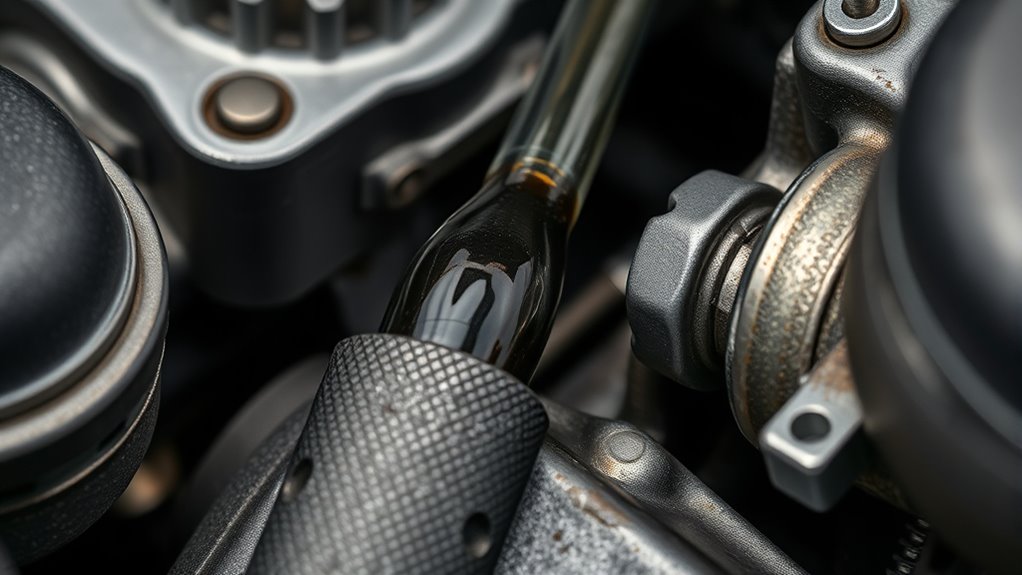

To diagnose oil pressure and level problems, start by checking your oil level with the dipstick, ensuring it’s within the recommended range. If levels are fine, pay attention to warning lights and listen for strange engine noises or notice performance issues. Test the oil pressure with a mechanical gauge if needed, and consider the health of the oil sensor and pump. Persistent concerns might mean inspecting these parts further—continue exploring to learn how to identify the root cause.
Key Takeaways
- Check oil levels regularly and top up if necessary to prevent pressure drops.
- Observe warning lights, unusual noises, or engine performance issues indicating potential oil pressure problems.
- Use a mechanical oil pressure gauge to verify actual oil pressure and identify pump or sensor failures.
- Test or replace faulty oil sensors if warning lights persist despite correct oil levels.
- Inspect the oil pump for signs of failure, such as whining noises or inconsistent pressure readings.

Have you noticed warning lights or unusual noises from your engine? If so, it’s essential to pay attention because these signs often point to oil pressure or level issues. One common culprit behind these problems is the oil sensor. This tiny device monitors the oil pressure inside your engine and sends signals to your dashboard. If it detects a drop in oil pressure, it triggers a warning light, alerting you to potential trouble. Sometimes, the warning light can be false, caused by a faulty oil sensor, but it’s better to check thoroughly before ignoring it. When the oil sensor malfunctions, it might give you misleading readings, leading you to think everything’s okay when it’s not. That’s why testing or replacing the sensor can resolve false alarms and provide accurate information.
Another vital component related to oil pressure problems is the oil pump. The oil pump’s job is to circulate oil throughout your engine, ensuring all moving parts stay lubricated and cooled. If the oil pump fails or becomes inefficient, oil won’t flow properly, causing pressure drops. A failing pump might produce strange noises like whining or knocking sounds, especially during acceleration or when the engine is cold. You might also notice a decrease in engine performance or overheating because insufficient lubrication leads to increased friction and wear. Diagnosing issues with the oil pump often involves checking oil pressure with a mechanical gauge, which provides a direct reading. If the pressure is consistently low despite having enough oil in the system, then the pump could be the root of the problem.
Regularly checking your oil level is essential because low oil levels can cause similar warning signs. If your oil is low, your engine may struggle to maintain proper pressure, triggering the oil sensor or warning light. Always make sure to use the correct type of oil and check levels regularly, especially before long drives. If you find that your oil level is fine but your warning light persists, it’s time to think about other causes like a faulty sensor or mechanical failure within the pump. Addressing these issues promptly can prevent severe engine damage, saving you money and time in the long run. When in doubt, consulting a mechanic to perform a thorough oil pressure test can pinpoint the exact problem. Remember, maintaining proper oil pressure not only keeps your engine running smoothly but also extends its lifespan, so don’t ignore warning signs and check your oil system thoroughly whenever problems arise.
Frequently Asked Questions
How Often Should I Check My Oil Pressure and Level?
You should check your oil level every month and before long trips to make certain it’s within the recommended range. Regularly monitor your oil gauge while driving for any pressure drops, and keep an eye on the oil sensor indicator light. If the gauge shows low pressure or the sensor alerts you, check your oil level immediately and top it off if needed. Staying vigilant helps prevent engine damage.
Can Low Oil Pressure Cause Engine Damage?
Low oil pressure can definitely cause engine damage, as it means your engine isn’t getting enough lubrication. Did you know that a faulty oil pump or incorrect oil viscosity can lead to low oil pressure? This reduces the oil flow, increasing wear and risking serious engine failure. Always check your oil levels and confirm the pump functions properly to prevent costly repairs and extend your engine’s life.
What Are Signs of Oil Level Inaccuracies?
You might notice inaccurate oil levels if your oil sensor faults or oil contamination occur. These issues can cause false readings on your dipstick or oil level gauge, leading you to think there’s enough oil when there isn’t. Look out for inconsistent readings, engine warning lights, or unusual oil discoloration. Regularly check the oil manually and watch for sensor errors to prevent potential engine damage caused by inaccurate oil level detection.
Is It Safe to Drive With Fluctuating Oil Pressure?
You shouldn’t drive with fluctuating oil pressure because it indicates a potential issue with your engine. The oil sensor and pressure gauge help you monitor these fluctuations; if the gauge shows inconsistent readings or the sensor alerts you, stop driving immediately. Continuing to drive risks severe engine damage. Get your oil pressure checked by a mechanic to diagnose the cause and prevent costly repairs.
How Do Temperature Changes Affect Oil Pressure Readings?
Imagine you’re driving on a cold morning, and your oil pressure drops slightly. Temperature fluctuation causes viscosity change, meaning colder oil becomes thicker, reducing flow and pressure. As the engine warms, oil thins out, restoring pressure to normal levels. So, temperature changes directly affect oil pressure readings; colder temps can lower pressure temporarily, but it’s usually normal as the oil warms up. Always consider engine temperature when checking oil pressure.
Conclusion
So, next time you ignore that oil warning light or skip checking your oil level, remember—it’s your engine’s way of whispering, “Help me.” Ironically, the simple act of regular checks can save you from costly repairs and unexpected breakdowns. Don’t wait until your engine’s crying for mercy. Stay proactive, catch problems early, and enjoy a smoother ride. Because sometimes, the smallest level of attention makes the biggest difference—before it’s too late.