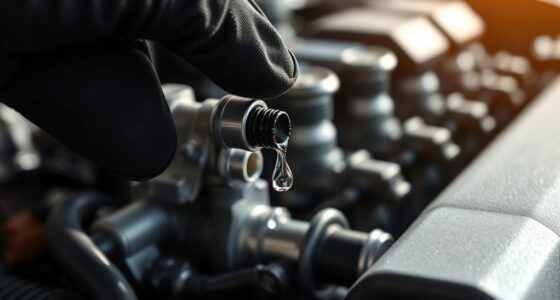
To diagnose wet stacking and black smoke, check if your engine shows symptoms during short trips or idling, like black smoke at startup or low load. Make certain your engine reaches proper temperature, and inspect injectors, filters, and turbochargers for clogs or wear. Confirm that your air intake is clear and fuel pressure is correct. Regular maintenance and operating under proper conditions reduce these issues. Keep exploring to understand how to optimize your engine’s performance fully.

Get backup power and energy gear delivered free with Prime
- Fast, free delivery on millions of items
- Prime Video, Amazon Music and more included
- Member-only deals all year
Key Takeaways
- Observe symptoms like persistent black smoke and wet exhaust during startup or low load conditions.
- Verify engine warm-up and operating temperature to ensure complete fuel combustion.
- Check fuel injectors, filters, and turbochargers for cleanliness and proper functioning.
- Ensure air intake filters are clean and airflow is unrestricted to prevent rich fuel mixtures.
- Maintain proper engine maintenance and monitor operating conditions to prevent wet stacking and black smoke.

If you notice black smoke or wet stacking from your diesel engine, diagnosing the issue promptly is vital to prevent damage and maintain efficiency. Both symptoms can signal underlying problems that, if left unaddressed, might lead to costly repairs or reduced fuel efficiency. Wet stacking occurs when unburned fuel accumulates in the exhaust system, often due to operating conditions that don’t allow the engine to reach proper temperature or load. Black smoke, on the other hand, usually indicates incomplete combustion, which can be caused by issues like incorrect fuel-to-air ratios or clogged injectors. Recognizing these signs early helps you take targeted steps to correct the problem and maximize engine performance.
Start by examining your engine’s operating conditions. Wet stacking is common during short trips or idle periods where the engine doesn’t warm up sufficiently, leading to inefficient fuel combustion. In such cases, you might notice persistent black smoke, especially during startup or low-load operations. To address this, you should review your engine’s maintenance schedule, ensuring that components like injectors, filters, and turbochargers are clean and functioning properly. Regular engine maintenance improves combustion efficiency, which directly impacts fuel efficiency and reduces the likelihood of wet stacking. Properly maintained engines burn fuel more completely, producing cleaner exhaust and better overall performance.
Short trips and idling can cause wet stacking and black smoke; regular maintenance improves combustion efficiency.
Next, check your fuel delivery system. Incorrect fuel pressure or faulty injectors can cause incomplete combustion, resulting in black smoke. If your injectors are clogged or worn, they won’t atomize fuel properly, leading to excess unburned fuel in the exhaust gases. Cleaning or replacing injectors can dramatically improve combustion efficiency. Additionally, verify that your air intake system is clear and that filters are clean. Restricted airflow causes the engine to run rich, contributing to black smoke and wet stacking. Ensuring proper airflow and fuel delivery helps your engine operate at peak efficiency, reducing emissions and extending component lifespan. Moreover, monitoring fuel quality is essential, as contaminated fuel can also impair combustion and lead to these symptoms.
Monitoring your engine’s operating temperature is another vital step. If the engine runs too cool, it won’t burn fuel completely, leading to wet stacking. Consider inspecting your thermostat and cooling system to make sure they’re functioning correctly. When the engine reaches its proper operating temperature, combustion becomes more complete, reducing emissions and improving fuel efficiency. Consistently maintaining the right temperature and proper engine settings minimizes the risk of wet stacking and black smoke, ensuring your engine runs smoothly and efficiently.
Top picks for "diagnos stack black"
As an affiliate, we earn on qualifying purchases.
Frequently Asked Questions
Can Wet Stacking Damage My Engine Long-Term?
Wet stacking can damage your engine long-term if ignored, especially when poor fuel quality causes incomplete combustion. This buildup of unburned fuel can lead to engine overheating, which stresses components and accelerates wear. Regular maintenance, using quality fuel, and monitoring engine temperature help prevent wet stacking. If left unchecked, it can cause significant damage, reducing your engine’s lifespan and efficiency over time.
How Often Should I Check for Wet Stacking Symptoms?
You should check for wet stacking symptoms every few hundred hours of engine operation—think of it as keeping your engine’s health in check like a mother hen. Regularly inspect fuel additives to prevent buildup and ensure air filters are clean to improve combustion. If you notice black smoke or rough running, it’s time for a thorough check. Staying vigilant helps prevent long-term damage and keeps your engine running smoothly.
Are There Specific Fuel Types That Cause Black Smoke?
Certain fuel types can cause black smoke, especially low-quality diesel with high sulfur content or contaminants. Poor diesel quality burns inefficiently, producing excess soot and black smoke. Using fuel additives can improve combustion and reduce smoke emissions. Always choose high-quality diesel from reputable sources, and consider additives to enhance fuel stability and combustion efficiency, helping prevent black smoke and keep your engine running cleaner and smoother.
What Maintenance Prevents Wet Stacking in Generators?
You need to stay ahead of the game to prevent wet stacking. Regularly check fuel quality and use clean, high-quality fuel to keep exhaust emissions in check. Keep your generator’s cooling system and filters clean, and perform routine oil changes to avoid buildup. Running the generator at proper loads also helps. When you stick to these maintenance tips, you’ll reduce wet stacking and keep your generator running smoothly.
Is Black Smoke Always a Sign of Engine Failure?
Black smoke isn’t always a sign of engine failure; it often indicates incomplete combustion, usually caused by too much fuel or poor fuel efficiency. You should check the engine oil levels and quality, as low or dirty oil can contribute to this issue. Regular maintenance ensures proper fuel combustion, helping prevent black smoke and keeping your generator running smoothly. If the problem persists, consider consulting a technician for a detailed diagnosis.
Conclusion
Understanding how to diagnose wet stacking and black smoke helps you keep your engine running smoothly. Did you know that inefficient combustion caused by wet stacking can reduce engine lifespan by up to 30%? Regular maintenance and proper fuel management are key to preventing these issues. By staying vigilant and addressing symptoms early, you guarantee your engine operates efficiently, saving you time and money in the long run. Keep a close eye on your engine’s health for ideal performance.
Fall Picks
fall essentials
As an affiliate, we earn on qualifying purchases.