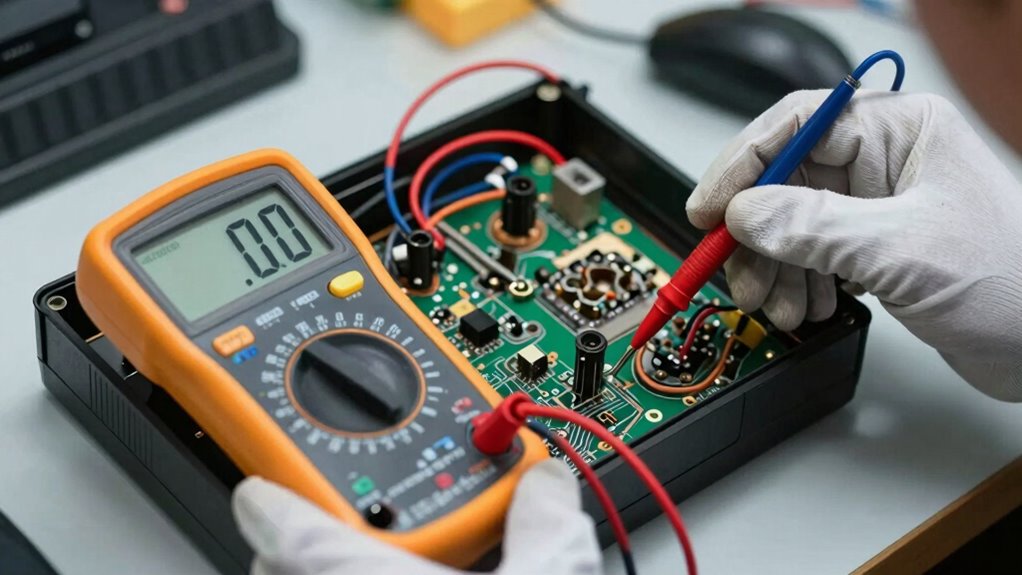

To diagnose a faulty battery charger, start by testing the power source—try plugging into different outlets and use a multimeter to check voltage stability. Inspect cables for loose or damaged connections, and clean any dirt or debris from ports. Look out for external interference that might affect performance, and verify the charger’s output with a multimeter. If issues persist, consider replacing cables or the charger itself—continuing with these tips can help uncover the root cause efficiently.

Get backup power and energy gear delivered free with Prime
- Fast, free delivery on millions of items
- Prime Video, Amazon Music and more included
- Member-only deals all year
Key Takeaways
- Test the charger on different outlets to identify voltage fluctuation issues.
- Use a multimeter to verify the charger delivers correct voltage output.
- Inspect cables and connections for damage, loose fittings, or debris.
- Check for external interference or environmental noise affecting power stability.
- Replace damaged cables or faulty chargers to ensure safe, reliable operation.
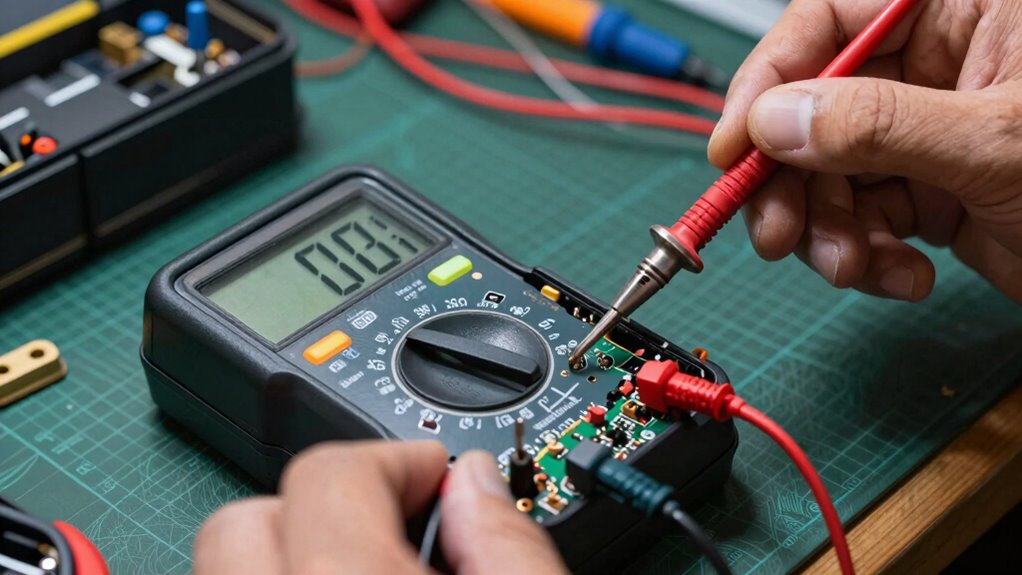
Ever wondered why your battery charger suddenly stops working? It can be frustrating, especially when you’re in a hurry or relying on it to power your device. Often, the issue isn’t with the device itself but with the power supply or connection. Before assuming the charger is faulty, it’s crucial to diagnose the problem carefully. One common culprit is voltage fluctuation, which can disrupt the charging process. If the voltage supplied to your charger is inconsistent or unstable, it might cause the charger to shut down or fail to deliver the correct current. You can check this by plugging your charger into different outlets or using a multimeter to measure the voltage. If you notice significant fluctuations, the problem could be with your power source rather than the charger itself. Properly understanding field recording techniques can also help you identify issues with external noise or interference affecting your device’s performance. Additionally, environmental factors such as electromagnetic interference can impact the stability of your power supply, making it worth considering your surroundings during diagnosis. Recognizing power stability is essential for accurate troubleshooting and ensuring consistent device performance.
Another critical factor to examine is connection integrity. Loose or damaged cables, frayed wires, or poor contact points can prevent proper power transfer. When inspecting the connection, ensure that the plug fits snugly into the outlet and that the cable isn’t bent sharply or showing signs of wear. Sometimes, dirt or debris inside the charging port or on the plug’s contact points can interfere with the connection, leading to charging issues. Clean the contacts gently with a dry cloth or compressed air to remove any obstructions. If the connection feels loose or wobbly, replacing the cable might be necessary. A secure, well-maintained connection is essential for reliable charging, so don’t overlook this step. Checking for connection issues regularly can help prevent future problems and ensure your device charges efficiently. Also, testing the power adapter with a multimeter can reveal if it’s delivering the correct voltage output, further aiding in diagnosis. Moreover, understanding regulatory compliance can assist in selecting safe and reliable chargers, reducing the risk of damage or inefficiency. Recognizing the importance of contrast ratio in your setup can also help you identify if external lighting is affecting your device’s performance during troubleshooting.
Frequently Asked Questions
Can a Faulty Charger Damage My Device’s Battery?
Yes, a faulty charger can damage your device’s battery. If it supplies inconsistent or incorrect voltage, it can reduce your battery’s lifespan and harm its overall health. Poor charging efficiency might cause your device to overheat or charge slowly, further degrading the battery. To protect your device, always use a quality charger and replace any that show signs of malfunction, ensuring best battery performance and longevity.
How Often Should I Test My Battery Charger?
Don’t wait until the wheels fall off. You should test your battery charger at least once every three to six months to guarantee it’s working properly. Regular checks help extend your battery lifespan and confirm charger compatibility, preventing unexpected failures. If you notice slow charging or inconsistent power, it’s time for a test. Staying proactive keeps your devices safe and saves you from costly repairs down the road.
Are There Safety Precautions When Inspecting Chargers?
When inspecting chargers, you should prioritize charger safety by unplugging the device before inspection. Use insulated tools and wear safety gloves to prevent shocks. Make certain the area is dry and well-ventilated. Always follow inspection precautions, such as avoiding contact with internal components and checking for damaged cords or corrosion. These steps help protect you from electrical hazards and ensure accurate diagnosis of your charger’s condition.
What Are Common Signs of a Failing Charger?
You’ll notice your charger is failing if the battery lifespan shortens unexpectedly or if charging indicators flicker or stay off. A declining battery lifespan signals the charger isn’t supplying consistent power. Additionally, if your device takes longer to charge or if the charger becomes unusually hot, these are signs that it might be failing. Regularly check the charging indicators to catch issues early and prevent damage.
Can a Damaged Cable Be Repaired or Replaced?
A damaged cable is like a frayed lifeline, and yes, you can often repair it or explore replacement options. For cable repair, you might splice and seal the wires or use specialized connectors, but if the damage is extensive, replacing the cable is the safer bet. Check the charger’s manufacturer guidelines for replacement options, ensuring you choose a compatible cable to keep your device powered and protected.
Conclusion
By following these simple steps, you’ll master the art of diagnosing faulty battery chargers and save yourself from being stranded in the middle of nowhere. Remember, a faulty charger isn’t just a minor inconvenience—it’s like a ticking time bomb waiting to leave you powerless when you need your vehicle the most. Stay vigilant, test thoroughly, and keep your charger in top shape. With these tips, you’ll never be caught off guard by a dead battery again!
Columbus Day / Indigenous Peoples' Day Picks
long weekend sales
As an affiliate, we earn on qualifying purchases.