When your car won’t start, start with simple checks like testing the battery voltage and listening for the fuel pump. Avoid jumping to conclusions or replacing parts without confirming the problem first. Make sure the fuel tank isn’t empty and that the battery isn’t drained before trying more complex fixes. Taking these basic steps helps you save time and money. Keep going to discover more important tips that can help you troubleshoot effectively.

Get backup power and energy gear delivered free with Prime
- Fast, free delivery on millions of items
- Prime Video, Amazon Music and more included
- Member-only deals all year
Key Takeaways
- Check battery voltage and connections before considering replacement.
- Listen for fuel pump hum when turning on the ignition to verify fuel delivery.
- Avoid jumping to complex repairs; perform simple tests first, like inspecting spark plugs.
- Confirm fuel gauge reads sufficient fuel, and listen for engine cranking.
- Don’t skip testing the battery or fuel system, as these are common no-start causes.
Key Steps to Take First When Your Car Won’t Start
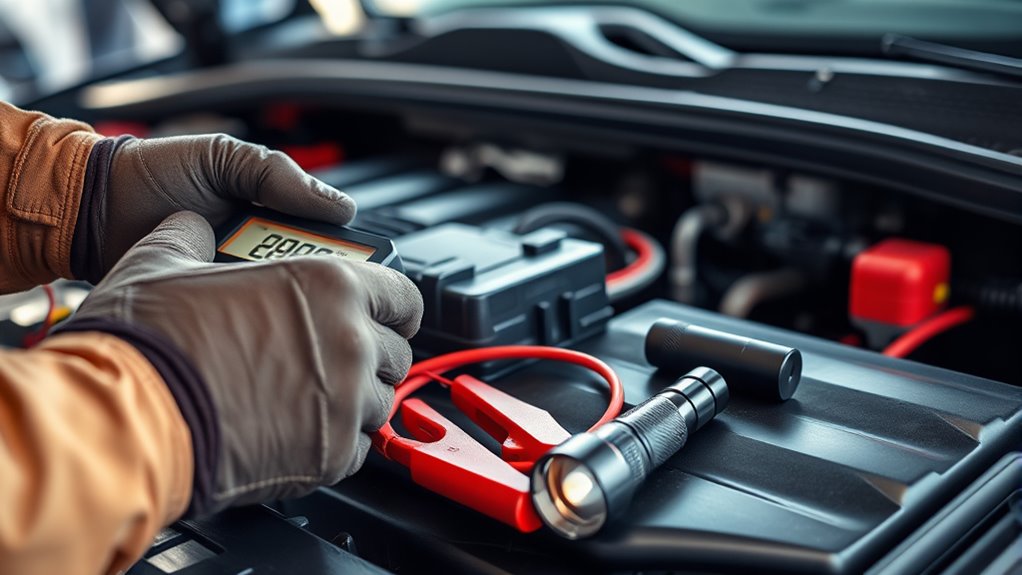
When your car won’t start, the first step is to stay calm and assess the situation quickly. Check if your battery drain might be the culprit—look for dim lights or slow engine crank. If the battery seems fine, consider the fuel system. Confirm your fuel gauge isn’t empty, and listen for the sound of the fuel pump when you turn the key to the “on” position. A drained or faulty battery can prevent the engine from starting, so try jump-starting if needed. Also, verify that your fuel system isn’t clogged or delivering fuel properly. Recognizing whether the issue stems from insufficient power or fuel delivery helps you decide your next move, whether it’s recharging, replacing the battery, or inspecting the fuel system before deeper troubleshooting. Additionally, understanding your vehicle’s backup power options can be useful if electrical issues are a recurring problem.
Common Mistakes to Avoid During No-Start Troubleshooting
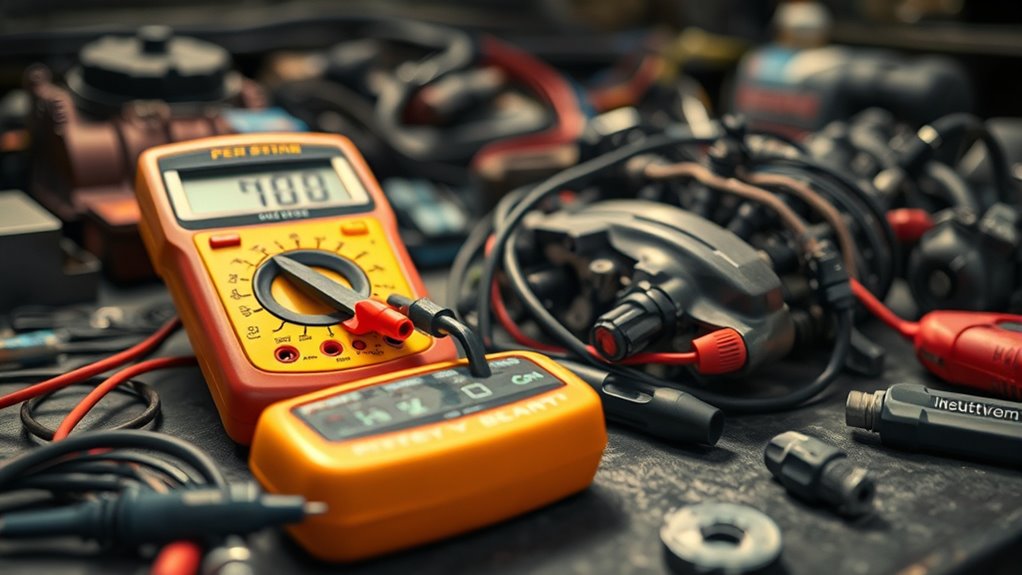
Avoid jumping to conclusions or making assumptions about the cause of your car’s no-start issue. Instead, perform a proper battery inspection and spark plug check before replacing parts. Rushing can lead to wasted time and unnecessary repairs. Don’t overlook simple steps like testing the battery’s voltage or inspecting the spark plugs for wear and fouling. Here’s a quick guide:
| Mistake to Avoid | Why It Matters | Better Approach |
|---|---|---|
| Skipping battery check | It’s often the root cause | Test voltage first |
| Ignoring spark plug condition | Worn plugs cause misfires | Inspect and replace if needed |
| Jumping to complex fixes | Overcomplicates troubleshooting | Start with basics |
Focus on these simple checks to save time and avoid costly errors. Being aware of common family photoshoot fails can also help you stay relaxed and focused during your troubleshooting process.
Frequently Asked Questions
How Can I Tell if the Battery Is the Problem?
You can tell if the battery’s the problem by performing battery testing with a multimeter or a dedicated tester. If the voltage reads below 12.4 volts, the battery may be weak. Also, do an alternator check to guarantee it’s charging properly; if the battery still struggles after driving, likely, it needs replacing. Consistent slow engine cranks and dim lights also point to a faulty battery.
What Tools Do I Need for Basic No-Start Diagnostics?
You’ll want basic diagnostic tools like a multimeter and a spark tester to uncover common causes of no-start issues. These tools help you check the battery’s voltage, inspect for weak connections, and verify spark delivery. With them, you gain clarity on whether the problem lies within electrical components or something more subtle. Using these essentials, you can quickly identify potential trouble spots and address the root cause efficiently.
Can Environmental Factors Cause a Car Not to Start?
Environmental factors can definitely cause your car not to start, especially if they affect the fuel system or ignition issues. Cold weather can thicken the fuel, making it harder to flow, or drain the battery, impacting ignition. High humidity might cause moisture in electrical connections, disrupting signals. Wind and rain can also worsen existing issues or cause new ones, so always consider weather conditions when diagnosing a no-start problem.
When Should I Call a Professional Mechanic?
You should call a professional mechanic if troubleshooting the ignition system or fuel injection doesn’t resolve your car’s no-start issue. If you notice persistent problems like difficulty turning the key, odd smells, or engine stalling, it’s time to seek expert help. Ignoring these signs can lead to further damage. A mechanic can accurately diagnose issues related to the ignition system, fuel injection, or other components, ensuring your vehicle gets the proper repairs.
Are There Safety Precautions I Should Follow During Troubleshooting?
Sure, because risking your life is the best way to fix a no-start issue, right? Always wear safety gear like gloves and goggles, and stay alert to hazard awareness. Keep a fire extinguisher nearby, and avoid working under a lifted vehicle without proper support. Remember, safety isn’t optional—it’s your best tool. If you’re unsure, call a professional before turning your troubleshooting into a trip to the ER.
Conclusion
When your car won’t start, think of it as a puzzle waiting to be solved. By following the right steps and avoiding common mistakes, you guide yourself through the maze with confidence. Remember, patience and methodical checking are your best tools—don’t let frustration be the roadblock. With a clear plan in hand, you’ll turn that stubborn engine into a smoothly running machine, proving that troubleshooting is just a matter of finding the right key to open the mystery.
Halloween Picks
halloween
As an affiliate, we earn on qualifying purchases.