
To avoid common transfer switch installation mistakes, make certain you size the generator correctly to handle your power needs and follow all wiring instructions precisely. Plan the placement carefully—install the transfer switch near the main panel and label circuits clearly. Always position the generator outdoors in a well-ventilated area to prevent hazards. If you pay attention to these details and consult safety guidelines, you’ll set up a reliable system. Keep going to discover more helpful tips for a safe, effective installation.
Key Takeaways
- Follow manufacturer instructions carefully for wiring connections to ensure safety and proper operation.
- Properly size the generator based on total wattage to prevent overloads or unnecessary wear.
- Install the transfer switch near the main panel with clear labels to facilitate safe, seamless power switching.
- Position the generator outdoors in a well-ventilated area away from windows and vents to prevent gas buildup.
- Consult a licensed electrician to verify correct wiring and adherence to electrical codes for reliable and safe installation.
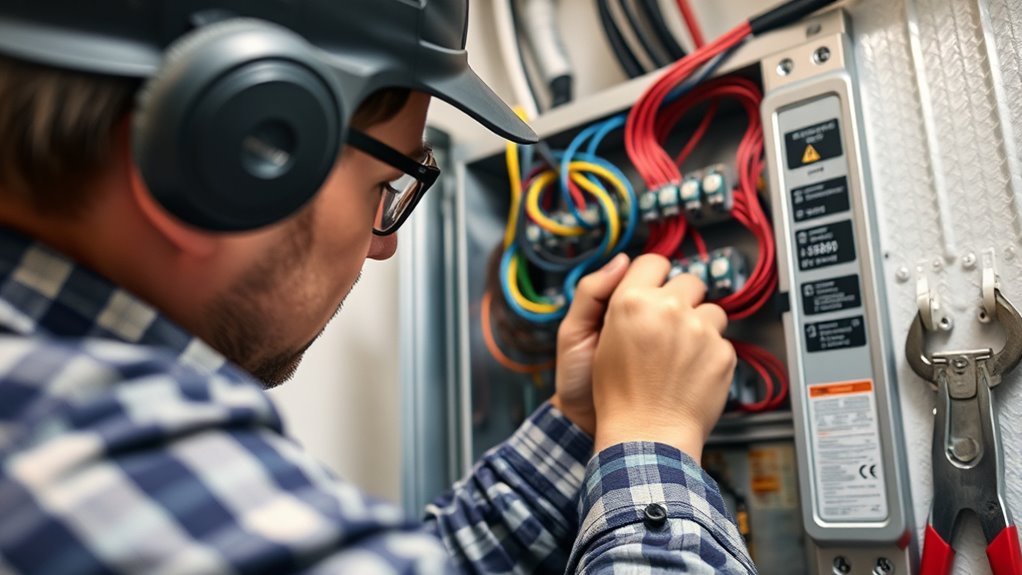
Installing a transfer switch is a vital step in guaranteeing your backup power system works safely and reliably, but many homeowners make simple mistakes that can compromise its effectiveness. One of the most common errors involves improper generator sizing. If your generator is too small, it won’t supply enough power to run essential appliances during an outage, while an oversized generator can cause unnecessary wear and tear or even damage your system. Before installation, you need to carefully evaluate your power needs and select a generator that matches your home’s load requirements. This involves calculating the total wattage of devices you want to operate simultaneously and choosing a generator capable of handling that load comfortably. Failing to do so can lead to frequent overloads or inefficient operation, undermining the reliability of your backup system.
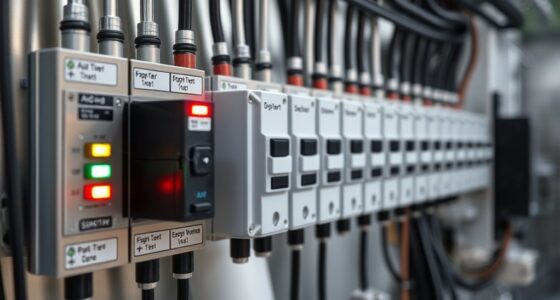
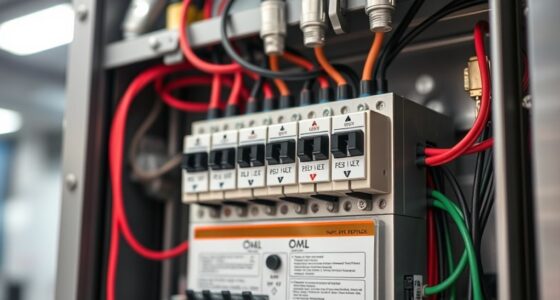
Another mistake homeowners often make pertains to wiring configuration. The wiring setup must be precise to guarantee a safe transfer of power and to prevent backfeeding—where electricity flows back into the utility lines, posing a risk to utility workers and neighbors. When installing the transfer switch, you should follow the manufacturer’s instructions meticulously, making sure all connections are secure and properly insulated. Incorrect wiring can cause electrical shorts, damage your appliances, or even create fire hazards. It’s vital to use the correct gauge wires and to connect the transfer switch to designated circuits that handle the intended load. If you’re unsure, consulting a licensed electrician can help you avoid costly mistakes. Proper wiring configuration not only enhances safety but also ensures your generator supplies power efficiently without unnecessary interruptions. Additionally, choosing the right raw materials for wiring and components can further reduce potential hazards and improve system longevity.
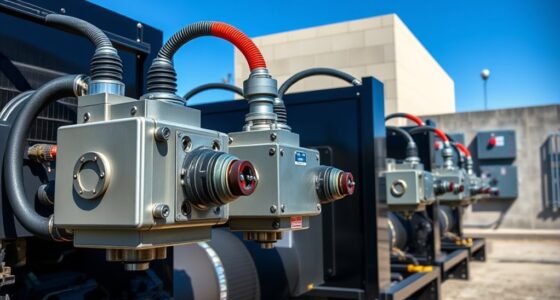
Additionally, many overlook the importance of planning for a seamless switch between utility and generator power. Your transfer switch should be installed in a way that allows you to easily and safely switch sources during an outage. This often means positioning the switch near your main electrical panel and ensuring clear labeling for each circuit. Poor placement or ambiguous labeling can lead to confusion during emergencies, increasing the risk of improper operation or accidental shocks. Also, consider the location of your generator itself; it should be installed outdoors in a well-ventilated area away from windows and vents to prevent carbon monoxide buildup. Proper placement and planning help you avoid hazards and guarantee your backup power system functions smoothly when needed.
Frequently Asked Questions
How Do I Determine the Right Transfer Switch Size for My Needs?
To determine the right transfer switch size, start with a load calculation of your essential appliances and equipment. Transfer switch sizing depends on this total load, so add up the wattages or amperages of everything you want to power during an outage. Choose a switch that matches or slightly exceeds this load to guarantee reliable operation. Proper sizing prevents overloads and ensures your system works efficiently when needed.
What Safety Precautions Should I Take During Installation?
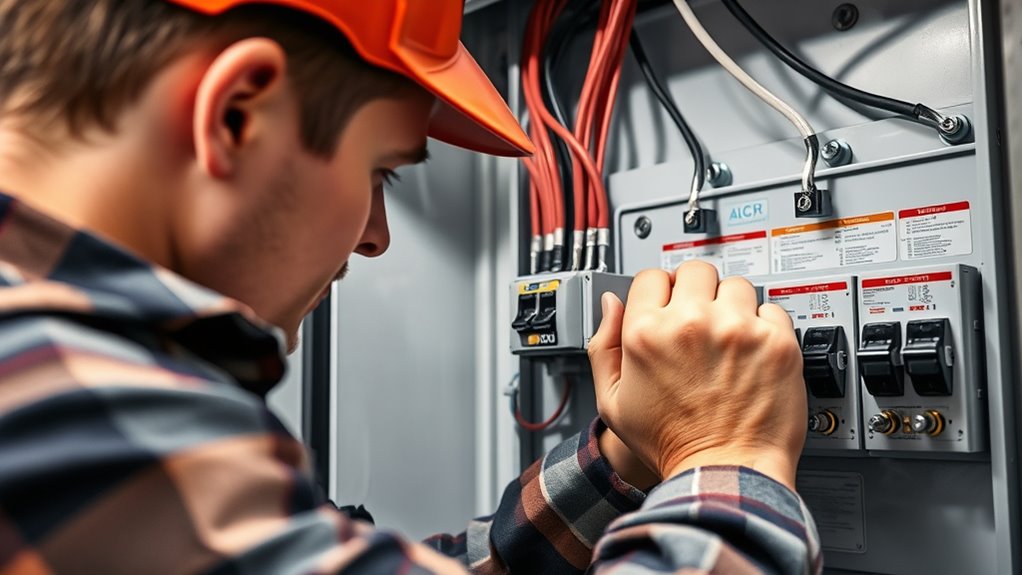
During installation, you should wear fire-resistant gear to protect yourself from potential sparks or electrical faults. Guarantee proper grounding of the transfer switch to prevent electrical shock or fire hazards. Turn off power at the main breaker before starting, and double-check all connections for tightness. Keep your workspace dry, and use insulated tools to avoid accidental shorts. Following these safety precautions helps keep you safe throughout the process.
Can I Install a Transfer Switch Myself or Hire a Professional?
You can DIY install a transfer switch if you’re comfortable with electrical work, but when in doubt, it’s best to hire a professional. Think of it as crossing the road—sometimes, it’s worth having an expert do the heavy lifting to ensure safety and compliance. Professional installation guarantees proper setup and reduces risks, while DIY might save money but could lead to costly mistakes. Choose wisely based on your experience and comfort level.
What Are the Common Signs of an Improperly Installed Transfer Switch?
You’ll notice transfer switch malfunctions, like failure to switch power correctly or frequent tripping, which indicate improper installation. Improper wiring issues can cause electrical shocks, flickering lights, or inconsistent power transfer. If your transfer switch makes strange noises or doesn’t respond during outages, it’s a sign something’s wrong. Always double-check connections and consult a professional if you suspect improper wiring, ensuring your setup is safe and reliable.
How Often Should I Inspect and Maintain My Transfer Switch?
You should inspect and maintain your transfer switch at least once a year, but don’t wait for a warning sign to act. Think of it as keeping your finger on the pulse. Follow a regular inspection schedule and use a maintenance checklist to make certain all parts are working smoothly. Regular upkeep helps catch issues early, preventing unexpected failures and extending the switch’s lifespan.
Conclusion
By paying close attention to installation details, you guarantee your system’s reliability and safety. Taking a little extra care helps prevent potential headaches and keeps your home running smoothly during unexpected moments. Remember, a thoughtful approach now can save you from unforeseen troubles later. Embrace the process with patience and confidence—your effort creates a secure, dependable environment for you and your loved ones. After all, a well-installed transfer switch is a quiet guardian, silently supporting your peace of mind.