Remote switching for critical facilities allows you to control circuit breakers and switches instantly from afar, boosting your system’s reliability and response times during outages or faults. It eliminates manual interventions, reduces downtime, and enhances safety by limiting personnel exposure. Plus, it integrates seamlessly with automation systems to monitor performance, optimize energy use, and support emergency responses. To discover how this technology can keep your facility operational, explore further insights below.
Key Takeaways
- Enables rapid, reliable remote control of switches and breakers to minimize downtime during outages.
- Integrates with automation systems for real-time monitoring and proactive power management.
- Enhances safety by reducing personnel exposure and facilitating quick fault assessment remotely.
- Supports load balancing and demand response to optimize energy efficiency in critical facilities.
- Future-proofs infrastructure by aligning with smart grid technologies and advanced automation integration.
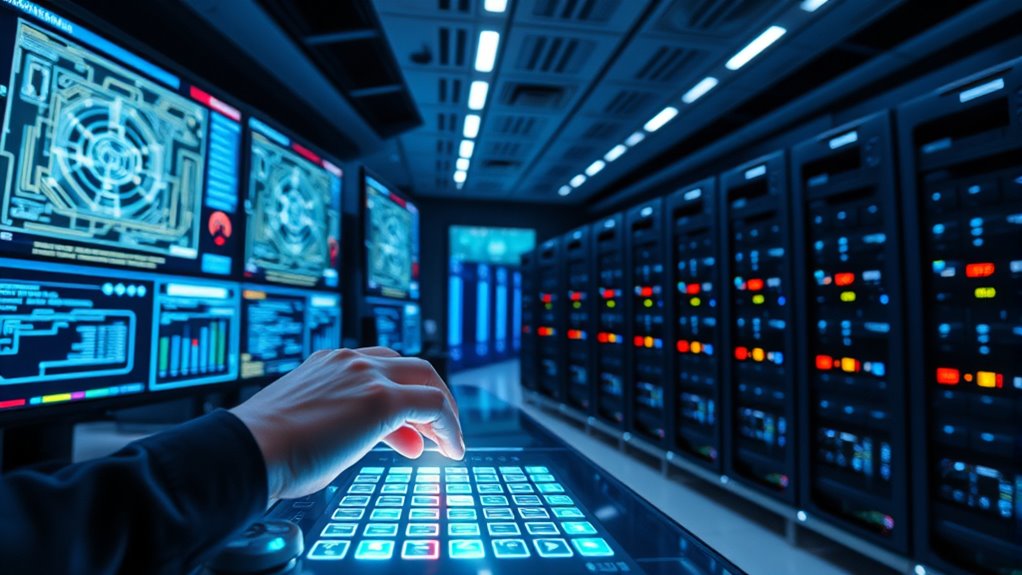
Remote switching technology is transforming how essential facilities manage their power systems by allowing operators to control switches and circuit breakers from a distance. This innovation plays a pivotal role in maintaining a reliable power grid, especially for facilities that demand uninterrupted power supply. Instead of manual interventions, you can now oversee and adjust electrical systems instantly, improving response times during outages or system faults. This capability is particularly indispensable in environments where downtime can have serious consequences, such as hospitals, data centers, or emergency services.
Remote switching enhances reliability and response times for critical facilities’ power management.
By integrating remote switching with advanced automation systems, you gain a significant advantage in managing complex power networks. Automation systems enable you to monitor real-time data, analyze system performance, and execute commands automatically or remotely. This synergy ensures that your facility’s power distribution remains stable and efficient, minimizing the risk of overloads, faults, or outages. You can quickly isolate problematic sections of the power grid, reroute power flows, or disconnect faulty equipment without needing to send personnel into potentially hazardous environments.
The seamless communication enabled by remote switching enhances your ability to respond swiftly to emergencies. When a fault occurs, you don’t have to wait for manual inspections or physically access circuit breakers. Instead, you can evaluate the situation remotely, determine the best course of action, and implement it instantly. This not only reduces downtime but also improves the safety of your staff by limiting their exposure to electrical hazards. Additionally, remote switching integrated with automation systems allows for predictive maintenance. You receive alerts about potential issues before they escalate, enabling you to schedule repairs proactively and avoid unexpected failures.
Your control over the power grid becomes more precise with remote switching technology. You can perform load balancing, manage demand response, and optimize energy consumption—all from a centralized platform. This level of control enhances overall system reliability and helps you meet regulatory requirements for safety and efficiency. Moreover, remote switching provides detailed logging and reporting features, giving you valuable insights into historical data for analysis or compliance documentation.
Implementing remote switching in your critical facility also future-proofs your operations. As power grids evolve with smarter technologies, your ability to adapt quickly becomes essential. By leveraging automation systems alongside remote switching, you position your facility at the forefront of energy management, ensuring resilience and operational excellence. As the technology advances, integrating advanced automation systems can further enhance your operational capabilities and response times. In conclusion, remote switching empowers you to manage your power systems more effectively, safely, and efficiently, transforming how critical facilities safeguard their electrical infrastructure in an increasingly interconnected world.
Frequently Asked Questions
What Are the Cybersecurity Measures for Remote Switching Systems?
You should implement robust cybersecurity protocols, including encryption and regular security updates, to safeguard remote switching systems. Access control is essential—use multi-factor authentication and strict user permissions to prevent unauthorized access. Continuously monitor system activity for suspicious behavior, and train staff on cybersecurity best practices. These measures help guarantee your critical facility’s remote switching remains secure and resilient against cyber threats.
How Does Remote Switching Comply With Industry Safety Standards?
You guarantee remote switching complies with industry safety standards by implementing strict emergency protocols and adhering to regulatory compliance requirements. These protocols include fail-safes, real-time monitoring, and backup systems to prevent accidents. Regular audits and updates align your system with evolving standards. By following these practices, you maintain a safe, compliant environment that minimizes risks during remote operations, safeguarding your critical facility’s infrastructure and personnel.
What Backup Options Are Available if Remote Switching Fails?
When remote switching fails, you’re not left in the dark. You can rely on manual override systems to take control instantly, ensuring continuous operation. Additionally, system redundancies, like backup power supplies and secondary communication links, act as safety nets. These fail-safes keep your critical facilities running smoothly, even when the main remote switching system hits a snag, giving you peace of mind that everything’s covered.
How Is Remote Switching Integrated With Existing Facility Infrastructure?
You integrate remote switching with your facility by ensuring seamless facility integration and infrastructure compatibility. This involves connecting remote control systems to your existing electrical and communication infrastructure, using standardized protocols for smooth operation. You also verify that the remote switching hardware and software are compatible with your facility’s systems, enabling reliable, real-time control without disrupting current operations. Proper integration safeguards your critical facility’s infrastructure while enhancing operational flexibility.
What Training Is Required for Personnel Operating Remote Switching Systems?
A stitch in time saves nine, so proper training is essential. As a remote operator, you’ll need thorough remote training to master system controls, safety protocols, and emergency procedures. You should also understand facility infrastructure and communication protocols. Hands-on sessions, simulations, and periodic refresher courses ensure you’re confident and prepared. This training minimizes risks and ensures smooth operations, keeping critical facilities safe and resilient.
Conclusion
Remote switching guarantees your critical facilities stay operational even during emergencies. Some might worry about security risks, but with advanced encryption and access controls, your systems remain safe. You don’t have to be onsite to troubleshoot or switch power, saving time and reducing downtime. Trusting remote switching means you’re prepared for anything, keeping your facility protected and resilient. It’s a reliable, secure solution that adapts to your needs—so you can focus on what matters most.