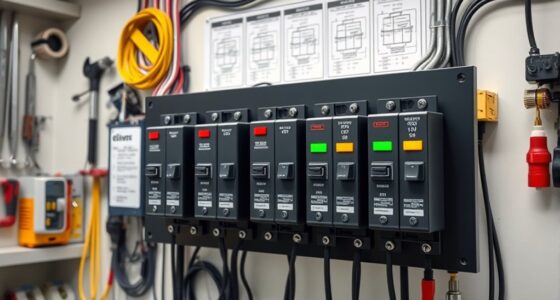
ATS neutral switching guarantees your power system switches sources safely without risking faults or shocks. It involves managing how the neutral conductor grounds and disconnects during source changes, keeping everything stable and protected. Proper neutral switching prevents unintended current paths and maintains system safety and reliability. Understanding key terms like grounding and relay coordination helps you optimize your setup. Keep exploring to learn how to implement these strategies smoothly and avoid common challenges effectively.
Key Takeaways
- Neutral switching enables seamless transfer between power sources while maintaining system safety and stability.
- Proper neutral grounding during switching prevents shock hazards and equipment faults.
- Coordination of relays and switchgear ensures safe, synchronized neutral transfer without transient issues.
- Neutral switching protects personnel and equipment by isolating neutral conductors during source changes.
- Effective implementation requires clear procedures, thorough testing, and maintenance to ensure system reliability.
What Is ATS Neutral Switching?

ATS neutral switching is a feature that allows an automatic transfer switch to change between power sources without favoring one over the other. This process involves managing neutral grounding to guarantee safe and reliable operation. When switching occurs, the neutral conductor is carefully coordinated with switchgear to prevent faults or unintentional energizing of circuits. Proper switchgear coordination ensures that the neutral points are properly isolated or connected, depending on the system’s design. Neutral switching helps maintain system stability and protects equipment from potential damage caused by improper grounding or neutral faults. By controlling how the neutral grounding interacts during source transfer, ATS neutral switching provides a seamless transfer process while preserving system safety and integrity. Understanding neutral grounding is essential for ensuring the overall safety and efficiency of power transfer systems.
Why Is Neutral Switching Important?
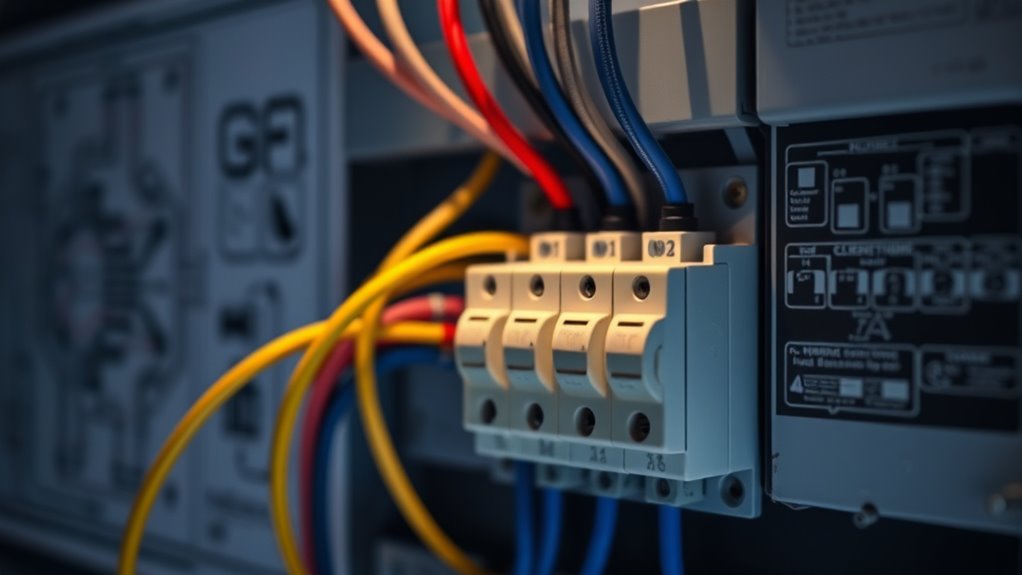
Why is neutral switching essential in power transfer systems? Neutral switching ensures grounding safety by preventing unintended current paths that could pose shock hazards or damage equipment. It also maintains electrical reliability by controlling how loads are connected to different sources, reducing the risk of power interruptions. Proper neutral switching isolates the neutral conductor when switching between power sources, avoiding faults or backfeed issues. This process helps protect personnel and equipment, especially during maintenance or system failures. Without effective neutral switching, the system could become unstable, increasing the chance of electrical faults. Additionally, system stability depends heavily on proper neutral switching techniques. Ultimately, neutral switching plays a pivotal role in safeguarding grounding safety and ensuring consistent, reliable power delivery across your system.
Key Terms and Concepts in Neutral Switching

Understanding key terms and concepts in neutral switching helps you grasp how the process maintains system stability and safety. Grounding safety is vital, as proper grounding prevents faults from escalating and protects equipment and personnel. Neutral switching ensures the system’s neutral is correctly connected or disconnected, facilitating safe operation during faults or maintenance. Relay coordination involves synchronizing protective relays to respond appropriately, avoiding false trips or system instability. When relays work in harmony, they isolate faults quickly while maintaining system reliability. Knowing these terms helps you understand how neutral switching functions as a safeguard, guaranteeing seamless transitions between power sources and preventing dangerous voltage or current imbalances. Proper inspection and maintenance of electrical components further enhance system safety and reliability. Mastering these concepts supports effective system design and operational safety in electrical networks.
How to Implement Neutral Switching Effectively

Implementing neutral switching effectively requires careful planning and precise control strategies to guarantee safety and system stability. You must prioritize grounding safety by ensuring proper grounding during switching operations to prevent electric shock risks. Coordinating switchgear is vital—using synchronized devices minimizes transients and avoids system disturbances. Proper sequencing and clear procedures help prevent faults or misoperations. Additionally, understanding air purifier maintenance dos and don’ts can help maintain equipment reliability during system operations.
Common Challenges and How to Overcome Them

Neutral switching can present several challenges, especially if you don’t plan carefully. One common issue is guaranteeing safety compliance, as improper switching can cause faults or equipment damage. To overcome this, always follow manufacturer guidelines and industry standards, and conduct thorough testing before implementation. Another challenge is achieving cost reduction; poorly planned switching may lead to unnecessary downtime or equipment wear. To avoid this, optimize switching schedules and use reliable components. Additionally, integrating neutral switching with existing systems can be complex and may require specialized knowledge. Addressing potential auditory processing challenges through proper training can facilitate smoother integration. By anticipating these challenges and proactively addressing them, you can ensure smooth operation, maintain safety standards, and realize the full cost-saving benefits of neutral switching.
Frequently Asked Questions
How Does ATS Neutral Switching Impact Overall System Reliability?
ATS neutral switching improves overall system reliability by enhancing system stability and fault detection. When you switch neutrals carefully, you prevent unexpected faults and reduce system disruptions. This proactive approach helps you identify issues early, ensuring smoother operation. By maintaining proper neutral switching, you minimize outages and maintain consistent power flow, ultimately boosting your system’s dependability and safety.
Are There Safety Standards Specific to ATS Neutral Switching Procedures?
Yes, there are safety standards specific to ATS neutral switching procedures. You must follow ground fault protection protocols and switchgear safety guidelines to prevent electrical hazards. Properly implementing these standards guarantees safe switching operations, minimizes risks of electrical shock, and maintains system integrity. Regular training and adherence to industry regulations help you manage potential hazards effectively, keeping both personnel and equipment safe during neutral switching processes.
Can Neutral Switching Be Automated in Modern Electrical Systems?
You can automate neutral switching in modern electrical systems, thanks to advancements in switchgear design. Studies show that nearly 65% of new installations incorporate automation potential, improving safety and efficiency. Automated neutral switching reduces human error, ensuring reliable operation during power shift. With the right switchgear design, integrating automation becomes straightforward, allowing seamless control and enhanced system stability. This evolution helps you maintain continuous power while simplifying maintenance and troubleshooting.
What Are the Environmental Considerations for Neutral Switching Practices?
You need to contemplate grounding practices because improper neutral switching can cause electrical faults and pose safety risks. It’s also essential to assess the ecological impact, as faulty switching may lead to power outages that affect local ecosystems or increase energy waste. By following best practices, you minimize environmental harm and ensure safer, more reliable electrical systems that protect both the environment and your infrastructure.
How Does Neutral Switching Differ in Various Industrial Applications?
Neutral switching is like a chameleon, adapting to different industrial environments. You’ll find it varies in applications such as power distribution, manufacturing, or data centers. In each case, ground fault protection and switchgear design influence how switches are used to disconnect the neutral safely. You must consider specific needs, like fault detection sensitivity or safety standards, to guarantee the neutral switching method enhances reliability and safety across diverse industrial settings.
Conclusion
Now that you understand ATS neutral switching and its importance, you’re better equipped to implement it effectively. Remember, the right setup can improve system safety and reliability. Are you ready to take control and optimize your switching process? With clear concepts and practical tips, you can avoid common pitfalls and ensure smooth operation. Don’t wait—start applying these insights today and make neutral switching work for you.