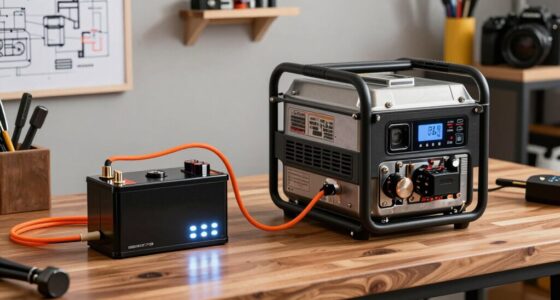
During a power outage, you should prioritize powering essential appliances like your refrigerator and freezer to keep food safe, as well as medical devices such as oxygen concentrators or CPAP machines if needed. Next, make sure your safety systems, like smoke and carbon monoxide detectors, stay operational. Use backup power sources for lighting and communication devices to stay informed and safe. If you keep these priorities in mind, you’ll be better prepared for the situation ahead. Keep going to discover more helpful strategies.

Get backup power and energy gear delivered free — and shop member deals
- Fast, free delivery on millions of items
- Access to Prime Big Deal Days deals on October 6–7
- Prime Video, Amazon Music and more included
Key Takeaways
- Prioritize powering essential medical devices, such as oxygen concentrators or CPAP machines, for health safety.
- Keep the refrigerator and freezer running to preserve perishable food and prevent spoilage.
- Activate home safety systems, including smoke and carbon monoxide detectors, for ongoing hazard detection.
- Use backup power to charge communication devices for staying informed and contacting emergency services.
- Ensure lighting devices are operational to maintain visibility and prevent accidents in darkness.
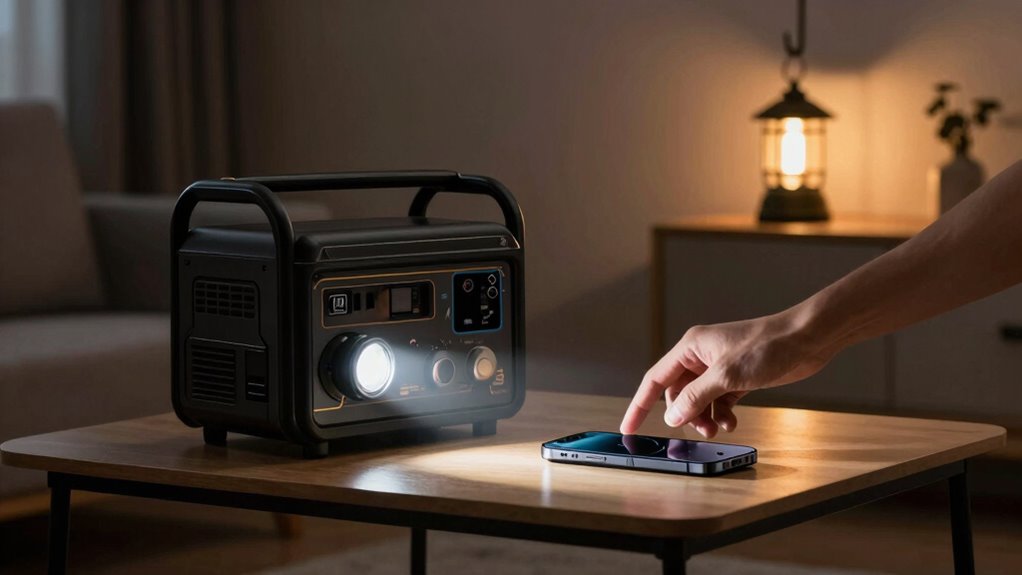
When the power goes out unexpectedly, knowing what to turn on first can make a big difference in staying safe and minimizing damage. In such moments, your focus should be on establishing a solid foundation of emergency essentials and practicing smart power prioritization. This approach guarantees that you protect critical systems, keep your family safe, and reduce the risk of costly damage to your appliances and home.
Start by powering your emergency essentials. These are the devices and systems that keep you safe and comfortable, such as your refrigerator, freezer, and essential medical equipment. The refrigerator and freezer are essential because they preserve perishable food and prevent spoilage. To prevent food loss, keep the fridge door closed as much as possible, and only turn it on after the outage if you have a backup power source. Medical devices like oxygen concentrators or CPAP machines should also be prioritized if they are essential for health. Making sure these essentials are powered first minimizes inconvenience and health risks while conserving energy for what matters most.
Next, consider your home’s safety systems. If you have security systems, alarms, or smoke and carbon monoxide detectors that run on electricity, get these up and running early. These systems are indispensable for detecting hazards and alerting you to potential dangers, especially in the dark or unfamiliar surroundings. Powering them immediately helps maintain security and safety, giving you peace of mind during the outage. Using backup power sources effectively can help ensure these safety systems stay operational throughout the outage. Additionally, understanding power management strategies can help maximize your backup resources and ensure continuous safety during outages.
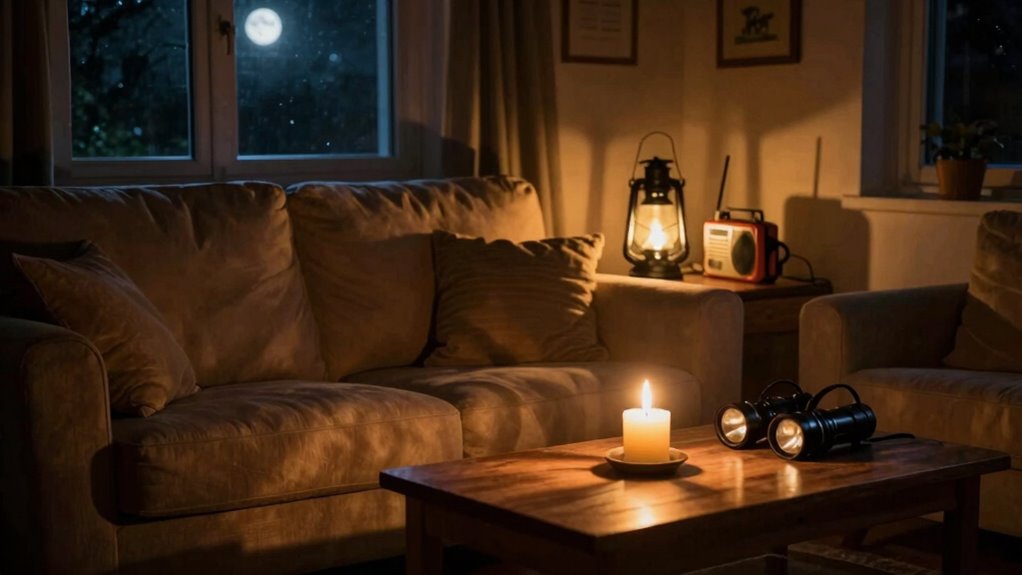
Once your emergency essentials are addressed, shift your focus to lighting and communication devices. In a power outage, visibility is limited, and staying connected to the outside world is critical. Turn on battery-powered lights, flashlights, or LED lanterns. If you have a small generator or backup power source, prioritize charging your cell phones and communication devices. Staying informed through weather updates or emergency alerts can be lifesaving, especially during prolonged outages. Proper lighting and communication are vital for safety and coordination, making them top priorities in the initial response.
Frequently Asked Questions
How Long Should I Run Each Device During an Outage?
You should run each device just long enough to conserve your battery life and maintain essential functions. Use smart power management techniques, like turning off non-essential devices and lowering screen brightness, to extend battery life. Prioritize critical devices, such as your phone or medical equipment, and disconnect others to avoid unnecessary drain. Regularly monitor battery levels, and switch to backup power sources if available, to keep crucial devices operational during an outage.
What Safety Precautions Should I Take When Using Backup Power?
Did you know that improper use of backup power causes over 80% of electrical fires? When using solar energy and battery storage during an outage, always guarantee your equipment is properly grounded and ventilated. Never overload circuits, and keep flammable materials away from batteries. Use surge protectors and follow manufacturer instructions carefully. Regularly inspect your backup system to prevent hazards, and consider consulting a professional for safe installation and maintenance.
Can I Power My Wi-Fi Router During an Outage?
Yes, you can power your Wi-Fi router during an outage if you have a compatible backup power source, like an uninterruptible power supply (UPS). Make certain proper battery maintenance and check that your power source is compatible with your router’s requirements. Keep the UPS charged and regularly test it to make sure it functions when needed. This way, you stay connected without risking damage to your equipment or safety.
How Do I Prioritize Medical Devices During a Power Outage?
Did you know that nearly 60% of medical emergencies involve equipment failure during outages? To keep your critical devices running, prioritize medical equipment like oxygen concentrators or ventilators first. Practice battery maintenance regularly and use power conservation techniques to extend backup power. Disconnect non-essential devices to preserve energy, and guarantee your backup power sources are fully charged beforehand. This way, you protect essential health needs when power outages strike.
Is It Safe to Use a Generator Indoors?
It’s not safe to use a generator indoors because of carbon monoxide risks. Always prioritize indoor safety by placing your generator outdoors, away from windows and vents. Guarantee proper generator placement to prevent exhaust fumes from entering your home. Keep the area well-ventilated, and never run the generator inside a garage, basement, or any enclosed space, even with the doors or windows open. Your safety depends on correct placement and adherence to safety guidelines.
Conclusion
When the power goes out, prioritizing what to power first can make all the difference. Focus on essential appliances like your refrigerator and medical devices, then move on to lighting and communication tools. Remember, staying calm and organized helps you navigate the outage more smoothly. So, next time the lights flicker out, ask yourself: what truly matters most to keep you safe and comfortable? Making smart choices now guarantees you’re better prepared for any blackout.
Fall Picks
fall essentials
As an affiliate, we earn on qualifying purchases.