To guarantee continuous power in critical healthcare facilities, you need a robust plan that combines reliable backup systems, renewable energy integration, and emergency protocols. Incorporate solar, wind, and storage solutions to reduce reliance on traditional generators, and regularly test and maintain all components. Train staff for quick response during outages and prioritize power to essential systems like life-support and medication refrigeration. If you keep exploring, you’ll discover how technology and strategic planning create resilient healthcare power systems.
Key Takeaways
- Develop robust power continuity plans prioritizing critical systems like life-support and medication refrigeration.
- Integrate renewable energy sources such as solar and wind, coupled with energy storage for reliable backup.
- Regularly test and maintain backup systems and renewable components to ensure operational readiness.
- Establish comprehensive emergency protocols and staff training for quick response during outages.
- Utilize smart grid technology for real-time monitoring, automatic switching, and adaptive power management.

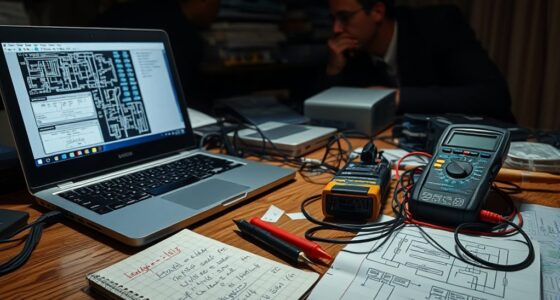
Have you ever contemplated what happens to critical healthcare facilities when the power goes out? In these moments, every second counts, and your facility’s ability to maintain operations hinges on robust power planning. One essential aspect is integrating renewable energy sources into your power system. Renewable integration, such as solar panels or wind turbines, can provide a reliable backup during outages, reducing dependency on traditional generators. However, this integration requires careful planning. You need to verify that your renewable systems are properly sized, synchronized with existing power supplies, and equipped with storage solutions like batteries. This way, when the grid fails, your facility can still draw on clean, sustainable energy, which not only enhances resilience but also aligns with environmental goals. But simply adding renewable sources isn’t enough; you must also develop thorough emergency protocols that address various outage scenarios. These protocols should clearly define the steps staff must take to safeguard patient safety and maintain critical functions. Regular drills and staff training are crucial to guarantee everyone understands their roles when the power goes out. A well-designed power plan combines renewable integration with these emergency protocols to create a seamless response. For example, your facility might automatically switch to stored renewable energy during an outage, activating backup generators only as a secondary measure. This layered approach minimizes downtime and keeps essential systems like ventilators, life-support machines, and medication refrigeration operational. Furthermore, emergency protocols should include procedures for rapid diagnosis of power issues, communication plans to inform staff and patients, and protocols for prioritizing power to critical areas. You also need to evaluate the maintenance and testing of these systems regularly. Renewable energy components must be inspected and tested to guarantee they perform efficiently when needed. This proactive approach prevents surprises during emergencies. Another key factor is verifying your facility’s power infrastructure is adaptable enough to accommodate new renewable sources and evolving technology. As renewable technology advances, your power planning should adapt accordingly. Incorporating smart grid technology can help monitor and control energy flow more effectively, giving you real-time data for decision-making. Additionally, understanding reliable backup power options and their proper implementation is vital for ensuring continuous operation during outages. Ultimately, integrating renewable energy with well-crafted emergency protocols strengthens your facility’s resilience. It ensures that, regardless of external disruptions, your healthcare operations can continue safely and efficiently. You’ll have peace of mind knowing that your power system isn’t just dependent on the grid but is resilient, sustainable, and prepared for any challenge that comes your way.
Top picks for "power plann critical"
Open Amazon search results for this keyword.
As an affiliate, we earn on qualifying purchases.
Frequently Asked Questions
How Often Should Backup Power Systems Be Tested?
You should test backup power systems at least twice a year to guarantee reliability. During these tests, follow your emergency protocols and maintenance schedules to identify any issues before an actual outage. Regular testing helps verify that generators and other backup systems activate promptly, maintaining continuous power. Consistent checks also ensure staff are familiar with procedures, minimizing downtime and risk during emergencies.
What Are the Latest Advancements in Healthcare Power Systems?
Think of healthcare power systems as evolving ecosystems. Today, advancements include integrating renewable energy sources like solar and wind, making facilities more sustainable. Energy storage solutions, such as advanced batteries, store excess power for emergencies, ensuring uninterrupted care. These innovations create a resilient, eco-friendly backbone for healthcare, allowing facilities to adapt to changing demands while reducing reliance on traditional power sources. You’re stepping into a future where power systems are smarter and more sustainable.
How Do Power Plans Adapt to Emergency Scenarios?
You adapt power plans to emergency scenarios by implementing robust emergency protocols and ensuring power source diversification. This means having backup generators, uninterruptible power supplies, and alternative energy sources ready to activate instantly. You regularly test these systems, train staff on emergency procedures, and review your plans to address potential disruptions. Diversifying power sources helps maintain critical operations, ensuring patient safety and facility stability during outages or crises.
What Are the Cost Implications of High-Level Power Redundancy?
You’ll find that high-level power redundancy crucially increases costs, as you must invest in additional backup systems like generators and uninterruptible power supplies. Conducting a thorough cost analysis helps you weigh these expenses against the benefits of enhanced reliability and patient safety. Redundancy strategies are essential for critical healthcare facilities, but they demand careful planning to balance the financial investment with the imperative of uninterrupted power during emergencies.
How Is Power System Security Maintained Against Cyber Threats?
You maintain power system security against cyber threats by implementing robust cybersecurity protocols and continuously updating them. You employ advanced threat detection systems that monitor network activity for suspicious behavior. Regular staff training ensures everyone recognizes potential attacks. You also segment networks to limit access, and conduct frequent security audits. By staying vigilant and proactive, you defend critical healthcare facilities from cyber threats, ensuring uninterrupted power and patient safety.
Conclusion
Ultimately, careful power planning gently guides your healthcare facility through life’s unpredictable currents. By thoughtfully preparing for every eventuality, you create a resilient environment where even the most delicate moments find stability. While challenges may subtly arise, your proactive approach ensures that the rhythm of care continues seamlessly. Embrace this quiet vigilance, knowing that your foresight softly anchors your facility, allowing life’s uncertainties to pass without disturbance, and providing unwavering support when it’s needed most.