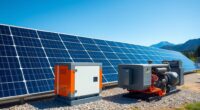
You should use multi-generator parallel systems when demand fluctuates or exceeds a single generator’s capacity. To implement them, synchronize each generator’s voltage, frequency, and phase for smooth load sharing. They automatically adjust loads during failures or changes, ensuring continuous power supply and system stability. These systems are ideal for maintaining efficiency, resilience, and cost-effectiveness. Keep exploring to discover how these strategies work seamlessly together for reliable power management.

Get backup power and energy gear delivered free — and shop member deals
- Fast, free delivery on millions of items
- Access to Prime Big Deal Days deals on October 6–7
- Prime Video, Amazon Music and more included
Key Takeaways
- Parallel operation begins when system load exceeds a single generator’s capacity or during high demand periods.
- Synchronize generators by matching voltage, frequency, and phase before connecting in parallel.
- Use automated control systems to continuously monitor and adjust load sharing dynamically.
- Implement load sharing strategies to prevent overloading, reduce wear, and ensure system reliability.
- Add or remove generators seamlessly to optimize efficiency and maintain power supply during operational changes.

Have you ever wondered how power systems guarantee reliability and efficiency? When multiple generators operate together in parallel, they form a multi-generator system that can provide a stable power supply even during unexpected disruptions. This setup isn’t just about having more power; it’s about smartly managing how that power is distributed. Load sharing plays a vital role here, ensuring each generator contributes appropriately based on its capacity, which helps prevent overloading any single unit. Proper load sharing is essential for reliability enhancement because it distributes the demand evenly, reducing wear and tear on individual generators and minimizing the risk of failures.
Load sharing ensures reliability by balancing demand and preventing generator overloads.
In a multi-generator parallel system, you need to decide when to bring additional generators online. Typically, you ramp up capacity during peak demands, or when the load exceeds what a single generator can handle efficiently. This approach prevents strain on individual units, extends their operational lifespan, and maintains a consistent power supply. Coordinating multiple generators involves synchronization, where each unit’s voltage, frequency, and phase are matched before they operate together. This synchronization process guarantees a smooth load sharing transition, avoiding power surges or dips that could trip protective devices or damage equipment. Additionally, maintaining power quality is critical to ensure the stability of the entire system.
You also need to think about how to control the system dynamically. Automated control systems constantly monitor load variations and generator performance, adjusting their output as needed. When a generator trips or fails, the system automatically redistributes the load among remaining units, maintaining reliability. This automatic load sharing capability is essential for seamless operation, especially in critical applications where even brief power interruptions aren’t acceptable.
Furthermore, a well-designed multi-generator system provides flexibility and resilience. You can add or remove generators based on changing demand, which enhances reliability during outages or maintenance activities. The system’s ability to adapt quickly guarantees continuous power supply, minimizing downtime and operational disruptions. Properly implementing load sharing techniques not only optimizes fuel efficiency but also reduces operational costs by preventing unnecessary running of all generators at partial loads.
Frequently Asked Questions
How Do Multi-Generator Systems Impact Overall Energy Efficiency?
Multi-generator systems boost your overall energy efficiency by improving energy conservation and enabling power optimization. When you operate multiple generators together, you can match power output more precisely to your demand, reducing waste. This setup allows you to switch between generators seamlessly, minimizing fuel consumption and emissions. By efficiently managing generator loads, you guarantee reliable power while conserving energy, ultimately lowering operational costs and supporting sustainable practices.
What Are the Common Challenges in Maintaining Parallel Generators?
You’ll often face challenges like fuel management and maintenance scheduling when maintaining parallel generators, which are vital for reliability. Studies show that improper fuel management can lead to 15% efficiency loss, so monitoring fuel levels is necessary. Additionally, coordinating maintenance to prevent downtime requires precise scheduling, as neglecting it can cause system failures. Staying proactive in these areas ensures your generators operate smoothly and efficiently.
How Do Load Variations Affect Generator Synchronization?
Load variations can disrupt generator synchronization by affecting load balancing and frequency stability. When load increases suddenly, your generators may struggle to keep up, causing frequency fluctuations. Conversely, a drop in load can lead to overloading or instability. To maintain proper sync, you need to adjust generator outputs promptly, ensuring load sharing remains balanced and frequency stays stable. This helps prevent system malfunctions and maintains reliable power supply.
What Are the Cost Considerations for Multi-Generator Setups?
Imagine balancing a delicate scale—cost considerations in multi-generator setups hinge on fuel optimization and startup sequencing. You’ll need to weigh initial investment against ongoing fuel savings, as efficient sequencing reduces wear and tear. Planning startup order minimizes fuel use and operational costs. While upfront costs may be higher, long-term savings from optimized fuel and reduced maintenance make multi-generator setups a cost-effective choice for reliable power.
How Is System Reliability Enhanced With Multiple Generators?
You enhance system reliability by implementing generator coordination, which guarantees that multiple generators work together seamlessly. This coordination prevents overloads and maintains power stability, even if one generator fails or needs maintenance. By balancing loads and switching between generators smoothly, you minimize downtime and ensure continuous power supply. This approach increases overall system resilience, reduces interruptions, and guarantees dependable operation during unexpected events or high demand periods.
Conclusion
Think of your multi-generator system as a well-trained crew steering stormy seas. When one engine falters, the others step in seamlessly, keeping your voyage smooth. Knowing when and how to deploy each generator is like guiding your crew through treacherous waters—timing and coordination matter. Master this dance, and you’ll guarantee your system sails confidently through any challenge, turning potential chaos into a steady voyage. With the right approach, your power system becomes an unwavering fleet.
Fall Picks
fall essentials
As an affiliate, we earn on qualifying purchases.