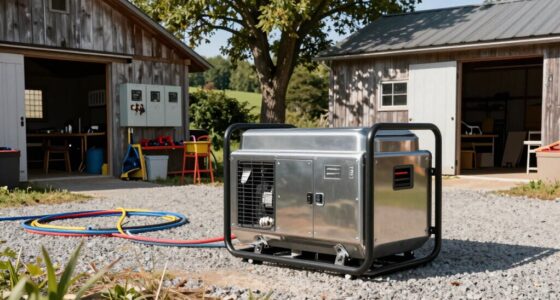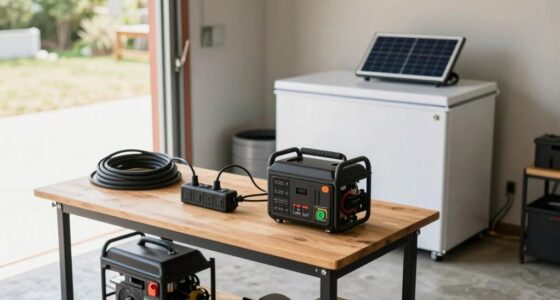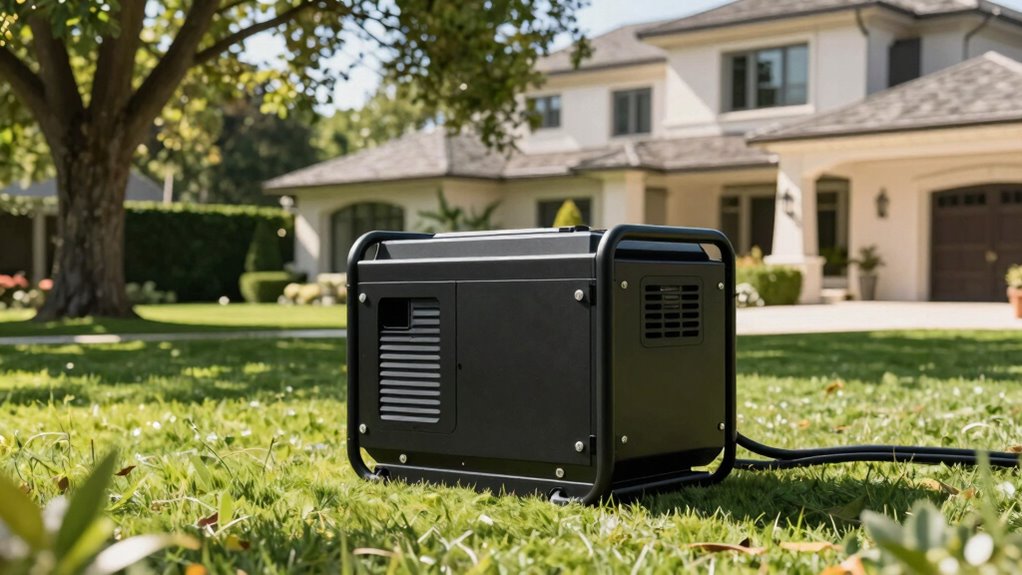
Finding the right backup generator for a large home means balancing power capacity, reliability, and ease of use. The Generac 12,500 Starting Watt Tri-Fuel Portable Generator stands out for its strong performance and fuel flexibility, making it a versatile choice. The Westinghouse 14500 Peak Watt Tri-Fuel Generator is ideal for those prioritizing high wattage and remote start convenience. However, larger generators often come with higher costs and complex installation needs, so buyers must weigh capacity against budget and setup complexity. Keep reading for a detailed breakdown of the best options to help you make an informed decision.

Get backup power and energy gear delivered free with Prime
- Fast, free delivery on millions of items
- Prime Video, Amazon Music and more included
- Member-only deals all year
Complete the kit


Key Takeaways
- High wattage capacity is essential for powering a large home’s entire electrical load during outages.
- Tri-fuel options provide greater versatility, allowing use of natural gas, propane, or gasoline depending on availability.
- Remote electric start enhances convenience but can add to the cost and complexity of installation.
- Portability is less critical for fixed home backup generators, but some models are portable for versatility.
- Safety features like CO sensors and transfer switches are vital for safe and compliant backup power systems.
| Generac 12,500 Starting Watt Tri-Fuel Portable Generator, Electric Start |  | Best Overall for Flexibility and Safety | Starting Watts: 12,500 | Running Watts: 9,500 | Fuel Tank Capacity: 7.5 gallons | VIEW ON AMAZON | See Our Full Breakdown |
| Westinghouse 13500 Peak Watt Tri-Fuel Portable Generator with Remote Electric Start |  | Best for Extended Power with Remote Convenience | Peak Watts: 13500 | Running Watts: 10500 | Fuel Tank Capacity: 9.5 gallons | VIEW ON AMAZON | See Our Full Breakdown |
| Oxseryn Power Equipment 4400 Watts Inverter Generator Gas Powered, Portable Open Frame Generator, Low Noise with ECO Mode, RV Ready, Emergency Home Backup |  | Best Compact and Quiet Backup for Smaller Homes or RVs | Peak Watts: 4400 | Running Watts: 3400 | Fuel Tank Capacity: 2 gallons | VIEW ON AMAZON | See Our Full Breakdown |
| Westinghouse 14500 Peak Watt Tri-Fuel Home Backup Portable Generator with Remote Electric Start |  | Best for Heavy-Duty Home Power and Electronics | Peak Watts: 14500 | Running Watts: 11500 | Fuel Tank Capacity: 9.5 gallons | VIEW ON AMAZON | See Our Full Breakdown |
| DuroStar DS13000MXT 13,000-Watt Tri Fuel Portable Generator with Remote Electric Start |  | Best for Whole-Home Backup with Safety Features | Power Output: 13,000 watts | Fuel Types: Gasoline, Propane, Natural Gas | Start Type: Remote Electric Start | VIEW ON AMAZON | See Our Full Breakdown |
| Westinghouse 6500 Watt Dual Fuel Portable Generator with Transfer Switch and CO Sensor |  | Best Overall for Versatile Emergency Power | Gasoline Watts: 5300 Running / 6500 Peak | Propane Watts: 4800 Running / 5800 Peak | Fuel Tank Capacity: 4.7 gallons | VIEW ON AMAZON | See Our Full Breakdown |
| Westinghouse 12500 Watt Dual Fuel Portable Generator with Remote Electric Start |  | Best for Heavy-Duty Backup and Job Sites | Peak Watts: 12500 | Running Watts: 9500 (Gasoline), 8500 (Propane) | Fuel Tank Capacity: 6.6 gallons | VIEW ON AMAZON | See Our Full Breakdown |
| Oxseryn 4400-Watts Inverter Generator, Gas Powered, Emergency Home Backup, RV Ready 30A Outlet |  | Best for Compact, Quiet Emergency Power | Wattage: 4400 watts | Fuel Type: Gasoline | Tank Volume: 2 gallons | VIEW ON AMAZON | See Our Full Breakdown |
| Oxseryn 5000-Watts Portable Inverter Generator, Gas Generator for Home Backup, RV Ready, ECO Mode, 60 lbs |  | Best for Moderate Power with Portability | Power Output: 5000 peak / 4000 rated watts | Fuel Tank Capacity: 2 gallons | Runtime: Up to 6 hours at 50% load | VIEW ON AMAZON | See Our Full Breakdown |
| Westinghouse 14500 Peak Watt Dual Fuel Portable Generator with Remote Electric Start | 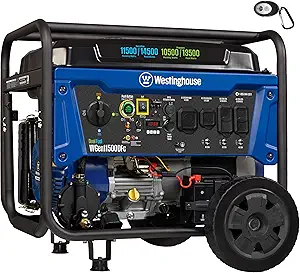 | Best for Large-Scale Home Backup and Extended Runtime | Peak Watts: 14500 | Running Watts: 11500 (gasoline), 10500 (propane) | Fuel Tank Capacity: 9.5 gallons | VIEW ON AMAZON | See Our Full Breakdown |
| backup generators for large home | Fuel Tank Capacity | Running Watts | Runtime | Peak Watts |
|---|---|---|---|---|
| Generac 12,500 Starting Watt T | 7.5 gallons | 9,500 | — | — |
| Westinghouse 13500 Peak Watt T | 9.5 gallons | 10500 | Up to 19 hours | 13500 |
| Oxseryn Power Equipment 4400 W | 2 gallons | 3400 | — | 4400 |
| Westinghouse 14500 Peak Watt T | 9.5 gallons | 11500 | Up to 19 hours | 14500 |
| DuroStar DS13000MXT 13,000-Wat | 9.5 gallons | — | Up to 19 hours | — |
| Westinghouse 6500 Watt Dual Fu | 4.7 gallons | — | — | — |
| Westinghouse 12500 Watt Dual F | 6.6 gallons | 9500 (Gasoline), 8500 (Propane) | — | 12500 |
| Oxseryn 4400-Watts Inverter Ge | — | — | Up to 14 hours | — |
| Oxseryn 5000-Watts Portable In | 2 gallons | — | Up to 6 hours at 50% load | — |
| Westinghouse 14500 Peak Watt D | 9.5 gallons | 11500 (gasoline), 10500 (propane) | Up to 19 hours | 14500 |
More Details on Our Top Picks
Generac 12,500 Starting Watt Tri-Fuel Portable Generator, Electric Start
The Generac GP9500E excels as a versatile backup solution thanks to its tri-fuel capability, allowing use with gasoline, propane, or natural gas. Compared with the Westinghouse 13500 Peak Watt generator, it offers similar runtime and fuel options but slightly less peak wattage, which may influence power capacity for the largest loads. Its automatic voltage regulation and CO sensing technology prioritize safety and stability, essential features for large home backup. The electric start and mobility features make it user-friendly, yet its weight of 219 lbs can be a drawback for those needing portability. This model is well-suited for homeowners who want reliable, multi-fuel operation with safety in mind, but less so for users needing a lightweight portable unit.Pros:- Fuel flexibility enables use with gasoline, propane, or natural gas
- Automatic voltage regulation and CO sensing enhance safety and stability
- Easy electric start with mobility features like wheels and folding handle
- Long runtime with a large 7.5-gallon fuel tank
Cons:- Heavy weight may require assistance for transportation
- Potentially high price point for budget-conscious buyers
- Limited to a 3-year residential warranty, which may be short for some
Best for: Large homeowners needing flexible, safe backup power with natural gas compatibility
Not ideal for: Users with limited strength or space who require a lightweight, easily movable generator
- Starting Watts:12,500
- Running Watts:9,500
- Fuel Tank Capacity:7.5 gallons
- Runtime at 50% load:9.5 hours
- Runtime at 25% load:14 hours
- Weight:219 lbs
Our verdict“This generator is best suited for large homes where safety, fuel versatility, and power stability are priorities, despite its weight and cost.”
Westinghouse 13500 Peak Watt Tri-Fuel Portable Generator with Remote Electric Start
The Westinghouse 13500 Peak Watt generator stands out for its impressive runtime of up to 19 hours and remote electric start, making it ideal for long outages. While it offers a slightly higher peak wattage than the Generac, it is also larger and heavier, which can limit portability. Its tri-fuel capability provides fuel flexibility, similar to the Generac, but it includes additional features like a digital hour meter and multiple outlets, including transfer switch and RV-ready options. The setup may require some assembly, and the size could be a challenge for those with limited storage space. This unit fits homeowners seeking extended runtime and remote operation, though it’s less suitable for those needing frequent portability.Pros:- Up to 19 hours of runtime on a full tank
- Remote electric start for quick operation
- Versatile tri-fuel capability
- Multiple outlets including transfer switch and RV-ready
Cons:- Relatively large and heavy, impacting mobility
- Initial setup may be somewhat complex
- Fuel odor may be noticeable after factory testing
Best for: Large households needing long-lasting backup power with remote start convenience
Not ideal for: Users with limited storage space or who prioritize lightweight, portable generators
- Peak Watts:13500
- Running Watts:10500
- Fuel Tank Capacity:9.5 gallons
- Runtime:Up to 19 hours
- Engine:500cc Westinghouse 4-Stroke OHV
- Outlets:Multiple including transfer switch and RV
Our verdict“Ideal for homeowners who prioritize long runtime and remote start features over portability and compactness.”
Oxseryn Power Equipment 4400 Watts Inverter Generator Gas Powered, Portable Open Frame Generator, Low Noise with ECO Mode, RV Ready, Emergency Home Backup
The Oxseryn 4400-watt inverter generator offers a surprisingly high output for its size, making it a strong contender for RV owners and small-to-medium home backup needs. Compared with larger models like the Westinghouse 14500, it sacrifices peak wattage for portability and quiet operation, under 72 dBA. Its low weight of 56 lbs makes it highly portable, perfect for users who need quick setup or occasional use. The runtime of 14 hours on a 2-gallon tank and ECO mode help maximize efficiency, although its power capacity may fall short for larger homes with multiple high-demand appliances. This makes it ideal for smaller homes or RV enthusiasts who want quiet, reliable power in a compact form, but less suitable for full-home backup in larger residences.Pros:- Lightweight and portable at just 56 lbs
- Low noise level under 72 dBA
- Long runtime of up to 14 hours with fuel gauge
- Low fuel consumption with ECO mode
Cons:- Limited peak wattage may not power large appliances
- Slight smell of gas upon arrival could be off-putting
- Requires initial setup and proper ventilation
Best for: Small households, RV owners, or those needing portable backup with low noise
Not ideal for: Large homes with high power demands or permanent backup needs
- Peak Watts:4400
- Running Watts:3400
- Fuel Tank Capacity:2 gallons
- Runtime at 25% load:14 hours
- Noise Level:Under 72 dBA
- Weight:56 lbs
Our verdict“Best suited for small homes, RVs, or emergency uses where portability and quiet operation are prioritized over sheer power.”
Westinghouse 14500 Peak Watt Tri-Fuel Home Backup Portable Generator with Remote Electric Start
The Westinghouse 14500 Peak Watt generator makes a strong case for powering large homes during outages, with its 11,500 running watts and remote electric start. It surpasses the Generac in peak wattage and offers multi-fuel flexibility, comparable to the DuroStar but with a more robust 550cc engine. The long runtime of up to 19 hours and advanced safety features make it suitable for sensitive electronics and major appliances. Its size and weight, however, can hinder portability, and setup requires some technical skill. This model is ideal for homeowners with high power demands who want reliability and safety, though it’s less suitable for those seeking a lightweight or portable unit.Pros:- High peak and running wattage suitable for whole-home backup
- Long runtime of up to 19 hours
- Remote electric start and safety features like CO alert
- Multiple fuel options for versatility
Cons:- Heavy and difficult to transport without assistance
- Complex setup may require technical knowledge
- Higher price due to advanced features
Best for: Large homes needing high-capacity power with remote start and multi-fuel flexibility
Not ideal for: Users who require frequent mobility or have limited space for storage
- Peak Watts:14500
- Running Watts:11500
- Fuel Tank Capacity:9.5 gallons
- Runtime:Up to 19 hours
- Engine:550cc 4-Stroke OHV
- Start Method:Remote Electric Start
Our verdict“Best for large households seeking powerful, long-lasting backup with safety and remote operation, despite its size and cost.”
DuroStar DS13000MXT 13,000-Watt Tri Fuel Portable Generator with Remote Electric Start
The DuroStar DS13000MXT delivers reliable power with 13,000 watts and versatile fuel options, making it a solid choice for large homes during outages. Its remote electric start adds convenience, and the built-in CO alert prioritizes safety. Compared with the Westinghouse models, it offers comparable power but may be slightly less refined in setup and features. Its weight and size make it less portable, so it’s better suited for stationary use rather than frequent transport. This generator fits homeowners who want a straightforward, high-capacity backup with safety features, but those seeking a lightweight or compact unit should consider alternatives.Pros:- Flexible fuel options (gasoline, propane, natural gas)
- High power output suitable for whole-home backup
- Remote electric start simplifies operation
- CO alert safety system
Cons:- Heavy and not easily moved
- Requires proper ventilation during use
- Potentially expensive for casual or infrequent use
Best for: Large households requiring robust, safe power backup with remote start
Not ideal for: Users who need portability or have limited storage space
- Power Output:13,000 watts
- Fuel Types:Gasoline, Propane, Natural Gas
- Start Type:Remote Electric Start
- Safety Features:CO Alert
- Fuel Tank Capacity:9.5 gallons
- Runtime:Up to 19 hours
Our verdict“A reliable, high-capacity backup generator suited for large homes, provided size and weight are manageable for the user.”
Westinghouse 6500 Watt Dual Fuel Portable Generator with Transfer Switch and CO Sensor
This model stands out for its dual fuel flexibility, allowing you to switch between gasoline and propane based on availability or cost, which is a significant advantage over single-fuel options like the Oxseryn 4400-Watt inverter. Its lengthy runtime of up to 14.5 hours on a full tank ensures sustained power during extended outages, surpassing smaller generators. The inclusion of a transfer switch-ready outlet makes it easier to connect to your home’s electrical system safely, and safety features like a CO sensor add peace of mind. However, the weight isn’t specified, which could make transportation tricky, and setup might require some familiarity. Compared with lighter inverter models, this generator trades portability for higher power capacity and safety features.
Pros:- Dual fuel capability offers flexibility in fuel choice
- Long runtime of up to 14.5 hours on a full tank
- Multiple outlets including transfer switch-ready and RV options
- Built-in safety features like CO sensor and low oil shutdown
Cons:- Weight not specified, may be heavy to transport
- Setup complexity could be challenging for less experienced users
Best for: Large households seeking reliable, versatile backup power with safety features and longer run times
Not ideal for: Owners prioritizing portability or needing a lightweight, easy-to-move generator for frequent relocation
- Gasoline Watts:5300 Running / 6500 Peak
- Propane Watts:4800 Running / 5800 Peak
- Fuel Tank Capacity:4.7 gallons
- Run Time:Up to 14.5 hours
- Engine:274cc 4-Stroke OHV
- Outlets:120V Duplex, RV-Ready TT-30R 30A, Transfer Switch Ready L14-30R 30A
Our verdict“This generator is best suited for large homes needing dependable, versatile backup power with safety features, accepting some setup complexity.”
Westinghouse 12500 Watt Dual Fuel Portable Generator with Remote Electric Start
This model makes sense for users who need substantial power, such as large homes or job sites, with its peak of 12,500 watts and 9,500 running watts on gasoline, outperforming smaller models like the Oxseryn 5000-Watt inverter. Its remote electric start offers convenience, especially during emergencies, and a 457cc engine promises durability. The runtime of around 12 hours on a full tank supports longer outages, but the weight isn’t specified, which could hinder mobility. Compared to inverter generators, this unit prioritizes raw power over noise levels, which can make it louder and less suitable for quiet settings. Its robust capacity and remote start make it a top choice for those who need serious backup power but are prepared for a heavier, less portable unit.
Pros:- High peak and running wattage suitable for large appliances
- Remote electric start adds convenience
- Long runtime of up to 12 hours on a full tank
- Multiple outlets, including transfer switch and RV options
Cons:- Potentially heavy and difficult to move
- No explicit price info, possibly expensive
Best for: Large households or contractors needing high wattage and remote operation for backup or worksite use
Not ideal for: Urban residents in quiet neighborhoods seeking a quiet, lightweight generator for occasional use
- Peak Watts:12500
- Running Watts:9500 (Gasoline), 8500 (Propane)
- Fuel Tank Capacity:6.6 gallons
- Run Time:Up to 12 hours
- Engine:457cc 4-Stroke OHV
- Outlets:GFCI 120V 5–20R, Transfer Switch Ready 120V L14-30R, RV Ready 120/240V 14–50R
Our verdict“This generator excels for large homes and job sites needing maximum power and remote start, with portability as a secondary concern.”
Oxseryn 4400-Watts Inverter Generator, Gas Powered, Emergency Home Backup, RV Ready 30A Outlet
This inverter generator offers a reliable 4400 peak watts and 3400 running watts, making it suitable for smaller homes or backup scenarios where noise and portability matter, unlike larger, heavier units like the Westinghouse 12500. Its inverter technology ensures clean, stable power ideal for sensitive electronics, and its lightweight design at 56 lbs makes it easy to move around or store. Runtime of up to 14 hours on just 2 gallons of fuel supports extended use, but it may produce a slight gas smell after shipping, which is normal. Compared to larger models, this generator sacrifices some power capacity for quiet operation and ease of handling, making it perfect for smaller homes or RV use where space and noise are concerns.
Pros:- Lightweight and portable at 56 lbs
- Inverter tech provides stable power for electronics
- Long runtime of up to 14 hours on 2 gallons
- RV-ready with 30A outlet
Cons:- Limited to 4400 peak watts, not suitable for high-demand appliances
- Slight gas smell possible after shipping
Best for: Small to medium homes or RV owners needing portable, quiet backup power
Not ideal for: Large homes requiring high wattage or long-term power during extended outages
- Wattage:4400 watts
- Fuel Type:Gasoline
- Tank Volume:2 gallons
- Runtime:Up to 14 hours
- Engine Power:Maximum 4.4 KW
- Output Wattage:3400 watts
Our verdict“This inverter generator is ideal for those needing quiet, portable backup power for smaller homes or RVs, with a focus on stability and ease of use.”
Oxseryn 5000-Watts Portable Inverter Generator, Gas Generator for Home Backup, RV Ready, ECO Mode, 60 lbs
This generator offers 5000 peak watts and 4000 rated watts, bridging the gap between smaller inverter units and larger backup generators like the Westinghouse 14500. Its 60-pound frame makes it manageable for most users, and the clean power output suits sensitive electronics, similar to the Oxseryn 4400. While its runtime of up to 6 hours at half load is less than larger models, the eco mode helps extend fuel efficiency, and its compact design makes it suitable for outdoor activities and emergency use. Compared with larger, less portable units, this generator is a practical choice for those who want reliable power without the bulk, though it doesn’t support as long a runtime or as high a wattage for very large appliances.
Pros:- Moderate 5000 peak and 4000 rated watts, versatile for various needs
- Relatively lightweight at 60 lbs for portability
- Clean power output safe for sensitive electronics
- Eco mode improves fuel efficiency
Cons:- Runtime limited to about 6 hours at half load
- Limited wattage for very high-demand appliances
Best for: Homeowners or outdoor enthusiasts needing portable, reliable power with moderate capacity
Not ideal for: Large homes in extended outage scenarios or those requiring extensive power capacity
- Power Output:5000 peak / 4000 rated watts
- Fuel Tank Capacity:2 gallons
- Runtime:Up to 6 hours at 50% load
- Noise Level:70dB at 23 feet
- Weight:60 lbs
- Outlet:30A RV-ready outlet
Our verdict“This inverter generator strikes a balance between portability and power, best suited for moderate backup needs and outdoor use.”
Westinghouse 14500 Peak Watt Dual Fuel Portable Generator with Remote Electric Start
This generator provides an impressive 14,500 peak watts and 11,500 running watts on gasoline, making it the top choice for large homes or demanding outdoor applications. Its 9.5-gallon tank supports up to 19 hours of runtime, far exceeding most others, and the remote electric start adds convenience during emergencies. Compared with the Westinghouse 12500, it offers more power and longer runtime, though it is also heavier and more cumbersome to move. Its low THD makes it suitable for sensitive electronics, but the size and weight may limit mobility for some users. This model is ideal for situations where maximum power and runtime are essential, accepting some logistical challenges in transport.
Pros:- Highest power output among reviewed models
- Long runtime of up to 19 hours on a large fuel tank
- Dual fuel capability for flexibility
- Low THD safe for sensitive electronics
Cons:- Heavy and difficult to transport
- Potentially loud during operation
Best for: Large households, campsites, or job sites needing maximum power and long operational hours
Not ideal for: Urban residents who need a lightweight or portable unit for infrequent use
- Peak Watts:14500
- Running Watts:11500 (gasoline), 10500 (propane)
- Fuel Tank Capacity:9.5 gallons
- Runtime:Up to 19 hours
- Engine:550cc 4-Stroke OHV Westinghouse
- Start Type:Remote Electric Start
Our verdict“This generator is best for those who need maximum power and extended runtime, and are willing to handle the size and weight for critical backup needs.”

How We Picked
The products in this roundup were chosen based on their power output, fuel versatility, ease of use, durability, and safety features. Generators capable of handling the high energy needs of large homes were prioritized, with a focus on models that offer reliable startup and operation in emergency situations. We also considered user convenience features like remote start, noise levels, and safety sensors. To ensure value, models with good build quality at reasonable prices were favored, while premium options with advanced features made the cut for those willing to invest more. The ranking reflects a balance of performance, usability, and overall reliability for large home backup needs.| backup generators for large home | Runtime |
|---|---|
| Generac 12,500 Starting Watt T | — |
| Westinghouse 13500 Peak Watt T | Up to 19 hours |
| Oxseryn Power Equipment 4400 W | — |
| Westinghouse 14500 Peak Watt T | Up to 19 hours |
| DuroStar DS13000MXT 13,000-Wat | Up to 19 hours |
| Westinghouse 6500 Watt Dual Fu | — |
| Westinghouse 12500 Watt Dual F | — |
| Oxseryn 4400-Watts Inverter Ge | Up to 14 hours |
| Oxseryn 5000-Watts Portable In | Up to 6 hours at 50% load |
| Westinghouse 14500 Peak Watt D | Up to 19 hours |
Factors to Consider When Choosing Backup Generators For Large Homes
Choosing a backup generator for a large home requires careful consideration of several critical factors. Beyond just wattage, you should evaluate fuel type, ease of use, safety features, and installation requirements. Making the right choice means understanding the tradeoffs involved—higher capacity often means higher costs and more complex setup, but it also guarantees more reliable power during outages. This section breaks down the key factors to keep in mind to help you select a generator that suits your home’s specific needs and budget.Power Capacity and Load Management
Assessing your home’s total electrical load is the first step. Large homes typically need generators that can produce 10,000 watts or more. Remember, it’s wise to oversize slightly to handle additional appliances or future expansion. Choosing a generator with enough capacity prevents overloads and ensures your critical systems stay operational. Keep in mind that very high wattage models tend to be more expensive and might require dedicated installation, so balancing capacity with cost is key.
Fuel Type and Availability
Tri-fuel generators offer the flexibility to run on natural gas, propane, or gasoline, which can be a major advantage if supplies fluctuate. Gasoline is readily available but less reliable in extended outages, while natural gas and propane are more stable but may require special connections or setup. Consider your local fuel infrastructure and storage capacity when choosing. The right fuel choice can significantly impact your generator’s reliability and operating costs over time.
Ease of Use and Safety Features
Features like remote electric start, automatic transfer switches, and user-friendly controls make operation smoother, especially during stressful outages. Safety features such as CO sensors, overload protection, and automatic shutdown are essential to prevent accidents and damage. For large homes, a generator with these features reduces the risk of misuse and helps ensure safety for all household members. Remember, ease of maintenance and clear instructions also contribute to long-term reliability.
Installation and Maintenance
Proper installation can be complex and often requires professional assistance, especially for large, permanent units connected to your home’s electrical system. Consider the space available for installation and whether you prefer a portable or permanently installed model. Regular maintenance is crucial for ensuring your generator runs smoothly when needed; choose models with accessible service points and straightforward maintenance routines. Skimping on installation or maintenance can lead to costly failures during outages.
Budget and Long-Term Value
High-capacity, feature-rich generators come with a higher upfront cost but can save money over time through better reliability and lower maintenance. Cheaper models may save initial expenses but could struggle with the power demands of a large home or require frequent repairs. Consider the total cost of ownership—including fuel, maintenance, and potential installation—when evaluating your options. Investing in a slightly more expensive, reliable model can provide peace of mind during extended outages.
Frequently Asked Questions
How much wattage do I need for a large home backup generator?
For a large home, a generator with at least 10,000 to 15,000 watts is typically necessary to power essential appliances and systems. You should calculate your home’s critical loads—such as refrigerators, heating systems, lighting, and communication devices—and add a buffer for future needs. Consulting an electrician for a detailed load calculation can help determine the appropriate capacity, ensuring you don’t under- or over-invest in power capacity.
Is a tri-fuel generator worth the extra cost for a large home?
Tri-fuel generators provide significant flexibility since you can switch between natural gas, propane, or gasoline depending on availability, which is especially useful during prolonged outages. While they tend to cost more upfront, this versatility can reduce the risk of running out of fuel and offer lower operating costs over time. For large homes where reliable backup power is critical, investing in a tri-fuel option often makes sense, but it’s worth balancing this against your budget and fuel infrastructure.
Can I install a large backup generator myself?
Installing a large backup generator, especially one connected to your home’s electrical system, typically requires professional expertise. Proper installation involves electrical wiring, fuel connections, and safety compliance, which are best handled by licensed electricians and technicians. Attempting a DIY setup can lead to safety hazards, code violations, and potential damage to your home. For peace of mind and safety, hiring experienced professionals is strongly recommended.
How often should I perform maintenance on my backup generator?
Regular maintenance is key to ensuring your generator functions properly when needed. Most manufacturers recommend inspecting and servicing your unit every 6 to 12 months, especially if it’s used infrequently. This includes checking fuel levels, oil changes, testing safety sensors, and running the generator under load periodically. Keeping a maintenance schedule helps prevent unexpected failures and extends the lifespan of your investment.
What safety features should I look for in a large home backup generator?
Safety features such as carbon monoxide sensors, automatic shutoff, overload protection, and automatic transfer switches are essential for safe operation. CO sensors detect dangerous fumes and shut down the generator to prevent poisoning. Automatic transfer switches ensure your home seamlessly switches to backup power without manual intervention, reducing the risk of electrical hazards. Prioritizing these safety features helps protect your household and ensures compliant operation during outages.
Conclusion
For most large homes, the Generac 12,500 Starting Watt Tri-Fuel Portable Generator offers a balanced mix of power, versatility, and reliability, making it the best overall choice. Those seeking the best value might consider models like the Westinghouse 12500 Watt Dual Fuel Generator for their combination of capacity and affordability. If you prefer premium features and maximum power, the Westinghouse 14500 Peak Watt Tri-Fuel Generator stands out for its high wattage and remote start. Beginners or homeowners with smaller budgets should look at inverter models like the Oxseryn 4400 Watts for simplicity and quieter operation. Ultimately, your choice depends on your specific power needs, budget, and safety preferences, but understanding these options helps you make a confident decision.
Halloween Picks
halloween
As an affiliate, we earn on qualifying purchases.