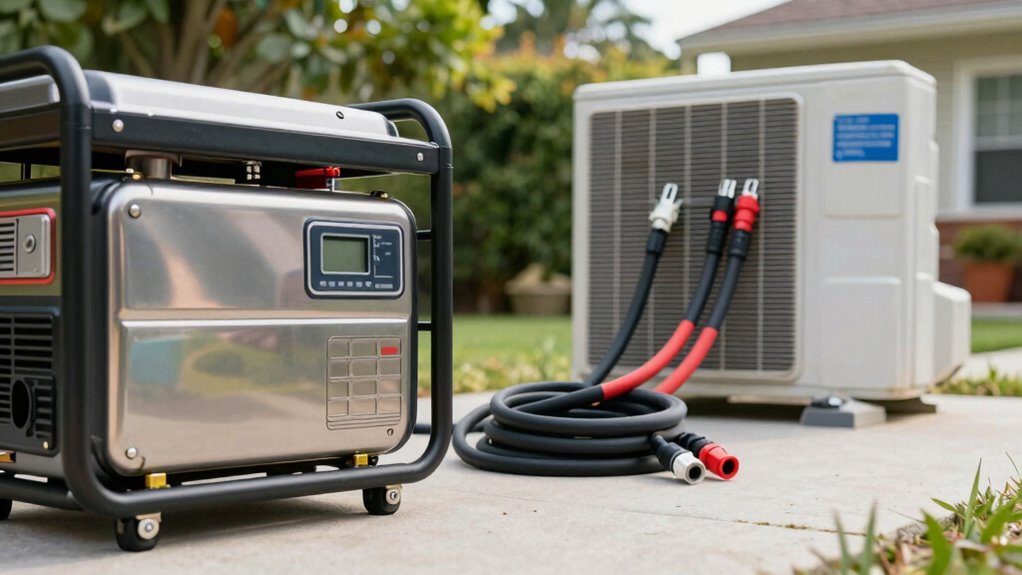

Before powering your HVAC with a generator, make sure it’s energy-efficient and has enough wattage to handle your system’s demands. Always operate outdoors and at least 20 feet away from openings to prevent carbon monoxide buildup. Use a qualified electrician to install a transfer switch, and test your setup regularly for safety and reliability. Pay attention to noise levels and fuel efficiency to keep costs down. If you keep these tips in mind, you’ll guarantee safe and effective backup power for your HVAC needs.

Get backup power and energy gear delivered free with Prime
- Fast, free delivery on millions of items
- Prime Video, Amazon Music and more included
- Member-only deals all year
Key Takeaways
- Ensure the generator has sufficient watt-hour capacity to handle HVAC power requirements safely.
- Use a qualified electrician to install a transfer switch for safe, code-compliant connection.
- Choose an energy-efficient inverter generator to provide clean, steady power and prevent equipment damage.
- Operate the generator outdoors at least 20 feet away from windows and vents to prevent carbon monoxide buildup.
- Regularly test and maintain the generator to ensure reliable performance during outages.
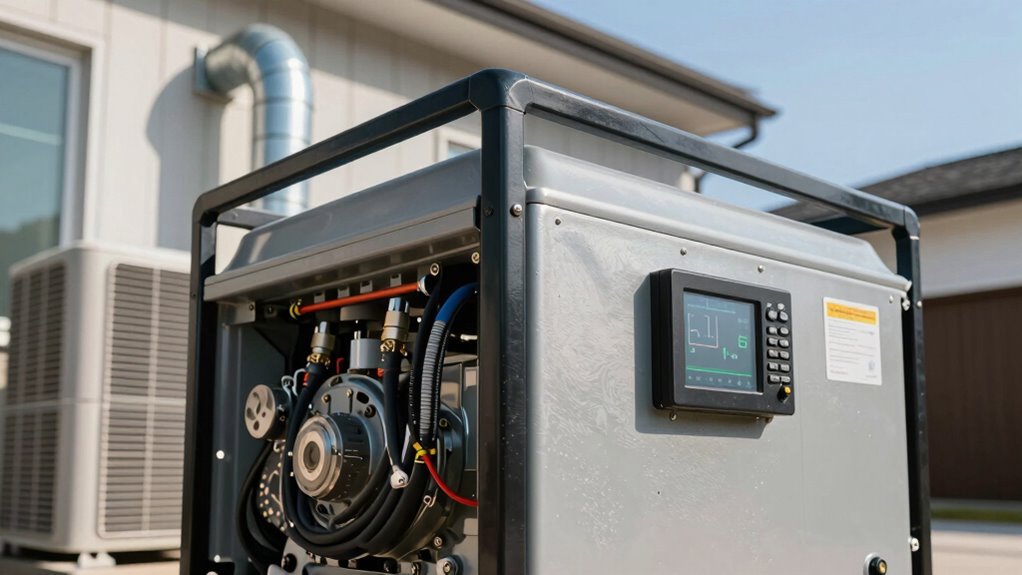
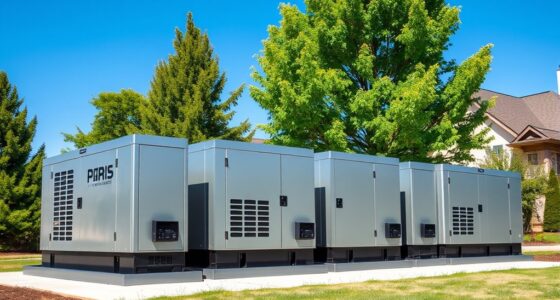
When it comes to ensuring your HVAC system runs smoothly during power outages, having a reliable generator is essential. But before you start powering your HVAC with a generator, it’s important to understand how to do it safely and efficiently. First, consider energy efficiency. Not all generators are created equal, and choosing an energy-efficient model can save you money on fuel and reduce wear on the generator itself. Look for units with features like automatic transfer switches and inverter technology, which help regulate power output and prevent overloads. Efficient generators minimize waste and ensure your HVAC system receives a steady, clean power supply, preventing potential damage caused by voltage fluctuations. Understanding the importance of power quality can help you select a generator that best fits your needs. Additionally, selecting a generator with body-based features can enhance durability and ease of maintenance. Incorporating watt-hour capacity considerations into your choice can further ensure your generator can handle your HVAC’s power demands during an outage. It’s also beneficial to consider fuel efficiency to maximize runtime and reduce overall operating costs. Moreover, paying attention to noise levels can help you operate your generator more comfortably and without disturbing your household or neighbors.
Choose energy-efficient generators with transfer switches and inverter tech for safe, steady HVAC power during outages.
Safety precautions should be your top priority when connecting a generator to your HVAC system. Always read the manufacturer’s instructions carefully, and never attempt to connect a generator directly to your home’s electrical wiring without a proper transfer switch installed by a qualified electrician. This device isolates your home’s wiring from the utility grid, preventing backfeed that could endanger utility workers or damage your equipment. Remember, running a generator indoors or in enclosed spaces is extremely dangerous due to carbon monoxide risks. Always operate your generator outdoors, at least 20 feet away from windows, doors, and vents, to prevent harmful gases from entering your home.
When powering your HVAC system, ensure all connections are secure and avoid overloading the generator. Check your HVAC’s power requirements and match them with your generator’s wattage capacity. It’s wise to start the generator first, then turn on your HVAC system, to prevent sudden surges that could damage both your equipment and the generator. Keep a fire extinguisher nearby and ensure your generator is well-maintained, with fresh oil and clean filters, to promote safe operation and energy efficiency.
Finally, plan ahead by having a backup plan in case your generator fails or runs out of fuel. Regularly test your setup in non-emergency situations to confirm everything works as intended. By prioritizing energy efficiency and safety precautions, you can keep your HVAC system running reliably during outages without risking your safety or wasting fuel. Proper planning and responsible usage will help you enjoy continuous comfort, even when the power’s out.
Frequently Asked Questions
Can I Run My Entire HVAC System on a Portable Generator?
You can run your entire HVAC system on a portable generator, but be aware of potential issues like generator noise and power fluctuations. These fluctuations might cause your system to shut down or operate inefficiently. To guarantee smooth operation, choose a generator with sufficient wattage, and consider a generator with noise reduction features. Regular maintenance can also help minimize noise and stabilize power delivery, protecting your HVAC system.
What Maintenance Is Required for an HVAC Generator?
Did you know regular maintenance can extend your HVAC generator’s lifespan by up to 30%? You should perform routine inspections, checking for oil leaks, worn belts, and loose connections. Keep the fuel tank clean and guarantee fuel efficiency by using fresh fuel and servicing filters. Regularly test run the generator to identify issues early, and follow manufacturer guidelines for scheduled maintenance to keep your system running smoothly during outages.
How Do I Determine the Right Generator Size for My HVAC?
You determine the right generator size for your HVAC by calculating its power needs, focusing on electrical compatibility. Check your system’s wattage requirements, including startup surges, and select a generator that exceeds this load. Also, consider noise levels—opt for quieter models if your space is sensitive. Ensuring proper size prevents overloads, while noise considerations keep your environment comfortable during operation.
Are There Safety Concerns When Powering HVAC With a Generator?
Yes, powering your HVAC with a generator involves safety concerns. You should follow emergency protocols, like installing proper transfer switches to prevent backfeeding, which can cause electrical hazards. Also, consider noise considerations, as generators can be loud and disturb your household or neighbors. Regular maintenance and correct installation are essential to guarantee safe operation, reducing risks of electrical fires or carbon monoxide poisoning. Always consult a professional for safe setup and operation.
How Does Fuel Type Affect Generator Performance for HVAC?
About 75% of generators run on gasoline, affecting HVAC performance. Fuel type impacts fuel efficiency and adherence to emission standards, which can influence your system’s reliability and environmental footprint. Gasoline generators often offer quick startup and portability but may produce more emissions, while propane or natural gas generators tend to be cleaner and more efficient over time. Your choice depends on balancing performance needs with environmental considerations.
Conclusion
Now, imagine the cool breeze of your HVAC gently kicking in, a comforting whisper against the quiet hum of your generator. With the right setup and awareness, you’ll keep your home cozy and your family safe, no matter the storm outside. Think of it as a symphony where each part plays in harmony—power, comfort, and peace of mind. Prepare wisely, and you’ll enjoy uninterrupted comfort, rain or shine, with confidence and ease.
Halloween Picks
halloween
As an affiliate, we earn on qualifying purchases.