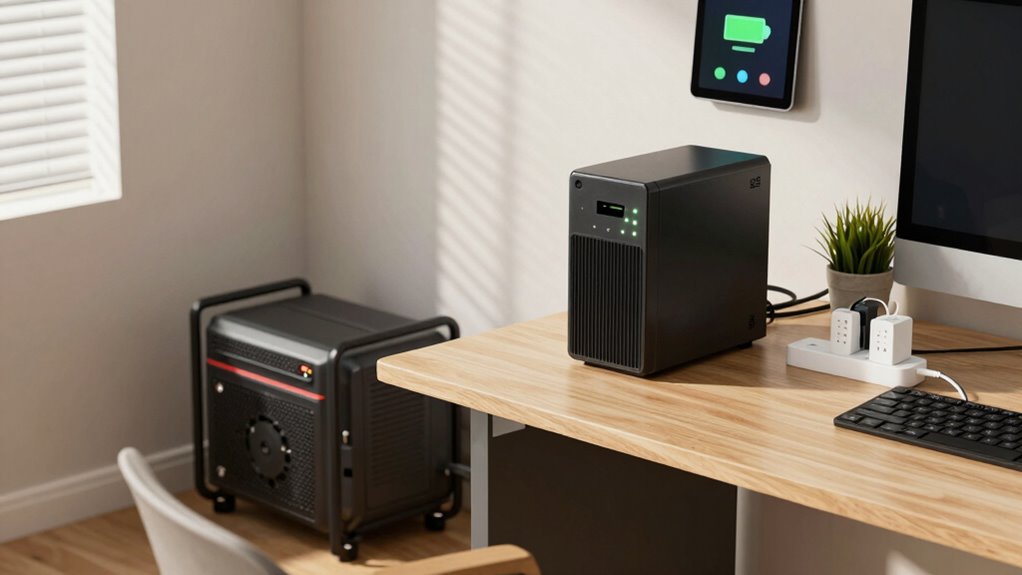

A backup power plan for your home office should include regularly maintained generators with fuel checks, system tests, and proactive part replacements to guarantee reliability. Incorporate home entertainment elements like lighting and sound to keep your workspace comfortable during outages. Make sure filters are properly sized for water and airflow, and manage electrical loads to avoid overloads. Use extension cords that meet safety standards. Keep these key steps in mind, and you’ll discover how to create a resilient setup that keeps you productive no matter what.

Get backup power and energy gear delivered free with Prime
- Fast, free delivery on millions of items
- Prime Video, Amazon Music and more included
- Member-only deals all year
Key Takeaways
- Ensure generator maintenance, including fuel checks, leak inspections, and system testing, for reliable emergency power.
- Incorporate home theater and comfort elements to maintain a productive and comfortable workspace during outages.
- Properly size filters and optimize flow rates to sustain water quality and system efficiency during backup operation.
- Manage electrical loads effectively, prioritizing essential devices and preventing overloads for continuous power.
- Use extension cords that meet safety standards and are rated for the required power load to ensure safe power delivery.
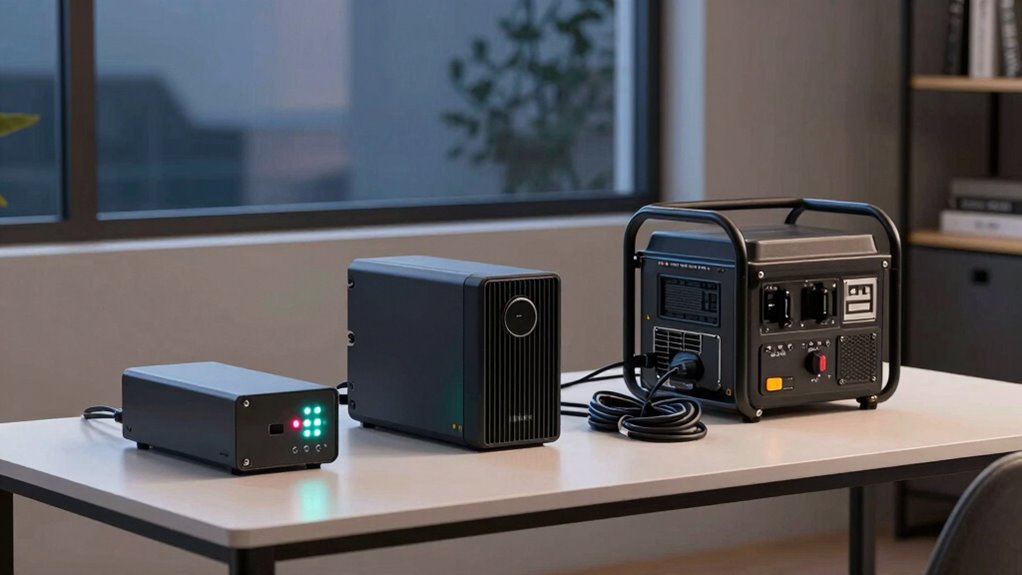
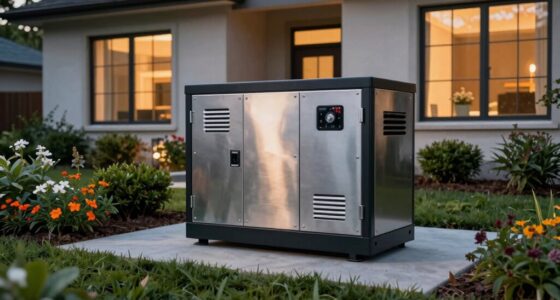
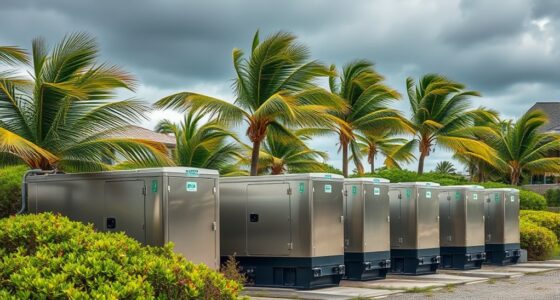
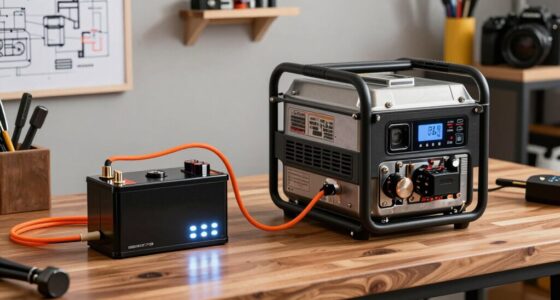
When your home office experiences a power outage, it can halt your productivity and disrupt important tasks. To avoid this, your backup power plan should be dependable and well-prepared. One of the most essential components is a generator, but simply having one isn’t enough—you need to prioritize generator maintenance. Regularly scheduled maintenance ensures your generator will start when you need it most, preventing unexpected failures. This includes checking fuel levels, inspecting for leaks, testing the system, and replacing parts as necessary. A well-maintained generator provides peace of mind, knowing it can power your devices during outages, especially if your work depends on it. Incorporating home theater fundamentals like sound, picture, and lighting into your planning can also help create a comfortable and efficient workspace during emergencies. Additionally, understanding the filter sizing/flow requirements for your backup systems can optimize performance and prevent bottlenecks during critical times. Proper electrical load management is also crucial to ensure your backup power system can handle the total power demand without overloads. Maintaining proper extension cord standards is also essential to ensure safe and reliable power delivery during outages or when using portable backup power sources.
Frequently Asked Questions
How Long Should a Backup Power Supply Last During Outages?
You should aim for a backup power supply that lasts at least 4 to 6 hours during outages. Consider its battery capacity to guarantee it can support your essential devices for the desired power duration. If you work on critical tasks, opt for a system with a larger capacity to extend runtime. This way, you’ll stay productive without interruptions, even when power is out longer than expected.
What Is the Cost Difference Between Various Backup Power Options?
Surprisingly, the cheapest backup power option might cost you more in the long run. Fuel types like gas generators are initially affordable but require ongoing fuel costs and maintenance, while battery lifespan for UPS systems can vary greatly, affecting replacement costs. You’ll find that investing in a reliable system pays off, as cheaper options often lead to higher expenses over time. So, consider the long-term costs before choosing your backup power plan.
Can Backup Power Plans Support High-Power Equipment Like Printers?
Yes, backup power plans can support high-power equipment like printers, but you need to guarantee printer compatibility with your backup system. Use surge protectors to shield your printer from power surges during outages. Consider an uninterruptible power supply (UPS) with sufficient wattage to handle your printer’s power needs, and verify that it offers surge protection. This way, your printer stays operational and protected during outages.
How Often Should Backup Power Systems Be Tested or Maintained?
You should test and maintain your backup power system regularly, ideally every three to six months. This keeps the Battery lifespan ideal and guarantees reliable performance during outages. Follow a Maintenance schedule that includes inspecting connections, testing the battery, and verifying backup functions. Regular upkeep prevents surprises and prolongs your system’s life, giving you peace of mind knowing your home office stays powered when needed.
Are There Any Safety Concerns With Using Certain Backup Power Sources?
Using backup power sources can be a double-edged sword if you’re not careful. Generator safety is vital—never run it indoors or near open windows to prevent carbon monoxide poisoning. For battery storage, guarantee proper ventilation and avoid overcharging to prevent fire risks. Always follow manufacturer instructions and regular maintenance routines. If you stay cautious, you’ll keep your home office powered safely, without the danger lurking like a shadow.
Conclusion
Having a solid backup power plan is like having a safety net beneath a tightrope walker—you’ll feel more confident knowing you’re protected when outages strike. By investing in a reliable generator or UPS, you keep your home office running smoothly, no matter what the power company throws your way. Stay prepared, and turn potential chaos into a mere flicker in the background. With the right backup, you’re always ready to keep working, come rain or shine.
Halloween Picks
halloween
As an affiliate, we earn on qualifying purchases.