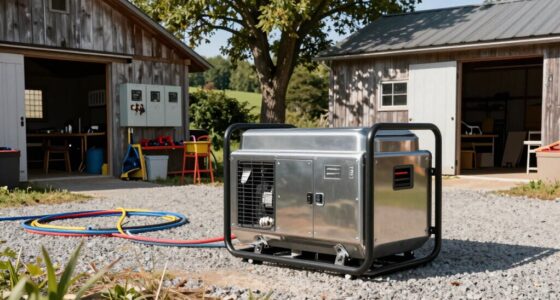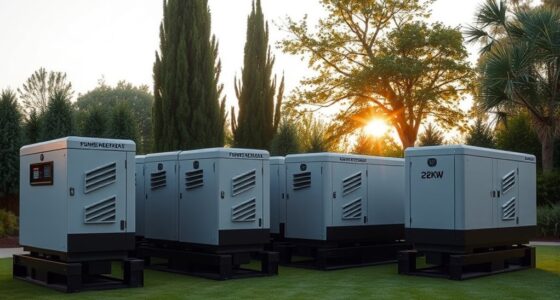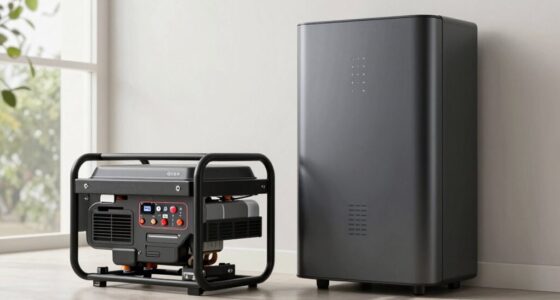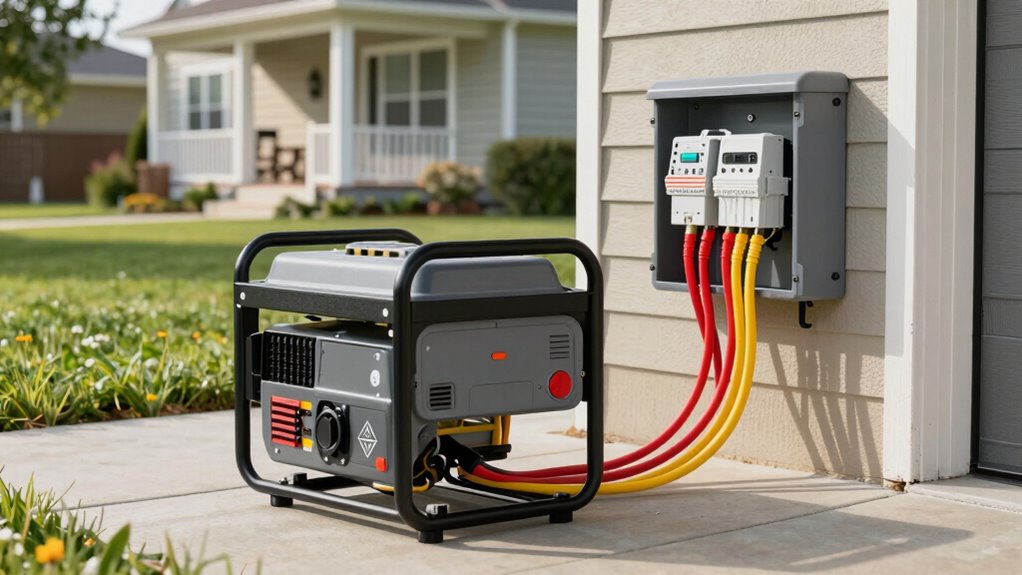

To pair a portable generator with your home backup circuits safely, first turn off your main circuit breaker and use a heavy-duty, outdoor-rated extension cord to connect the generator to a transfer switch or a dedicated power inlet box installed by a qualified electrician. Make certain the generator is grounded and runs smoothly before connecting. Avoid connecting directly to standard outlets and never run the generator inside. Follow proper safety, grounding, and installation guidelines for reliable backup power—more tips ahead.

Get backup power and energy gear delivered free — and shop member deals
- Fast, free delivery on millions of items
- Access to Prime Big Deal Days deals on October 6–7
- Prime Video, Amazon Music and more included
Key Takeaways
- Turn off the main house circuit breaker to prevent backfeeding before connecting the generator.
- Use a transfer switch or dedicated power inlet box installed by a qualified electrician.
- Connect the generator to the transfer switch or inlet box using an outdoor-rated, heavy-duty extension cord.
- Verify the generator runs smoothly and is properly grounded before powering backup circuits.
- Turn on the generator after all connections are secure, then power essential circuits through the transfer switch.
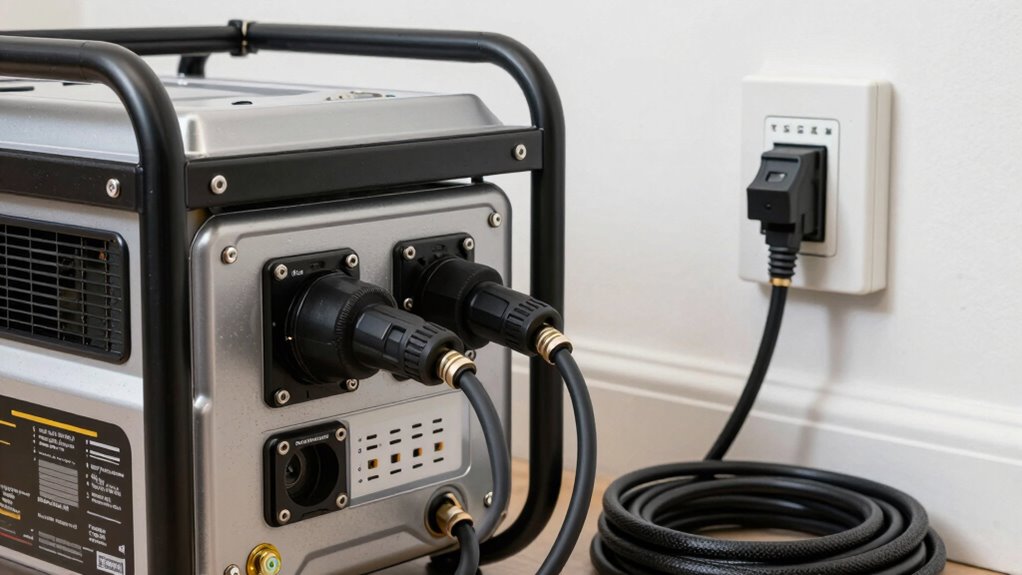
During a power outage, safely connecting your portable generator to your home backup circuits guarantees you have essential electricity without risking damage or safety hazards. Before attempting any connection, it’s imperative to follow proper safety precautions. Always read your generator’s manual thoroughly and verify your setup adheres to local electrical codes. This step helps prevent electrical shocks, fires, or damage to your appliances and home wiring. Remember, generator maintenance is critical; a well-maintained unit runs more efficiently and reduces the risk of malfunctions during emergencies. Regularly check for fuel leaks, test the transfer switch, and keep the generator clean and dry.
When you’re ready to connect, start by placing the generator outdoors in a well-ventilated area, away from windows and vents. Never run it inside your home or garage, as carbon monoxide buildup can be deadly. Once it’s running smoothly, turn off the main house circuit breaker before connecting the generator. This disconnect prevents backfeeding, which could electrocute utility workers or damage your generator. Use a heavy-duty, outdoor-rated extension cord to link the generator to a transfer switch or a dedicated power inlet box installed by a qualified electrician. This setup guarantees your backup circuits are safely isolated from the grid, allowing you to power essential appliances without risking electrical hazards. Additionally, ensuring your generator is properly grounded is essential for safety and optimal operation. Proper grounding is a key safety measure that should not be overlooked. Incorporating electrical safety standards into your setup further enhances protection and compliance.
Connecting your generator through a transfer switch is the safest and most efficient method. It allows you to selectively power circuits such as your refrigerator, lights, and communication devices. If you don’t have a transfer switch, consider installing one, or consult an electrician to set it up properly. Never connect your generator directly to standard wall outlets, as this can cause dangerous backfeed. Always verify that your transfer switch is compatible with your generator’s power output and voltage. Before turning on the generator, double-check all connections and verify your appliances are properly plugged in. Following proper generator safety guidelines is essential for preventing accidents and ensuring reliable operation. Proper installation procedures are crucial to maintain safety and effectiveness.
Throughout this process, keep safety precautions front and center. Use proper personal protective equipment, keep children and pets away from the generator, and never overload the unit. After power is restored, turn off the generator, disconnect the extension cord, and reset your main circuit breaker. Regular generator maintenance, like inspecting fuel levels and testing run times, guarantees your backup power source remains reliable when you need it most. Being aware of home electrical safety and following proper procedures helps prevent accidents and ensures a smooth power restoration process. By following these steps, you guarantee a safe, efficient, and effective connection of your portable generator to your home backup circuits.
Frequently Asked Questions
Can I Connect a Portable Generator Directly to My Home’s Main Panel?
You shouldn’t connect a portable generator directly to your home’s main panel, as it’s dangerous and can damage your system. Instead, use a transfer switch for safe connection. Regular generator maintenance guarantees it runs smoothly, and proper fuel storage keeps it ready when needed. Always follow safety guidelines and consult a professional for installation to avoid hazards and ensure reliable backup power during outages.
What Safety Precautions Should I Take During Generator Setup?
During generator setup, you should prioritize safety by regularly performing generator maintenance and guaranteeing fuel safety. Always read the manufacturer’s instructions before starting. Keep the generator outdoors in a well-ventilated area, away from windows and vents. Check fuel levels and store fuel safely, away from heat sources. Use proper grounding techniques, and never overload the generator. These precautions help prevent accidents, ensure reliable operation, and extend your generator’s lifespan.
How Do I Prevent Backfeeding Into the Utility Lines?
Think of your generator as a trusted friend who must not cross the line into the utility’s territory. To prevent backfeeding, always use a transfer switch, which acts like a gatekeeper, ensuring power flows safely. Regular generator maintenance keeps it reliable, while proper fuel management prevents interruptions or hazards. These steps act as safeguards, keeping your home and utility lines in harmony, avoiding dangerous backfeed situations.
Is It Necessary to Hire an Electrician for the Installation?
Yes, hiring an electrician is necessary for safe generator installation. Proper electrical wiring and generator safety are vital to prevent hazards such as backfeeding or electrical fires. An electrician guarantees your setup complies with local codes and safely integrates your portable generator with your home’s circuits. They have the expertise to install transfer switches and wiring correctly, reducing risks and guaranteeing reliable backup power during outages.
What Size Generator Do I Need for My Home’s Essential Circuits?
Think of your home’s essential circuits as the heart of your power needs—you’ll want a generator that beats in harmony with it. A 5,000 to 7,000-watt generator usually fits the bill, balancing fuel efficiency and noise levels. This size can comfortably run your fridge, lights, and essential appliances without overwhelming the system, ensuring your backup stays reliable without disturbing your peace.
Conclusion
Think of your home’s electrical system as a delicate dance, and your portable generator as the skilled partner guiding it. When you pair them correctly, you keep the rhythm steady and avoid missteps. Remember to follow all safety steps and use proper transfer switches. With the right setup, you’ll keep your home humming smoothly through any power outage, like a well-rehearsed performance that never misses a beat. Stay prepared and stay safe!
Fall Picks
fall essentials
As an affiliate, we earn on qualifying purchases.