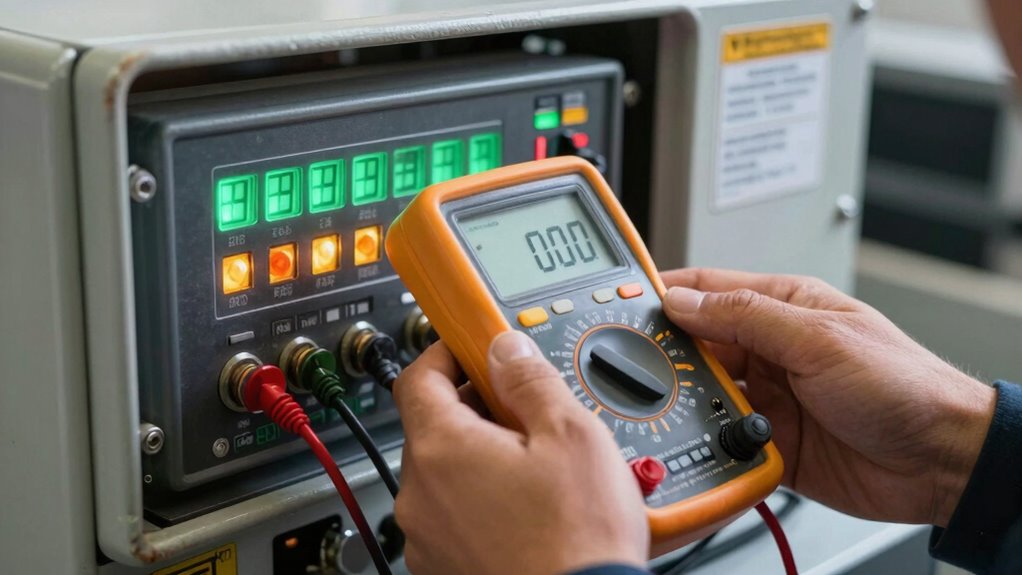

To calculate a sensible generator buffer margin, start by listing all devices you need to power, noting both starting and running wattages. Add 20-25% to your total load to account for unexpected surges and peak demands, adjusting this percentage if your equipment has larger startup surges. Keep an eye on fuel efficiency and operational costs, as bigger margins can increase expenses. Understanding your specific load and pattern helps refine your buffer, and exploring further will reveal how to optimize your setup.
Key Takeaways
- Estimate total starting and running wattages of all critical devices and add a safety margin.
- Add 20-25% to the total load to determine a practical buffer, adjusting based on surge potential.
- Consider equipment startup surges and peak load times when setting the buffer size.
- Evaluate fuel efficiency and operational costs to find a balance between buffer margin and expenses.
- Regularly monitor generator performance and load conditions to refine and optimize the buffer margin.
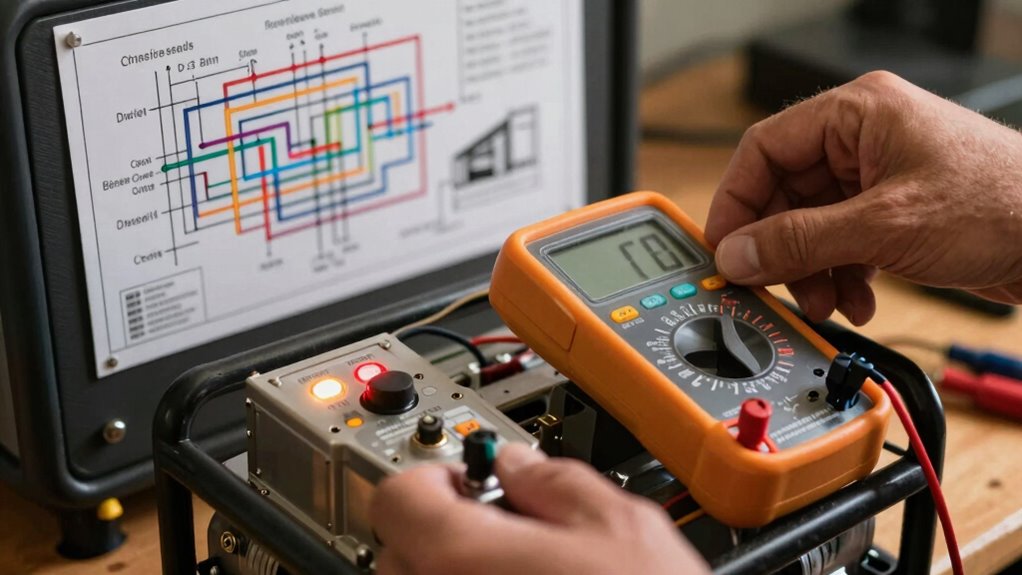
When selecting a generator, understanding how to calculate a sensible buffer margin is essential to guarantee reliable power without overspending. This buffer acts as a safety net, ensuring your generator can handle unexpected surges or additional loads without risking outages. To determine this margin, you need to consider your typical power needs and how much extra capacity you should build into your calculations. A well-calculated buffer helps you avoid underestimating your requirements, which could cause interruptions, or overestimating, which might lead to unnecessary expenses. Additionally, considering digital concepts can help optimize your generator’s performance and monitoring capabilities. Start by assessing your essential loads. Make a detailed list of the devices and systems you need to run, and note their starting and running wattages. Once you have this baseline, add a percentage to account for potential load increases. A common approach is to add 20-25% to your total estimated load, but this can vary depending on your specific circumstances. For example, if you operate equipment with high startup surges, you might want to add more to ensure your generator can handle these spikes without strain. Fuel efficiency plays a key role in determining your ideal buffer margin. A larger margin might provide more reliability, but it can also mean higher fuel consumption and operational costs. Conversely, a smaller margin might save money but increase the risk of overloads during peak demands. Striking a balance between fuel efficiency and load management is crucial—you want a generator that maximizes fuel economy during normal operation but still has enough capacity to handle unexpected loads. Proper load management, such as staggering startup times for multiple devices or prioritizing critical loads, can also reduce the need for a larger buffer, making your system more efficient overall. Regular maintenance and monitoring of your generator’s performance can also help you identify if your buffer is appropriately sized or if adjustments are necessary for optimal efficiency. Understanding the performance characteristics of your generator is essential for maintaining an effective buffer margin and ensuring long-term reliability. Incorporating load analysis techniques can further refine your buffer calculations and improve overall system resilience. Additionally, implementing load shedding strategies can help optimize your generator’s capacity during unexpected demand spikes. Monitoring fuel consumption rates can also provide valuable insights into how well your buffer margin aligns with your operational needs.

Porch Shield Waterproof Universal Generator Cover 38 x 28 x 30 inch - for Most Generators 5500-15000 Watt, Black
Compatible - More sizes for 5500w -15000w gas generator or inverter generator.
As an affiliate, we earn on qualifying purchases.
Frequently Asked Questions
What Are Common Mistakes When Setting Generator Buffer Margins?
One common mistake you make is setting the generator buffer margin too tight, risking overload during peak demands or power fluctuations. Another mistake is ignoring generator capacity limits, which can compromise safety protocols. You might also overlook the importance of accounting for future load increases, leading to insufficient buffer margins. Always consider safety protocols and guarantee the buffer margin allows for unexpected surges, maintaining system reliability and safety.
How Does Load Fluctuation Affect Buffer Margin Calculations?
Load fluctuation impacts buffer margin calculations because unpredictable load variability makes it harder to set accurate margins. When demand forecasting isn’t precise, your buffer needs to be larger to accommodate sudden spikes or drops. You should regularly review and adjust your buffer margin based on observed load patterns, ensuring your generator can handle fluctuations without risking outages or unnecessary fuel consumption. This proactive approach keeps your system reliable and efficient.
Can Battery Backup Influence Generator Buffer Sizing?
Battery backup can considerably influence generator buffer sizing, acting like a safety net in your power system. When you integrate batteries, they provide immediate backup during power fluctuations, reducing strain on your generator. This backup influence allows you to optimize buffer margins, ensuring your system remains stable and responsive under varying loads. By considering battery integration, you create a more resilient setup, ready to handle surprises without breaking a sweat.
How Often Should Buffer Margins Be Reevaluated?
You should reevaluate your generator buffer margins at least annually, especially if your fuel type or maintenance schedule changes. Regular assessments help confirm your buffer remains adequate for current demands and fuel efficiency. Keep an eye on usage patterns and fuel availability, adjusting your margins as needed. This proactive approach helps prevent unexpected outages, maintains peak performance, and aligns with your maintenance schedule, guaranteeing reliable power supply.
What Tools or Software Assist in Buffer Margin Calculations?
Power planners prefer precise, practical programs that promote system efficiency and simplify power demand assessments. Tools like MATLAB, Excel, and specialized power system software such as ETAP or DIgSILENT PowerFactory assist in buffer margin calculations. These programs analyze load variations, simulate system responses, and optimize generator buffer margins, ensuring reliable power supply without unnecessary overcapacity. They make managing power demand more manageable, accurate, and adaptable for evolving energy needs.

GenArmor Generator Covers While Running, 100% Waterproof Heavy Duty Tarps Generator Tent, Portable Outdoor Generator Enclosure for Most 4000w~13000w Generators, Black, Standard
100% Waterproof Protection: A patented innovation from GenArmor independent design lab, ensuring the safety of your generator covers...
As an affiliate, we earn on qualifying purchases.
Conclusion
By understanding your power needs, evaluating your generator’s capacity, and incorporating an appropriate buffer margin, you ensure reliable operation, prevent overloads, and extend your generator’s lifespan. Recognize the importance of regular assessments, adjust your buffer as your load fluctuates, and prioritize safety in every decision. Ultimately, a well-calculated buffer margin isn’t just a number; it’s a safeguard, a safeguard that guarantees peace of mind, efficiency, and ongoing performance for your power needs.
Porch Shield Waterproof Universal Generator Cover 32 x 24 x 24 inch - for Most Generators 5000-10000 Watt, Black
Compatible - More sizes for 5000w -10000w gas generator or inverter generator.
As an affiliate, we earn on qualifying purchases.

GPS GENERATOR PARTS SPECIALIST Tune Up Kit for Cummins Home Standby Generator 20KW RS20AC & RS20A Model GSBB
This kit includes all Onan OEM required hard parts to perform generator maintenance.
As an affiliate, we earn on qualifying purchases.