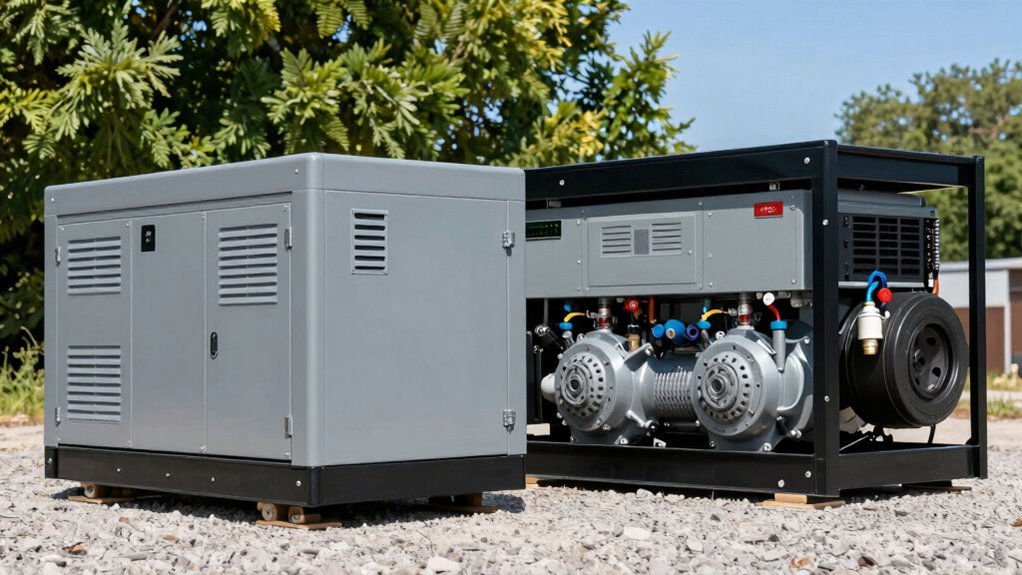

Tri fuel portable generators offer unmatched flexibility by running on gasoline, propane, or natural gas, making them ideal for emergency backup, camping, or job sites. The best models deliver reliable power with convenient startup options and safety features like CO sensors. The main tradeoffs involve balancing power output, portability, and price—more power often means heavier units, while compact models may sacrifice capacity. Continue reading for a detailed comparison of the top options to help you choose the right generator for your needs.

Get backup power and energy gear delivered free with Prime
- Fast, free delivery on millions of items
- Prime Video, Amazon Music and more included
- Member-only deals all year
Complete the kit


Key Takeaways
- The highest wattage models tend to be larger and heavier but provide more power for heavy-duty use.
- Inverter models stand out for quieter operation and cleaner power, ideal for sensitive electronics.
- Remote start features are common in premium picks, offering convenience but at a higher cost.
- CO sensors are increasingly standard, enhancing safety in portable generator designs.
- Price often correlates with features like remote start, higher wattage, and advanced safety options—balance your needs accordingly.
| Westinghouse 14500 Peak Watt Tri-Fuel Portable Generator with Remote Electric Start |  | Best Overall Tri-Fuel Power for Versatility and Power | Peak Watts: 14,500 | Running Watts: 11,500 (gasoline), 13,500 (propane), 12,000 (natural gas) | Engine: 550cc 4-Stroke OHV | VIEW ON AMAZON | See Our Full Breakdown |
| Westinghouse 8200 Peak Watt Tri-Fuel Portable Inverter Generator with Remote Electric Start and CO Sensor |  | Best for Quiet, Sensitive Electronics and Extended Use | Peak Wattage: 8200 | Running Wattage (Gasoline): 6600 | Fuel Tank Capacity: 3.9 gallons | VIEW ON AMAZON | See Our Full Breakdown |
| WEN 14,500-Watt Tri-Fuel Generator with Electric Start, CO Watchdog, and Wheel Kit |  | Best for Emergency Backup and Job Site Mobility | Surge Watts (Gasoline): 14,500 | Running Watts (Gasoline): 11,500 | Fuel Tank Capacity: 8.2 gallons | VIEW ON AMAZON | See Our Full Breakdown |
| Westinghouse 13500 Peak Watt Tri-Fuel Home Backup Portable Generator with Remote Electric Start |  | Best for Long-Run Home Backup Power | Peak Watts: 13500 | Running Watts: 10500 | Fuel Tank Capacity: 9.5 gallons | VIEW ON AMAZON | See Our Full Breakdown |
| Generac 12,500 Starting Watt Tri-Fuel Portable Generator, Electric Start |  | Best for Heavy-Duty Home and Job Site Power | Starting Watts: 12500 | Running Watts: 9500 | Fuel Tank Capacity: 7.5 gallons | VIEW ON AMAZON | See Our Full Breakdown |
| DuroStar DS13000MXT 13,000-Watt Tri Fuel Portable Generator with Remote Electric Start |  | Best Overall for Whole-Home Power and Flexibility | Power Output: 13,000 watts | Fuel Types: Gasoline, Propane, Natural Gas | Start Type: Remote Electric Start | VIEW ON AMAZON | See Our Full Breakdown |
| Westinghouse 12000 Peak Watt Tri-Fuel Portable Inverter Generator with Remote Start and Transfer Switch Ready |  | Best for Quiet, Long-Run Whole-Home Backup | Peak Wattage: 12,000W | Running Wattage: 9,000W (gasoline), 8,100W (propane), 7,200W (natural gas) | Fuel Tank Capacity: 7.9 gallons | VIEW ON AMAZON | See Our Full Breakdown |
| DuroMax XP13000HXT 13,000-Watt Tri Fuel Portable Generator with CO Alert, Black/Blue |  | Best for Power and Safety in Heavy-Duty Applications | Wattage: 13,000 watts | Fuel Type: Gasoline, Propane, Natural Gas | Engine Displacement: 500 cc | VIEW ON AMAZON | See Our Full Breakdown |
| Champion 6500-Watt Remote Start Tri Fuel Portable Inverter Generator |  | Best for RV and Home Backup with Quiet Operation | Wattage: 6,500 watts | Fuel Types: Natural gas, Propane, Gasoline | Run Time: Up to 18 hours | VIEW ON AMAZON | See Our Full Breakdown |
| Westinghouse 18000 Peak Watt Tri-Fuel Portable Generator with Remote Electric Start and CO Sensor |  | Best for Large Homes and Job Sites with Maximum Power | Peak Watts (Gas): 18,000 | Running Watts (Gas): 14,500 | Fuel Tank Capacity: 10.5 gallons | VIEW ON AMAZON | See Our Full Breakdown |
| tri fuel portable generator | Fuel Tank Capacity | Engine |
|---|---|---|
| Westinghouse 14500 Peak Watt T | 9.5 gallons | 550cc 4-Stroke OHV |
| Westinghouse 8200 Peak Watt Tr | 3.9 gallons | 298 cc 4-stroke OHV |
| WEN 14,500-Watt Tri-Fuel Gener | 8.2 gallons | 500cc 4-stroke OHV |
| Westinghouse 13500 Peak Watt T | 9.5 gallons | 500cc Westinghouse 4-Stroke OHV |
| Generac 12,500 Starting Watt T | 7.5 gallons | 500cc Generac OHV |
| DuroStar DS13000MXT 13,000-Wat | — | — |
| Westinghouse 12000 Peak Watt T | 7.9 gallons | — |
| DuroMax XP13000HXT 13,000-Watt | — | — |
| Champion 6500-Watt Remote Star | — | — |
| Westinghouse 18000 Peak Watt T | 10.5 gallons | 713cc V-Twin |
More Details on Our Top Picks
Westinghouse 14500 Peak Watt Tri-Fuel Portable Generator with Remote Electric Start
This model stands out for its impressive peak wattage of 14,500, making it ideal for heavy-duty backup or job-site use. Compared to the smaller Westinghouse iGen8200TFc, it offers significantly more power, though it sacrifices portability due to its weight and size. The large 9.5-gallon tank provides up to 19 hours of runtime, perfect for extended outages or demanding work shifts. Its low THD makes it safe for sensitive electronics, a feature not always present in high-wattage generators. The main tradeoff is its bulkiness, which limits mobility for casual users or those needing lightweight solutions. This pick makes the most sense for contractors or homeowners needing robust backup power where size isn’t a concern.
Pros:- Exceptional peak wattage for demanding applications
- Long runtime on gasoline for extended use
- Low THD safe for sensitive electronics
- Tri-fuel flexibility enhances fuel options
Cons:- Heavy and bulky, difficult to transport
- Residual factory odor may require airing out
Best for: Heavy-duty contractors or homeowners requiring high power output and extended runtime.
Not ideal for: Camping or portable use for small households, due to its weight and size.
- Peak Watts:14,500
- Running Watts:11,500 (gasoline), 13,500 (propane), 12,000 (natural gas)
- Engine:550cc 4-Stroke OHV
- Fuel Tank Capacity:9.5 gallons
- Runtime on Gasoline:up to 19 hours
- Start Type:Remote Electric Start
Our verdict“Best suited for users who prioritize power and runtime over portability and are prepared for its size.”
Westinghouse 8200 Peak Watt Tri-Fuel Portable Inverter Generator with Remote Electric Start and CO Sensor
This inverter generator provides 8,200 peak watts, making it a more portable option than the Westinghouse 14500. Its inverter technology ensures quieter operation and cleaner power, ideal for sensitive electronics—an advantage over larger, less refined models like the DuroMax XP13000HXT. With a 3.9-gallon tank, it offers up to 17 hours of runtime at lower loads, suitable for camping or home backup without noise disruption. However, its lower wattage limits heavy appliances or large power tools, making it less suitable for demanding job sites. The complexity of setup and higher price are additional considerations. This model is best for users prioritizing quiet operation, portability, and electronics safety.
Pros:- Quiet inverter technology for minimal noise
- Long run time at low loads
- Safe for sensitive electronics
- Tri-fuel flexibility for fuel choice
Cons:- Heavier and bulkier than smaller inverter units
- Higher price compared to basic generators
Best for: Campers, small households, or those needing quiet backup power for sensitive electronics.
Not ideal for: Heavy-duty construction sites or large appliance backup, due to limited wattage.
- Peak Wattage:8200
- Running Wattage (Gasoline):6600
- Fuel Tank Capacity:3.9 gallons
- Runtime at 25% load:up to 17 hours
- Engine:298 cc 4-stroke OHV
- CO Sensor:Yes
Our verdict“Ideal for users seeking quiet, clean power with portability and fuel flexibility for lighter applications.”
WEN 14,500-Watt Tri-Fuel Generator with Electric Start, CO Watchdog, and Wheel Kit
The WEN TF-1450X offers a high surge wattage of 14,500, matching the Westinghouse model, but adds a wheel kit and electric start for greater portability during emergency or job-site use. Its multi-fuel capability ensures versatility, yet it’s bulkier than inverter options, so it’s less suited for casual camping. The integrated CO Watchdog sensor enhances safety during prolonged use, a feature absent in many comparable models like the DuroStar DS13000MXT. The 8.2-gallon tank provides up to 12 hours of runtime at half load, but it demands regular maintenance. This generator strikes a balance between power, portability, and safety, making it suitable for those who need reliable backup power on the move.
Pros:- High surge wattage for demanding tools
- Wheel kit enhances portability
- CO Watchdog sensor improves safety
- Tri-fuel flexibility
Cons:- Heavy and somewhat bulky for frequent transport
- NG quick-connect hose sold separately
Best for: Homeowners and contractors needing portable, high-capacity power on job sites or during outages.
Not ideal for: Light camping or users seeking a compact, lightweight generator for casual outdoor use.
- Surge Watts (Gasoline):14,500
- Running Watts (Gasoline):11,500
- Fuel Tank Capacity:8.2 gallons
- Runtime at half load:up to 12 hours
- Engine:500cc 4-stroke OHV
- CO Watchdog:Yes
Our verdict“Best for active users who need robust, portable, tri-fuel power with safety features.”
Westinghouse 13500 Peak Watt Tri-Fuel Home Backup Portable Generator with Remote Electric Start
This generator offers 13,500 peak watts, slightly below the WEN and Westinghouse 14500 but still substantial for home backup. Its long runtime of up to 19 hours on a 9.5-gallon tank makes it a strong contender for extended outages, comparable to the Westinghouse 14500 but more suited for stationary residential use due to its size. The remote start feature adds convenience, especially during bad weather. While it shares many features with the Westinghouse 14500, it is somewhat less powerful, limiting its ability to run larger appliances simultaneously. Its bulk and weight render it less portable, making it better for static backup rather than frequent transport. This generator is best for homeowners prioritizing long runtime and reliable power for prolonged outages.
Pros:- Long runtime of up to 19 hours
- Remote electric start for convenience
- Tri-fuel capability for fuel choice
- Multiple outlets for various devices
Cons:- Heavy and less portable
- Residual odor may require airing out
Best for: Homeowners seeking long-lasting backup power with remote convenience.
Not ideal for: Frequent movers or outdoor enthusiasts needing lightweight, portable units.
- Peak Watts:13500
- Running Watts:10500
- Fuel Tank Capacity:9.5 gallons
- Runtime:Up to 19 hours
- Engine:500cc Westinghouse 4-Stroke OHV
- Remote Start:Yes
Our verdict“Ideal for residential users who need dependable, long-duration backup power with remote start features.”
Generac 12,500 Starting Watt Tri-Fuel Portable Generator, Electric Start
The Generac 12500W excels in providing high surge capacity, matching the power of larger units like the Westinghouse 14500 but with a focus on automatic voltage regulation and safety features like COsense technology. Its large 7.5-gallon tank supports runtime of up to 14 hours at 25% load, suitable for extended home backup or construction sites. At 219 pounds, it’s significantly heavy, requiring assistance to move, unlike lighter inverter models. Its multiple outlets and robust engine make it a strong choice for demanding environments, but the setup can be complex for casual users or those unfamiliar with such equipment. This generator is best for users needing reliable, high-capacity power with advanced safety features for serious applications.
Pros:- High surge wattage for heavy loads
- Automatic voltage regulation for stable power
- COsense safety technology
- Large fuel capacity for long runtimes
Cons:- Heavy and difficult to transport
- Complex setup may be challenging for beginners
Best for: Homeowners or contractors needing high surge power and safety features for demanding applications.
Not ideal for: Camping or casual outdoor use, due to weight and setup complexity.
- Starting Watts:12500
- Running Watts:9500
- Fuel Tank Capacity:7.5 gallons
- Runtime at 50% load:9.5 hours
- Weight:219 lbs
- Engine:500cc Generac OHV
Our verdict“Best suited for those needing durable, high-capacity power with safety features for demanding environments.”
DuroStar DS13000MXT 13,000-Watt Tri Fuel Portable Generator with Remote Electric Start
The DuroStar DS13000MXT stands out for its robust 13,000-watt output, making it capable of powering an entire home during outages—something the Westinghouse iGen12000TFc can’t match in sheer capacity. Its tri-fuel capability offers significant flexibility, allowing users to switch between gasoline, propane, or natural gas depending on availability, which is ideal for emergency preparedness. The remote electric start adds convenience, particularly when dealing with larger units, but this heaviness (due to its high wattage) makes transportation challenging. Compared to smaller models, this generator demands proper setup and maintenance but rewards users with reliable, full-home backup power. Its safety features like CO alert enhance peace of mind during extended use.
Pros:- High 13,000-watt output suitable for whole-home backup
- Tri-fuel flexibility for maximum fuel options
- Includes safety features like CO alert
Cons:- Heavy and difficult to transport
- Requires careful setup and maintenance
Best for: Homeowners seeking a powerful, flexible backup generator capable of running entire households during outages.
Not ideal for: Casual users or those needing portable, lightweight solutions for outdoor activities, due to its weight and size.
- Power Output:13,000 watts
- Fuel Types:Gasoline, Propane, Natural Gas
- Start Type:Remote Electric Start
- CO Alert:Yes
- Outlets:Multiple including transfer switch-ready 50 amp outlet
- Weight:Heavy
Our verdict“This generator is best suited for homeowners who prioritize power capacity and fuel versatility over portability.”
Westinghouse 12000 Peak Watt Tri-Fuel Portable Inverter Generator with Remote Start and Transfer Switch Ready
The Westinghouse iGen12000TFc is distinguished by its quiet operation at 64 dBA, making it suitable for neighborhood environments—unlike the louder Westinghouse 14500. Its peak wattage of 12,000 provides ample power for essential home circuits, and its long runtime of up to 19 hours at 25% load surpasses many competitors, such as the DuroMax XP13000HXT, which only offers around 8 hours. The inverter technology ensures clean power safe for sensitive electronics, and its transfer switch-ready outlets offer versatility for emergency use. However, its weight and size make it less portable for outdoor adventures, and setup can be complex for those unfamiliar with inverter generators.
Pros:- Quiet operation at 64 dBA suitable for residential areas
- Long runtime up to 19 hours at 25% load
- Clean power safe for sensitive electronics
Cons:- Heavy and bulky for easy portability
- Complex setup for beginners
Best for: Homeowners needing quiet, long-lasting power for sensitive electronics during outages or outdoor gatherings.
Not ideal for: Users seeking a lightweight, portable generator for frequent outdoor use or camping, due to its bulk and weight.
- Peak Wattage:12,000W
- Running Wattage:9,000W (gasoline), 8,100W (propane), 7,200W (natural gas)
- Fuel Tank Capacity:7.9 gallons
- Noise Level:64 dBA
- Run Time:Up to 19 hours
- Outlets:Multiple transfer switch-ready outlets
Our verdict“Ideal for those who prioritize quiet, reliable, and long-lasting backup power at home or in quiet outdoor settings.”
DuroMax XP13000HXT 13,000-Watt Tri Fuel Portable Generator with CO Alert, Black/Blue
The DuroMax XP13000HXT delivers a robust 13,000 watts with a sizable 500cc engine, making it a solid choice for both residential and commercial needs—outperforming smaller models like the Champion 6500-watt inverter in raw power. Its tri-fuel capability provides flexibility for various fuel sources, and the remote and push-start options add to convenience, especially during emergencies. The built-in CO alert system enhances safety, but this unit is large and heavy, requiring significant storage space and effort to transport. Runtime is limited to about 8 hours per tank, which might be insufficient for extended outages without refueling.
Pros:- High 13,000-watt output suitable for large loads
- Tri-fuel flexibility for maximum fuel options
- Remote and push-button start for ease of use
- CO alert enhances safety
Cons:- Heavy and large, challenging to move
- Limited runtime of around 8 hours per tank
Best for: Commercial operators or homeowners needing high wattage with safety features for ongoing backup power.
Not ideal for: Individuals seeking ultra-portable or lightweight generators for infrequent use, due to size and weight.
- Wattage:13,000 watts
- Fuel Type:Gasoline, Propane, Natural Gas
- Engine Displacement:500 cc
- Runtime:Approximately 8 hours
- Color:Blue/Black
- Additional Features:Digital display, remote start, CO alert
Our verdict“This generator fits best for users who need high power and safety features at the expense of portability and runtime.”
Champion 6500-Watt Remote Start Tri Fuel Portable Inverter Generator
The Champion 6500-Watt is tailored for users who need a quieter operation at just 64 dB, making it suitable for RVs, camping, and home backup—more portable than the larger Westinghouse units. Its tri-fuel capability offers good flexibility, and the remote start simplifies operation in tight spots. The runtime of 18 hours on a full tank surpasses many smaller inverter generators, providing extended use without frequent refueling. However, at full power, it may not handle the largest household loads like the 13,000-watt models do, and connecting hoses for natural gas setup can be cumbersome, especially for beginners.
Pros:- Quiet operation at 64 dB
- Long runtime of 18 hours
- Remote start for convenience
Cons:- Limited peak wattage compared to larger models
- Initial setup with hoses can be complicated
Best for: RVers and homeowners who need a quiet, reliable generator for moderate loads with long runtime.
Not ideal for: Those with high power demands or needing to run large appliances simultaneously, due to limited peak wattage.
- Wattage:6,500 watts
- Fuel Types:Natural gas, Propane, Gasoline
- Run Time:Up to 18 hours
- Noise Level:64 dB
- Hoses Included:Natural gas and propane hoses
- Warranty:3 years
Our verdict“This generator is ideal for users seeking a quiet, versatile power source for moderate loads in a portable form.”
Westinghouse 18000 Peak Watt Tri-Fuel Portable Generator with Remote Electric Start and CO Sensor
The Westinghouse WGen14500TFc offers impressive peak wattage at 18,000, making it a strong choice for large homes or job sites where power demand exceeds the capacity of many other models like the DuroStar DS13000MXT. Its tri-fuel flexibility coupled with remote electric start provides convenience, while the CO sensor adds safety during extended operation. Despite its power, it remains somewhat portable for its size, though its 74 dBA noise level is higher than smaller inverter options. Its large fuel tank and multiple outlets make it suitable for demanding applications, but setup can be complex and the weight substantial.
Pros:- Very high peak wattage for large power needs
- Tri-fuel capability for fuel flexibility
- Remote start and CO sensor for safety
Cons:- Heavy and bulky for portable use
- Higher noise level at 74 dBA
Best for: Large households, contractors, or users needing maximum power with safety features for demanding environments.
Not ideal for: Light-duty users or those seeking a lightweight, easy-to-move generator, due to its size and weight.
- Peak Watts (Gas):18,000
- Running Watts (Gas):14,500
- Fuel Tank Capacity:10.5 gallons
- Engine:713cc V-Twin
- Noise Level:74 dBA
- Outlets:Multiple including transfer switch-ready
Our verdict“This generator suits high-power applications where size and weight are secondary to performance and safety features.”

How We Picked
Our evaluation focused on performance, safety, usability, and value. We prioritized models with reliable power output across all three fuel types, considering how well they handle real-world demands. Ease of startup, noise levels, and safety features like CO sensors also played key roles. We ranked units that balance these factors with affordability and portability, ensuring each pick serves a distinct user need—from emergency backup to recreational use—without overwhelming the buyer with unnecessary features.Factors to Consider When Choosing Tri Fuel Portable Generators
Choosing a tri fuel portable generator requires weighing several factors to match your power needs and lifestyle. Beyond raw wattage, consider how easy it is to operate, the safety features included, and how portable the unit truly is. Understanding these broader considerations helps prevent common mistakes, such as overestimating your power needs or selecting a unit too heavy to transport easily.Power Output and Fuel Compatibility
Assess your typical power demands carefully. Higher wattage models provide more capacity but are often bulkier and more expensive. Consider whether you need enough power for large appliances or just essential electronics. Fuel versatility is a major advantage, so check that the generator runs reliably on all three fuels—gasoline, propane, and natural gas—and that the fuel conversion process is straightforward for your convenience.
Portability and Size
Weight and design influence how easily you can move or store your generator. Compact inverter models excel for camping or tailgating, while larger open-frame units suit home backup or construction sites. Beware of overly heavy models if you plan frequent transport; look for features like wheels and handles to ease movement. Remember, a larger capacity often means increased weight, so balance your portability needs with your power requirements.
Ease of Use and Starting Features
Features like electric start, remote control, and push-button ignition greatly enhance user convenience. In particular, remote start allows you to turn the unit on from a distance, which is helpful in emergency situations. Manual recoil starters are less convenient but can be more reliable in power outages, so evaluate your comfort with maintenance and startup procedures. Consider also the availability of user-friendly controls and clear indicator lights for safety and operation.
Safety Features and Certifications
Integrated safety features like CO sensors, overload protection, and transfer switch compatibility are vital for safe operation. CO sensors automatically shut down the generator if dangerous fumes are detected, preventing poisoning risks. Certifications from agencies like UL or CSA add confidence in safety standards. Investing in a model with these features can provide peace of mind, especially if the generator will be used regularly or around vulnerable individuals.
Budget and Long-Term Value
While it might be tempting to choose the cheapest option, consider the long-term costs of maintenance, fuel efficiency, and durability. Premium models often include better build quality, more safety features, and quieter operation, which can justify higher prices. Conversely, a budget model might suffice for occasional use but could require more repairs or replacements over time. Match your budget with your expected usage frequency to avoid overspending or underfunding your power needs.
Frequently Asked Questions
Can I run my tri fuel generator on natural gas at all times?
Many tri fuel generators can be permanently connected to natural gas lines, providing continuous power without the need to refuel. However, this typically requires a professional installation and a dedicated gas line. If you plan to use natural gas regularly, confirm that the model supports a direct hookup and that the connection is safe and compliant with local codes. In emergency scenarios, switching between fuels should also be straightforward to avoid delays or complications.
How loud are tri fuel generators compared to traditional gas-only models?
Tri fuel generators tend to be comparable in noise levels to standard models of similar wattage. Inverter versions are generally quieter, making them suitable for camping or residential use. Open-frame units, especially those with higher wattage, can be significantly louder—sometimes exceeding 70 decibels. If noise is a concern, opt for inverter models with noise-reduction features, and consider the environment where you’ll operate the generator.
Are tri fuel generators more expensive than single-fuel options?
Yes, tri fuel generators typically cost more upfront due to their added fuel versatility and often include advanced safety and convenience features. However, the flexibility to switch between fuels can save money over time, especially if you can access cheaper or more available fuel sources. Additionally, the increased safety and convenience features may justify the higher initial investment, particularly if you plan to use the generator frequently or in critical situations.
What maintenance is required for tri fuel generators?
Maintenance for tri fuel generators is similar to that of standard models but includes ensuring each fuel system remains clean and functional. Gasoline and propane tanks should be checked regularly for leaks, and fuel filters need periodic replacement. The natural gas hookup requires minimal maintenance but should be inspected for leaks or blockages. Regular oil changes, spark plug maintenance, and running the generator periodically help keep all fuel systems in good working order and extend the unit’s lifespan.
Can I use a tri fuel generator for sensitive electronics?
Many tri fuel inverter generators produce clean, stable power suitable for sensitive electronics like laptops and medical devices. If you opt for an inverter model, the power output is typically filtered to reduce voltage fluctuations and noise. It’s essential to verify that the specific model has inverter technology or a clean power output feature before connecting sensitive equipment. Using a surge protector can further safeguard your electronics against any residual power irregularities.
Conclusion
For those seeking the best overall performance and versatility, the Westinghouse 14500 Peak Watt Tri-Fuel Portable Generator stands out with its high wattage and remote start. If budget-conscious buyers want reliable power without breaking the bank, the WEN 14,500-Watt Tri-Fuel Generator offers excellent value. For users prioritizing safety and advanced features, models with CO sensors and remote start, like the Westinghouse 18000 Peak Watt, are ideal. Beginners or occasional users might prefer smaller inverter options, while contractors and emergency prepper should consider higher-capacity units with transfer switch compatibility. Your choice should align with your power needs, safety priorities, and mobility requirements.
As an affiliate, we earn on qualifying purchases.Fall Picks
fall essentials