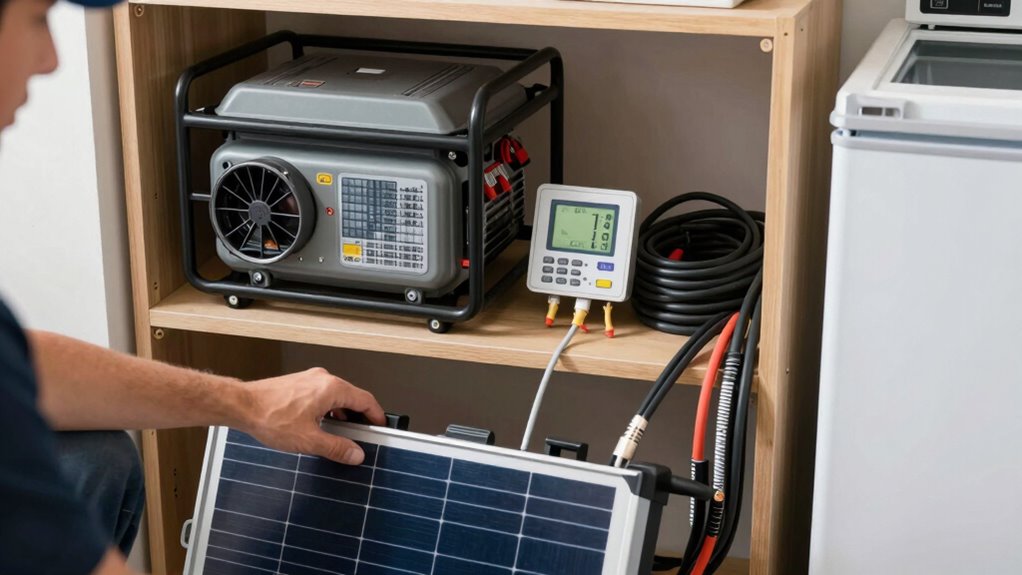
When selecting a portable power station for your freezer, reliability and capacity are key. The BLUETTI FridgePower stands out for its robust 2016Wh capacity, ideal for longer outages. The Anker SOLIX C2000 offers high power output with portability in mind, perfect for frequent use. However, tradeoffs often involve balancing size, weight, and price — more capacity usually means a larger, heavier unit. Continue reading for an in-depth comparison to help you find the best fit for your freezer needs.

Get backup power and energy gear delivered free with Prime
- Fast, free delivery on millions of items
- Prime Video, Amazon Music and more included
- Member-only deals all year
Complete the kit


Key Takeaways
- Higher capacity models like BLUETTI FridgePower and PECRON E3800 excel at long outages but are bulkier and more expensive.
- Lighter, more compact options such as Jackery Explorer 300 are suitable for short-term backup but may lack sufficient power for extended freezer use.
- Power output (W) and surge capacity are critical for starting freezer compressors — units with 1500W+ are recommended.
- Battery chemistry matters: LiFePO4 batteries offer longer lifespan and safety, making them a worthwhile investment.
- Price often correlates with capacity and features; balancing budget with capacity is essential for reliable freezer backup.
| BLUETTI AC180 Portable Power Station 1152Wh LiFePO4 Solar Generator |  | Best Overall for Versatile Emergency and Off-Grid Use | Battery Capacity: 1152 Wh | Battery Type: LiFePO4 | Output Power: 1800W (boostable to 2700W) | VIEW ON AMAZON | See Our Full Breakdown |
| BLUETTI FridgePower Portable Power Station, 2016Wh 1800W LFP Battery Backup |  | Best for Refrigerator and Household Appliance Backup | Capacity: 2016Wh | Power Output: 1800W | Standby Power Consumption: 4W | VIEW ON AMAZON | See Our Full Breakdown |
| PECRON Portable Power Station E3800 with 3840Wh LiFePO4 Battery Backup |  | Best for Long-Term High-Capacity Power and Off-Grid Use | Battery Type: LiFePO4 | Capacity: 3840Wh | Max Power Output: 4200W | VIEW ON AMAZON | See Our Full Breakdown |
| Anker SOLIX S2000 Portable Power Station, 2010Wh, 1500W |  | Best Lightweight Compact Power for Short-Term Use | Watt-hour capacity: 2010Wh | Output Wattage: 1500W | Item Weight: 35.7 pounds | VIEW ON AMAZON | See Our Full Breakdown |
| Jackery HomePower 3600 Plus Power Station, 3584Wh, 3600W AC Output |  | Best for Long-Lasting Home Backup with Easy Mobility | Capacity: 3584Wh | AC Output: 3600W | Battery Type: LFP | VIEW ON AMAZON | See Our Full Breakdown |
| BLUETTI Elite 300 Portable Power Station for RV & Home Backup 3014.4Wh |  | Best Overall for High-Capacity, Reliable Backup | Capacity: 3014.4Wh | Output Power: 2400W | Surge Power: 4800W | VIEW ON AMAZON | See Our Full Breakdown |
| Librids Portable Power Station 640Wh, 1200W Surge, Solar Generator with 4 AC Outlets |  | Best for Versatile, Sensitive Electronics Backup | Capacity: 640Wh | Surge Power: 1200W | Charging Time: 1.5 hours | VIEW ON AMAZON | See Our Full Breakdown |
| Jackery Explorer 300 Portable Power Station, 292Wh |  | Best Lightweight for Camping and Short Trips | Capacity: 292Wh | Weight: 7.5 lbs | Outlets: 2 AC, USB-C, USB-A, car port | VIEW ON AMAZON | See Our Full Breakdown |
| Anker SOLIX C1000 Gen 2 Portable Power Station |  | Best Compact High-Performance Backup | Capacity: 1,024Wh | Output Power: 2,000W | Recharge Time: 49 minutes with HyperFlash | VIEW ON AMAZON | See Our Full Breakdown |
| Anker SOLIX C2000 Gen 2 Portable Power Station, 2048Wh, 2400W, Camping |  | Best for Heavy-Duty Camping and Extended Power Needs | Capacity: 2048Wh | Rated Power: 2400W | Peak Power: 4000W | VIEW ON AMAZON | See Our Full Breakdown |
| portable power stations for freezer | Capacity |
|---|---|
| BLUETTI AC180 Portable Power S | — |
| BLUETTI FridgePower Portable P | 2016Wh |
| PECRON Portable Power Station | 3840Wh |
| Anker SOLIX S2000 Portable Pow | — |
| Jackery HomePower 3600 Plus Po | 3584Wh |
| BLUETTI Elite 300 Portable Pow | 3014.4Wh |
| Librids Portable Power Station | 640Wh |
| Jackery Explorer 300 Portable | 292Wh |
| Anker SOLIX C1000 Gen 2 Portab | 1,024Wh |
| Anker SOLIX C2000 Gen 2 Portab | 2048Wh |
More Details on Our Top Picks
BLUETTI AC180 Portable Power Station 1152Wh LiFePO4 Solar Generator
The BLUETTI AC180 stands out for its high capacity of 1152Wh paired with rapid 1-hour charging, making it suitable for both emergency backup and off-grid scenarios. Its 1800W output (boostable to 2700W via app) supports a variety of devices, including freezers, with reliable power delivery. Compared to smaller units like the Jackery Explorer 300, it offers significantly more capacity and power, though it weighs a hefty 37.4 pounds, which may limit portability. The ability to support solar charging enhances its appeal for remote use. However, its weight and the number of outlets (11) could be limiting factors for those needing ultra-lightweight or extensive device connections. This pick makes the most sense for users seeking a durable, versatile power station that can serve as an emergency UPS or off-grid power source without frequent recharging needs.
Pros:- Fast charging in just 1 hour, minimizing downtime
- High capacity supports multiple devices simultaneously
- Supports solar charging for off-grid use
- Reliable UPS with quick response time
Cons:- Relatively heavy at 37.4 pounds, reducing portability
- Limited to 11 outlets, which may be insufficient for extensive setups
Best for: Homeowners and campers who need reliable, high-capacity power for freezers and multiple devices in emergency or off-grid situations.
Not ideal for: Individuals seeking a super lightweight, ultra-portable unit for short-term, small-scale use, due to its weight and size.
- Battery Capacity:1152 Wh
- Battery Type:LiFePO4
- Output Power:1800W (boostable to 2700W)
- Charging Time:1 hour (AC input), 2.8-3.3 hours (solar)
- Number of Outlets:11
- Weight:37.4 pounds
Our verdict“This model suits users who need a powerful, versatile backup capable of handling large loads and multiple devices in emergencies or off-grid settings.”
BLUETTI FridgePower Portable Power Station, 2016Wh 1800W LFP Battery Backup
The BLUETTI FridgePower is designed specifically to backup household appliances like refrigerators, with a capacity of 2016Wh and a compact, slim profile of just 75mm thick. It offers smart UPS modes that switch seamlessly during outages, making it an excellent choice for continuous refrigerator operation. While it doesn’t match the massive capacity of larger units like the PECRON E3800, its slim design allows easy placement in tight kitchen spaces, and its expandable capacity up to 8064Wh offers future-proofing. Compared to the Jackery HomePower, it focuses more narrowly on household appliance backup rather than high-power, multi-device support. Its main tradeoff is that it’s limited to refrigerator and similar loads, so it isn’t suited for powering multiple or high-demand devices simultaneously.
Pros:- Ultra-slim design fits most kitchen spaces
- Supports expansion for increased capacity
- Smart UPS mode for seamless backup
- Low standby power consumption
Cons:- Limited to refrigerator and household appliance backup
- Requires installation space for mounting
Best for: Homeowners needing a dedicated, space-saving backup for refrigerators and essential household appliances during outages.
Not ideal for: Users seeking a multi-purpose power station for camping or high-power tools, due to its specialized focus and limited output capacity.
- Capacity:2016Wh
- Power Output:1800W
- Standby Power Consumption:4W
- Expandable Capacity:Up to 8064Wh
- Design Thickness:75mm
- Included Accessories:AC charging cable, leveling feet, mounting brackets
Our verdict“This unit is ideal for homeowners wanting a dedicated, space-efficient backup for refrigerators and essential appliances.”
PECRON Portable Power Station E3800 with 3840Wh LiFePO4 Battery Backup
The PECRON E3800 features a robust 3840Wh LiFePO4 battery with over 3500 cycles, making it a dependable choice for long-term backup and off-grid living. Its high power output of 4200W supports large appliances and multiple devices at once, which is advantageous over smaller units like the Anker SOLIX S2000 that cannot handle high-demand loads. Its smart controls, fast charging, and UPS support make it versatile for emergency use, camping, or remote locations. However, its large size and weight mean it’s less portable and more suitable for stationary setups. The need for compatible solar panels for optimal solar charging adds to the initial setup complexity and cost. It excels for users prioritizing capacity and longevity over portability.
Pros:- Long lifespan with over 3500 cycles
- High capacity supports multiple high-power devices
- Supports solar, AC, and car charging
- Smart controls with remote monitoring
Cons:- Large and heavy, limiting portability
- High initial cost compared to smaller units
Best for: Homesteaders, off-grid enthusiasts, or anyone needing a durable, high-capacity backup for multiple high-power devices over many years.
Not ideal for: Individuals seeking a compact, lightweight unit for short-term, portable use or quick trips, due to its size and weight.
- Battery Type:LiFePO4
- Capacity:3840Wh
- Max Power Output:4200W
- Number of AC Outlets:4
- Additional Outputs:3 DC 12V, 4 USB-A, 2 USB-C
- Input Charging:AC, Solar, Car
Our verdict“This power station is best suited for users who need a long-lasting, high-capacity solution for off-grid or home backup with multiple devices.”
Anker SOLIX S2000 Portable Power Station, 2010Wh, 1500W
The Anker SOLIX S2000 offers a solid 2010Wh capacity with a 1500W continuous output, making it suitable for powering essential appliances during outages or outdoor activities. Its lightweight design at just 35.7 pounds and compact size allow easy transport, unlike larger models such as the Jackery HomePower. While it lacks a dedicated 12V DC port, its multiple charging options—including solar input—make it versatile for quick trips or backup needs. Its runtime of up to 35 hours is sufficient for basic freezer use and small appliances, but the limited outlets (8) may restrict simultaneous device connections. This makes it best for users who prioritize portability over extensive capacity or outlet count.
Pros:- High capacity for a portable unit
- Lightweight and easy to carry
- Multiple recharging options including solar
- Powerful enough to run most essential appliances
Cons:- No 12V DC port, limiting some device compatibility
- Limited to 8 outlets, which may be insufficient for complex setups
Best for: Campers, emergency prepper, or homeowners needing a portable, reliable power source for limited appliances and freezers during outages.
Not ideal for: Users needing to power multiple high-demand devices or large appliances for extended periods, due to its limited outlets and runtime variability.
- Watt-hour capacity:2010Wh
- Output Wattage:1500W
- Item Weight:35.7 pounds
- Runtime:Up to 35 hours
- Additional Features:solar input, compact design
Our verdict“This model suits users who need a portable, reliable power source for short-term or emergency use with moderate device loads.”
Jackery HomePower 3600 Plus Power Station, 3584Wh, 3600W AC Output
The Jackery HomePower 3600 Plus offers a substantial 3584Wh capacity and 3600W AC output, making it one of the most capable portable options for home backup, especially during extended outages. Its high-temperature resistant LFP battery promises a lifespan of around 10 years and 6,000 charge cycles, surpassing many competitors like the PECRON E3800 in longevity. Despite its impressive capacity, its weight of 77.2 pounds and large dimensions limit portability—it’s more a stationary unit with wheels and a telescopic handle. The multiple charging options, including solar, make it flexible, but the size and weight require significant storage space and handling effort. This pick is perfect for users who prioritize long-term reliability and high power over portability.
Pros:- Large 3584Wh capacity for long-term backup
- High cycle life with 6,000 cycles
- Multiple charging options including solar and gas
- Wheels and telescopic handle for mobility
Cons:- Heavy at 77.2 pounds, challenging to move
- Large size requires ample storage space
Best for: Homeowners seeking a long-lasting, high-capacity backup that can be moved around easily during emergencies and is suitable for powering large appliances like freezers.
Not ideal for: People needing a lightweight, portable solution for short-term outdoor or camping use, due to its weight and size.
- Capacity:3584Wh
- AC Output:3600W
- Battery Type:LFP
- Cycle Life:6,000 cycles
- Weight:77.2 pounds
- Charging Options:AC, solar, gas generator
Our verdict“This unit is best suited for users who need a durable, high-capacity backup with mobility features for home or long-term off-grid use.”
BLUETTI Elite 300 Portable Power Station for RV & Home Backup 3014.4Wh
The BLUETTI Elite 300 stands out for its impressive 3014Wh capacity in a relatively compact size, making it a top choice for those needing reliable backup power for freezers during outages or RV trips. Compared to smaller options like the Jackery Explorer 300, it offers significantly more capacity, though it’s heavier and less portable. Its fast recharge time of 78 minutes from zero to 80% and support for AC, solar, and car charging ensure flexible recharging options. The inclusion of smart app control adds convenience for monitoring power levels remotely. However, its weight and size limit its portability, and the price may be higher, making it less suitable for casual or infrequent use. This pick is ideal for users seeking dependable, high-capacity power that balances size and functionality for backup or RV applications.
Pros:- High capacity of 3014Wh suitable for extended freezer operation
- Fast recharge time of 78 minutes with multiple charging options
- Smart app control for remote monitoring and management
- Compact for its capacity, nearly 59% smaller than traditional units
Cons:- Relatively heavy, which limits portability
- Higher price point may be a barrier for casual users
- Designed mainly for RV and backup use, not daily portable power
Best for: Homeowners or RV owners needing a high-capacity, reliable backup power source for freezers during outages or travel.
Not ideal for: People seeking a lightweight, ultra-portable station for short-term outdoor activities, due to its weight and size.
- Capacity:3014.4Wh
- Output Power:2400W
- Surge Power:4800W
- Recharging Time:78 minutes from 0% to 80%
- Recharging Methods:AC, solar, car charger
- Dimensions:Nearly 59% smaller than traditional large power stations
Our verdict“This is best suited for users who need a dependable, high-capacity power station for backup or RV use, despite its size and weight tradeoffs.”
Librids Portable Power Station 640Wh, 1200W Surge, Solar Generator with 4 AC Outlets
The Librids Portable Power Station offers a balanced mix of capacity and portability, with 640Wh and a 1200W surge, making it suitable for backup needs and camping. When compared to the Jackery Explorer 300, its higher surge capacity allows powering slightly larger or more sensitive devices. Its fast 1.5-hour charging time ensures quick readiness, and the LiFePO₄ battery with over 4000 cycles guarantees longevity. The pure sine wave inverter provides safe power for sensitive electronics, which is a key advantage over less refined inverters. However, its weight and bulk limit outdoor portability, and it’s only suitable for dry, indoor environments. This station is perfect for those who need reliable, clean power for sensitive devices during outages or indoor emergencies, but not for rugged outdoor adventures.
Pros:- Fast charging in just 1.5 hours with multiple outlets for versatility
- Long-lasting LiFePO₄ battery with over 4000 cycles
- Pure sine wave inverter ensures safe power for sensitive electronics
- Compact and durable design for indoor use
Cons:- Heavy and bulky, limiting portability outdoors
- Not suitable for outdoor, wet, or rugged conditions
- Limited to dry, well-ventilated environments
Best for: Indoor users needing a durable, safe power source for sensitive electronics during outages or indoor camping.
Not ideal for: Outdoor adventurers or wet environments, due to its weight, bulk, and indoor-only design.
- Capacity:640Wh
- Surge Power:1200W
- Charging Time:1.5 hours
- Battery Type:LiFePO₄
- Number of Outlets:4 AC, USB ports
- Warranty:5 years
Our verdict“This is ideal for users who need a reliable, safe power source for sensitive electronics indoors, accepting some bulk for longevity and safety.”
Jackery Explorer 300 Portable Power Station, 292Wh
The Jackery Explorer 300 is a lightweight, highly portable station weighing only 7.5 lbs, making it ideal for camping or short-term outdoor use. Its 292Wh capacity is suitable for powering small freezers or certain appliances in emergency scenarios, especially when portability is a priority. Compared to larger models like the Anker SOLIX C1000, it sacrifices capacity for ease of carrying. Its multiple outlets—including USB-C, USB-A, and a car port—offer versatile device compatibility. While solar charging is possible, it requires an additional panel, and its limited capacity means it won’t support extended freezer operation without frequent recharges. This device is best for casual users who want a portable, easy-to-carry option for brief outages or outdoor activities.
Pros:- Extremely lightweight at 7.5 lbs, with an integrated handle
- Versatile outlets including USB-C and car port
- Over 4,000 charge cycles ensure durability
- Fast solar charging with compatible panels
Cons:- Limited capacity of 292Wh restricts freezer runtime
- Solar panel not included, adding to total cost
- Not suitable for powering larger appliances for extended periods
Best for: Campers or outdoor enthusiasts needing a lightweight, portable power station for short-term freezer backup or device charging.
Not ideal for: Users needing long-duration power for large freezers or extended outages, due to its limited 292Wh capacity.
- Capacity:292Wh
- Weight:7.5 lbs
- Outlets:2 AC, USB-C, USB-A, car port
- Rated Power:300W
- Peak Surge:600W
- Charge Cycles:over 4,000
Our verdict“This is best for those prioritizing portability and short-term backup power, accepting limited freezer runtime.”
Anker SOLIX C1000 Gen 2 Portable Power Station
The Anker SOLIX C1000 Gen 2 offers a solid 1,024Wh capacity with 2,000W continuous power, making it suitable for emergency backup and camping that require more power than the smaller Jackery Explorer 300. Its rapid recharge time of 49 minutes with HyperFlash technology surpasses many competitors, including the BLUETTI Elite 300, in speed, though it’s slightly less capable in capacity. With 10 ports, it provides versatile options for multiple devices, and its compact size enhances portability. However, the exact weight isn’t specified, and its higher price may be a limiting factor for casual users. Its solar compatibility makes it suitable for off-grid use, though details on solar efficiency are limited. This station fits users needing a balance of speed, capacity, and portability for emergency or camping use.
Pros:- Fast recharge time of 49 minutes with HyperFlash tech
- High capacity of 1,024Wh with multiple ports for devices
- Compact and portable design for easy transport
- Solar recharging capability for off-grid use
Cons:- Price may be prohibitive for casual users
- Exact weight not specified, which might matter for portability
- Limited details on solar efficiency
Best for: Preppers or campers who need a versatile, fast-recharging station with enough capacity for moderate freezer backup.
Not ideal for: Users seeking the highest capacity or the lowest weight, as it balances both but doesn’t excel in either.
- Capacity:1,024Wh
- Output Power:2,000W
- Recharge Time:49 minutes with HyperFlash
- Ports:10 total
- Battery Cycles:4,000 cycles
- Recharging Time:1.8 hours via solar
Our verdict“This station suits users who need quick recharging, moderate capacity, and versatility for emergency or outdoor scenarios, with some cost and weight considerations.”
Anker SOLIX C2000 Gen 2 Portable Power Station, 2048Wh, 2400W, Camping
The Anker SOLIX C2000 Gen 2 provides a substantial 2,048Wh capacity with a peak output of 4,000W, making it suitable for powering multiple appliances and larger freezers during extended camping or emergencies. Compared to the BLUETTI Elite 300, it offers more capacity and higher peak power, at the expense of increased weight—41.7 lbs—making it less convenient for frequent portability. Its rapid 58-minute recharge from AC and multiple recharging options, including solar, support continuous use in off-grid scenarios. The ability to expand capacity up to 4kWh with additional batteries adds flexibility for long-term power needs. Its size and weight, however, mean it’s better suited for stationary use or vehicle transport rather than daily carrying. This model suits users needing robust, expandable power for demanding applications like large freezer operation in remote locations.
Pros:- High capacity of 2,048Wh with expansion options
- Fast 58-minute recharge and multiple recharging methods
- Peak power of 4,000W supports multiple appliances simultaneously
- Expandable capacity up to 4kWh with additional batteries
Cons:- Heavy weight of over 41 lbs limits portability
- Price likely higher, which may restrict casual buyers
- Bulkier size not suited for frequent hand-carrying
Best for: Heavy-duty campers or emergency preparedness enthusiasts requiring high capacity and power for multiple appliances, including freezers.
Not ideal for: Individuals seeking a lightweight, portable solution for short outdoor outings, due to its weight and size.
- Capacity:2048Wh
- Rated Power:2400W
- Peak Power:4000W
- Recharge Time:58 minutes
- Expansion Capacity:Up to 4kWh with additional batteries
- Recharging Methods:AC, solar, car alternator
Our verdict“This unit is best for those who need serious power, expansion potential, and can handle the weight for stationary or vehicle-based use, accepting portability limitations.”

How We Picked
The products in this roundup were selected based on their capacity, power output, battery chemistry, portability, and user reviews. We prioritized units that provide enough wattage to reliably start and run a freezer, especially during power outages. Durability and safety features like LiFePO4 batteries were also key factors, as freezers require consistent, long-term power. The ranking considers value for capacity, ease of use, and overall build quality, ensuring each option serves a specific need—whether for emergency backup or regular outdoor use.Factors to Consider When Choosing Portable Power Stations For Freezers
Choosing the right portable power station for a freezer involves understanding several important factors. Not all units are designed to handle the startup surge of a freezer compressor, so capacity and surge wattage are vital. Weight and size impact portability, especially if you need to move the unit frequently or store it easily. Battery chemistry influences lifespan and safety, with LiFePO4 offering advantages over traditional lithium-ion. Price varies widely, so balancing your budget with your power needs is essential. Lastly, consider whether you prefer solar compatibility or standard AC charging for versatile use.Capacity and Power Output
Freezers, especially larger models, demand high surge power to start. Look for a unit with at least 1500W surge capacity and a continuous power rating that exceeds your freezer’s running wattage. Capacity, measured in watt-hours (Wh), determines how long the freezer can run during an outage. Typically, a freezer consumes between 100-400W, so choose a power station that can sustain this for at least 12-24 hours on a full charge. Higher capacity units provide longer backup but tend to be heavier and more expensive.
Portability and Size
For frequent transport or outdoor use, size and weight are crucial considerations. Compact units like the Jackery Explorer 300 are easier to carry but may lack the capacity needed for prolonged outages. Larger models such as the PECRON E3800 or BLUETTI FridgePower offer more power but can be cumbersome to move. Think about where you’ll store the power station and whether portability outweighs capacity needs. If you plan to use it mainly at home, weight becomes less of an issue, allowing for larger, more capable units.
Battery Chemistry and Lifespan
LiFePO4 batteries dominate premium power stations due to their longer lifespan, safety, and thermal stability. They typically offer more charge cycles—up to 2000 or more—compared to traditional lithium-ion batteries. This attribute makes them more cost-effective over time, especially if you plan continuous or frequent use. Cheaper units with standard lithium batteries might need replacement sooner, adding to total costs. Evaluate your usage frequency and budget to decide whether investing in LiFePO4 technology makes sense.
Charging Options and Speed
Versatility in charging methods adds convenience. Solar compatibility allows for off-grid use and reduces reliance on grid power, but solar input capacity varies and impacts charging time. AC wall charging is generally faster and more reliable, especially during emergencies. Some units support fast charging, reducing downtime. Consider your typical use scenario: if you need quick recharges or plan to use solar panels regularly, prioritize units with higher input wattage and compatibility with portable solar arrays.
Price and Value
Cost can range significantly based on capacity, features, and brand reputation. Higher-capacity units with advanced battery chemistry and high surge wattage naturally command higher prices but offer better long-term reliability. Cheaper models may suffice for short-term or occasional use but could fall short during extended outages. Balance your budget with your expected power needs, and consider additional features like multiple outlets or solar compatibility that add value over time.
Frequently Asked Questions
Can I run my freezer continuously with a portable power station?
Yes, as long as the power station has sufficient capacity and surge wattage to handle the freezer’s startup requirements. Freezers typically need a surge capacity of around 1500W, so selecting a unit with at least this rating ensures reliable operation. Keep in mind that running a freezer continuously will drain the battery over time, so larger capacity units will provide longer backup durations. Always check the freezer’s wattage and compare it to the power station’s specs before purchasing.
How long will a portable power station run a typical freezer?
The runtime depends on the freezer’s wattage and the capacity of the power station. For example, a 150W freezer can run for approximately 20-30 hours on a 300Wh unit, but larger units like 2000Wh can sustain it for several days. To estimate your needs, multiply your freezer’s wattage by the desired backup hours, then divide by the power station’s capacity in Wh. Keep in mind that starting the freezer may require more power than running it, so choose a station with a higher surge capacity.
Is LiFePO4 technology worth paying extra for?
Absolutely. LiFePO4 batteries provide longer cycle life, enhanced safety, and better thermal stability compared to standard lithium-ion batteries. While they tend to cost more upfront, their extended lifespan often results in a lower total cost of ownership over time. If you plan to rely heavily on your power station for freezer backup or outdoor use, investing in LiFePO4 technology ensures more reliable and durable performance in the long run.
Should I prioritize capacity or portability for freezer backup?
This depends on your typical use scenario. If you’re primarily concerned with emergency backup at home, capacity and surge wattage take precedence, making larger, heavier units more suitable. Conversely, if you plan to take the power station on camping trips or outdoor events, portability becomes more critical, which might mean sacrificing some capacity for a lighter, more manageable unit. Finding a balance based on your expected usage will help ensure you get the most effective solution.
Can I use solar panels to recharge my portable power station during an outage?
Many modern power stations support solar charging, providing a renewable way to replenish power without grid access. The effectiveness depends on the solar input wattage and the size of your solar panel array. For prolonged outages, solar recharging can extend your backup capacity, but expect longer charging times compared to AC charging. Ensure the power station you choose is compatible with the solar panels you own or plan to buy, and consider panels with higher wattage for faster recharging.