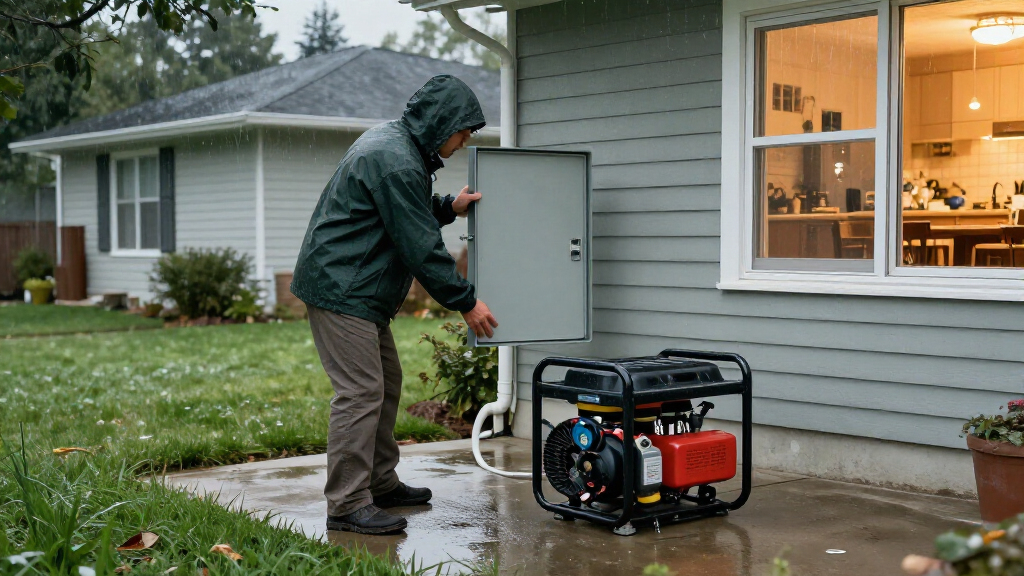
For most homeowners seeking automatic natural-gas backup, I rank the Generac 22 kW Whole-Home Standby Generator with a 200-Amp Transfer Switch as the best overall choice in this lineup, pairing substantial home coverage with a transfer switch. The Generac 14 kW models suit buyers aiming to cover essential circuits, while the 26 kW Generac is the higher-capacity pick for larger loads. The key tradeoff is between a permanently installed standby unit that starts automatically and a less costly, portable tri-fuel generator that needs setup and connection when an outage hits. Capacity, natural-gas supply, installation requirements, and monitoring all affect which option makes sense. Read on for the full comparison and a guide to matching a generator to your home.

Get backup power and energy gear delivered free with Prime
- Fast, free delivery on millions of items
- Prime Video, Amazon Music and more included
- Member-only deals all year
Complete the kit


Key Takeaways
- The lineup mixes two different solutions: Generac’s permanently installed standby models are designed for automatic backup, while the Westinghouse and Generac portable tri-fuel units require a suitable connection and user setup.
- The 22 kW Generac with a 200-Amp transfer switch stands out as the strongest all-around balance for buyers seeking whole-home coverage and an included transfer-switch component.
- Generac’s 10 kW and 14 kW standby options make a more targeted backup plan possible, but buyers need to decide which circuits and appliances matter before choosing a smaller capacity.
- More capacity is not automatically a better fit: the 24 kW and 26 kW models may suit larger loads, but require buyers to check electrical demand, gas supply, and installation needs.
- Cellular monitoring appears across many Generac models, so it is not the main differentiator here. Capacity, included transfer equipment, and standby versus portable operation separate the choices more clearly.
| Westinghouse 13500 Peak Watt Tri-Fuel Home Backup Portable Generator with Remote Electric Start |  | Best Portable Pick for Flexible Fuel | Peak wattage: 13,500 watts | Running wattage: 10,500 watts | Fuel types: Gasoline, propane, natural gas | VIEW LATEST PRICE | See Our Full Breakdown |
| Westinghouse WGen11500TFc Tri-Fuel Portable Generator with Remote Electric Start and CO Sensor |  | Best High-Output Portable Pick | Peak wattage: 14,500 watts | Running wattage: 11,500 watts | Fuel types: Gasoline, propane, natural gas | VIEW LATEST PRICE | See Our Full Breakdown |
| Generac GP9500E Tri-Fuel Portable Generator with Electric Start |  | Best Portable Pick for Easier Relocation | Running power: 9,500 watts | Starting power: 12,500 watts on gasoline | Fuel types: Gasoline, liquid propane, natural gas | VIEW LATEST PRICE | See Our Full Breakdown |
| Generac 24 kW Whole-Home Standby Generator with Cellular Monitoring |  | Best Premium Standby for Higher Capacity | Power output: 24 kW | Fuel types: Natural gas or LP | Voltage and frequency: 240 V, 60 Hz | VIEW LATEST PRICE | See Our Full Breakdown |
| Generac 22kW Whole-Home Standby Generator with 200-Amp Transfer Switch and Cellular Connectivity |  | Best Standby Package with Transfer Switch | Power output: 22 kW | Fuel types: Natural gas, liquefied petroleum gas | Transfer switch: 200 A | VIEW LATEST PRICE | See Our Full Breakdown |
| Generac 14kW Whole Home Generator, Transfer Switch & Cellular Capability | | Best for Built-In Transfer-Switch Convenience | Fuel: Dual-fuel; natural gas suitability is not specified in the supplied fuel details | Voltage: 240 volts | Transfer switch: Built-in 200 A transfer switch | VIEW LATEST PRICE | See Our Full Breakdown |
| Generac 26kW Whole Home Generator, Cellular Capability | | Best for High Household Load Capacity | Fuel: Natural gas or propane | Voltage: 240 volts | Frequency: 60 hertz | VIEW LATEST PRICE | See Our Full Breakdown |
| Westinghouse iGen8200TFc Tri-Fuel Portable Inverter Generator with Remote Electric Start |  | Best Portable Natural Gas Option | Fuel types: Gasoline, propane, and natural gas | Natural gas output: 6,560 peak watts; 5,280 running watts | Gasoline output: 8,200 peak watts; 6,600 running watts | VIEW LATEST PRICE | See Our Full Breakdown |
| Generac 10 kW Whole-Home Standby Generator with Cellular Monitoring |  | Best for Essential-Circuit Backup | Fuel: Natural gas or LP (propane) | Voltage: 120 volts | Ignition: Electronic | VIEW LATEST PRICE | See Our Full Breakdown |
| Generac 22 kW Whole-Home Standby Generator with Cellular Connectivity | | Best Mid-to-High-Capacity Standby Balance | Fuel: Natural gas; LP-ready | Voltage: 240 volts | Frequency: 60 hertz | VIEW LATEST PRICE | See Our Full Breakdown |
| Generac 18kW Whole Home Generator with Cellular Capability | | Best for Larger Homes | Fuel: Natural gas or propane | Voltage: 240 volts | Frequency: 60 Hz | VIEW LATEST PRICE | See Our Full Breakdown |
| Westinghouse WGen20000TFc Tri-Fuel Portable Generator, 28,000 Peak Watts, Remote Electric Start |  | Best High-Output Portable Tri-Fuel Pick | Peak output: 28,000 watts | Running output: 20,000 watts | Fuel: Gasoline, propane, or natural gas | VIEW LATEST PRICE | See Our Full Breakdown |
| Generac 14 kW Whole-Home Standby Generator with Cellular Connectivity | | Best for Connected 14 kW Backup | Fuel: Natural gas or liquid propane | Voltage: 240 volts | Frequency: 60 Hz | VIEW LATEST PRICE | See Our Full Breakdown |
| Honeywell 14kW Home Standby Generator – Automatic Backup Power for Whole Home, Runs on Natural Gas or Propane, Weather-Resistant Enclosure, Installation Pad Included |  | Best for Straightforward Installation Planning | Fuel: Natural gas or propane | Voltage: 120 volts | Frequency: 60 Hz | VIEW LATEST PRICE | See Our Full Breakdown |
| Generac 10kW Whole Home Generator, Transfer Switch & Cellular Capability |  | Best Lower-Capacity Standby Package | Fuel: Natural gas or LPG | Running wattage: 10,000 watts | Voltage: 120 volts | VIEW LATEST PRICE | See Our Full Breakdown |
| natural gas standby generator | Voltage | Warranty | Weight | Dimensions |
|---|---|---|---|---|
| Westinghouse 13500 Peak Watt T | 240 V | 3-year limited residential | — | — |
| Westinghouse WGen11500TFc Tri- | — | 3-year limited residential | — | — |
| Generac GP9500E Tri-Fuel Porta | — | 3-year residential / 2-year commercial limited | 219 lb | — |
| Generac 24 kW Whole-Home Stand | — | 5-year limited | 461 lb | 46.4 × 26.3 × 30.7 in |
| Generac 22kW Whole-Home Standb | — | 5-year limited | 451 lb | 46.4 × 26.3 × 30.7 in |
| Generac 14kW Whole Home Genera | 240 volts | — | 391 pounds | 46.4 × 26.3 × 30.7 inches |
| Generac 26kW Whole Home Genera | 240 volts | 5-year limited warranty | 524 pounds | 46.4 × 26.3 × 30.7 inches |
| Westinghouse iGen8200TFc Tri-F | 120/240 volts | 3-year limited warranty | — | — |
| Generac 10 kW Whole-Home Stand | 120 volts | 5-year limited warranty | 344 pounds | 46.3 × 24.6 × 30.7 inches |
| Generac 22 kW Whole-Home Stand | 240 volts | 5-year limited warranty | 451 pounds | 46.4 × 26.3 × 30.7 inches |
| Generac 18kW Whole Home Genera | 240 volts | — | 426 lb | 46.4 x 26.3 x 30.7 in |
| Westinghouse WGen20000TFc Tri- | 240 volts | — | — | — |
| Generac 14 kW Whole-Home Stand | 240 volts | — | 391 lb | 46.4 x 26.3 x 30.7 in |
| Honeywell 14kW Home Standby Ge | 120 volts | — | — | 48 x 25 x 29 in |
| Generac 10kW Whole Home Genera | 120 volts | 5-year limited warranty | 384 lb | 47.3 x 25.6 x 30.7 in |
More Details on Our Top Picks
Westinghouse 13500 Peak Watt Tri-Fuel Home Backup Portable Generator with Remote Electric Start
The Westinghouse WGen10500TFc is a strong fit for buyers who want substantial backup output without committing to a permanently installed standby unit. Its 10,500 running watts and natural-gas capability can support a range of household loads, while tri-fuel operation leaves gasoline and propane as alternatives if the gas supply is unavailable. Remote electric start is a welcome convenience when the generator is stored outside, and its 19-hour gasoline runtime at 25% load reduces refueling during lighter use. Compared with the larger-running-output Westinghouse WGen11500TFc, this model gives up 1,000 running watts but remains a capable portable option. The tradeoff is that it does not start automatically during an outage: full home integration requires a separately purchased transfer switch, and its size and weight make relocation a two-person task for many owners.
Pros:- Tri-fuel operation includes natural gas, propane, and gasoline.
- 10,500 running watts can serve substantial backup loads.
- Remote electric start and a built-in fuel gauge simplify operation.
- Up to 19 hours of gasoline runtime at 25% load.
Cons:- Automatic transfer switch is sold separately, and the unit does not start automatically.
- Heavy, bulky design limits how easily one person can reposition it.
- Gasoline runtime figures do not describe runtime on natural gas.
Best for: Homeowners who want a high-output portable generator that can connect to natural gas but still offers gasoline and propane flexibility.
Not ideal for: Buyers who need automatic outage response, an included transfer switch, or a generator that is easy to move without help.
- Peak wattage:13,500 watts
- Running wattage:10,500 watts
- Fuel types:Gasoline, propane, natural gas
- Engine:500 cc 4-stroke OHV
- Fuel tank:9.5 gallons (36 liters)
- Runtime:Up to 19 hours at 25% load
- Voltage:240 V
- Warranty:3-year limited residential
Our verdict“Choose this Westinghouse if you want flexible natural-gas-capable portable backup and can accept manual setup and a large, heavy machine.”
Westinghouse WGen11500TFc Tri-Fuel Portable Generator with Remote Electric Start and CO Sensor
For buyers prioritizing portable-generator capacity, the WGen11500TFc leads this pair of Westinghouse tri-fuel models with 11,500 running watts. That extra 1,000 watts over the WGen10500TFc can provide more room for simultaneous household loads, though both remain manually operated portable generators rather than automatic standby systems. Natural gas is one of its three fuel choices, while remote and push-button starting make it easier to bring online. Its display reports voltage, frequency, and lifetime hours, giving owners practical operating information, and the specified less-than-5% THD is intended to suit sensitive electronics. The compromise is the same basic installation gap found on its smaller sibling: transfer-switch-ready outlets do not include a transfer switch or automatic outage response. Its 19-hour runtime applies at 25% load on gasoline, not every fuel or load level.
Pros:- 11,500 running watts provide more capacity than the WGen10500TFc.
- Runs on natural gas, propane, or gasoline.
- Remote and push-button electric start offer two convenient starting methods.
- CO sensor, low-oil shutdown, and less-than-5% THD are specified.
Cons:- Transfer switch is sold separately, and outage startup is not automatic.
- The 19-hour runtime is specified at only 25% load on gasoline.
- Portable format still requires owners to manage setup and fuel connections.
Best for: Households that want more running capacity than the WGen10500TFc while keeping natural gas, propane, and gasoline as fuel options.
Not ideal for: Buyers seeking an automatically starting, permanently installed standby system or an all-in-one transfer-switch package.
- Peak wattage:14,500 watts
- Running wattage:11,500 watts
- Fuel types:Gasoline, propane, natural gas
- Engine:550 cc 4-stroke OHV
- Fuel tank:9.5 gallons (36 liters)
- Maximum runtime:Up to 19 hours at 25% load
- Voltage and frequency:240 V, 60 Hz
- Total harmonic distortion:Less than 5%
- Warranty:3-year limited residential
Our verdict“Pick the WGen11500TFc over the WGen10500TFc when the extra running capacity matters more than a permanently installed automatic system.”
Generac GP9500E Tri-Fuel Portable Generator with Electric Start
The Generac GP9500E trades some output for a more manageable portable setup. Its 9,500 running watts are below both Westinghouse options here, so buyers with larger simultaneous loads may prefer the WGen11500TFc. In return, Generac includes a 12V starting battery, never-flat wheels, and a folding handle, which help with setup and repositioning despite a substantial 219-pound weight. It can run on natural gas, propane, or gasoline, and its COsense shutdown and low-oil protection add useful safeguards. The 7.5-gallon tank supports up to 9.5 hours at 50% load on gasoline; that is a more demanding load point than the Westinghouse models’ quoted 25% runtime figures, so those numbers are not directly comparable. This is still a manual portable generator, not an automatic standby unit, and natural-gas runtime is not specified.
Pros:- Tri-fuel operation includes natural gas, liquid propane, and gasoline.
- Included 12V battery supports electric starting.
- Never-flat wheels and a folding handle aid repositioning.
- COsense, low-oil shutdown, and covered GFCI outlets are specified.
Cons:- Its 9,500 running watts are lower than either Westinghouse portable in this group.
- At 219 pounds, it remains difficult to move despite its wheels and handle.
- Natural-gas runtime is not provided, and gasoline runtime depends on load.
Best for: Homeowners who need a natural-gas-capable portable generator with included electric starting and wheeled mobility, and whose backup loads fit its output.
Not ideal for: Buyers who need the highest running capacity in this group, automatic outage startup, or an easy-to-lift generator.
- Running power:9,500 watts
- Starting power:12,500 watts on gasoline
- Fuel types:Gasoline, liquid propane, natural gas
- Engine:500 cc Generac OHV
- Fuel tank:7.5 gallons
- Gasoline runtime:Up to 9.5 hours at 50% load; up to 14 hours at 25% load
- Weight:219 lb
- Starting system:Electric start with included 12V battery
- Warranty:3-year residential / 2-year commercial limited
Our verdict“Choose the GP9500E if mobility features and included electric starting matter more than matching the larger Westinghouse models’ output.”
Generac 24 kW Whole-Home Standby Generator with Cellular Monitoring
Unlike the portable Westinghouse and Generac models in this group, this Generac 24 kW standby generator is designed to detect an outage and start automatically on a home’s natural-gas or LP supply. That distinction matters to buyers who want backup without storing gasoline or manually starting a machine. Its 24 kW output also exceeds the 22 kW Generac standby model listed here, giving it more rated capacity for household loads, though actual coverage depends on the home and installation. Built-in cellular connectivity supports Mobile Link monitoring and control, while oil-level monitoring and cold-start features address readiness. The tradeoffs are substantial: this is a 461-pound installed unit, not a portable alternative, and the listed monitoring features require a Mobile Link premium subscription. Buyers should also plan around professional installation rather than treating it as a plug-in purchase.
Pros:- Automatically detects outages and starts on natural gas or LP.
- 24 kW output is higher than the listed Generac 22 kW standby model.
- Built-in cellular connectivity supports Mobile Link monitoring and control.
- Oil-level monitoring, cold-start features, and a 5-year limited warranty are specified.
Cons:- At 461 pounds, it requires substantial installation planning and is not portable.
- Remote monitoring features require a Mobile Link premium subscription.
- The provided specifications do not state that a transfer switch is included.
Best for: Homeowners who want automatic natural-gas or LP backup, higher rated output than a 22 kW standby unit, and remote system monitoring.
Not ideal for: Renters, buyers needing a portable generator, or households unwilling to plan for installation and a Mobile Link premium subscription.
- Power output:24 kW
- Fuel types:Natural gas or LP
- Voltage and frequency:240 V, 60 Hz
- Weight:461 lb
- Dimensions:46.4 × 26.3 × 30.7 in
- Monitoring:Built-in cellular connectivity; Mobile Link app
- Warranty:5-year limited
Our verdict“Choose this 24 kW Generac if you want installed, automatic natural-gas backup with more rated capacity than the 22 kW option and accept its subscription and installation demands.”
Generac 22kW Whole-Home Standby Generator with 200-Amp Transfer Switch and Cellular Connectivity
This Generac 22 kW standby model makes the most sense for buyers who value a specified 200-amp transfer switch as part of the package. Like the 24 kW Generac, it runs on natural gas or LP, detects utility outages, and starts automatically; the supplied transfer-switch detail gives this listing a clearer integration package than the 24 kW model’s provided specifications. Its 22 kW output is lower, so households with larger loads may favor the higher-capacity generator, but many buyers may prefer a defined transfer-switch pairing over extra rated power. Cellular connectivity supports Mobile Link, with a premium subscription required for remote monitoring and control. At 451 pounds, it remains a permanent-installation decision, not a portable solution, and the package’s transfer switch does not remove the need to plan the installation.
Pros:- Automatically detects outages and runs on natural gas or LP.
- Specified 200-amp transfer switch supports a defined home-backup package.
- Built-in cellular connectivity works with the Mobile Link app.
- Oil-level monitoring, cold-start support, and a 5-year limited warranty are specified.
Cons:- Its 22 kW output is lower than the 24 kW Generac standby option.
- Remote monitoring and control require a Mobile Link premium subscription.
- At 451 pounds, it calls for installation planning and is not portable.
Best for: Homeowners seeking an automatic natural-gas standby system with a specified 200-amp transfer switch and cellular monitoring capability.
Not ideal for: Buyers who need portable backup, want more than 22 kW of output, or do not want subscription-based remote monitoring.
- Power output:22 kW
- Fuel types:Natural gas, liquefied petroleum gas
- Transfer switch:200 A
- Voltage and frequency:240 V, 60 Hz
- Weight:451 lb
- Dimensions:46.4 × 26.3 × 30.7 in
- Connectivity:Built-in cellular; Mobile Link premium subscription required for remote monitoring and control
- Warranty:5-year limited
Our verdict“Pick this 22 kW Generac if the specified 200-amp transfer switch matters more to you than the 24 kW model’s additional output.”
Generac 14kW Whole Home Generator, Transfer Switch & Cellular Capability
For a buyer seeking a natural gas standby setup with the transfer switch included, this 14 kW Generac offers a more direct path than models whose listed package does not include one. Its 200 A transfer switch supports automatic changeover, while built-in cellular connectivity lets owners check status and receive information through Mobile Link. Compared with the Generac 10 kW Whole-Home Standby Generator, the higher output gives more room for household loads, though it still calls for a realistic load plan rather than a guarantee that every appliance can run at once. The unit is listed as dual-fuel, but the product data does not specify separate output figures by fuel. Its 391-pound weight, large enclosure, and subscription requirement for full remote monitoring are real compromises. I’d choose it for switch-included convenience, not for a compact installation.
Pros:- Includes a 200 A transfer switch for automatic power changeover.
- 14 kW output exceeds the listed capacity of the Generac 10 kW standby model.
- Built-in cellular capability supports remote status checks through Mobile Link.
- Listed dual-fuel operation offers natural gas and another fuel option.
Cons:- At 391 pounds, delivery and installation require careful access planning.
- Full remote monitoring requires a paid Mobile Link subscription.
- The enclosure needs more outdoor space than a portable generator.
Best for: Homeowners who want a mid-capacity automatic standby system with a 200 A transfer switch included and cellular monitoring available.
Not ideal for: Owners with limited outdoor space, a difficult equipment-access route, or no interest in paying for the full Mobile Link monitoring service.
- Fuel:Dual-fuel; natural gas suitability is not specified in the supplied fuel details
- Voltage:240 volts
- Transfer switch:Built-in 200 A transfer switch
- Connectivity:Built-in cellular capability; Mobile Link app
- Weight:391 pounds
- Dimensions:46.4 × 26.3 × 30.7 inches
Our verdict“Choose this Generac if an included 200 A transfer switch and 14 kW standby capacity matter more than a lighter, smaller installation.”
Generac 26kW Whole Home Generator, Cellular Capability
Among the listed standby options, this 26 kW Generac offers the greatest stated output, making it the strongest fit here for homes with substantial electrical demand. It runs on natural gas or propane and starts automatically when it detects an outage. Compared with the Generac 22 kW Whole-Home Standby Generator with Cellular Connectivity, the extra four kilowatts provide more capacity headroom, but they come with a heavier 524-pound unit. That weight and the full-size enclosure make professional placement and a suitable mounting area part of the plan. Cellular monitoring is built in, although full app service requires a paid premium subscription. I’d favor this model over smaller standby units when the home’s load calculation supports the added capacity; buyers with modest needs may be better served by a 10 or 14 kW option.
Pros:- 26 kW output is higher than the listed 22 kW and 14 kW Generac standby options.
- Operates on natural gas or propane.
- Automatic outage detection and cellular monitoring support unattended backup.
- Low-oil shutdown and oil-level sensors add operational safeguards.
Cons:- At 524 pounds, installation and equipment access need careful planning.
- Full Mobile Link monitoring requires a paid premium subscription.
- Its large standby enclosure can be difficult to place on smaller properties.
Best for: Owners of larger homes with a professionally assessed need for more standby capacity and an existing natural gas or propane supply.
Not ideal for: Households with modest backup loads, restricted installation access, or limited space for a heavy whole-home enclosure.
- Fuel:Natural gas or propane
- Voltage:240 volts
- Frequency:60 hertz
- Connectivity:Built-in cellular; Mobile Link app
- Weight:524 pounds
- Dimensions:46.4 × 26.3 × 30.7 inches
- Warranty:5-year limited warranty
Our verdict“Pick the 26 kW model when a load assessment points to high capacity needs and the site can accommodate its heavy enclosure.”
Westinghouse iGen8200TFc Tri-Fuel Portable Inverter Generator with Remote Electric Start
The iGen8200TFc is the portable alternative in this group, not a substitute for an automatic standby system. It can run on natural gas, propane, or gasoline, but its natural gas rating falls to 5,280 running watts, well below the 10–26 kW outputs listed for the Generac standby models. That makes it more appropriate for selected circuits or portable use than whole-home coverage. A 50 A outlet is transfer-switch-ready, and the inverter’s less-than-3% THD rating is useful for powering sensitive electronics. Remote start, wheels, and a folding handle make moving and starting it simpler than handling a fixed, 391-pound Generac 14 kW unit. The tradeoff is that someone must position and connect it during an outage, and its gasoline runtime figure does not describe operation on natural gas.
Pros:- Tri-fuel operation includes natural gas, propane, and gasoline.
- 50 A outlet is transfer-switch-ready for a suitable installation.
- Less than 3% THD is suited to sensitive electronics.
- Remote start, wheels, and a folding handle support portable use.
Cons:- Natural gas running output is 5,280 watts, below the listed standby models.
- It does not provide automatic whole-home outage changeover.
- The up-to-17-hour runtime applies at 25% load on gasoline, not natural gas.
Best for: Homeowners who want a movable generator that can use a natural gas connection for selected circuits, with gasoline and propane as alternatives.
Not ideal for: Buyers seeking automatic whole-home standby power, high natural-gas output, or unattended outage response.
- Fuel types:Gasoline, propane, and natural gas
- Natural gas output:6,560 peak watts; 5,280 running watts
- Gasoline output:8,200 peak watts; 6,600 running watts
- Engine:298 cc, 4-stroke OHV
- Voltage:120/240 volts
- THD:Less than 3%
- Outlets:14-50R 50 A; TT-30R 30 A; GFCI 5-20R 20 A duplex
- Warranty:3-year limited warranty
Our verdict“Choose this Westinghouse if portability and three fuel choices matter more than the automatic response and higher capacity of a standby generator.”
Generac 10 kW Whole-Home Standby Generator with Cellular Monitoring
This 10 kW Generac is the lowest-capacity fixed standby option in this batch, which can be an advantage when a home only needs selected essentials backed up. It connects to a natural gas or LP supply and starts automatically when utility power fails. Compared with the 14 kW Generac that includes a 200 A transfer switch, this model offers less stated output, and the supplied product details do not list an included transfer switch. A load assessment is especially useful here: limiting backup to chosen circuits can make a smaller generator a sensible fit, while broad whole-house expectations may point toward the 22 or 26 kW models. Cellular status and maintenance alerts are available through Mobile Link with a premium subscription. Its 344-pound weight also means this is a fixed installation, not equipment to move around.
Pros:- Runs on an existing natural gas or LP fuel supply.
- Automatic outage response supplies backup without manual generator setup.
- Cellular connectivity supports status checks and maintenance alerts.
- Oil-level monitoring and cold-start improvements support readiness in cold weather.
Cons:- 10 kW output is lower than the 14, 22, and 26 kW Generac standby options.
- The supplied product data does not identify an included transfer switch.
- Remote monitoring features require a Mobile Link premium subscription.
Best for: Homeowners with a modest, clearly defined essential-circuit load who want automatic natural gas or LP backup.
Not ideal for: Households expecting high simultaneous loads or buyers who want an included transfer switch or subscription-free remote monitoring.
- Fuel:Natural gas or LP (propane)
- Voltage:120 volts
- Ignition:Electronic
- Connectivity:Built-in cellular; Mobile Link app
- Weight:344 pounds
- Dimensions:46.3 × 24.6 × 30.7 inches
- Warranty:5-year limited warranty
Our verdict“This is a sensible standby pick for a home with modest essential loads, but not for buyers seeking generous whole-house capacity.”
Generac 22 kW Whole-Home Standby Generator with Cellular Connectivity
The 22 kW Generac sits between the 10 and 14 kW choices and the 26 kW model, offering substantial residential backup capacity without reaching the lineup’s highest output. It uses a natural gas or LP fuel supply and starts automatically during an outage, while cellular connectivity supports app monitoring and control. Compared with the 26 kW Generac, it gives up four kilowatts but is 73 pounds lighter; compared with the 10 kW unit, it provides more capacity for homes with broader backup needs. Electronic fuel and ignition control, oil-level monitoring, and cold-start support address operation and readiness, though they do not remove the need for proper siting and service. Full Mobile Link app service requires a premium subscription, and at 451 pounds this remains a permanent-installation appliance rather than a portable backup choice.
Pros:- 22 kW output provides more capacity than the listed 10 and 14 kW standby models.
- Operates on natural gas or LP fuel.
- Automatic outage response and built-in cellular connectivity support remote oversight.
- Oil-level monitoring and cold-start support are designed to aid readiness.
Cons:- At 451 pounds, delivery and installation need a suitable access route and site.
- Mobile Link app service requires a premium subscription.
- Offers less stated capacity than the 26 kW Generac.
Best for: Homeowners whose load assessment calls for more than a small essential-circuit generator but not the 26 kW model’s maximum listed output.
Not ideal for: Buyers with limited installation access, modest backup requirements, or no desire to pay for premium cellular app service.
- Fuel:Natural gas; LP-ready
- Voltage:240 volts
- Frequency:60 hertz
- Connectivity:Built-in cellular; Mobile Link app
- Weight:451 pounds
- Dimensions:46.4 × 26.3 × 30.7 inches
- Warranty:5-year limited warranty
Our verdict“Choose this model for substantial automatic backup without stepping up to the 26 kW unit’s greater weight and capacity.”
Generac 18kW Whole Home Generator with Cellular Capability
The 18 kW output gives this standby unit more headroom than the 14 kW Generac and Honeywell options in this group, which can matter when several household loads need to run during an outage. It starts automatically on natural gas or propane, and built-in cellular connectivity lets owners check status through the Mobile Link app. Compared with the portable Westinghouse WGen20000TFc, this is the more hands-off home installation; the Westinghouse offers greater stated running output but requires portable-generator setup and fuel management. The tradeoff is a 426-pound enclosure that calls for a suitable site and professional installation. Cellular monitoring also has a recurring subscription requirement for premium features, so buyers should weigh remote oversight against ongoing service costs.
Pros:- 18 kW capacity offers more output headroom than the 14 kW standby models in this group.
- Automatic operation on natural gas or propane.
- Built-in cellular monitoring through the Mobile Link app.
- Fully enclosed, quiet design with cold-start support.
Cons:- At 426 pounds, it requires substantial handling and a carefully planned installation site.
- Premium Mobile Link monitoring features require a paid subscription.
Best for: Homeowners with larger electrical loads who want automatic natural-gas backup and remote status checks.
Not ideal for: Buyers with limited outdoor installation space or those who want a portable unit and do not want a paid monitoring subscription.
- Fuel:Natural gas or propane
- Voltage:240 volts
- Frequency:60 Hz
- Weight:426 lb
- Dimensions:46.4 x 26.3 x 30.7 in
- Monitoring:Built-in cellular connectivity; Mobile Link app
- Enclosure material:Aluminum and stainless steel
Our verdict“Choose this Generac if you need more standby capacity than a 14 kW unit and prefer automatic operation over portable setup.”
Westinghouse WGen20000TFc Tri-Fuel Portable Generator, 28,000 Peak Watts, Remote Electric Start
The WGen20000TFc is the outlier here: it is a portable generator, not an automatically starting standby system. Its 20,000 running watts exceed the listed output of the fixed 18 kW Generac, and it can use natural gas, propane, or gasoline. That flexibility suits buyers who want a natural-gas connection at home but also value alternate fuels. Remote and push-button starting, plus a CO sensor and low-oil shutdown, add useful operating safeguards. Unlike the Generac 18 kW, however, it will not detect an outage and take over automatically; an automatic transfer switch is sold separately, and the generator needs manual placement and connection. The wheels and lift bracket help with movement, but this remains a substantial machine rather than a set-and-forget home system.
Pros:- Runs on natural gas, propane, or gasoline.
- 20,000 running watts provide strong portable backup capacity.
- Remote and push-button electric start simplify starting.
- CO sensor, low-oil shutdown, and overload protection add operating safeguards.
Cons:- Does not provide the automatic outage response of the Generac 18 kW standby generator.
- Automatic transfer switch is sold separately.
- Gasoline runtime is listed at up to 15 hours at 25% load, so extended operation may require refueling.
Best for: Homeowners who want high running output and three fuel choices, and are comfortable managing a portable generator during outages.
Not ideal for: Buyers who need automatic outage response, a permanently installed system, or long runtimes without refueling.
- Peak output:28,000 watts
- Running output:20,000 watts
- Fuel:Gasoline, propane, or natural gas
- Engine:999 cc 4-stroke OHV V-twin
- Voltage:240 volts
- Fuel tank:17.2 gallons
- Runtime:Up to 15 hours at 25% load
- Starting:Push-button electric start and remote start
- Transfer switch ready:Yes; transfer switch sold separately
Our verdict“Pick the WGen20000TFc for portable, high-output tri-fuel backup, but choose a fixed standby model if automatic transfer is your priority.”
Generac 14 kW Whole-Home Standby Generator with Cellular Connectivity
This 14 kW Generac fits homeowners who want automatic natural-gas backup and remote system checks without stepping up to the 18 kW model. It detects an outage and starts on natural gas or liquid propane, while oil-level monitoring and cold-start support are aimed at readiness when the unit is needed. Built-in cellular connectivity is a practical distinction from systems that depend on a nearby home network, though real-time updates and maintenance alerts require a premium Mobile Link subscription. Compared with the Honeywell 14 kW, the Generac emphasizes app-based monitoring and compatibility with select Generac energy products; the Honeywell instead lists an included mounting pad and a multilingual LCD panel. The main compromise is capacity: buyers with larger simultaneous loads may be better served by the 18 kW Generac.
Pros:- Automatically starts when it detects an outage.
- Runs on natural gas or liquid propane.
- Built-in cellular connectivity supports remote monitoring and control.
- Oil-level monitoring and cold-start support help with readiness.
Cons:- Premium Mobile Link subscription is required for real-time updates and maintenance alerts.
- Its 14 kW capacity offers less headroom than the Generac 18 kW.
- The 391-pound unit requires a suitable installation site and careful handling.
Best for: Homeowners with moderate backup needs who want an automatically starting natural-gas standby system and cellular status monitoring.
Not ideal for: Households with heavy simultaneous loads, or buyers unwilling to pay for premium app alerts and remote updates.
- Fuel:Natural gas or liquid propane
- Voltage:240 volts
- Frequency:60 Hz
- Weight:391 lb
- Dimensions:46.4 x 26.3 x 30.7 in
- Connectivity:Built-in cellular
- Monitoring app:Generac Mobile Link
Our verdict“Choose this model for connected, automatic 14 kW backup; move up to the Generac 18 kW if your household needs more output headroom.”
Honeywell 14kW Home Standby Generator – Automatic Backup Power for Whole Home, Runs on Natural Gas or Propane, Weather-Resistant Enclosure, Installation Pad Included
The Honeywell pairs 14 kW automatic standby output with natural-gas or propane operation, putting it in the same capacity class as the Generac 14 kW. Its clearest practical distinction is the included composite mounting pad, which can simplify site preparation compared with buying a pad separately. The weather-resistant aluminum enclosure and multilingual LCD control panel suit owners who want status information at the unit rather than making an app the central monitoring route. The tradeoff is that the product details do not list cellular monitoring, unlike the Generac 14 kW, so remote visibility may be less convenient. Its listed 120-volt specification also differs from the 240-volt Generac models; buyers should confirm electrical compatibility and load requirements with an installer before choosing.
Pros:- Automatic outage response with natural gas or propane.
- Composite mounting pad is included.
- Weather-resistant aluminum enclosure.
- Multilingual LCD control panel provides local status information.
Cons:- Cellular monitoring is not listed, unlike the Generac 14 kW alternative.
- The listed 120-volt specification warrants installer confirmation for the intended home loads.
- Requires a natural-gas or propane line and a suitable outdoor installation area.
Best for: Homeowners seeking a 14 kW automatic natural-gas standby unit with a mounting pad included and an on-unit display.
Not ideal for: Buyers who want listed cellular app monitoring, gasoline capability, or more capacity than a 14 kW unit provides.
- Fuel:Natural gas or propane
- Voltage:120 volts
- Frequency:60 Hz
- Enclosure material:Aluminum
- Dimensions:48 x 25 x 29 in
- Power outlets:16
- Installation feature:Composite mounting pad included
- Control panel:Multilingual LCD
Our verdict“Choose the Honeywell if an included mounting pad and local LCD controls matter more than cellular app monitoring.”
Generac 10kW Whole Home Generator, Transfer Switch & Cellular Capability
This 10 kW Generac package is the lower-capacity choice among the fixed standby models here, and its included 16-circuit transfer switch makes the system more complete than a generator-only purchase. Automatic outage detection and natural-gas or LPG operation suit owners who want the generator to take over without dragging out a portable unit. Cellular monitoring adds remote oversight, although premium Mobile Link features require a paid subscription. Compared with the Generac 14 kW, this model offers less output headroom, so buyers may need to prioritize circuits or manage larger loads carefully. Its 384-pound weight also makes installation a professional job, not a lightweight alternative. The five-year limited warranty is a useful ownership detail, but it does not change the need to size the system around the home’s actual loads.
Pros:- Includes a 16-circuit transfer switch.
- Automatically starts on natural gas or LPG when an outage is detected.
- Built-in cellular connectivity supports remote monitoring.
- Five-year limited warranty is listed.
Cons:- 10 kW provides less output headroom than the 14 kW and 18 kW standby models.
- Premium Mobile Link monitoring features require a paid subscription.
- At 384 pounds, the generator requires careful handling and professional installation.
Best for: Homeowners with essential-circuit or modest whole-home backup needs who want a transfer switch included in the package.
Not ideal for: Households expecting to run many large appliances at once, or buyers seeking cellular premium features without an ongoing subscription.
- Fuel:Natural gas or LPG
- Running wattage:10,000 watts
- Voltage:120 volts
- Frequency:60 Hz
- Transfer switch:16-circuit switch included
- Weight:384 lb
- Dimensions:47.3 x 25.6 x 30.7 in
- Warranty:5-year limited warranty
Our verdict“Choose this package for essential-circuit backup with a transfer switch included, but select a higher-capacity Generac for heavier household loads.”
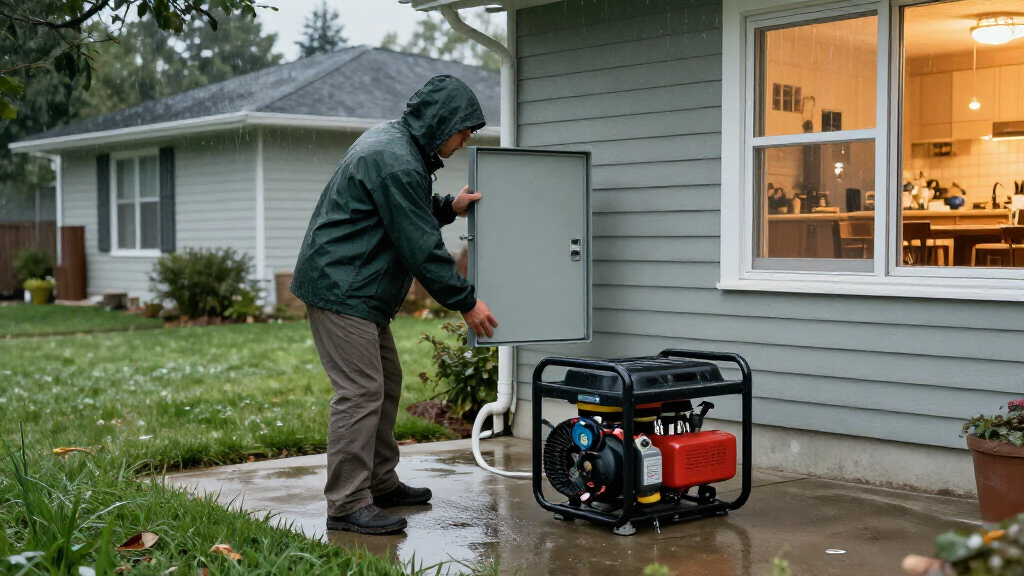
How We Picked
I ranked these products around the needs of someone specifically shopping for natural-gas backup power, not simply a generator that can burn several fuels. The main criteria were standby automation, stated capacity, transfer-switch inclusion, natural-gas compatibility, monitoring features, and how clearly each product fits a particular home or backup plan. I also distinguished permanently installed standby generators from portable tri-fuel models: both may run on natural gas, but they differ substantially in readiness, installation, and outage-day effort.
The ranking favors products that make a coherent residential backup solution, with a useful balance of capacity and transfer equipment. Higher-capacity units rank well for larger electrical demands, but not by default; an oversized generator can be a poor match if a home’s gas service or intended loads do not support it. Portable models rank lower for buyers prioritizing automatic whole-home backup, though they may be more suitable for flexible or temporary use. Several Generac listings share similar capacity and cellular features, so I treat included equipment and stated specifications—not branding alone—as meaningful separators.
Factors to Consider When Choosing Natural Gas Standby Generators
Before choosing a model, I would settle the project questions that product listings cannot answer on their own: what must stay on, how the generator will connect, and whether the home’s fuel and electrical systems can support the plan. These checks can change which capacity is appropriate and whether a standby or portable unit is the better route.
Choose the Loads You Actually Need to Keep Running
Start by listing the circuits and appliances you need during an outage, rather than treating “whole home” as a fixed amount of power. Heating and cooling equipment, well pumps, cooking appliances, and other large loads can shape the required capacity far more than lights and small electronics. Ask an electrician to account for starting loads as well as continuous demand, since motors may draw more power when they start. A smaller generator with a planned set of backed-up circuits can be a better match than a larger unit if you do not need every appliance at once. The common mistake is selecting by a headline kilowatt figure without checking the home’s actual load profile. That assessment helps separate the 10 kW and 14 kW choices from the larger 22 kW, 24 kW, and 26 kW models.
Confirm Natural-Gas Supply Before Picking Capacity
A generator’s ability to run on natural gas does not confirm that a particular home has enough gas available for it. Ask the gas utility or a qualified installer to check the meter, pipe sizing, pressure, and expected demand when other gas appliances are operating. A larger generator can place more demand on the supply, so moving from a 14 kW option to a 26 kW model may involve gas-system work as well as a different generator. Do not assume a portable tri-fuel unit avoids this check; its fuel connection still needs to match the manufacturer’s requirements. Buyers often focus on generator output and leave fuel delivery until late in the project. Confirming the supply early can prevent a capacity choice that the home cannot support as planned.
Decide Whether You Need Automatic Standby or Portable Flexibility
A permanently installed standby generator is the closer fit for buyers who want backup to start automatically when utility power fails, subject to correct installation and setup. Portable tri-fuel models offer a different kind of flexibility, but they are not equivalent to an installed standby system simply because they can use natural gas. The owner may need to position the unit, connect it through an approved setup, and manage operation during an outage. Think about whether anyone will be available to handle those steps, including during severe weather or overnight. A frequent buying error is comparing portable and standby products only by peak output. Choose based on how much outage-day involvement you are willing and able to take on.
Read the Transfer-Switch Details as Carefully as the Generator Specs
The transfer switch is part of the backup system, not a minor accessory: it manages the connection between utility power and generator power. Some listings in this roundup explicitly include a 200-Amp transfer switch or other transfer equipment, while others emphasize the generator and cellular capability without the same inclusion in the product name. Check the exact package contents and the intended circuits before comparing listings. An included switch does not mean installation is included, nor does it confirm that the switch suits every home’s electrical panel. Buyers can mistakenly budget for the generator alone and miss the costs and planning tied to electrical integration. Have a qualified professional confirm the required switch, wiring, permits, and site work.
Treat Monitoring as a Convenience, Not a Substitute for Service
Cellular monitoring can help owners check generator status remotely, but it does not replace routine maintenance, a working fuel supply, or correct installation. Many of the Generac options here list cellular capability, so that feature alone does little to distinguish their suitability. Review what the monitoring service includes, whether connectivity is available at the installation site, and whether any ongoing service terms apply. Also ask who will receive alerts and what action is expected if the system reports a problem. A common mistake is to assume that a connected generator will handle every maintenance task automatically. For a buyer choosing among similar models, capacity and transfer-switch details usually deserve priority over monitoring claims.
Compare the Full Installation Plan, Not Just the Generator
Standby systems need a suitable site, safe clearances, electrical work, a fuel connection, and any required local approvals. Those requirements can affect where a unit can go and whether the preferred model is practical at a given property. Ask for an installation assessment before settling on capacity, especially if the site is tight or the gas and electrical systems need upgrades. Portable units avoid some permanent-site decisions but still require safe operation, an appropriate connection method, and compliance with manufacturer instructions. Buyers should also ask how maintenance access will work once the generator is in place. Comparing the complete plan keeps a seemingly convenient model from becoming a poor fit for the property.
Frequently Asked Questions
Can I connect a portable tri-fuel generator to my home’s natural-gas line?
Possibly, but a tri-fuel label by itself does not make a portable generator ready for direct household connection. The model must support natural gas, and the connection must use a suitable, code-compliant setup that follows its instructions. A qualified professional can check gas pressure, supply capacity, connection hardware, and how the generator will feed the home safely. Do not connect a portable generator to household wiring through an improvised method. If you want backup to start automatically without outage-day setup, compare it with a permanently installed standby system instead.
How do I know whether a 10 kW, 14 kW, or 22 kW standby generator is enough?
Start with the circuits and appliances you want powered, then have an electrician calculate their running and starting loads. A 10 kW or 14 kW unit may fit a deliberately limited backup plan, while a 22 kW model can support a broader set of loads when the home’s systems allow it. The number alone cannot tell you whether air conditioning, a well pump, or other large equipment can operate together. Your natural-gas supply also needs to support the selected generator. A load assessment is more reliable than choosing by home size or by the assumption that more capacity is always better.
Does a generator listing that says “whole-home” mean every appliance can run at once?
No. “Whole-home” describes the intended backup role, but actual simultaneous use depends on generator capacity, the home’s electrical design, and the loads in operation. Large appliances can draw substantial starting power, and an installer may recommend load management or limits on which equipment runs together. The transfer-switch setup and service-panel configuration also affect what can receive backup power. Ask for a written load plan that identifies any restrictions before buying. This helps avoid expecting a product label to promise unrestricted use of every household appliance.
If a standby generator includes cellular monitoring, can I skip regular maintenance?
No. Monitoring can report status or alerts, but it does not perform physical inspections or routine service. Follow the manufacturer’s maintenance schedule and ask the installer which checks the owner can handle and which should go to a technician. Confirm that the site has suitable cellular coverage and learn what service, if any, is required to use the monitoring features. It is also useful to know who will receive alerts and how quickly someone can respond. Treat connectivity as an added convenience, not a replacement for maintenance planning.
Should I buy the generator before arranging an installation assessment?
I would arrange an assessment first for a permanent standby system. The installer can check the gas meter and piping, electrical panel, transfer-switch needs, site clearances, permits, and any required upgrades. Those findings may change the capacity or model that fits the property, particularly when comparing a smaller unit with the 22 kW, 24 kW, or 26 kW choices. They can also clarify which parts of the work are included in a product package and which are separate. Buying first can leave you with a generator that needs more site work than expected or does not suit the home’s systems.
Conclusion
For the best overall fit, I would start with the Generac 22 kW model that lists a 200-Amp transfer switch, then confirm the switch and capacity suit the home. For best value in a focused backup plan, compare the Generac 10 kW and 14 kW standby models after a load assessment; neither is a sensible value if it cannot run the circuits you need. For a premium, higher-capacity standby choice, the Generac 26 kW is the lineup’s clearest candidate for larger loads, provided the gas supply and installation plan support it. For beginners who want automatic backup, I would favor a standby package with clearly stated transfer equipment and professional installation rather than a portable unit that requires more outage-day involvement. For flexible, non-permanent use, the Westinghouse tri-fuel portables merit attention, while the Honeywell 14 kW is a specific alternative for buyers drawn to its stated weather-resistant enclosure and included installation pad. Before deciding, match the generator to a load calculation, gas-supply check, and installation quote.