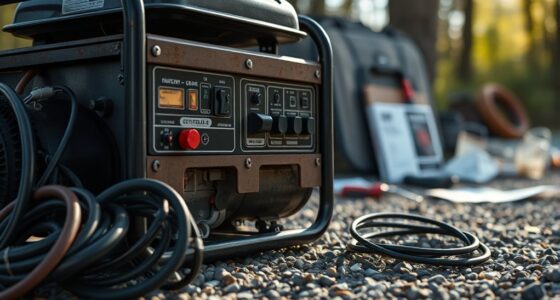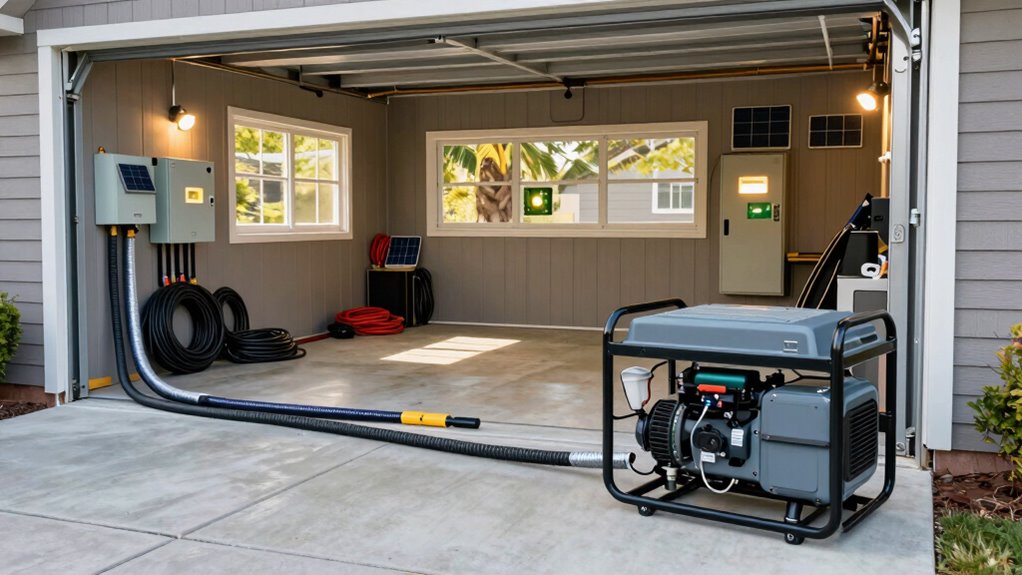

When selecting backup generators for workshops, reliability and power output are top priorities. The Oxseryn 5000-Watts Portable Inverter Generator stands out as the best overall choice for its balance of performance and portability. The Westinghouse 13500 Peak Watt Tri-Fuel Generator is ideal for heavy-duty needs, offering versatile fuel options and remote start. Buyers often face tradeoffs between size, noise levels, and fuel efficiency, making it crucial to understand what suits your workshop’s specific demands. Keep reading for a detailed breakdown of the best options and what to consider before buying.
Listen free for 30 days with Audible
Thousands of audiobooks and originals — cancel anytime.
Start your free trialAs an affiliate, we earn on qualifying purchases.
Complete the kit


Key Takeaways
- The top generators balance power output with portability, ensuring they can handle workshop demands without being cumbersome.
- Dual-fuel options provide greater flexibility, especially when fuel accessibility varies or costs fluctuate.
- Quiet operation remains a key factor—especially in shared workshop environments or when working late.
- Features like remote start and transfer switches add convenience but often come with higher price tags.
- Pricing varies significantly based on power capacity and features; understanding your workshop’s needs helps avoid overspending.
| Oxseryn 5000-Watts Portable Inverter Generator, Gas Powered, RV Ready, Eco Mode |  | Best Overall for Versatile Home and RV Backup | Wattage: 4000 watts (rated), 5000 watts (peak) | Fuel Type: Gasoline | Power Source: Fuel powered | VIEW ON AMAZON | See Our Full Breakdown |
| WEN 6800-Watt Dual Fuel RV-Ready Electric Start Portable Inverter Generator |  | Best for Dual Fuel Flexibility and Safety Features | Engine: 224cc dual-fuel | Surge Watts: 6800 (gasoline), 6000 (propane) | Rated Watts: 5100 (gasoline), 4500 (propane) | VIEW ON AMAZON | See Our Full Breakdown |
| WEN 4,750-Watt Dual Fuel Portable Generator with Electric Start and Wheel Kit |  | Best for Long Runtime and Dual Fuel Flexibility | Power: 4750 surge watts / 3800 running watts (gas), 4350 surge / 3500 running watts (propane) | Voltage: 120V/240V | Engine: 224cc 4-stroke OHV | VIEW ON AMAZON | See Our Full Breakdown |
| Westinghouse 13500 Peak Watt Tri-Fuel Portable Generator with Remote Electric Start |  | Best for Heavy-Duty Tri-Fuel Power and Long Runtime | Peak Watts: 13,500 | Running Watts: 10,500 (Gasoline), 9,500 (Propane), 8,500 (Natural Gas) | Fuel Tank Capacity: 9.5 gallons | VIEW ON AMAZON | See Our Full Breakdown |
| Oxseryn 4400-Watts Inverter Generator, Gas Powered, Emergency Home Backup, RV Ready 30A Outlet, EPA Compliant |  | Best for Compact Home and Emergency Backup | Wattage: 4400 watts | Fuel Type: Gasoline | Power Source: Fuel Powered | VIEW ON AMAZON | See Our Full Breakdown |
| ERAYAK 4500W Portable Inverter Generator for Home Use, Super Quiet Small Generator for Camping Outdoor Emergency Power Backup, Gas Powered Engine, ECO Mode, EPA Compliant |  | Best for Quiet, Compact Home Backup and Outdoor Use | Wattage: 3500 watts (running), 4500 watts (peak) | Fuel Type: Gasoline | Voltage: 120 volts | VIEW ON AMAZON | See Our Full Breakdown |
| Westinghouse 6500 Watt Dual Fuel Portable Generator with Transfer Switch and CO Sensor |  | Best for Versatile Power and Safety Features | Gasoline Wattage: 5300 Running Watts & 6500 Peak Watts | Propane Wattage: 4800 Running Watts & 5800 Peak Watts | Fuel Tank Capacity: 4.7 Gallons | VIEW ON AMAZON | See Our Full Breakdown |
| Oxseryn Power Equipment 4400 Watts Inverter Generator Gas Powered, Portable Open Frame Generator, Low Noise with ECO Mode, RV Ready, Emergency Home Backup |  | Best for Versatile, Quiet Power in a Lightweight Package | Wattage: 3400 watts | Fuel Type: Gasoline | Voltage: 120 volts | VIEW ON AMAZON | See Our Full Breakdown |
| Westinghouse 12500 Watt Dual Fuel Portable Generator with Remote Electric Start |  | Best for High-Power, Remote-Start Backup in Large Workshops | Peak Watts: 12500 | Running Watts: 9500 (Gasoline), 8500 (Propane) | Fuel Type: Gasoline, Propane | VIEW ON AMAZON | See Our Full Breakdown |
| Oxseryn 2800-Watts Portable Inverter Generator for Home and Camping |  | Best for Compact, Quiet, Emergency Backup and Camping | Power Output: 2800 peak watts / 2000 running watts | Engine: 79.8cc 4-stroke OHV | Fuel Tank Capacity: 1.1 gallons | VIEW ON AMAZON | See Our Full Breakdown |
| backup generators for workshop | Fuel Type | Runtime | Voltage |
|---|---|---|---|
| Oxseryn 5000-Watts Portable In | Gasoline | 6 hours | 120 volts |
| WEN 6800-Watt Dual Fuel RV-Rea | Gasoline and propane | — | — |
| WEN 4,750-Watt Dual Fuel Porta | — | — | 120V/240V |
| Westinghouse 13500 Peak Watt T | — | — | — |
| Oxseryn 4400-Watts Inverter Ge | Gasoline | 14 hours | 120 volts |
| ERAYAK 4500W Portable Inverter | Gasoline | 16 hours | 120 volts |
| Westinghouse 6500 Watt Dual Fu | — | Up to 14.5 hours | — |
| Oxseryn Power Equipment 4400 W | Gasoline | 14 hours | 120 volts |
| Westinghouse 12500 Watt Dual F | Gasoline, Propane | — | — |
| Oxseryn 2800-Watts Portable In | — | up to 9 hours | — |
More Details on Our Top Picks
Oxseryn 5000-Watts Portable Inverter Generator, Gas Powered, RV Ready, Eco Mode
This generator stands out for delivering a solid 5000-watt peak output in a compact, portable package. Compared with the Oxseryn 4400-Watts inverter, it offers more power, making it suitable for running larger appliances during outages or on the road. Its quiet operation at 70dB from 23 feet and the inclusion of an RV-ready 30A outlet make it especially appealing for RV owners and homeowners needing reliable backup power. However, its 6-hour runtime on a 2-gallon tank limits continuous operation without refueling, and the single outlet might be restrictive for multiple devices. Still, the balance of power, portability, and fuel efficiency makes this a versatile choice for users who prioritize reliable, stable power with minimal noise.
Pros:- Powerful 5000-watt peak output for various appliances
- Quiet operation at 70dB from 23 feet
- Includes RV-ready 30A outlet and eco mode for fuel efficiency
- Compact and portable at 60 lbs
Cons:- Limited runtime of only 6 hours on a full tank
- Single power outlet restricts simultaneous device use
- Some users may find it heavy to carry over long distances
Best for: Homeowners and RV users needing reliable, portable power with quiet operation and moderate runtime
Not ideal for: Heavy-duty workshop environments requiring longer runtime or higher power output
- Wattage:4000 watts (rated), 5000 watts (peak)
- Fuel Type:Gasoline
- Power Source:Fuel powered
- Voltage:120 volts
- Tank Volume:2 gallons
- Total Power Outlets:1
- Engine Power Maximum:5 KW
- Starting Wattage:5000 watts
- Runtime:6 hours
Our verdict“This generator is ideal for users who need a reliable, portable power source for RVs or home backup with moderate runtime and quiet operation.”
WEN 6800-Watt Dual Fuel RV-Ready Electric Start Portable Inverter Generator
This model is well-suited for users who want versatility, offering both gasoline and propane options, unlike the WEN 4750 that relies solely on gasoline. Its 224cc dual-fuel engine provides up to 6800 surge watts, making it a strong choice for RV owners and backup situations where fuel options matter. The inclusion of a CO shutdown sensor and multiple outlets enhances safety and convenience. Nevertheless, its size and weight mean it can be cumbersome to transport without assistance, and the setup process may be complex for first-timers. Compared to the Oxseryn 4400-Watts inverter, it provides higher power and more fuel choices, but at the expense of portability and simplicity.
Pros:- Dual-fuel capability for gasoline and propane
- Safety features like CO shutdown sensor
- Multiple outlets including 120V/240V and USB ports
- Wheels and telescoping handle for easier transport
Cons:- Heavy to move without help
- Setup can be complex for beginners
- Bulkier profile may limit storage options
Best for: RV owners or homeowners who value fuel flexibility and safety features in a portable generator
Not ideal for: Users seeking a lightweight, simple plug-and-play solution for occasional use
- Engine:224cc dual-fuel
- Surge Watts:6800 (gasoline), 6000 (propane)
- Rated Watts:5100 (gasoline), 4500 (propane)
- Receptacles:L14-30R 120V/240V, two 120V, TT-30R RV, 12V DC, two USB
- Fuel Type:Gasoline and propane
- Warranty:3 years
Our verdict“This generator is ideal for those requiring fuel versatility and safety features, especially RV owners and frequent campers.”
WEN 4,750-Watt Dual Fuel Portable Generator with Electric Start and Wheel Kit
The WEN 4750-Watt generator makes a strong case for users needing extended runtime with dual fuel options, outperforming the Oxseryn 4400 in terms of fuel capacity and duration—up to 11 hours on a 4-gallon tank. Its electric start eases operation, and multiple outlets make it adaptable for various devices. However, its weight and bulkiness can hinder portability, especially for users who need to move it frequently or over long distances. Unlike the Oxseryn inverter, which prioritizes quieter operation and compact design, this model is better suited for job sites or backup power over longer periods where runtime matters most.
Pros:- Long runtime of up to 11 hours on full tank
- Dual fuel capability for gasoline and propane
- Electric start for easy operation
- Includes wheel and handle kit for mobility
Cons:- Heavy and bulky compared to inverter models
- No specific noise level info provided
- Requires manual propane setup
Best for: Homeowners or contractors needing long-lasting, versatile power with easy electric start
Not ideal for: Users requiring lightweight or ultra-portable solutions for brief outages or outdoor activities
- Power:4750 surge watts / 3800 running watts (gas), 4350 surge / 3500 running watts (propane)
- Voltage:120V/240V
- Engine:224cc 4-stroke OHV
- Tank Capacity:4 gallons
- Run Time:Up to 11 hours
- Outlets:Two 120V GFCI, 120V/240V twist lock, 12V DC
- Includes:Wheel and handle kit, LPG connection hose, oil
Our verdict“This generator is best for users who prioritize extended runtime and fuel flexibility over portability or noise considerations.”
Westinghouse 13500 Peak Watt Tri-Fuel Portable Generator with Remote Electric Start
The Westinghouse WGen10500TFc excels in heavy-duty applications, offering tri-fuel flexibility—gasoline, propane, or natural gas—making it ideal for large workshops or prolonged outages. Its impressive 13,500 peak watts and 10,500 running watts outpace most in this roundup, including the Oxseryn 5000. The remote electric start adds convenience, and its 9.5-gallon tank supports up to 19 hours of operation. While it’s heavier and more complex to set up than inverter options, it’s designed for continuous, high-capacity use. The residual smell from factory testing and the need for assistance to move it are minor tradeoffs compared to its unmatched power output and fuel options.
Pros:- Tri-fuel operation (gasoline, propane, natural gas)
- Remote start with key fob for convenience
- Long runtime up to 19 hours
- Multiple transfer switch-ready outlets
Cons:- Heavy and requires assistance to move
- Complex setup for first-time users
- Residual smell from factory testing
Best for: Large workshops, construction sites, or emergency backup where high power and fuel versatility are required
Not ideal for: Small-scale or portable applications where ease of transport and lightweight design are priorities
- Peak Watts:13,500
- Running Watts:10,500 (Gasoline), 9,500 (Propane), 8,500 (Natural Gas)
- Fuel Tank Capacity:9.5 gallons
- Run Time:Up to 19 hours
- Engine:500cc 4-Stroke OHV
- Outlets:GFCI 120V 5–20R, Transfer Switch Ready L14-30R 30A, RV Ready 120/240V 14–50R 50A
- Features:Remote electric start, fuel gauge, automatic low oil shutdown, CO sensor
Our verdict“This generator is best suited for large-scale, high-capacity needs where fuel flexibility and long runtime are essential.”
Oxseryn 4400-Watts Inverter Generator, Gas Powered, Emergency Home Backup, RV Ready 30A Outlet, EPA Compliant
This inverter generator shines in portability and efficiency, providing 4400 peak watts in a lightweight 56-pound frame. Its inverter technology ensures clean, stable power, making it suitable for sensitive electronics and emergency home backup, similar to the Oxseryn 5000 but with less raw power. Its 14-hour runtime on a 2-gallon tank and EPA compliance favor users needing long, quiet operation during outages or outdoor activities. Compared to larger models like the Westinghouse 13500, it’s less suited for high-demand applications, but for small workshops or residential backup, it strikes a good balance. The slight gas smell upon delivery is a minor inconvenience, and its limited fuel capacity means refueling could be frequent during extended outages.
Pros:- Lightweight at 56 lbs for easy transport
- Inverter technology for clean power
- Multiple outlets including RV 30A and USB
- Long runtime of 14 hours on 2 gallons
Cons:- Limited to 4400 watts, not suitable for high-demand tools
- Slight gas smell post-delivery
- Fuel capacity may require frequent refueling for extended use
Best for: Homeowners needing portable, quiet backup power for sensitive electronics and light workshop tasks
Not ideal for: Heavy-duty workshops or situations demanding high power for extended periods
- Wattage:4400 watts
- Fuel Type:Gasoline
- Power Source:Fuel Powered
- Voltage:120 volts
- Tank Volume:2 gallons
- Runtime:14 hours
- Additional Features:Cold Start Technology, Fuel Efficient, Low Oil Shutdown
Our verdict“This inverter generator is best for users seeking portable, quiet power with clean output for sensitive electronics and light backup needs.”
ERAYAK 4500W Portable Inverter Generator for Home Use, Super Quiet Small Generator for Camping Outdoor Emergency Power Backup, Gas Powered Engine, ECO Mode, EPA Compliant
The ERAYAK 4500W inverter generator stands out for its remarkably quiet operation at just 60.5 dB, making it ideal for residential areas or outdoor camping where noise is a concern. Compared to heavier models like the Westinghouse 6500 Watt, this generator is significantly more portable, weighing only 55 lbs and fitting easily into small spaces. Its multiple outlets, including USB ports, offer versatile device charging, perfect for lightweight workshop needs or outdoor setups. However, it’s limited to a single outlet without parallel capability unless you purchase a separate kit, and it requires oil addition before first use to avoid startup issues. While fuel efficiency and runtime are strong points, the small tank limits continuous operation at high loads. This pick makes the most sense for small workshops, hobbyists, or homeowners needing quiet, reliable power for brief outages or outdoor jobs.Pros:- Quiet operation at just 60.5 dB, ideal for noise-sensitive environments
- Multiple outlets including USB compatible with small devices
- Fuel-efficient with up to 16 hours runtime at rated load
- Lightweight and compact for easy portability
Cons:- Parallel connection requires a separate kit, adding extra cost
- Limited to one power outlet without parallel setup
- Oil must be added before initial startup to prevent issues
Best for: Small workshop owners, hobbyists, or homeowners needing quiet, portable backup power
Not ideal for: Large workshops or construction sites requiring high power output and multiple outlets simultaneously
- Wattage:3500 watts (running), 4500 watts (peak)
- Fuel Type:Gasoline
- Voltage:120 volts
- Tank Volume:2.25 gallons
- Runtime:16 hours
- Engine Displacement:208 cc
Our verdict“This generator suits small-scale workshops or outdoor projects where quiet, portable power is a priority.”
Westinghouse 6500 Watt Dual Fuel Portable Generator with Transfer Switch and CO Sensor
The Westinghouse 6500 Watt dual fuel generator offers flexibility with gasoline and propane, making it well-suited for backup in larger workshops or homes. Its long runtime of up to 14.5 hours on a full tank ensures extended operation during outages, and the inclusion of a CO sensor adds a vital safety layer. Unlike the inverter models such as Oxseryn Power Equipment 4400W, this unit provides more raw power for demanding tools or multiple devices. Its dual fuel capability is a major advantage over single-fuel options, though the weight isn’t specified, which could make transportation challenging for smaller users. Its multiple outlets, including transfer switch compatibility, make it a practical choice for serious backup needs. The tradeoff is that it’s heavier and more complex to set up, which might not appeal to those seeking a lightweight, simple solution.Pros:- Dual fuel capability offers flexibility with gasoline and propane
- Long runtime of up to 14.5 hours on a full tank
- Includes multiple outlets suitable for household and RV use
- Built-in CO sensor enhances safety during operation
Cons:- Weight not specified, potentially heavy for transport
- Setup complexity may be daunting for first-time users
- No specific price data available
Best for: Larger workshops or homeowners requiring high power capacity with safety and fuel flexibility
Not ideal for: Portable work sites or users with limited physical strength, due to potential weight and setup complexity
- Gasoline Wattage:5300 Running Watts & 6500 Peak Watts
- Propane Wattage:4800 Running Watts & 5800 Peak Watts
- Fuel Tank Capacity:4.7 Gallons
- Runtime:Up to 14.5 hours
- Outlets:120V Duplex, RV-Ready TT-30R, Transfer Switch L14-30R
- Features:CO Sensor, Low Oil Shutdown
Our verdict“This generator is ideal for those needing reliable, long-lasting power with fuel choice options for larger workshops or homes.”
Oxseryn Power Equipment 4400 Watts Inverter Generator Gas Powered, Portable Open Frame Generator, Low Noise with ECO Mode, RV Ready, Emergency Home Backup
The Oxseryn Power Equipment 4400W inverter generator is a notable choice for those seeking a balance between power and portability. Its 3400 running watts handle multiple small tools or electronics, comparable to the ERAYAK but with a slightly higher maximum wattage, making it suitable for emergency backup or outdoor work. Operating quietly at under 72 dBA, it’s a better option than larger, noisier models like the Westinghouse 12500W when noise is a concern. Its lightweight at only 56 lbs and compact frame make it easy to carry around. However, it’s gasoline-only, with no alternative fuel options, and may emit a slight gas smell upon arrival, similar to the Oxseryn 2800W. Its runtime of 14 hours is moderate, and regular maintenance is needed for long-term reliability. This generator fits small workshops, mobile professionals, or serious campers who need reliable, portable power without excess bulk.Pros:- Quiet operation under 72 dBA, suitable for noise-sensitive environments
- Lightweight and portable at 56 lbs with easy handle design
- Multiple outlets including USB and Type-C for versatile device charging
- Fuel-efficient ECO mode prolongs runtime
Cons:- Limited to gasoline fuel, no hybrid options
- May produce a gas smell upon arrival due to testing
- Requires regular maintenance for peak performance
Best for: Mobile professionals, small workshop owners, or camping enthusiasts needing quiet, portable backup power
Not ideal for: Large workshop environments or projects requiring continuous high-wattage power
- Wattage:3400 watts
- Fuel Type:Gasoline
- Voltage:120 volts
- Tank Volume:2 gallons
- Runtime:14 hours
- Engine Displacement:208 cc
Our verdict“This inverter generator serves well for portable, quiet power needs in small workshops or outdoor settings.”
Westinghouse 12500 Watt Dual Fuel Portable Generator with Remote Electric Start
The Westinghouse WGen9500DF offers impressive power, with up to 12,500 peak watts, making it suitable for large workshops or whole-house backup. Its remote electric start, combined with a durable 457cc engine, simplifies operation during emergencies. Unlike smaller inverter models, this generator provides robust power for heavy-duty tools and multiple devices simultaneously, but its weight and size could hinder portability for small or mobile setups. The longer runtime of 12 hours supports extended outages without frequent refueling. While its initial cost and setup complexity might be higher, this unit excels where high wattage and remote operation are required. It’s less suited for users who prioritize portability over raw power or have limited space for storage.Pros:- Massive power output with up to 12,500 peak watts
- Remote electric start for convenience
- Long runtime of up to 12 hours on a full tank
- Multiple transfer switch ready outlets
Cons:- Heavy and bulky, difficult to move without help
- Setup may be complicated for first-time users
- Higher price point for the size and features
Best for: Large workshops or homeowners needing high power with remote start capability
Not ideal for: Small workshops or users with limited space or mobility constraints
- Peak Watts:12500
- Running Watts:9500 (Gasoline), 8500 (Propane)
- Fuel Type:Gasoline, Propane
- Tank Capacity:6.6 gallons
- Run Time:Up to 12 hours
- Outlets:GFCI 120V, Transfer Switch 120/240V
Our verdict“This generator is best suited for large workshops or homes where maximum power and remote operation are needed without portability being a priority.”
Oxseryn 2800-Watts Portable Inverter Generator for Home and Camping
The Oxseryn 2800-Watts inverter generator offers a compact and lightweight solution for emergency backup, camping, and small workshop tasks. Its 2000 running watts are sufficient for sensitive electronics and small tools, with a notably quiet operation at under 58 dBA, making it ideal for noise-sensitive environments. Its small size and 39 lbs weight make it highly portable, and multiple outlets including USB and Type-C ensure compatibility with modern devices. However, its limited runtime of about 9 hours at 25% load means frequent refueling for extended use, and it produces a slight gas scent upon arrival, similar to other small units. It’s best for users who prioritize portability and quiet operation over continuous, high-wattage power. Larger workshops or demanding tools may find this generator insufficient.Pros:- Quiet operation at under 58 dBA, excellent for noise-sensitive settings
- Lightweight at only 39 lbs with a carrying handle
- Multiple outlets including USB and Type-C for versatile device charging
- Parallel capability expands power when needed
Cons:- Limited runtime of about 9 hours at 25% load
- May emit a gas smell upon arrival due to factory testing
- High-altitude use requires a specific kit above 4000 feet
Best for: Emergency backup for small workshops, camping, or sensitive electronics where portability is key
Not ideal for: Heavy-duty workshop environments or prolonged power outages requiring high wattage
- Power Output:2800 peak watts / 2000 running watts
- Engine:79.8cc 4-stroke OHV
- Fuel Tank Capacity:1.1 gallons
- Runtime:up to 9 hours
- Noise Level:Under 58 dBA
- Weight:39 lbs
Our verdict“This generator is ideal for small workshops or camping trips where quiet, portable power is more important than extended runtime or high wattage.”
How We Picked
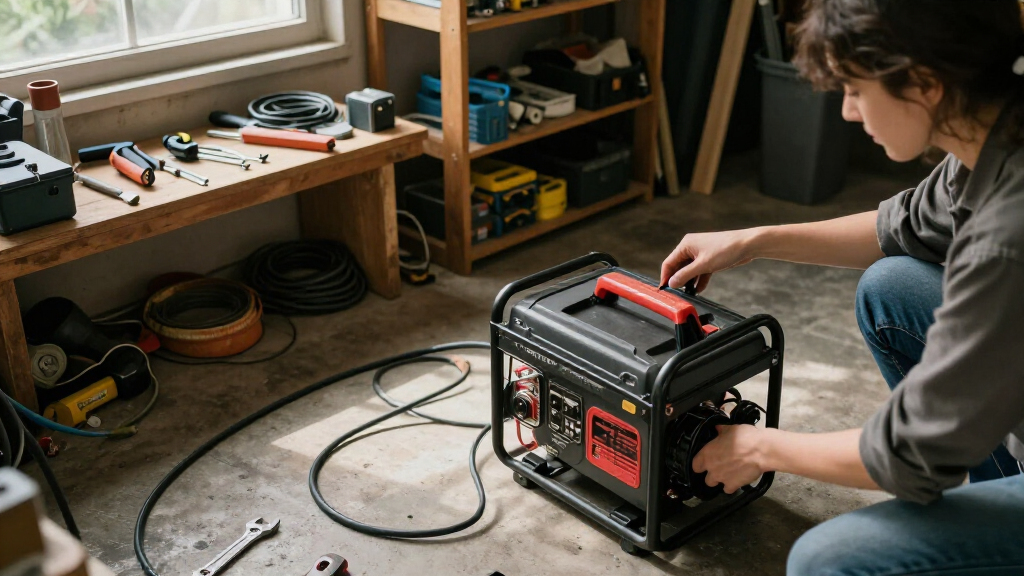
The selection process focused on evaluating power output, fuel versatility, ease of use, noise levels, and build quality. We prioritized generators that can reliably run workshop tools and equipment, even during extended outages. Ease of maintenance and added features like remote start or transfer switches were also considered, as they improve usability. Products were ranked based on their overall value and suitability for workshop environments—balancing performance with practical considerations like size and price. Our goal was to highlight options that serve a range of workshop sizes and budgets, ensuring readers can find a tailored solution.| backup generators for workshop | Fuel Type |
|---|---|
| Oxseryn 5000-Watts Portable In | Gasoline |
| WEN 6800-Watt Dual Fuel RV-Rea | Gasoline and propane |
| WEN 4,750-Watt Dual Fuel Porta | — |
| Westinghouse 13500 Peak Watt T | — |
| Oxseryn 4400-Watts Inverter Ge | Gasoline |
| ERAYAK 4500W Portable Inverter | Gasoline |
| Westinghouse 6500 Watt Dual Fu | — |
| Oxseryn Power Equipment 4400 W | Gasoline |
| Westinghouse 12500 Watt Dual F | Gasoline, Propane |
| Oxseryn 2800-Watts Portable In | — |
Factors to Consider When Choosing Backup Generators For Workshops
Choosing the right backup generator for your workshop requires understanding several key factors. Beyond just power capacity, you need to consider fuel type, noise levels, ease of operation, and safety features. Making the wrong choice can lead to insufficient power, excessive noise, or high operating costs. This guide walks through the most important considerations to help you select a generator that fits your specific needs and budget, avoiding common pitfalls along the way.Power Output and Size
Assess your workshop’s equipment and power needs carefully. Overestimating can lead to unnecessary expenses and a bulky setup, while underestimating risks inadequate power during outages. Focus on generators with a continuous wattage rating that exceeds your peak demand. Remember, larger units may offer more outlets and better capacity but can be heavier and less portable. Striking the right balance ensures you have enough power without sacrificing convenience or budget.
Fuel Type and Efficiency
Generators commonly run on gasoline, propane, or dual fuels. Gasoline models are widely available but may require frequent refueling, especially during long outages. Propane offers cleaner burning and longer storage life, but infrastructure might be less accessible. Dual-fuel units provide flexibility, which is valuable during extended emergencies. Additionally, look for fuel-efficient features like ECO modes to extend runtime and reduce operating costs, especially if your workshop experiences frequent outages.
Noise Levels
Noise can be a significant concern, especially if your workshop operates late or in a shared space. Quiet models typically utilize inverter technology and sound-dampening enclosures, making them more suitable for indoor or semi-enclosed environments. Be aware that increased noise often correlates with higher power and larger size, so consider your environment and comfort needs before choosing a model. Lower-noise generators may come at a premium but can significantly improve your working conditions.
Ease of Use and Safety Features
Features like electric start, remote operation, and transfer switches add convenience—saving time and effort during emergencies. Safety features such as CO sensors and automatic shutoff protect users from hazardous conditions, especially important in enclosed workshops. Consider how often you’ll need to operate the generator and whether additional features justify the extra cost. A straightforward control panel and reliable startup are vital for hassle-free operation during critical times.
Budget and Long-Term Value
While initial cost is important, think about the long-term expenses of fuel, maintenance, and potential upgrades. Cheaper units may lack durability or sufficient power, leading to higher costs down the line. Conversely, investing in a higher-capacity, feature-rich generator can reduce downtime and maintenance costs over its lifespan. Prioritize models that strike a good balance between affordability and reliability, especially if your workshop depends heavily on consistent power during outages.
Frequently Asked Questions
How much power do I need for my workshop?
Calculating your workshop’s power needs involves listing all essential tools and equipment and summing their wattage. Add a buffer of 20-25% to accommodate startup surges and future additions. For most small to medium workshops, a generator with a continuous rating of 4,000 to 6,000 watts suffices. Larger setups with heavy machinery may require 10,000 watts or more, especially if you plan to run multiple tools simultaneously. Always match your generator size to your critical power demands to avoid overloads or insufficient power.
Is inverter technology worth it for workshop backup generators?
Inverter generators deliver cleaner, more stable power, making them suitable for sensitive equipment and electronics. Their quieter operation and fuel efficiency are additional benefits, especially if your workshop has designated hours of operation. However, inverter models typically offer lower wattage capacities at higher price points, which might not suit heavy-duty needs. If your workshop relies on delicate electronics or you value quieter operation, inverter technology enhances usability despite the higher upfront cost.
Should I prioritize dual-fuel capability?
Dual-fuel generators provide flexibility by allowing you to switch between gasoline and propane, which can be advantageous during extended outages or fuel shortages. Propane’s longer storage life and cleaner burn can help reduce maintenance needs. However, dual-fuel models tend to be more expensive and slightly heavier. If your workshop is located in an area prone to fuel supply disruptions or you want maximum versatility, dual-fuel capability makes sense. Otherwise, a high-quality single-fuel unit might suffice for shorter-term use.
How important is noise level in choosing a workshop generator?
Noise level is a significant factor if your workshop is in close proximity to living spaces or shared facilities. Quieter models, often inverter-based, operate at sound levels below 60 decibels, making them less disruptive. Larger, conventional generators tend to be louder, sometimes exceeding 70 decibels, which can be problematic during extended use. If noise is a concern, investing in a lower-noise model can improve your working environment and reduce complaints from neighbors or colleagues.
Are remote start features worth the extra cost?
Remote start adds convenience, especially during cold weather or when your workshop is hard to access physically. It allows you to start the generator from a distance, saving time and effort during emergencies. While this feature often increases the price, it can be a valuable addition if you value quick, hassle-free startup. For workshops with frequent outages, remote start can make the difference between a quick response and a delayed one, justifying the higher investment.
Conclusion
For general workshop use, the Oxseryn 5000-Watts Portable Inverter Generator offers the best balance of power, portability, and convenience, making it ideal for most small to medium workshops. Those seeking maximum capacity and versatility should consider the Westinghouse 13500 Peak Watt Tri-Fuel Generator, especially if heavy-duty power is needed. Budget-conscious buyers will find the Oxseryn 2800-Watts Portable Inverter Generator sufficient for lighter tasks and portable use. Beginners or occasional users might prefer models with automatic start and safety features. For workshops that depend on electronics or sensitive equipment, inverter-based models deliver cleaner power and quieter operation, justifying a higher investment.
NFL season / tailgating Picks
team gear
As an affiliate, we earn on qualifying purchases.